
Why You’ll Love This Kale Pesto Spaghetti Squash
- It’s a Texture Dream. You get the satisfying, slightly al dente pull of the squash “noodles” combined with the creamy, gritty goodness of the pesto. It’s a far more interesting mouthfeel than regular pasta, honestly.
- The Pesto Packs a Serious Flavor Punch. By using kale instead of all basil, we create a pesto that’s robust, a little earthy, and less prone to browning. It’s a powerhouse of flavor that clings to every single strand.
- It Feels Indulgent Without the Heavy Feeling. This is one of those meals that leaves you feeling full and happy, but not sluggish. It’s a fantastic way to load up on vegetables in the most delicious way possible.
- It’s Incredibly Versatile. Think of this as a perfect base. You can top it with a fried egg for breakfast, add some grilled chicken or chickpeas for extra protein, or even enjoy it cold as a salad the next day.
Ingredients & Tools
- 1 large spaghetti squash (about 3-4 pounds)
- 2 tablespoons olive oil, divided
- 1/2 teaspoon fine sea salt, plus more for seasoning
- 1/4 teaspoon black pepper
- 4 cups loosely packed kale leaves, stems removed (about 1 small bunch)
- 1/2 cup fresh basil leaves
- 1/3 cup toasted pine nuts or walnuts
- 2 cloves garlic, peeled
- 1/4 cup freshly grated Parmesan cheese, plus more for serving
- 2 tablespoons fresh lemon juice
- 1/3 to 1/2 cup extra-virgin olive oil
Tools: A large, sharp chef’s knife, a sturdy baking sheet, parchment paper, a food processor or high-speed blender, a fork for shredding the squash.
The quality of your olive oil really shines here, especially in the pesto, so use the good stuff if you have it. And don’t skip toasting the nuts—it unlocks their oils and adds a deep, nutty aroma that makes all the difference.
Serves: 3-4 as a main | Prep Time: 20 minutes | Cook Time: 45-50 minutes | Total Time: about 1 hour 10 minutes
Before You Start: Tips & Ingredient Notes
- Choosing Your Squash. Look for a squash that feels heavy for its size and has a firm, matte yellow skin without any soft spots. A heavier squash usually means more moisture and better “noodle” yield.
- Kale Prep is Key. Make sure you remove the tough central stems from the kale leaves. They can make the pesto unpleasantly stringy. A quick massage of the leaves with a little salt after washing can also help soften them up.
- Toasting Nuts 101. You can toast nuts in a dry skillet over medium-low heat for 3-5 minutes, shaking the pan frequently, until they’re fragrant and lightly golden. Watch them like a hawk—they go from perfectly toasted to burnt in seconds.
- Don’t Fear the Garlic. Using raw garlic gives the pesto its characteristic zing. If you’re sensitive to it, you can try roasting the garlic cloves along with the squash for a mellower flavor, but I love the punch of the raw version.
How to Make Kale Pesto Spaghetti Squash
Step 1: Preheat your oven to 400°F (200°C). This is our first crucial step—getting that oven nice and hot so the squash roasts perfectly. While it’s heating up, line a rimmed baking sheet with parchment paper for easy cleanup. Trust me, you’ll thank yourself later.
Step 2: Now, the slightly tricky part: cutting the squash. Carefully use a large, sharp knife to slice the spaghetti squash in half lengthwise. The skin is tough, so take your time and use a steady rocking motion. Once halved, use a spoon to scrape out the seeds and stringy pulp from the center—just like you would a pumpkin.
Step 3: Drizzle the cut sides of the squash with about a tablespoon of olive oil and rub it all over. Season generously with salt and pepper. Place the halves cut-side down on the prepared baking sheet. Roasting them face-down helps them steam and soften, resulting in those perfect, separate strands.
Step 4: Roast for 45-50 minutes, or until the outside skin is easily pierced with a fork and the flesh is tender. You’ll know it’s done when the edges look a little caramelized. Remove the baking sheet from the oven and let the squash cool for about 10 minutes—just until it’s cool enough to handle.
Step 5: While the squash is roasting, make your pesto. In the bowl of a food processor, combine the kale, basil, toasted nuts, garlic, Parmesan cheese, and lemon juice. Pulse a few times until everything is roughly chopped and combined.
Step 6: With the food processor running, slowly stream in the 1/3 to 1/2 cup of extra-virgin olive oil through the feed tube. Process until the pesto is mostly smooth but still has a bit of texture. You want it to be saucy, not a puree. Taste and adjust seasoning, adding more salt or lemon juice as needed.
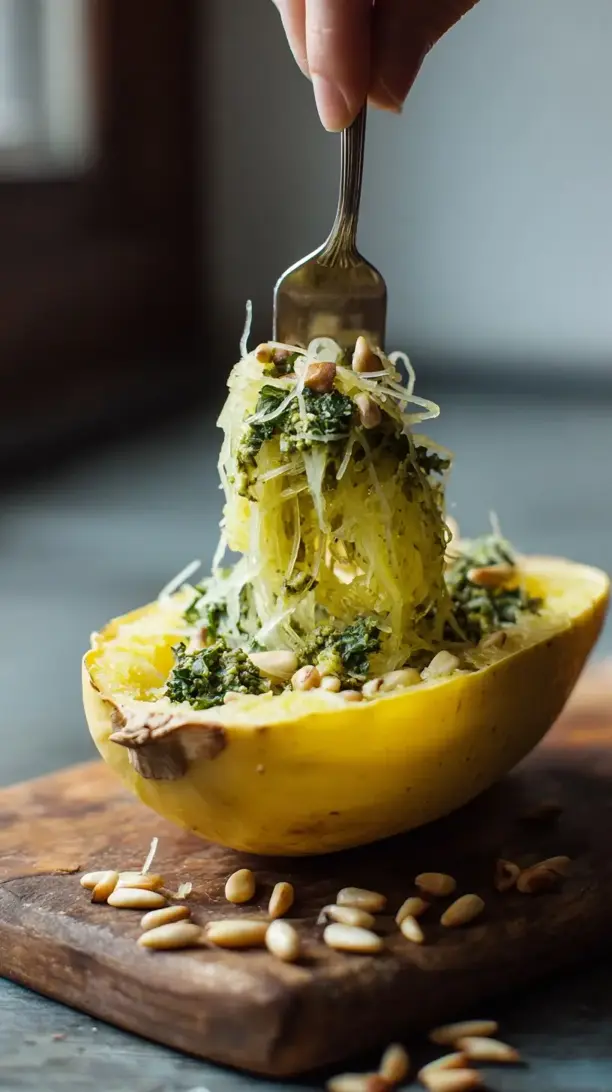
Step 7: Back to the squash! Once it’s cool, use a fork to scrape the flesh. You’ll see it magically separate into long, spaghetti-like strands. Scrape all the way down to the skin. Transfer all those beautiful strands to a large mixing bowl.
Step 8: Add the kale pesto to the bowl with the warm spaghetti squash strands. The warmth of the squash will help the pesto coat everything beautifully. Toss gently but thoroughly until every strand is glistening with that vibrant green sauce.
Step 9: Give it one final taste. Does it need another pinch of salt? A squeeze of lemon? Adjust to your liking. Then, divide among bowls, topping with extra grated Parmesan and a few reserved toasted nuts for a final flourish.
Serving Suggestions
Complementary Dishes
- Garlicky Sautéed Shrimp — The quick, savory punch of shrimp seared with garlic and a pinch of chili flake adds a luxurious protein element that complements the earthy pesto perfectly.
- Simple White Beans — A can of cannellini beans, rinsed and warmed with a little olive oil and rosemary, stirred right in, makes the dish heartier and adds a lovely creamy texture.
- Balsamic Glazed Chicken Thighs — The sweet and tangy glaze on juicy chicken thighs provides a fantastic contrast to the herbal, green notes of the squash.
Drinks
- A Crisp Sauvignon Blanc — The herbaceous and citrusy notes in a good Sauvignon Blanc mirror the flavors in the pesto, creating a really harmonious pairing.
- Sparkling Water with Lemon — The effervescence cleanses the palate between bites, and the lemon echo ties back to the fresh juice in the pesto. It’s a non-alcoholic winner.
- A Light Italian Red — Something like a Chianti or a Barbera, served slightly chilled, has enough acidity to cut through the richness without overpowering the dish.
Something Sweet
- Lemon Sorbet — The ultimate palate cleanser. Its sharp, clean citrus flavor is a refreshing finish after the savory, garlicky main course.
- Dark Chocolate Almond Clusters — A few pieces of good dark chocolate with toasted almonds satisfy the sweet tooth while continuing the nutty theme from the pesto.
- Poached Pears with a Hint of Vanilla — They feel elegant and light, and the gentle sweetness is a lovely, gentle way to end the meal.
Top Mistakes to Avoid
- Mistake: Underseasoning the Squash Before Roasting. The inside of the squash is quite mild, so salting the flesh before it goes into the oven is crucial for building flavor from the inside out. Don’t be shy!
- Mistake: Overprocessing the Pesto. If you blend the pesto into a completely smooth paste, it can become bitter and lose its charming, rustic texture. Pulse until it’s just combined and still has some little specks.
- Mistake: Not Letting the Squash Cool Enough. If you try to shred the squash straight out of the oven, it will be too hot to handle and the strands might turn to mush. A brief 10-minute cool-down makes all the difference.
- Mistake: Using Stale Nuts. Nuts can go rancid. Always taste one before using it in your pesto. If it tastes at all off or bitter, it will ruin the entire sauce.
Expert Tips
- Tip: Make a Double Batch of Pesto. This kale pesto is incredibly versatile. Any leftovers are fantastic on sandwiches, swirled into soups, or as a dressing for potato salad. It’ll keep in the fridge for about a week.
- Tip: Add a Pinch of Red Pepper Flake. For a subtle kick of heat, add a pinch of red pepper flakes to the food processor when you’re making the pesto. It adds a lovely, warm background note.
- Tip: Get Creative with Your “Noodle” Bowl. The hollowed-out spaghetti squash halves make adorable, edible serving bowls! Just be sure to leave a little border of flesh so they hold their shape.
- Tip: Revive Leftovers with a Splash of Water. If you have leftovers, the squash can absorb the pesto. When reheating, add a tablespoon or two of water to the pan to loosen everything up and make it saucy again.
FAQs
Can I make this recipe ahead of time?
Absolutely, and it’s a great timesaver! You can roast the spaghetti squash and make the pesto up to 3 days in advance. Store them separately in airtight containers in the fridge. When you’re ready to eat, gently warm the squash strands in a skillet or the microwave, then toss with the pesto. The pesto might thicken in the fridge, so you might need to stir in a teaspoon of warm water to loosen it up before mixing.
My pesto turned out bitter. What happened?
Oh, I’ve been there! Bitterness usually comes from one of two things: over-blending the kale (which can release bitter compounds) or using nuts that were either burnt during toasting or have gone slightly rancid. Another trick is to make sure you’re using only the leaves of the kale, not the tough stems. If it’s already bitter, try balancing it with a little more lemon juice or a tiny pinch of sugar.
Can I use a different type of squash?
You can, but the results will be different. Spaghetti squash is unique for its stringy, noodle-like texture. Other winter squashes like butternut or acorn will mash rather than shred. They would still taste delicious with the pesto, but you’d end up with more of a mashed squash situation, which is a different (though still lovely) dish.
Is there a good nut-free alternative for the pesto?
For sure! Toasted sunflower seeds are a fantastic, affordable, and nut-free alternative. They have a great texture and a mild, toasty flavor that works wonderfully in pesto. You could also use toasted pumpkin seeds (pepitas) for a slightly different, earthier twist.
How do I store leftovers and how long will they keep?
Store any leftovers in an airtight container in the refrigerator for up to 3 days. The squash will release a little water as it sits, so the texture is best when freshly made, but it’s still perfectly tasty reheated. I don’t recommend freezing this dish, as the squash will become very watery and mushy upon thawing.
Kale Pesto Spaghetti Squash
Transform spaghetti squash with a vibrant kale pesto! This healthy, gluten-free meal is a weeknight hero—easy, satisfying, and full of flavor. A low-carb pasta alternative that feels indulgent.
Ingredients
Ingredients
-
1 large spaghetti squash (about 3-4 pounds)
-
2 tablespoons olive oil (divided)
-
1/2 teaspoon fine sea salt (plus more for seasoning)
-
1/4 teaspoon black pepper
-
4 cups kale leaves (loosely packed, stems removed (about 1 small bunch))
-
1/2 cup basil leaves (fresh)
-
1/3 cup pine nuts or walnuts (toasted)
-
2 cloves garlic (peeled)
-
1/4 cup Parmesan cheese (freshly grated, plus more for serving)
-
2 tablespoons lemon juice (fresh)
-
1/3 to 1/2 cup extra-virgin olive oil
Instructions
-
Preheat your oven to 400°F (200°C). This is our first crucial step—getting that oven nice and hot so the squash roasts perfectly. While it's heating up, line a rimmed baking sheet with parchment paper for easy cleanup. Trust me, you'll thank yourself later.01
-
Now, the slightly tricky part: cutting the squash. Carefully use a large, sharp knife to slice the spaghetti squash in half lengthwise. The skin is tough, so take your time and use a steady rocking motion. Once halved, use a spoon to scrape out the seeds and stringy pulp from the center—just like you would a pumpkin.02
-
Drizzle the cut sides of the squash with about a tablespoon of olive oil and rub it all over. Season generously with salt and pepper. Place the halves cut-side down on the prepared baking sheet. Roasting them face-down helps them steam and soften, resulting in those perfect, separate strands.03
-
Roast for 45-50 minutes, or until the outside skin is easily pierced with a fork and the flesh is tender. You'll know it's done when the edges look a little caramelized. Remove the baking sheet from the oven and let the squash cool for about 10 minutes—just until it's cool enough to handle.04
-
While the squash is roasting, make your pesto. In the bowl of a food processor, combine the kale, basil, toasted nuts, garlic, Parmesan cheese, and lemon juice. Pulse a few times until everything is roughly chopped and combined.05
-
With the food processor running, slowly stream in the 1/3 to 1/2 cup of extra-virgin olive oil through the feed tube. Process until the pesto is mostly smooth but still has a bit of texture. You want it to be saucy, not a puree. Taste and adjust seasoning, adding more salt or lemon juice as needed.06
-
Back to the squash! Once it's cool, use a fork to scrape the flesh. You'll see it magically separate into long, spaghetti-like strands. Scrape all the way down to the skin. Transfer all those beautiful strands to a large mixing bowl.07
-
Add the kale pesto to the bowl with the warm spaghetti squash strands. The warmth of the squash will help the pesto coat everything beautifully. Toss gently but thoroughly until every strand is glistening with that vibrant green sauce.08
-
Give it one final taste. Does it need another pinch of salt? A squeeze of lemon? Adjust to your liking. Then, divide among bowls, topping with extra grated Parmesan and a few reserved toasted nuts for a final flourish.09