
Why You’ll Love This Honey Mustard Salmon with Roasted Veggies
- It’s a complete, balanced meal on one pan. Seriously, the protein and vegetables cook together, which means flavour mingling and, even better, minimal cleanup. No juggling multiple pots and pans here.
- The sweet and tangy glaze is ridiculously easy but tastes gourmet. With just a few pantry staples, you create a sticky, caramelised coating that makes the salmon feel truly special. It’s the kind of sauce you’ll want to put on everything.
- It’s incredibly versatile and forgiving. You can use whatever veggies you have lurking in the fridge—broccoli, sweet potato, bell peppers, zucchini—they all work beautifully. The cooking method is straightforward, so it’s hard to mess up.
- It’s ready in under 30 minutes. From prep to plate, this is a speedy dinner solution that doesn’t sacrifice an ounce of flavour or visual appeal. It’s perfect for those nights when time is tight but you’re craving something wholesome.
Ingredients & Tools
- 2 salmon fillets (about 150-180g each), skin on or off
- 2 tbsp olive oil, divided
- 1 tbsp wholegrain mustard
- 1 tbsp Dijon mustard
- 2 tbsp runny honey
- 1 clove garlic, minced
- 1 tbsp fresh lemon juice
- ½ tsp smoked paprika (optional, for a hint of warmth)
- 1 medium sweet potato, cut into 2cm cubes
- 1 head of broccoli, cut into florets
- 1 red onion, cut into wedges
- Salt and black pepper to taste
- Fresh dill or parsley for garnish (optional)
Tools: A large baking tray, a small bowl for the glaze, and a pastry brush (though a spoon works fine too).
The combination of the two mustards is key here—the wholegrain gives a lovely texture and mild bite, while the Dijon adds a smooth, sharp tang that balances the honey perfectly. Don’t skip the fresh lemon juice at the end; it brightens the whole dish up wonderfully.
Serves: 2 | Prep Time: 15 minutes | Cook Time: 15-20 minutes | Total Time: 30-35 minutes
Before You Start: Tips & Ingredient Notes
- Choosing your salmon. I prefer skin-on fillets for roasting as the skin gets lovely and crispy and helps protect the flesh from drying out. You can easily remove it after cooking if you prefer. Look for fillets that are similar in thickness for even cooking.
- The veggie equation. The trick is to cut your vegetables into similar-sized pieces so they cook at the same rate. Denser veggies like sweet potato need to be a bit smaller than broccoli florets. If you’re using quicker-cooking veggies like asparagus or cherry tomatoes, add them to the tray halfway through.
- Don’t be shy with the seasoning. A good sprinkle of salt and pepper over the veggies before they go in the oven is non-negotiable. It draws out their natural sweetness and makes all the difference. Season the salmon fillets just before adding the glaze.
- Room temperature is your friend. If you have time, take the salmon out of the fridge about 15 minutes before cooking. This helps it cook more evenly, preventing a cold centre and an overcooked exterior.
How to Make Honey Mustard Salmon with Roasted Veggies
Step 1: Prep the Oven and Tray. Preheat your oven to 200°C (400°F). This is a hot oven, and that’s what we want—it’s essential for getting those beautifully caramelised edges on the veggies and a nicely seared top on the salmon. While it’s heating up, grab your large baking tray. You can line it with baking paper for easier cleanup if you like, but it’s not strictly necessary.
Step 2: Season and Toss the Veggies. Place your chopped sweet potato, broccoli florets, and red onion wedges onto the tray. Drizzle with about one tablespoon of the olive oil and season generously with salt and black pepper. Now, get your hands in there and toss everything together until the vegetables are evenly coated. Spread them out into a single layer—this is important! If they’re piled on top of each other, they’ll steam instead of roast, and we’re after that delicious roasted flavour and texture.
Step 3: Start Roasting the Veggies. Pop the tray of vegetables into the preheated oven and let them roast for about 10 minutes. This head start is crucial because the root vegetables take longer to become tender than the salmon does to cook. You’ll notice the edges of the onions might just be starting to soften and brown. This par-cooking ensures everything finishes at the same time.
Step 4: Whisk Together the Glaze. While the veggies are having their initial roast, make the honey mustard glaze. In a small bowl, combine the remaining tablespoon of olive oil, the wholegrain mustard, Dijon mustard, honey, minced garlic, lemon juice, and smoked paprika (if using). Whisk it until it’s smooth and well combined. Give it a little taste—you should get a perfect balance of sweet from the honey and sharp from the mustards. Adjust to your preference.
Step 5: Add the Salmon and Glaze. After the 10 minutes are up, carefully pull the tray out of the oven. Push the vegetables to the sides to create space in the centre for the salmon fillets. Place the salmon skin-side down (if it has skin) on the hot tray. Spoon the honey mustard glaze generously over the top of each fillet, using the back of the spoon or a pastry brush to coat it evenly. The heat from the tray will start cooking the salmon from the bottom immediately.
Step 6: The Final Roast. Return the tray to the oven and roast for another 12-15 minutes. The exact time will depend on the thickness of your salmon fillets. You’re looking for the glaze to be bubbling and caramelised, and the salmon should flake easily when pressed gently with a fork. The vegetables should be tender with slightly crispy, browned edges.
Step 7: Rest and Serve. Once cooked, remove the tray from the oven. Let the salmon rest for a minute or two—this allows the juices to redistribute throughout the fish. Garnish with some freshly chopped dill or parsley for a pop of colour and freshness. Serve immediately right from the tray for a rustic feel, or plate it up neatly.
Serving Suggestions
Complementary Dishes
- Fluffy quinoa or couscous — These light grains are fantastic for soaking up any extra glaze and juices from the salmon and veggies. They add a lovely, neutral base that makes the meal even more substantial.
- A simple green salad with a lemony vinaigrette — The fresh, crisp bitterness of some rocket or little gem lettuce provides a wonderful contrast to the rich, sweet salmon. It cleanses the palate between bites.
- Crusty bread or bread rolls — Honestly, you’ll want something to mop up every last bit of that delicious, sticky glaze from the plate. A warm, crusty baguette is perfect for the job.
Drinks
- A crisp, dry white wine like Sauvignon Blanc or Pinot Grigio — The high acidity and citrus notes in these wines cut through the richness of the salmon beautifully and complement the tangy mustard.
- A cold, pale ale — The slight bitterness of a good ale balances the sweetness of the honey glaze surprisingly well, making for a very satisfying pairing.
- Sparkling water with lemon — For a non-alcoholic option, the bubbles and citrus are refreshing and help reset your taste buds, making each bite of salmon taste just as good as the first.
Something Sweet
- Lemon sorbet — This is the ultimate palate cleanser. Its sharp, clean citrus flavour is the perfect, light way to end a meal that features rich fish and sweet glaze.
- A dark chocolate pot de crème — A small, intensely chocolatey dessert provides a rich but not overly sweet contrast to the main course. A little goes a long way.
- Fresh berries with a dollop of Greek yoghurt — Simple, fresh, and healthy. The natural sweetness of the berries and the tang of the yoghurt feel like a natural progression from the flavours in the dish.
Top Mistakes to Avoid
- Mistake: Overcrowding the baking tray. If you pile all the veggies on top of each other, they’ll steam and become soggy instead of roasting and caramelising. Spread them out in a single layer, even if it means using two trays.
- Mistake: Adding the salmon at the same time as the vegetables. The salmon cooks much faster than root vegetables. Giving the veggies a 10-minute head start ensures everything is perfectly cooked at the same time—tender veggies and flaky, not-overcooked, salmon.
- Mistake: Overcooking the salmon. Salmon continues to cook from residual heat after it comes out of the oven. The trick is to take it out when it’s just opaque and flakes easily but is still moist in the centre. Overcooked salmon becomes dry and chalky.
- Mistake: Skipping the rest time. Letting the salmon sit for a couple of minutes after roasting allows the muscle fibres to relax and reabsorb the juices. If you cut into it straight away, those precious juices will just run out onto the plate.
Expert Tips
- Tip: Pat the salmon dry. Before seasoning and glazing, use a paper towel to pat the salmon fillets completely dry. This helps the glaze stick better and promotes a beautiful sear instead of a steam.
- Tip: Customise your veggie mix. This recipe is a blueprint! Use what’s in season. Asparagus, cherry tomatoes, zucchini, cauliflower, or carrots would all be delicious. Just remember to adjust the initial roasting time for harder or softer vegetables.
- Tip: Make extra glaze. The honey mustard mixture is so good you might want to have a little extra on the side for dipping. I often double the glaze recipe and serve the extra in a small bowl at the table.
- Tip: Get the tray hot. For extra crispy salmon skin (if using skin-on), you can preheat the empty baking tray in the oven for 5 minutes before adding the veggies. The sizzle when the salmon hits the hot pan is a very good sign.
FAQs
Can I use a different type of fish?
Absolutely! This honey mustard glaze is incredibly versatile. It works wonderfully with firm white fish like cod, halibut, or sea bass. Just keep a close eye on the cooking time, as thinner fillets will cook much faster than salmon. The general rule is to cook fish for about 10 minutes per inch of thickness. The veggies might need their full roasting time alone before the more delicate fish is added.
How do I know when the salmon is perfectly cooked?
The most reliable method is to use a fork. Gently press the top of the salmon fillet; it should flake apart easily. The flesh should be opaque all the way through but still look moist. If you have a thermometer, the internal temperature should read about 52-54°C (125-130°F) for medium-rare to medium, which is how I prefer it. It will continue to cook a little more as it rests.
Can I prepare this ahead of time?
You can do some prep to make things quicker! You can chop all the vegetables a day in advance and store them in an airtight container in the fridge. You can also whisk the glaze together and keep it separate. However, I don’t recommend glazing the salmon ahead of time, as the salt in the glaze can start to “cook” the fish (like a ceviche) and affect its texture. Assemble and bake just before you’re ready to eat.
What if I don’t have both types of mustard?
No problem! You can use all Dijon for a sharper, smoother glaze, or all wholegrain for a more textured, rustic feel. If you only have American yellow mustard, that will work in a pinch, but the flavour will be much milder and less complex. You might want to add an extra teaspoon of honey to balance it out.
How should I store and reheat leftovers?
Store any leftovers in an airtight container in the fridge for up to 2 days. To reheat, the oven is your best friend to avoid a rubbery texture. Place the salmon and veggies on a baking tray and warm in a 150°C (300°F) oven for about 10-15 minutes until heated through. The microwave can work in a pinch, but it will likely overcook the salmon, so use a low power setting if you can.
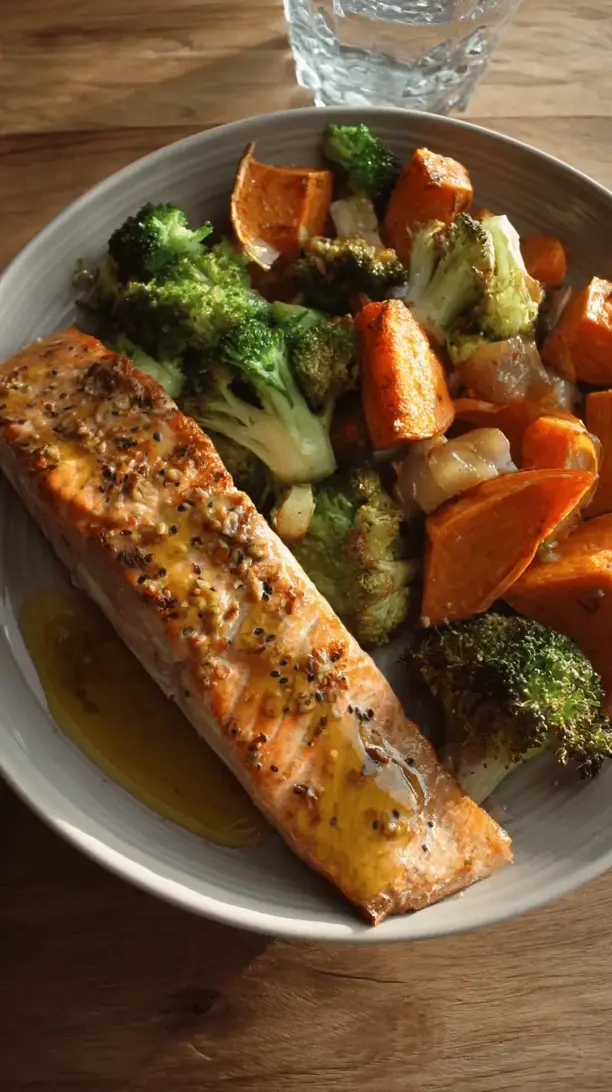
Honey Mustard Salmon With Roasted Veggies
Whip up this easy honey mustard salmon with roasted veggies! A one-pan, 30-minute meal that's healthy, delicious, and perfect for busy weeknights. Minimal cleanup, maximum flavor.
Ingredients
Ingredients
-
2 salmon fillets (about 150-180g each, skin on or off)
-
2 tbsp olive oil (divided)
-
1 tbsp wholegrain mustard
-
1 tbsp Dijon mustard
-
2 tbsp runny honey
-
1 clove garlic (minced)
-
1 tbsp fresh lemon juice
-
½ tsp smoked paprika (optional, for a hint of warmth)
-
1 medium sweet potato (cut into 2cm cubes)
-
1 head broccoli (cut into florets)
-
1 red onion (cut into wedges)
-
Salt and black pepper (to taste)
-
Fresh dill or parsley (for garnish (optional))
Instructions
-
Prep the Oven and Tray. Preheat your oven to 200°C (400°F). This is a hot oven, and that's what we want—it's essential for getting those beautifully caramelised edges on the veggies and a nicely seared top on the salmon. While it's heating up, grab your large baking tray. You can line it with baking paper for easier cleanup if you like, but it's not strictly necessary.01
-
Season and Toss the Veggies. Place your chopped sweet potato, broccoli florets, and red onion wedges onto the tray. Drizzle with about one tablespoon of the olive oil and season generously with salt and black pepper. Now, get your hands in there and toss everything together until the vegetables are evenly coated. Spread them out into a single layer—this is important! If they're piled on top of each other, they'll steam instead of roast, and we're after that delicious roasted flavour and texture.02
-
Start Roasting the Veggies. Pop the tray of vegetables into the preheated oven and let them roast for about 10 minutes. This head start is crucial because the root vegetables take longer to become tender than the salmon does to cook. You'll notice the edges of the onions might just be starting to soften and brown. This par-cooking ensures everything finishes at the same time.03
-
Whisk Together the Glaze. While the veggies are having their initial roast, make the honey mustard glaze. In a small bowl, combine the remaining tablespoon of olive oil, the wholegrain mustard, Dijon mustard, honey, minced garlic, lemon juice, and smoked paprika (if using). Whisk it until it's smooth and well combined. Give it a little taste—you should get a perfect balance of sweet from the honey and sharp from the mustards. Adjust to your preference.04
-
Add the Salmon and Glaze. After the 10 minutes are up, carefully pull the tray out of the oven. Push the vegetables to the sides to create space in the centre for the salmon fillets. Place the salmon skin-side down (if it has skin) on the hot tray. Spoon the honey mustard glaze generously over the top of each fillet, using the back of the spoon or a pastry brush to coat it evenly. The heat from the tray will start cooking the salmon from the bottom immediately.05
-
The Final Roast. Return the tray to the oven and roast for another 12-15 minutes. The exact time will depend on the thickness of your salmon fillets. You're looking for the glaze to be bubbling and caramelised, and the salmon should flake easily when pressed gently with a fork. The vegetables should be tender with slightly crispy, browned edges.06
-
Rest and Serve. Once cooked, remove the tray from the oven. Let the salmon rest for a minute or two—this allows the juices to redistribute throughout the fish. Garnish with some freshly chopped dill or parsley for a pop of colour and freshness. Serve immediately right from the tray for a rustic feel, or plate it up neatly.07