
Why You’ll Love This Honey Garlic Salmon with Spinach
- It’s a complete, healthy meal in one pan. You get your protein, your greens, and your incredible sauce all cooking together, which means maximum flavor and minimal cleanup. No juggling multiple pots and pans here.
- The flavor balance is absolutely perfect. The honey brings a gentle sweetness that caramelizes, the garlic provides a robust punch, and the soy sauce adds that essential salty, umami depth. It’s a trio that just works, every single time.
- It’s incredibly quick and versatile. From start to finish, you’re looking at about 25 minutes. It’s a weeknight hero, but it’s also impressive enough to serve to guests. You can also easily swap the spinach for kale or asparagus depending on what you have.
- It teaches you a great cooking technique. Learning how to make a simple pan sauce/glaze and bake salmon to flaky perfection is a skill you’ll use over and over again. This recipe builds kitchen confidence.
Ingredients & Tools
- 4 (6-ounce / 170 g) skin-on or skinless salmon fillets, about 1-inch thick
- 1 tablespoon olive oil
- Salt and black pepper to taste
- 5 ounces (about 5 large cups) fresh baby spinach
- 4 cloves garlic, minced
- 1/3 cup honey
- 1/4 cup soy sauce (or tamari for gluten-free)
- 1 tablespoon rice vinegar or fresh lemon juice
- 1 teaspoon grated fresh ginger
- 1/2 teaspoon red pepper flakes (optional, for a little heat)
- 1 tablespoon chopped fresh parsley or green onions, for garnish
Tools: A large oven-safe skillet (like cast iron or stainless steel), a small bowl, a microplane or grater for the ginger, and aluminum foil.
A few notes on the ingredients—using fresh garlic and ginger really makes a difference here compared to the powdered versions; their bright, aromatic qualities shine through. And don’t skip the acid (the vinegar or lemon juice)! It’s the secret weapon that balances the sweetness of the honey and keeps the dish from feeling too heavy.
Serves: 4 | Prep Time: 10 minutes | Cook Time: 15 minutes | Total Time: 25 minutes
Before You Start: Tips & Ingredient Notes
- Bring your salmon to room temperature. If you have a few extra minutes, take the salmon out of the fridge about 15 minutes before cooking. This helps it cook more evenly, preventing a cold center and an overcooked exterior.
- Pat the salmon fillets completely dry. Use a paper towel to blot the salmon dry. This is crucial for getting a nice sear if you start it on the stovetop and helps the glaze adhere better.
- Don’t be shy with the spinach. It looks like a mountain of greens at first, but I promise it wilts down to a perfectly manageable amount. It’s the bed that soaks up all the glorious sauce.
- Taste your honey. Different honeys have different levels of sweetness. If yours is very strong, you might want to reduce the amount by a tablespoon. The goal is a sweet-savory balance, not an overly sweet one.
- Why an oven-safe skillet? Using one pan from stovetop to oven is the key to this recipe’s simplicity and flavor development. It creates fond (those browned bits) that deglaze into the sauce.
How to Make Honey Garlic Salmon with Spinach
Step 1: Prep and Preheat. Start by preheating your oven to 400°F (200°C). While it heats up, pat your salmon fillets dry with paper towels and season both sides generously with salt and black pepper. This is your foundation for flavor. Mince the garlic, grate the ginger, and measure out your other sauce ingredients so everything is ready to go. The trick is to have your mise en place—it makes the cooking process so smooth.
Step 2: Make the Honey Garlic Glaze. In a small bowl, whisk together the honey, soy sauce, minced garlic, grated ginger, rice vinegar, and red pepper flakes (if using). Whisk it until the honey is fully dissolved and the mixture is smooth. You’ll notice the aroma immediately—it’s savory, sweet, and a little spicy. Set this glorious sauce aside for a moment.
Step 3: Wilt the Spinach. Place your large oven-safe skillet over medium-high heat and add the tablespoon of olive oil. Once the oil is shimmering, add the entire mountain of fresh spinach. It might not all fit at once, but it will wilt quickly. Use tongs to toss it constantly for about 1-2 minutes, until it’s just wilted and bright green. Season lightly with a pinch of salt. Remove the skillet from the heat and spread the spinach into an even layer on the bottom.
Step 4: Sear and Sauce the Salmon. Now, nestle the seasoned salmon fillets right on top of the bed of wilted spinach. If your skillet is hot from the spinach, you can place it back over medium heat. Pour about two-thirds of the honey garlic sauce evenly over the salmon fillets, reserving the rest for later. Let the salmon cook for just 2-3 minutes on the stovetop—this isn’t to cook it through, but to start the caramelization process and get the sauce bubbling.
Step 5: Bake to Perfection. Carefully transfer the entire skillet to your preheated oven. Bake for 10-12 minutes, or until the salmon is cooked to your liking. The FDA recommends 145°F (63°C), but I find it’s perfectly flaky and moist around 135-140°F (57-60°C). The sauce should be bubbling around the edges and glazing the salmon beautifully. A little goes a long way here—you don’t want to overcook it.
Step 6: The Final Glaze and Serve. Remove the skillet from the oven—remember, the handle will be extremely hot! Drizzle the remaining reserved sauce over the top of the salmon. This final hit of fresh sauce brightens everything up. Garnish with chopped parsley or green onions for a pop of color and freshness. Serve immediately right from the skillet, making sure to spoon plenty of the saucy spinach underneath each fillet.
Serving Suggestions
Complementary Dishes
- Fluffy jasmine or basmati rice — The ultimate sauce-absorber. The light, fragrant rice is the perfect neutral base for the bold flavors of the salmon and spinach.
- Quinoa or couscous — For a heartier, protein-packed grain option. Quinoa’s slight nuttiness complements the dish wonderfully.
- Roasted asparagus or broccoli — If you want even more greens, a simple side of roasted vegetables adds a nice textural contrast.
Drinks
- A crisp, unoaked Chardonnay or Sauvignon Blanc — The acidity in these white wines cuts through the richness of the salmon and balances the sweetness of the glaze.
- A light lager or pale ale — The carbonation and mild bitterness are a fantastic pairing with the savory-sweet elements of the meal.
- Sparkling water with a squeeze of lemon — A non-alcoholic option that cleanses the palate between each delicious bite.
Something Sweet
- A simple lemon sorbet — The bright, clean citrus flavor is a refreshing and light way to end the meal without feeling too heavy.
- Fresh berries with a dollop of whipped cream — Simple, elegant, and the natural sweetness of the berries is a perfect follow-up.
- Ginger cookies — A fun nod to the ginger in the main course, offering a warm, spiced finish.
Top Mistakes to Avoid
- Mistake: Using a skillet that’s not oven-safe. This is a surefire way to end up with a damaged pan handle or, worse, a kitchen accident. Always double-check that your skillet can withstand 400°F heat.
- Mistake: Overcooking the salmon. Salmon continues to cook for a minute or two after it comes out of the oven (this is called carryover cooking). It’s better to pull it out when it’s slightly underdone in the very center. I’ve messed this up before too, and dry salmon is a real disappointment.
- Mistake: Adding all the sauce at the beginning. Reserving some sauce for drizzling at the end is a pro-move. It adds a layer of fresh, uncooked garlic and ginger flavor that really elevates the final dish.
- Mistake: Skipping the acid (vinegar/lemon juice). Without it, the glaze can taste one-dimensionally sweet. The acid is essential for creating a complex, well-rounded flavor profile.
Expert Tips
- Tip: For extra crispy skin. If using skin-on salmon, press the fillets skin-side down in the hot skillet for a full 4-5 minutes before adding the sauce and transferring to the oven. This will render the fat and give you irresistibly crispy skin.
- Tip: Make it a marinade. If you have more time, you can marinate the salmon in the sauce for up to 30 minutes in the fridge before cooking. Just remember to reserve some fresh, unmarinated sauce for the final drizzle.
- Tip: Customize the heat. Love spice? Add a full teaspoon of red pepper flakes or even a tablespoon of sriracha to the sauce. Want it mild? Just leave it out entirely.
- Tip: Use the sauce for other proteins. This honey garlic glaze is fantastic on chicken thighs, shrimp, or even tofu. It’s a versatile sauce you’ll want to keep in your back pocket.
FAQs
Can I use frozen salmon?
Absolutely! The key is to thaw it properly. The best way is to move it from the freezer to the fridge the night before. If you’re short on time, place the sealed fillets in a bowl of cold water for about 30 minutes. Just make sure you pat it extremely dry before seasoning and cooking, as frozen fish releases more water.
My sauce is too thin. How can I thicken it?
If you prefer a thicker, more syrupy glaze, you have a couple of options. You can simmer the sauce in a small saucepan for 3-5 minutes before using it to reduce it. Alternatively, after baking, you can transfer the salmon and spinach to a plate, pour the skillet juices into a saucepan, and simmer until thickened, then pour it back over the dish.
Can I make this recipe with another type of fish?
You sure can! Firm white fish like cod, halibut, or sea bass would work beautifully. Just keep a close eye on the cooking time, as these fillets may cook a bit faster or slower than salmon depending on their thickness. The goal is the same: flaky, opaque flesh.
How should I store and reheat leftovers?
Store any leftovers in an airtight container in the refrigerator for up to 2 days. To reheat, gently warm it in a covered skillet over low heat or in the microwave at a reduced power setting. Be careful not to overheat, or the salmon will become dry.
Is there a good substitute for soy sauce?
Yes, for a gluten-free option, tamari is a perfect 1:1 substitute. Coconut aminos will also work, though they are slightly sweeter and less salty, so you might want to add a pinch of salt. If you need a soy-free option, a tablespoon of fish sauce mixed with water can work in a pinch, but the flavor will be different.
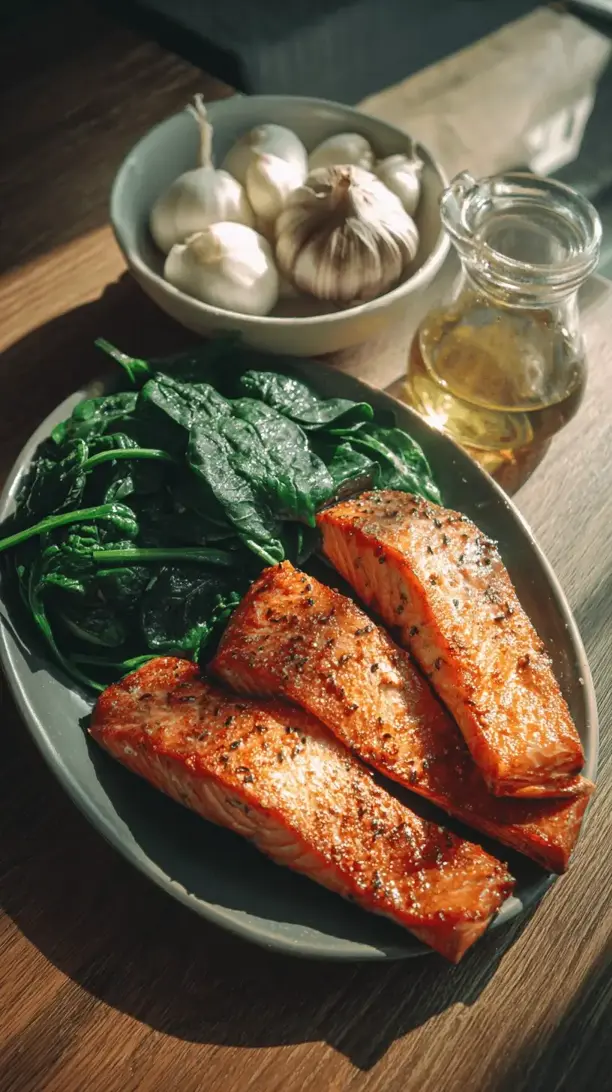
Honey Garlic Salmon With Spinach
Whip up this easy honey garlic salmon with spinach in under 30 minutes! A perfect sweet & savory weeknight meal that's healthy, delicious, and cooks in one pan.
Ingredients
Ingredients
-
4 salmon fillets (6-ounce / 170 g, skin-on or skinless, about 1-inch thick)
-
1 tablespoon olive oil
-
salt and black pepper (to taste)
-
5 ounces fresh baby spinach (about 5 large cups)
-
4 cloves garlic (minced)
-
1/3 cup honey
-
1/4 cup soy sauce (or tamari for gluten-free)
-
1 tablespoon rice vinegar or fresh lemon juice
-
1 teaspoon fresh ginger (grated)
-
1/2 teaspoon red pepper flakes (optional, for a little heat)
-
1 tablespoon fresh parsley or green onions (chopped, for garnish)
Instructions
-
Prep and Preheat. Start by preheating your oven to 400°F (200°C). While it heats up, pat your salmon fillets dry with paper towels and season both sides generously with salt and black pepper. This is your foundation for flavor. Mince the garlic, grate the ginger, and measure out your other sauce ingredients so everything is ready to go. The trick is to have your mise en place—it makes the cooking process so smooth.01
-
Make the Honey Garlic Glaze. In a small bowl, whisk together the honey, soy sauce, minced garlic, grated ginger, rice vinegar, and red pepper flakes (if using). Whisk it until the honey is fully dissolved and the mixture is smooth. You'll notice the aroma immediately—it's savory, sweet, and a little spicy. Set this glorious sauce aside for a moment.02
-
Wilt the Spinach. Place your large oven-safe skillet over medium-high heat and add the tablespoon of olive oil. Once the oil is shimmering, add the entire mountain of fresh spinach. It might not all fit at once, but it will wilt quickly. Use tongs to toss it constantly for about 1-2 minutes, until it's just wilted and bright green. Season lightly with a pinch of salt. Remove the skillet from the heat and spread the spinach into an even layer on the bottom.03
-
Sear and Sauce the Salmon. Now, nestle the seasoned salmon fillets right on top of the bed of wilted spinach. If your skillet is hot from the spinach, you can place it back over medium heat. Pour about two-thirds of the honey garlic sauce evenly over the salmon fillets, reserving the rest for later. Let the salmon cook for just 2-3 minutes on the stovetop—this isn't to cook it through, but to start the caramelization process and get the sauce bubbling.04
-
Bake to Perfection. Carefully transfer the entire skillet to your preheated oven. Bake for 10-12 minutes, or until the salmon is cooked to your liking. The FDA recommends 145°F (63°C), but I find it's perfectly flaky and moist around 135-140°F (57-60°C). The sauce should be bubbling around the edges and glazing the salmon beautifully. A little goes a long way here—you don't want to overcook it.05
-
The Final Glaze and Serve. Remove the skillet from the oven—remember, the handle will be extremely hot! Drizzle the remaining reserved sauce over the top of the salmon. This final hit of fresh sauce brightens everything up. Garnish with chopped parsley or green onions for a pop of color and freshness. Serve immediately right from the skillet, making sure to spoon plenty of the saucy spinach underneath each fillet.06