
Why You’ll Love This Healthy Chocolate Dipped Shortbread
- It’s deceptively simple. The dough comes together in one bowl with just a handful of ingredients, and there’s no chilling required, which means you’re never far from a warm, fresh-baked cookie.
- The texture is absolutely dreamy. We’re using fine whole wheat pastry flour, which gives you that signature shortbread crumble without being overly dense or gritty. It’s tender, sandy, and just sturdy enough to hold its shape.
- You have total control over the sweetness. With just a quarter cup of maple syrup in the entire batch, these are subtly sweet, allowing the nutty notes of the flour and the richness of the dark chocolate to really shine through.
- They feel like a special occasion. Dipping anything in chocolate instantly elevates it, and the drizzle of flaky sea salt on top? It’s a tiny detail that makes these feel like they came from a fancy bakery.
Ingredients & Tools
- 180 g whole wheat pastry flour
- 60 mL pure maple syrup, at room temperature
- 80 mL refined coconut oil, solid
- 1 tsp pure vanilla extract
- ¼ tsp fine sea salt
- 100 g high-quality dark chocolate (70% or higher), chopped
- ½ tsp coconut oil (for the chocolate)
- Flaky sea salt, for sprinkling (optional)
Tools: A medium mixing bowl, a wooden spoon or spatula, a rolling pin, a sharp knife or cookie cutter, a baking sheet lined with parchment paper, a double boiler or heatproof bowl for melting chocolate.
The quality of your ingredients really matters here. Using whole wheat pastry flour instead of regular whole wheat is key—it’s milled finer, so you get all the nutritional benefits without a heavy texture. And for the coconut oil, make sure it’s solid, almost like the consistency of softened butter. If it’s liquid, pop the jar in the fridge for a bit.
Nutrition (per serving)
- Calories: 145 kcal
- Protein: 2 g
- Fat: 8 g
- Carbohydrates: 17 g
- Fiber: 2 g
Serves: 12 | Prep Time: 15 minutes | Cook Time: 15 minutes | Total Time: 30 minutes
Before You Start: Tips & Ingredient Notes
- Why whole wheat pastry flour? This is the secret weapon for a tender, non-gritty whole grain shortbread. All-purpose flour will work, but you’ll lose that lovely nutty flavor and some of the fiber.
- Is my coconut oil the right consistency? This is crucial! If your coconut oil is melted, the dough will be greasy and spread too much. It needs to be solid but soft, so you can press a finger into it easily. If it’s rock hard, let it sit on the counter for 15 minutes.
- Don’t skip the fine sea salt in the dough. It’s not just for flavor; salt helps balance the sweetness and strengthens the gluten structure slightly, giving your shortbread a better texture.
- What if I don’t have a rolling pin? No worries! You can press the dough evenly into your baking sheet with your hands and use a knife to score it into rectangles before baking. It will have a more rustic, rugged look, which is honestly just as charming.
How to Make Healthy Chocolate Dipped Shortbread
Step 1: Preheat your oven to 325°F (160°C) and line a baking sheet with parchment paper. In your medium mixing bowl, combine the whole wheat pastry flour and the fine sea salt. Give it a quick whisk to aerate the flour and ensure the salt is evenly distributed. You’ll notice the flour has a lovely, light brown color and a soft, fine texture.
Step 2: Add the solid coconut oil, maple syrup, and vanilla extract to the dry ingredients. Now, use a wooden spoon or spatula to mix everything together. At first, it will seem dry and crumbly, but keep mixing! The friction and pressure will help the coconut oil incorporate. After a minute or two, you’ll see it start to form a cohesive, slightly crumbly dough that holds together when you press it.
Step 3: Turn the dough out onto your prepared baking sheet. Use your hands to press it into a rough rectangle, then grab your rolling pin. Gently roll the dough out to about a ¼-inch thickness. The trick is to roll evenly so the cookies bake at the same rate. If the dough sticks to the pin, a light dusting of flour on the pin will help.
Step 4: Take your sharp knife or cookie cutter and cut the dough into your desired shapes. Traditional fingers or simple rectangles work beautifully. You don’t need to separate them yet. Use a fork to prick each piece a few times—this is the classic shortbread look and it helps prevent the dough from puffing up too much in the oven.
Step 5: Carefully slide the baking sheet into the preheated oven. Bake for 12-15 minutes, or until the edges are just barely starting to turn a light golden brown. The center should still feel soft but set. They will firm up significantly as they cool, so don’t over-bake them looking for a deep color.
Step 6: Remove the baking sheet from the oven and let the shortbread cool on the sheet for exactly 5 minutes. This allows them to set. Then, while they’re still slightly warm, carefully re-cut along your scored lines and transfer the individual pieces to a wire rack to cool completely. They must be completely cool before you dip them in chocolate!
Step 7: Once the shortbread is cool, melt your chocolate. Create a double boiler by placing a heatproof bowl over a pot of simmering water (make sure the bottom of the bowl doesn’t touch the water). Add the chopped chocolate and the ½ teaspoon of coconut oil. Stir gently until the chocolate is completely smooth and glossy. The little bit of coconut oil helps thin the chocolate for a perfect, snappy coating.
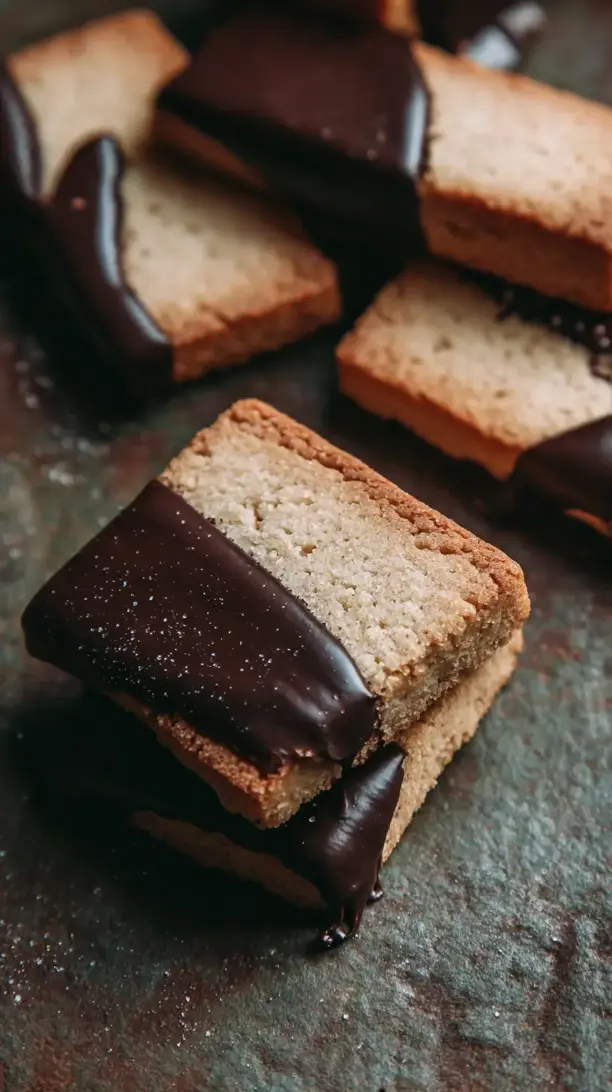
Step 8: Now for the fun part! Take one cooled shortbread finger and dip one end into the melted chocolate, swirling it to coat. Let the excess drip back into the bowl, then place it back on the parchment-lined rack. Immediately, while the chocolate is still wet, sprinkle a tiny pinch of flaky sea salt over the top. Repeat with all the cookies.
Step 9: Let the chocolate set completely. You can leave them at room temperature if it’s not too warm, or pop the whole rack into the refrigerator for about 10 minutes to speed up the process. The chocolate should be firm to the touch and make a satisfying snap when you break it.
Serving Suggestions
Complementary Dishes
- A simple fruit platter with berries and orange segments — The bright, acidic fruit cuts through the richness of the shortbread and chocolate beautifully, creating a lovely balance on the palate.
- A small bowl of mixed nuts, like almonds and pecans — The nuttiness echoes the whole wheat flavor in the cookie, and the different textures make for a more interesting nibbling experience.
- A sharp, tangy cheese like an aged cheddar or manchego — This might sound unusual, but the salty, savory cheese is a fantastic contrast to the sweet, crumbly shortbread. Try it, you might be surprised!
Drinks
- A strong cup of black coffee or espresso — The bitterness of the coffee is the perfect partner for the dark chocolate dip, making each bite taste even more decadent.
- A glass of cold oat or almond milk — For a truly cozy moment, nothing beats dunking a chocolate-dipped corner into a cool, creamy glass of plant-based milk.
- A spicy chai tea latte — The warm spices in the chai—cinnamon, cardamom, clove—complement the vanilla and whole grain notes in the shortbread incredibly well.
Something Sweet
- A small scoop of vanilla bean coconut milk ice cream — Sandwich a slightly warm cookie around a scoop for an instant, elevated ice cream sandwich that feels incredibly indulgent.
- A few medjool dates stuffed with almond butter — This keeps the whole snack naturally sweet and rich, and the chewy date against the crumbly cookie is a wonderful textural play.
- A bowl of fresh raspberries with a dollop of Greek yogurt — The tartness of the berries and yogurt provides a refreshing, light finish after the buttery shortbread.
Top Mistakes to Avoid
- Using melted coconut oil. This is the number one reason for greasy, spread-out shortbread. Your dough will be a mess and won’t hold its shape. Always ensure your oil is solid and scoopable.
- Over-mixing the dough. Once the dough comes together, stop mixing! Overworking it can develop the gluten in the whole wheat flour, leading to a tougher, less tender cookie. You want to mix just until no dry spots remain.
- Dipping the shortbread while it’s still warm. The chocolate will melt into the cookie, creating a messy, blotchy coating instead of a clean, crisp snap. Patience is key here—let them cool completely on a rack.
- Baking until deeply golden. Shortbread is meant to be pale. If you wait for a dark golden color, you’ve over-baked them, and they’ll taste bitter and be too hard once cooled. Pull them out when the edges are just lightly tanned.
Expert Tips
- Tip: For a super fine, professional-looking crumb, sift your whole wheat pastry flour. It aerates the flour and removes any larger bran particles, resulting in an even more delicate and melt-in-your-mouth texture.
- Tip: If your dough is too crumbly and won’t come together, add a teaspoon of cold water. Sometimes the absorbency of flour can vary, and this tiny bit of liquid is all it needs to bind.
- Tip: Use a bench scraper to lift and transfer your cut shortbread fingers before baking. It’s much gentler than a spatula and helps maintain the perfect rectangular shape without breaking the delicate dough.
- Tip: To create a beautiful marbled effect on your chocolate, don’t stir the melting chocolate constantly. Let it sit for a minute, then give it one or two slow folds. This prevents it from seizing and gives you a gorgeous, glossy finish.
FAQs
Can I use a different type of flour, like almond flour or oat flour?
You can, but the results will be quite different. Almond flour will make a much richer, denser, and more fragile cookie that spreads more. Oat flour will give you a softer, cakier texture that isn’t classic shortbread. For the best results, I highly recommend sticking with whole wheat pastry flour. If you must substitute, a 1:1 gluten-free all-purpose blend would be your next best bet for structure.
My dough is too sticky to roll out. What happened?
This usually means your coconut oil was too soft or your kitchen is very warm. Don’t panic! Just flour your hands and the rolling pin lightly, and work quickly. If it’s really unmanageable, you can chill the entire dough ball on the baking sheet for 10-15 minutes before rolling. This will firm up the fat and make it much easier to handle.
How should I store these, and how long do they keep?
Store them in an airtight container at room temperature for up to 5 days. Place a piece of parchment paper between layers to prevent the chocolate from sticking to other cookies. Honestly, they’re best within the first 3 days when the texture is at its peak. You can also freeze them for up to a month—just thaw at room temperature.
Can I make these without any sweetener at all?
The maple syrup adds both sweetness and moisture, so simply omitting it will give you a very dry, cracker-like result. If you want to reduce sugar further, you could try cutting it down to 2 tablespoons, but the texture will be denser. The chocolate dip will provide most of the sweetness, so a less-sweet base can actually be quite nice!
Why did my chocolate turn dull or develop white streaks after it set?
That’s called “bloom,” and it’s completely harmless! It happens when the chocolate is tempered incorrectly or experiences a temperature change. It might not look as pretty, but it still tastes exactly the same. To avoid it, make sure not to get any steam or water in your melting chocolate, and let the cookies set at a consistent, cool room temperature.
Healthy Chocolate Dipped Shortbread
Make this delicious Healthy Chocolate Dipped Shortbread with whole wheat flour and maple syrup. A guilt-free treat ready in 30 minutes! Get the easy recipe now.
Ingredients
For the Shortbread Dough
-
180 g whole wheat pastry flour
-
60 mL pure maple syrup (at room temperature)
-
80 mL refined coconut oil (solid)
-
1 tsp pure vanilla extract
-
¼ tsp fine sea salt
For the Chocolate Dip
-
100 g high-quality dark chocolate (70% or higher, chopped)
-
½ tsp coconut oil (for the chocolate)
-
Flaky sea salt (for sprinkling (optional))
Instructions
-
Preheat your oven to 325°F (160°C) and line a baking sheet with parchment paper. In your medium mixing bowl, combine the whole wheat pastry flour and the fine sea salt. Give it a quick whisk to aerate the flour and ensure the salt is evenly distributed.01
-
Add the solid coconut oil, maple syrup, and vanilla extract to the dry ingredients. Now, use a wooden spoon or spatula to mix everything together. At first, it will seem dry and crumbly, but keep mixing! The friction and pressure will help the coconut oil incorporate. After a minute or two, you'll see it start to form a cohesive, slightly crumbly dough that holds together when you press it.02
-
Turn the dough out onto your prepared baking sheet. Use your hands to press it into a rough rectangle, then grab your rolling pin. Gently roll the dough out to about a ¼-inch thickness. The trick is to roll evenly so the cookies bake at the same rate.03
-
Take your sharp knife or cookie cutter and cut the dough into your desired shapes. Traditional fingers or simple rectangles work beautifully. You don't need to separate them yet. Use a fork to prick each piece a few times—this is the classic shortbread look and it helps prevent the dough from puffing up too much in the oven.04
-
Carefully slide the baking sheet into the preheated oven. Bake for 12-15 minutes, or until the edges are just barely starting to turn a light golden brown. The center should still feel soft but set. They will firm up significantly as they cool, so don't over-bake them looking for a deep color.05
-
Remove the baking sheet from the oven and let the shortbread cool on the sheet for exactly 5 minutes. This allows them to set. Then, while they're still slightly warm, carefully re-cut along your scored lines and transfer the individual pieces to a wire rack to cool completely. They must be completely cool before you dip them in chocolate!06
-
Once the shortbread is cool, melt your chocolate. Create a double boiler by placing a heatproof bowl over a pot of simmering water (make sure the bottom of the bowl doesn't touch the water). Add the chopped chocolate and the ½ teaspoon of coconut oil. Stir gently until the chocolate is completely smooth and glossy. The little bit of coconut oil helps thin the chocolate for a perfect, snappy coating.07
-
Now for the fun part! Take one cooled shortbread finger and dip one end into the melted chocolate, swirling it to coat. Let the excess drip back into the bowl, then place it back on the parchment-lined rack. Immediately, while the chocolate is still wet, sprinkle a tiny pinch of flaky sea salt over the top. Repeat with all the cookies.08
-
Let the chocolate set completely. You can leave them at room temperature if it's not too warm, or pop the whole rack into the refrigerator for about 10 minutes to speed up the process. The chocolate should be firm to the touch and make a satisfying snap when you break it.09