
Why You’ll Love This Gumbo with Shrimp
- Flavor powerhouse: Dark roux gives nutty, chocolate-like depth.
- Incredibly versatile: Easily add chicken, sausage, or crab.
- Fantastic leftovers: Flavors meld and deepen overnight.
- Culinary experience: Making a proper roux is deeply satisfying.
Ingredients & Tools
- 115 g all-purpose flour
- 115 g vegetable oil or bacon drippings
- 1 large onion, diced
- 1 green bell pepper, diced
- 2 celery stalks, diced
- 4 cloves garlic, minced
- 1 litre chicken or seafood stock
- 400 g canned diced tomatoes
- 2 bay leaves
- 1 tsp dried thyme
- 1 tsp smoked paprika
- ½ tsp cayenne pepper (or to taste)
- 225 g andouille sausage, sliced
- 450 g raw large shrimp, peeled and deveined
- 4 spring onions, sliced
- 2 tbsp fresh parsley, chopped
- To taste salt and black pepper
- For serving cooked white rice
- For serving filé powder (optional)
Tools: A large, heavy-bottomed Dutch oven or stockpot, a sturdy wooden spoon or whisk, and a sharp chef’s knife.
Notes: Don’t skimp on the roux ingredients—the equal parts fat and flour are non-negotiable. While andouille sausage is traditional, a good smoked sausage will work in a pinch.
Nutrition (per serving)
| Calories: | 420 kcal |
| Protein: | 28 g |
| Fat: | 22 g |
| Carbs: | 25 g |
| Fiber: | 3 g |
Serves: 6 | Prep Time: 25 minutes | Cook Time: 1 hour 15 minutes | Total Time: 1 hour 40 minutes
Before You Start: Tips & Ingredient Notes
- Your roux patience will be rewarded. This is the most critical step. Don’t rush it. A dark roux takes time and constant attention, but it’s what gives gumbo its incredible, deep flavor and color. It’s a labor of love.
- Why the “holy trinity”? The combination of onion, bell pepper, and celery is the flavor foundation of so much Cajun and Creole cooking. Dicing them to a similar size ensures they cook evenly and melt beautifully into the stew.
- To filé or not to filé? Filé powder, made from dried sassafras leaves, is a traditional gumbo thickener and flavoring agent. It’s entirely optional, but it adds a wonderful, earthy note. Just remember—never add it while the gumbo is boiling, only after it’s off the heat.
- Don’t overcook the shrimp! They only need a few minutes at the very end. If you add them too early, they’ll become tough and rubbery. They should be plump, pink, and just cooked through.
How to Make Gumbo with Shrimp
Step 1: Make the Roux. In your heavy-bottomed Dutch oven, combine the flour and oil over medium heat. Stir continuously with a wooden spoon. You’ll notice it will start as a pale blonde, then turn a peanut butter color, and finally deepen to a milk chocolate brown. This whole process can take 20-30 minutes—do not walk away! The trick is constant motion to prevent burning. When it reaches that dark, nutty-smelling stage, you’re ready.
Step 2: Sauté the Vegetables. Immediately add your diced onion, bell pepper, and celery (the holy trinity!) to the hot roux. Be careful, as it will sizzle and steam. Stir everything together—the roux will seize up a bit, but that’s normal. Cook for about 8-10 minutes, until the vegetables have softened and released their moisture. Now add the minced garlic and cook for one more minute until fragrant.
Step 3: Build the Broth. Slowly pour in the chicken stock while stirring constantly. The mixture will bubble vigorously at first. Add the diced tomatoes, bay leaves, thyme, smoked paprika, and cayenne. Bring everything to a boil, then immediately reduce the heat to a gentle simmer. Let it bubble away, uncovered, for about 30 minutes. You’ll see the gumbo start to thicken and the flavors begin to meld beautifully.
Step 4: Add the Sausage and Simmer. Stir in the sliced andouille sausage. Let the gumbo continue to simmer for another 20 minutes. This allows the smoky, spicy flavor from the sausage to infuse the entire pot. Taste it now and season generously with salt and black pepper. The roux and stock can vary in saltiness, so this is your moment to get it just right.
Step 5: Cook the Shrimp and Finish. Turn off the heat. Add the raw shrimp to the hot gumbo—the residual heat is enough to cook them through. Stir and let them sit for 3-5 minutes, until they’re pink, opaque, and curled. Finally, stir in the sliced spring onions and fresh parsley. If you’re using filé powder, sprinkle a little into each serving bowl, not the main pot, to avoid it becoming stringy.
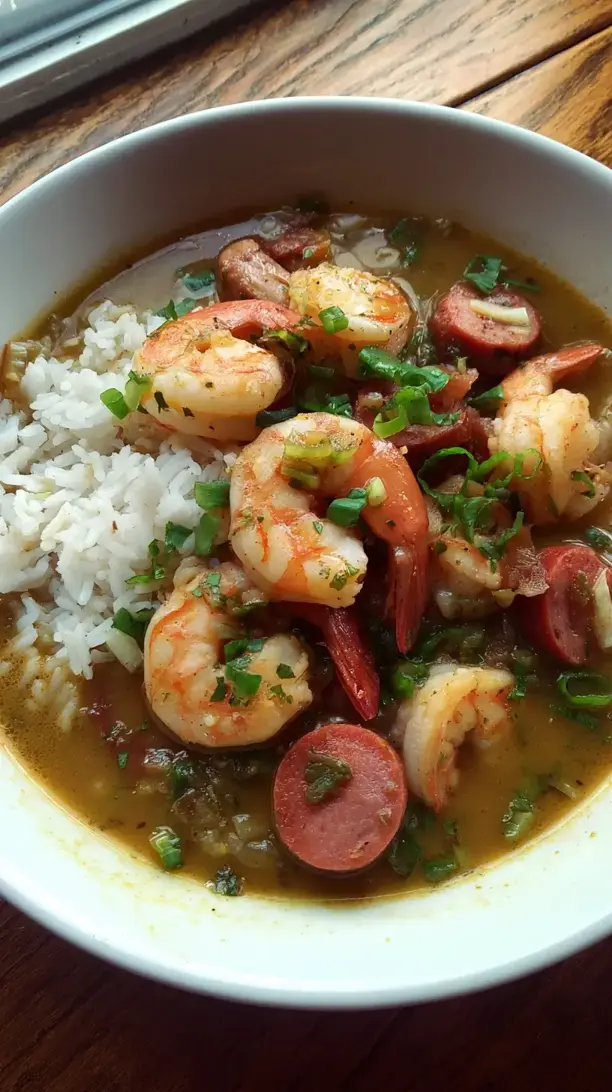
Step 6: Serve. Ladle the hot gumbo over a scoop of fluffy white rice in deep bowls. Let everyone admire the dark, rich broth, the plump shrimp, and the vibrant herbs. A little dash of hot sauce on the side is never a bad idea.
Storage & Freshness Guide
- Fridge: Cool completely, store in airtight container up to 3 days.
- Freezer: Freeze gumbo base without shrimp up to 3 months.
- Reviving: Reheat gently on stovetop, add fresh shrimp when warming.
Serving Suggestions
Complementary Dishes
- Buttermilk Cornbread — The slight sweetness and crumbly texture are perfect for sopping up every last drop of that incredible gumbo broth.
- Simple Collard Greens — Their earthy, slightly bitter flavor provides a wonderful counterpoint to the rich, spicy notes of the gumbo.
- Creole Potato Salad — A classic Louisiana pairing; the cool, creamy potatoes served right alongside the hot gumbo is a textural dream.
Drinks
- A Crisp Pilsner or Lager — The clean, effervescent bubbles cut through the richness and help tame the spice, making each bite feel new again.
- Sweet Iced Tea — The ultimate Southern companion; its sweetness is a refreshing palate cleanser between spoonfuls of the savory stew.
Something Sweet
- Bananas Foster Bread Pudding — Bringing the New Orleans theme full circle with a warm, boozy, and decadent dessert that feels like a celebration.
- Pecan Pralines — A little piece of crunchy, buttery, sweet candy is the perfect way to end a hearty gumbo feast.
Top Mistakes to Avoid
- Mistake: Burning the roux. This is the number one gumbo pitfall. If you see black specks or smell a burnt aroma, you have to start over. I’ve messed this up before too—it’s heartbreaking, but a burnt roux will make the entire pot bitter.
- Mistake: Overcrowding the pot with shrimp. Adding the shrimp while the gumbo is still actively boiling will cause them to overcook in seconds. The residual heat is more than enough to cook them through to a perfect, tender texture.
- Mistake: Skipping the simmer. Don’t try to rush the cooking process after you’ve added the broth. The simmering time is crucial for the flavors to develop depth and for the gumbo to achieve its proper, velvety consistency.
- Mistake: Adding filé powder to the boiling pot. This will make the gumbo unpleasantly stringy and can make it overly thick. Always add it individually to the bowls at the end.
Expert Tips
- Tip: Make a big batch of roux ahead of time. You can make a dark roux and store it in a jar in the fridge for weeks. It’s a huge time-saver for future gumbo cravings and takes the pressure off that long stirring session.
- Tip: Use frozen shrimp for ease. Buy raw, frozen shrimp and thaw them in a bowl of cold water before using. They’re often more affordable and just as high quality as “fresh” (which are usually previously frozen anyway).
- Tip: Brown the sausage first for extra flavor. While you can add it directly, taking a minute to sear the andouille slices in the pot before you make the roux adds another layer of smoky, caramelized flavor to the dish.
- Tip: Let it rest. If you can possibly wait, let the finished gumbo sit off the heat for 15-20 minutes before serving. This allows the fat to rise to the top a bit and the flavors to settle and harmonize even more.
FAQs
Can I make this gumbo ahead of time?
Absolutely, and it’s highly recommended! Gumbo is one of those dishes that tastes better the next day. Let it cool completely, then store it in an airtight container in the refrigerator for up to 3 days. Reheat it gently on the stovetop, but wait to add the raw shrimp until you’re reheating, so they don’t get rubbery. You may need to add a splash of stock or water when reheating as it will thicken upon standing.
What can I use instead of andouille sausage?
If you can’t find andouille, any other smoked sausage like kielbasa will work well. It won’t have the same distinct Cajun spice profile, but it will still provide that essential smoky, meaty element. For a different twist, you could even use diced smoked chicken or turkey.
Is gumbo supposed to be thick or soupy?
It’s somewhere in between! Gumbo is a stew, so it should have body but still be liquid enough to spoon over rice. It shouldn’t be as thick as a gravy. If yours is too thick, thin it with a bit more stock. If it’s too thin, let it simmer a while longer uncovered to reduce.
Can I freeze gumbo?
You can, but with one big caveat: freeze it without the shrimp. Cooked shrimp become very tough and watery when frozen and thawed. Freeze the gumbo base (with the sausage and vegetables), and then when you’re ready to eat, thaw it, reheat it, and add fresh shrimp at the end.
What’s the difference between Cajun and Creole gumbo?
This is a classic debate! Creole gumbo, often from New Orleans, frequently includes tomatoes (like this recipe) and is more “city” style. Cajun gumbo, from rural areas, typically does not use tomatoes and has a more rustic, robust flavor. Both are delicious, and the line is often blurred in home kitchens—so don’t stress too much about it!
Gumbo With Shrimp
Learn how to make authentic Gumbo with Shrimp, featuring a dark roux and the holy trinity. This classic recipe is a flavor powerhouse. Get the step-by-step guide now!
Ingredients
For the Ingredients
-
115 g all-purpose flour
-
115 g vegetable oil or bacon drippings
-
1 large onion (diced)
-
1 green bell pepper (diced)
-
2 celery stalks (diced)
-
4 cloves garlic (minced)
-
1 litre chicken or seafood stock
-
400 g canned diced tomatoes
-
2 bay leaves
-
1 tsp dried thyme
-
1 tsp smoked paprika
-
0.5 tsp cayenne pepper (or to taste)
-
225 g andouille sausage (sliced)
-
450 g raw large shrimp (peeled and deveined)
-
4 spring onions (sliced)
-
2 tbsp fresh parsley (chopped)
-
salt and black pepper (to taste)
-
cooked white rice (for serving)
-
filé powder (optional, for serving)
Instructions
-
Make the Roux. In your heavy-bottomed Dutch oven, combine the flour and oil over medium heat. Stir continuously with a wooden spoon. You’ll notice it will start as a pale blonde, then turn a peanut butter color, and finally deepen to a milk chocolate brown. This whole process can take 20-30 minutes—do not walk away! The trick is constant motion to prevent burning. When it reaches that dark, nutty-smelling stage, you’re ready.01
-
Sauté the Vegetables. Immediately add your diced onion, bell pepper, and celery (the holy trinity!) to the hot roux. Be careful, as it will sizzle and steam. Stir everything together—the roux will seize up a bit, but that’s normal. Cook for about 8-10 minutes, until the vegetables have softened and released their moisture. Now add the minced garlic and cook for one more minute until fragrant.02
-
Build the Broth. Slowly pour in the chicken stock while stirring constantly. The mixture will bubble vigorously at first. Add the diced tomatoes, bay leaves, thyme, smoked paprika, and cayenne. Bring everything to a boil, then immediately reduce the heat to a gentle simmer. Let it bubble away, uncovered, for about 30 minutes. You’ll see the gumbo start to thicken and the flavors begin to meld beautifully.03
-
Add the Sausage and Simmer. Stir in the sliced andouille sausage. Let the gumbo continue to simmer for another 20 minutes. This allows the smoky, spicy flavor from the sausage to infuse the entire pot. Taste it now and season generously with salt and black pepper. The roux and stock can vary in saltiness, so this is your moment to get it just right.04
-
Cook the Shrimp and Finish. Turn off the heat. Add the raw shrimp to the hot gumbo—the residual heat is enough to cook them through. Stir and let them sit for 3-5 minutes, until they’re pink, opaque, and curled. Finally, stir in the sliced spring onions and fresh parsley. If you’re using filé powder, sprinkle a little into each serving bowl, not the main pot, to avoid it becoming stringy.05
-
Serve. Ladle the hot gumbo over a scoop of fluffy white rice in deep bowls. Let everyone admire the dark, rich broth, the plump shrimp, and the vibrant herbs. A little dash of hot sauce on the side is never a bad idea.06