
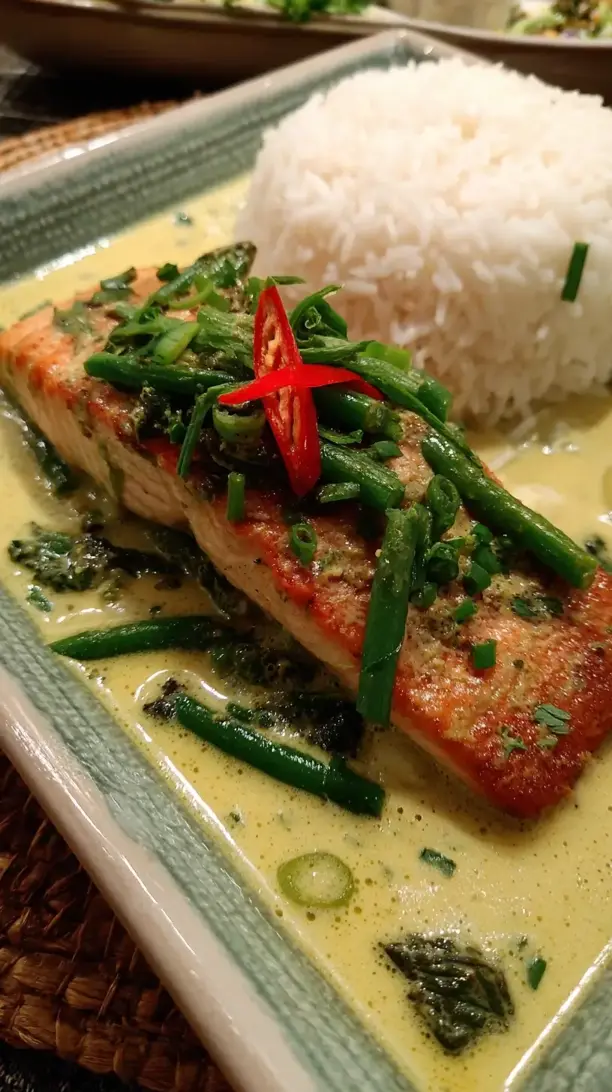
This Green Curry Salmon recipe brings together rich, flaky fish and a vibrant Thai green curry sauce. It’s a restaurant-quality meal you can make in just 30 minutes. The salmon cooks right in the creamy coconut curry, soaking up all the incredible flavors.
Why You’ll Love This Green Curry Salmon
- Flavor Bomb: Complex spicy, savory, sweet, and herbal notes in every bite.
- Quick & Simple: One-pan meal ready in about half an hour.
- Versatile: Easily swap salmon for shrimp, chicken, or tofu.
- Healthy & Wholesome: Packed with high-quality protein and healthy fats.
Ingredients & Tools
- 4 salmon fillets (about 150-180 g each), skin on or off
- 2 tbsp vegetable or coconut oil
- 1 medium shallot, finely chopped
- 3-4 tbsp Thai green curry paste
- 1 (400 ml) can full-fat coconut milk
- 1 tbsp fish sauce
- 1 tsp palm sugar or light brown sugar
- 1 red bell pepper, thinly sliced
- 100 g green beans, trimmed and halved
- Juice of 1 lime
- A large handful of fresh Thai basil or regular basil
- 1-2 fresh red chilies, sliced (optional, for extra heat)
Tools: A large skillet or sauté pan with a lid, a wooden spoon or spatula.
Notes: Use full-fat coconut milk for a luxuriously creamy texture. A good quality, fragrant green curry paste makes a big difference.
Nutrition (per serving)
| Calories: | 485 kcal |
| Protein: | 35 g |
| Fat: | 36 g |
| Carbs: | 9 g |
| Fiber: | 2 g |
Serves: 4 | Prep Time: 10 minutes | Cook Time: 20 minutes | Total Time: 30 minutes
Before You Start: Tips & Ingredient Notes
- Choosing Your Salmon. I prefer skin-on fillets for this recipe, as the skin helps the fish hold its shape during cooking. You can easily remove it after cooking if you prefer. Just make sure your fillets are of even thickness for consistent results.
- The Curry Paste is Key. This is the flavor foundation, so taste a tiny bit of your paste before you start. Some brands are much spicier or saltier than others. This will help you decide if you need to use the full 4 tablespoons or scale back a little.
- Don’t Rush the Aromatics. Taking a few extra minutes to sauté the shallot and “bloom” the curry paste in the oil is a non-negotiable step. It deepens the flavors immensely and removes any raw, harsh taste from the paste.
- Prep Everything First. This recipe comes together quickly once you start cooking. Having your vegetables chopped, your sauce ingredients measured, and your salmon patted dry and seasoned makes the process smooth and stress-free.
How to Make Green Curry Salmon
Step 1: Pat the salmon fillets completely dry with paper towels and season both sides lightly with a pinch of salt. This step is crucial for getting a nice sear and preventing the fish from steaming. Heat 1 tablespoon of oil in your large skillet over medium-high heat. Once the oil is shimmering, place the salmon fillets in the pan, presentation-side down. Sear for 2-3 minutes, until a golden-brown crust forms. You’re not cooking it through here—just getting some color and flavor. Remove the salmon to a plate and set aside.
Step 2: Reduce the heat to medium and add the remaining tablespoon of oil to the same skillet. Add the chopped shallot and sauté for 2-3 minutes until it becomes soft and translucent. Now, add the green curry paste. This is where the magic starts—cook the paste for 1-2 minutes, stirring constantly. You’ll notice the color darken slightly and the aroma become incredibly fragrant. This process of “blooming” the paste unlocks its full potential.
Step 3: Pour in about half of the coconut milk, stirring well to combine it with the curry paste and shallots. Let it bubble for a minute until it thickens slightly. This helps create a stable, emulsified base. Now, add the rest of the coconut milk, along with the fish sauce and palm sugar. Stir everything together and bring it to a gentle simmer. Taste the sauce now and adjust the seasoning if needed—you might want a touch more fish sauce for saltiness or sugar for balance.
Step 4: Add your sliced bell pepper and green beans to the simmering curry sauce. Let them cook for 4-5 minutes, just until they begin to soften but still retain a bit of crunch. You want some texture in there! Now, gently nestle the seared salmon fillets into the sauce, along with any juices that accumulated on the plate.
Step 5: Reduce the heat to low, cover the skillet with a lid, and let the salmon gently poach in the curry for 5-7 minutes. The exact time will depend on the thickness of your fillets. The salmon is done when it flakes easily with a fork and is opaque all the way through. Be careful not to overcook it, as it will continue to cook a little from residual heat.
Step 6: Turn off the heat. Stir in the fresh lime juice and most of the Thai basil leaves. The lime juice brightens everything up and cuts through the richness perfectly. To serve, spoon a generous amount of the curry sauce and vegetables into a bowl, top with a salmon fillet, and garnish with the remaining basil leaves and sliced fresh chilies if you’re using them.
Storage & Freshness Guide
- Fridge: Store in an airtight container for up to 2 days.
- Freezer: Not recommended; coconut sauce may separate upon thawing.
- Reviving: Reheat gently in a skillet over low heat with a splash of water or coconut milk.
Serving Suggestions
Complementary Dishes
- Jasmine Rice — The classic, fluffy companion that soaks up the incredible curry sauce like a dream. You really can’t go wrong here.
- Quick-Pickled Cucumbers — A simple salad of thinly sliced cucumbers with rice vinegar, sugar, and salt provides a crisp, acidic contrast that cleanses the palate between bites.
- Stir-Fried Morning Glory — A traditional Thai side of greens with garlic and chili, adding a wonderful bitter-green element that complements the rich curry.
Drinks
- A Crisp Lager — The cold, carbonated beer is fantastic at cutting through the spice and fat, making each mouthful of salmon taste fresh and new.
- Thai Iced Tea — The sweet, creamy, and slightly spiced notes of this iconic drink are a perfect partner for the curry’s heat and complexity.
- Off-Dry Riesling — A wine with a little sweetness and high acidity balances the spice and complements the herbal notes in the curry beautifully.
Something Sweet
- Mango with Sticky Rice — The ultimate Southeast Asian finale. The sweet, creamy mango and coconut-infused sticky rice are a heavenly match for the meal you’ve just enjoyed.
- Coconut Ice Cream — A simple scoop of rich coconut ice cream continues the tropical theme and cools down your taste buds after the spicy curry.
- Lychee Sorbet — Light, floral, and refreshing, this sorbet is a palate-cleansing finish that feels elegant and light.
Top Mistakes to Avoid
- Overcooking the Salmon. This is the biggest pitfall. Remember, the salmon continues to cook after you turn off the heat. You want it just opaque in the center for the most tender, melt-in-your-mouth texture.
- Not Blooming the Curry Paste. If you just dump the curry paste into the coconut milk without frying it first, the flavors will taste raw and one-dimensional. That quick sauté in oil is non-negotiable for depth.
- Using Light Coconut Milk. Light coconut milk is too watery and will make your curry sauce thin and lacking in body. The richness of full-fat coconut milk is what makes the sauce so luxurious and satisfying.
- Adding the Lime Juice Too Early. If you add the lime juice while the curry is still actively cooking or boiling, the acid will cause the coconut milk to curdle and separate. Always stir it in right at the end, off the heat.
Expert Tips
- Tip: For an extra-restaurant-quality finish, sear the salmon skin-side down in a separate, very hot pan until ultra-crispy. Serve it on top of the curry, skin-side up, so it stays crackling. The textural contrast is phenomenal.
- Tip: If your curry sauce is a bit too thin for your liking, simply remove the salmon and vegetables after cooking and let the sauce simmer uncovered for a few more minutes. It will reduce and thicken up perfectly.
- Tip: Don’t skip the fresh herbs! Thai basil has a distinct anise-like flavor that’s irreplaceable, but if you can’t find it, a combination of regular basil and a few fresh mint leaves makes a lovely substitute.
- Tip: Make it your own! This curry is a fantastic base. Feel free to add other quick-cooking vegetables like baby corn, bamboo shoots, or mushrooms in with the bell peppers.
FAQs
Can I use a different protein?
Absolutely! This curry base is incredibly versatile. For chicken, use bite-sized pieces and simmer them in the sauce for 10-12 minutes until cooked through before adding the vegetables. For shrimp, add them in the last 3-4 minutes of cooking. For firm tofu, pat it dry and pan-fry it until golden before adding it to the sauce to heat through.
My curry is too spicy! How can I fix it?
Don’t worry, it happens to the best of us. The quickest fix is to stir in a bit more coconut milk or even a splash of heavy cream to mellow out the heat. A teaspoon of sugar can also help balance the spiciness. Next time, just use less curry paste or seek out a milder brand.
How do I store and reheat leftovers?
Store any leftovers in an airtight container in the refrigerator for up to 2 days. To reheat, gently warm it in a skillet over low heat. Avoid microwaving on high power, as this can easily overcook the salmon and cause the coconut milk to separate. A little splash of water or extra coconut milk can help loosen the sauce when reheating.
Can I make this curry ahead of time?
You can definitely get a head start! You can make the curry sauce (through Step 3) a day in advance and keep it refrigerated. When you’re ready to eat, gently reheat the sauce, add your vegetables to cook, and then proceed with poaching the fresh salmon. This ensures the fish is perfectly cooked and not rubbery.
Is there a substitute for fish sauce?
If you need a vegetarian alternative, soy sauce or tamari will work in a pinch, though the flavor profile will be slightly different. For a closer umami hit, you could try a teaspoon of white miso paste thinned with a little water. The result won’t be identical, but it will still be delicious.
Green Curry Salmon
Make restaurant-quality Green Curry Salmon in just 30 minutes! This one-pan recipe features flaky salmon in a creamy coconut curry sauce. Get the easy recipe now!
Ingredients
For the Ingredients & Tools
-
4 salmon fillets (about 150-180 g each, skin on or off)
-
2 tbsp vegetable or coconut oil
-
1 medium shallot (finely chopped)
-
3-4 tbsp Thai green curry paste
-
1 can full-fat coconut milk (400 ml)
-
1 tbsp fish sauce
-
1 tsp palm sugar or light brown sugar
-
1 red bell pepper (thinly sliced)
-
100 g green beans (trimmed and halved)
-
Juice of 1 lime
-
A large handful fresh Thai basil or regular basil
-
1-2 fresh red chilies (sliced (optional, for extra heat))
Instructions
-
Pat the salmon fillets completely dry with paper towels and season both sides lightly with a pinch of salt. Heat 1 tablespoon of oil in your large skillet over medium-high heat. Once the oil is shimmering, place the salmon fillets in the pan, presentation-side down. Sear for 2-3 minutes, until a golden-brown crust forms. Remove the salmon to a plate and set aside.01
-
Reduce the heat to medium and add the remaining tablespoon of oil to the same skillet. Add the chopped shallot and sauté for 2-3 minutes until it becomes soft and translucent. Add the green curry paste and cook the paste for 1-2 minutes, stirring constantly.02
-
Pour in about half of the coconut milk, stirring well to combine it with the curry paste and shallots. Let it bubble for a minute until it thickens slightly. Add the rest of the coconut milk, along with the fish sauce and palm sugar. Stir everything together and bring it to a gentle simmer.03
-
Add your sliced bell pepper and green beans to the simmering curry sauce. Let them cook for 4-5 minutes, just until they begin to soften but still retain a bit of crunch. Gently nestle the seared salmon fillets into the sauce, along with any juices that accumulated on the plate.04
-
Reduce the heat to low, cover the skillet with a lid, and let the salmon gently poach in the curry for 5-7 minutes. The salmon is done when it flakes easily with a fork and is opaque all the way through.05
-
Turn off the heat. Stir in the fresh lime juice and most of the Thai basil leaves. To serve, spoon a generous amount of the curry sauce and vegetables into a bowl, top with a salmon fillet, and garnish with the remaining basil leaves and sliced fresh chilies if you’re using them.06