
This Gochujang Shrimp recipe delivers sweet, spicy, and savory harmony in under 20 minutes. The glossy, sticky sauce clings to plump shrimp for a vibrant, restaurant-quality meal. It’s a weeknight-friendly dish that makes Korean flavors accessible to all.
Why You’ll Love This Gochujang Shrimp
- Fast & Weeknight-Friendly: Ready in 20 minutes with minimal active cooking.
- Addictive Flavor Balance: Gochujang provides heat and umami, balanced by sweet honey and tangy vinegar.
- Versatile for Any Skill: Straightforward steps make it foolproof for beginners and experts.
- Fancy Without Fuss: Impressive glossy red finish looks like you slaved for hours.
Ingredients & Tools
- 450 g large raw shrimp, peeled and deveined
- 3 tbsp gochujang paste
- 2 tbsp honey or maple syrup
- 1 tbsp rice vinegar
- 2 tbsp soy sauce
- 3 garlic cloves, minced
- 1 tsp freshly grated ginger
- 1 tbsp sesame oil
- 2 tbsp vegetable oil
- 2 spring onions, thinly sliced
- 1 tbsp toasted sesame seeds
Tools: Large skillet or wok, mixing bowl, measuring spoons
Notes: Use quality gochujang without artificial additives for best flavor. Don’t skip the sesame oil—it adds a nutty aroma that ties everything together.
Nutrition (per serving)
| Calories: | 280 kcal |
| Protein: | 24 g |
| Fat: | 12 g |
| Carbs: | 18 g |
| Fiber: | 1 g |
Serves: 3 | Prep Time: 10 minutes | Cook Time: 10 minutes | Total Time: 20 minutes
Before You Start: Tips & Ingredient Notes
- What if my gochujang is super spicy? No worries—just reduce the amount slightly and add a touch more honey or a splash of water to mellow it out. You can always adjust the heat level to your preference.
- Can I use frozen shrimp? Absolutely, but make sure to thaw them completely in the refrigerator first. Pat them very dry with paper towels—this is key for getting a nice sear instead of steaming them.
- Why rice vinegar? Its mild acidity balances the richness without being too harsh. If you only have apple cider vinegar, that works too, but rice vinegar really keeps the flavors bright and clean.
- Don’t have fresh ginger? You can use ¼ teaspoon of ground ginger instead, though the fresh stuff provides a more vibrant, zesty kick that I highly recommend.
How to Make Gochujang Shrimp
Step 1: Start by prepping your shrimp. If they’re not already prepared, peel and devein them, leaving the tails on or off based on your preference. Pat them thoroughly dry with paper towels—this step is crucial for achieving a beautiful sear rather than steaming them in the pan. You’ll notice that dry shrimp develop a lovely golden color and firm texture when cooked properly.
Step 2: In a small bowl, whisk together the gochujang, honey, rice vinegar, soy sauce, minced garlic, and grated ginger. This sauce is the heart of the dish, so take a moment to taste it and adjust if needed. Want it sweeter? Add a bit more honey. Prefer more tang? Another splash of vinegar will do the trick.
Step 3: Heat a large skillet or wok over medium-high heat and add the vegetable oil. Once the oil shimmers, carefully add the shrimp in a single layer. You should hear a satisfying sizzle—that’s how you know the pan is hot enough. Cook for about 1-2 minutes per side, just until they turn pink and opaque. Be careful not to overcrowd the pan; cook in batches if necessary.
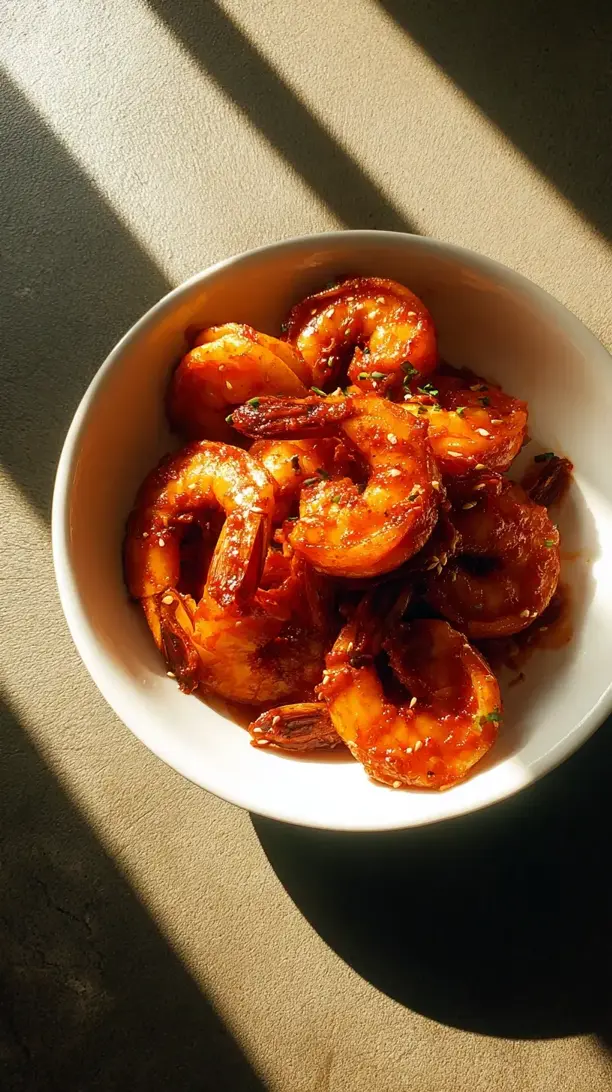
Step 4: Reduce the heat to medium-low and push the shrimp to one side of the pan. Pour the sauce into the empty space and let it bubble for 30 seconds—this helps the flavors meld and thicken slightly. Then, toss the shrimp in the sauce until each one is generously coated. The sauce should look glossy and cling to the shrimp beautifully.
Step 5: Remove the pan from the heat and drizzle with sesame oil. Give everything one final toss to incorporate that nutty aroma. The sesame oil isn’t just for flavor—it also adds a lovely sheen to the finished dish.
Step 6: Transfer the Gochujang Shrimp to a serving platter and garnish with sliced spring onions and toasted sesame seeds. The green onions add a fresh, crisp contrast to the rich, spicy sauce, while the sesame seeds provide a subtle crunch. Serve immediately while hot!
Storage & Freshness Guide
- Fridge: Store in an airtight container for up to 2 days.
- Freezer: Not recommended; shrimp become rubbery upon thawing.
- Reviving: Reheat gently with a splash of water to loosen sauce.
Serving Suggestions
Complementary Dishes
- Steamed jasmine rice — The fluffy, slightly sticky grains are perfect for soaking up every last drop of that delicious sauce.
- Quick-pickled cucumbers — Their bright, acidic crunch provides a refreshing contrast to the spicy, savory shrimp.
- Stir-fried bok choy — The mild, green flavor and tender-crisp texture make a wonderful vegetable side that doesn’t compete with the main event.
Drinks
- Iced barley tea — Its mild, toasty flavor helps cleanse the palate between bites without overpowering the dish.
- Crisp lager or pilsner — The light carbonation and subtle bitterness cut through the richness of the sauce beautifully.
- Sparkling water with lime — Sometimes simple is best—the bubbles and citrus provide a refreshing counterpoint to the spice.
Something Sweet
- Mango sorbet — The sweet, tropical fruit flavor is a fantastic way to cool down your palate after the spicy kick.
- Green tea ice cream — Its slightly bitter, earthy notes create a sophisticated ending that complements the Korean flavors.
- Yuzu cheesecake — If you want to get fancy, the citrusy yuzu and creamy cheese balance the meal’s heat perfectly.
Top Mistakes to Avoid
- Overcooking the shrimp. They turn rubbery and tough in seconds. Cook just until pink and opaque—remember, they’ll continue cooking a bit after you take them off the heat.
- Adding the sauce too early. If you pour the sauce in while the shrimp are still cooking, it can burn or become too thick before the shrimp are done. Cook the shrimp first, then add the sauce.
- Not patting the shrimp dry. Moisture is the enemy of a good sear. You’ll end up steaming the shrimp instead of getting that nice caramelized exterior.
- Using high heat for the sauce. Gochujang contains sugar that can burn easily. Keep the heat at medium-low when adding the sauce to prevent bitterness.
Expert Tips
- Marinate the shrimp briefly. If you have an extra 15 minutes, toss the raw shrimp in a tablespoon of the sauce before cooking. This adds another layer of flavor right into the shrimp themselves.
- Add a splash of mirin. For extra depth and a subtle sweetness, replace one tablespoon of honey with a tablespoon of mirin. It enhances the umami quality of the dish.
- Toast your own sesame seeds. It takes just a minute in a dry pan and makes a huge difference in aroma and flavor compared to pre-toasted seeds.
- Garnish with Korean perilla leaves. If you can find them, these aromatic leaves add a unique minty, basil-like flavor that elevates the dish to restaurant level.
FAQs
Can I make this dish ahead of time?
You can prepare the sauce up to 3 days in advance and store it in the refrigerator, but I strongly recommend cooking the shrimp fresh. Reheated shrimp tend to become rubbery. If you must, gently warm them in a skillet over low heat with a splash of water to loosen the sauce.
What can I substitute for gochujang?
While the flavor won’t be exactly the same, you can mix together 2 tablespoons of tomato paste, 1 tablespoon of sriracha, and ½ teaspoon of fish sauce for a somewhat similar spicy-savory profile. But honestly, seeking out real gochujang is worth it for that authentic fermented depth.
Is this recipe very spicy?
It has a moderate kick that most people find enjoyable rather than overwhelming. The sweetness from the honey and the richness from the shrimp balance the heat nicely. If you’re sensitive to spice, start with 2 tablespoons of gochujang and add more after tasting.
Can I use chicken instead of shrimp?
Absolutely! Use boneless, skinless chicken thighs cut into bite-sized pieces. They’ll need a longer cooking time—about 6-8 minutes until cooked through—before adding the sauce. The result is equally delicious with a different texture.
How do I store leftovers?
Store in an airtight container in the refrigerator for up to 2 days. The sauce may thicken when cold, so when reheating, add a tablespoon of water and warm gently over low heat, stirring frequently to prevent the shrimp from toughening.
Gochujang Shrimp
Make this easy Gochujang Shrimp recipe in just 20 minutes for a sweet, spicy, and savory meal. Ready to cook? Get the full recipe now!
Ingredients
For the Ingredients
-
450 g large raw shrimp (peeled and deveined)
-
3 tbsp gochujang paste
-
2 tbsp honey or maple syrup
-
1 tbsp rice vinegar
-
2 tbsp soy sauce
-
3 cloves garlic (minced)
-
1 tsp freshly grated ginger
-
1 tbsp sesame oil
-
2 tbsp vegetable oil
-
2 spring onions (thinly sliced)
-
1 tbsp toasted sesame seeds
Instructions
-
Start by prepping your shrimp. If they’re not already prepared, peel and devein them, leaving the tails on or off based on your preference. Pat them thoroughly dry with paper towels—this step is crucial for achieving a beautiful sear rather than steaming them in the pan. You’ll notice that dry shrimp develop a lovely golden color and firm texture when cooked properly.01
-
In a small bowl, whisk together the gochujang, honey, rice vinegar, soy sauce, minced garlic, and grated ginger. This sauce is the heart of the dish, so take a moment to taste it and adjust if needed. Want it sweeter? Add a bit more honey. Prefer more tang? Another splash of vinegar will do the trick.02
-
Heat a large skillet or wok over medium-high heat and add the vegetable oil. Once the oil shimmers, carefully add the shrimp in a single layer. You should hear a satisfying sizzle—that’s how you know the pan is hot enough. Cook for about 1-2 minutes per side, just until they turn pink and opaque. Be careful not to overcrowd the pan; cook in batches if necessary.03
-
Reduce the heat to medium-low and push the shrimp to one side of the pan. Pour the sauce into the empty space and let it bubble for 30 seconds—this helps the flavors meld and thicken slightly. Then, toss the shrimp in the sauce until each one is generously coated. The sauce should look glossy and cling to the shrimp beautifully.04
-
Remove the pan from the heat and drizzle with sesame oil. Give everything one final toss to incorporate that nutty aroma. The sesame oil isn’t just for flavor—it also adds a lovely sheen to the finished dish.05
-
Transfer the Gochujang Shrimp to a serving platter and garnish with sliced spring onions and toasted sesame seeds. The green onions add a fresh, crisp contrast to the rich, spicy sauce, while the sesame seeds provide a subtle crunch. Serve immediately while hot!06