

Why You’ll Love This Gingerbread Pancakes
- They’re like Christmas morning in pancake form. The warm, familiar spices of gingerbread—ginger, cinnamon, and a hint of cloves—transform a simple breakfast into a truly special treat that feels celebratory any day of the year.
- The texture is absolutely dreamy. We get a beautifully fluffy interior thanks to a careful balance of leavening agents, while the outside develops those lovely little bubbles and a delicate crispness as it hits the hot griddle.
- They fill your home with the most incredible aroma. Honestly, the scent of these pancakes cooking is half the experience. It’s warm, inviting, and will have everyone drifting into the kitchen wondering what’s happening.
- They’re incredibly versatile. While delicious with just maple syrup, these pancakes are a fantastic base for all sorts of toppings, from classic butter to a dollop of whipped cream or a handful of fresh berries for a bright contrast.
Ingredients & Tools
- 250 g (2 cups) all-purpose flour
- 2 tsp baking powder
- 1/2 tsp baking soda
- 1/2 tsp salt
- 2 tsp ground ginger
- 1 1/2 tsp ground cinnamon
- 1/4 tsp ground cloves
- 1/4 tsp ground nutmeg
- 2 large eggs
- 360 ml (1 1/2 cups) buttermilk
- 80 ml (1/3 cup) molasses (not blackstrap)
- 60 g (1/4 cup) unsalted butter, melted and slightly cooled
- 2 tbsp light brown sugar
- 1 tsp pure vanilla extract
Tools: A large mixing bowl, a medium mixing bowl, a whisk, a ladle or 1/4 cup measure, a large non-stick skillet or griddle, and a spatula.
Using real buttermilk is key here—it reacts with the baking soda for that essential lift and adds a subtle tang that balances the sweetness beautifully. And when it comes to molasses, go for the regular, robust kind; blackstrap is too bitter and will overpower the other lovely spices.
Serves: 4 (makes about 12 pancakes) | Prep Time: 10 minutes | Cook Time: 15 minutes | Total Time: 25 minutes
Before You Start: Tips & Ingredient Notes
- Don’t skip the buttermilk. Its acidity is crucial for activating the baking soda, which gives these pancakes their signature fluffiness. If you’re in a pinch, you can make a substitute by adding 1 1/2 tablespoons of white vinegar or lemon juice to regular milk and letting it sit for 5 minutes.
- Why not blackstrap molasses? I know it’s tempting if it’s what you have on hand, but blackstrap molasses has a very intense, almost bitter flavor that will dominate the pancakes. The lighter, robust molasses provides the perfect deep, caramel-like sweetness without being overwhelming.
- Get your pan properly preheated. This is the secret to a perfect pancake. Your skillet or griddle should be over medium heat for a good 3-5 minutes before you add any batter. A drop of water should skitter and evaporate instantly when it hits the surface.
- Embrace the lumpy batter. When you combine the wet and dry ingredients, mix just until they’re incorporated. A few lumps are not just okay—they’re desirable! Overmixing develops gluten, which leads to tough, chewy pancakes instead of light and tender ones.
How to Make Gingerbread Pancakes
Step 1: First, let’s get our dry ingredients together. In your large mixing bowl, whisk together the flour, baking powder, baking soda, salt, and all the spices—the ginger, cinnamon, cloves, and nutmeg. Whisking them well at this stage ensures the leavening agents and spices are evenly distributed, so you get a consistent flavor and rise in every single pancake. You’ll notice the mixture will already smell incredible.
Step 2: In the medium bowl, combine the wet ingredients. Crack in the eggs and whisk them lightly. Then, pour in the buttermilk, molasses, melted (and slightly cooled) butter, brown sugar, and vanilla extract. Whisk it all together until it’s smooth and homogenous. The molasses might be a bit stubborn to incorporate at first, but just keep whisking—it’ll blend in beautifully.
Step 3: Now for the most important part: combining the two. Create a well in the center of your dry ingredients and pour the wet mixture into it. Using your whisk, gently stir everything together. The trick is to stop stirring the moment you no longer see streaks of dry flour. The batter will be thick and yes, a little lumpy. That’s exactly what you want. Set it aside for a minute while you heat your pan.
Step 4: Place your skillet or griddle over medium heat. Let it get properly hot—this is non-negotiable for a golden-brown exterior. To test it, flick a few drops of water onto the surface; they should dance and evaporate almost immediately. Lightly grease the surface with a tiny bit of butter or a neutral oil like avocado or canola.
Step 5: Using a ladle or a 1/4 cup measure, pour the batter onto the hot griddle. You’ll see it start to bubble almost immediately around the edges. Cook for about 2-3 minutes, until the bubbles on the surface begin to pop and the edges look set. The underside should be a deep golden brown when you peek.
Step 6: Now, slide your spatula underneath and flip those pancakes with confidence! Cook for another 1-2 minutes on the second side, until it’s also golden brown and the pancake is cooked through. You can press the center gently—it should spring back. Transfer the cooked pancakes to a wire rack set over a baking sheet in a warm (200°F / 95°C) oven while you finish the rest of the batch. This keeps them all perfectly warm and prevents the bottoms from getting soggy.
Serving Suggestions
Complementary Dishes
- Crispy bacon or sausage links — The salty, savory crunch is the perfect counterpoint to the sweet, spiced pancakes. It creates a classic sweet-and-salty balance that’s just irresistible.
- Scrambled eggs with chives — For a more substantial brunch, a side of soft, fluffy scrambled eggs adds a protein-packed element and a mild flavor that doesn’t compete with the gingerbread.
- Sautéed cinnamon apples — Thinly sliced apples cooked in a little butter and cinnamon until tender amp up the cozy, autumnal vibe and add a wonderful soft texture.
Drinks
- Strong, hot coffee — The bitterness of a good dark roast coffee cuts through the sweetness of the pancakes and molasses beautifully, making for a truly satisfying breakfast combination.
- Chai latte — Double down on the spices! A warm, creamy chai latte echoes the ginger and cinnamon notes in the pancakes, creating a harmoniously spiced experience.
- Cold glass of milk — Sometimes, the classic is the best. A cold glass of milk is wonderfully refreshing and creamy alongside the warm, spiced cakes.
Something Sweet
- Maple whipped cream — Whip some cold heavy cream with a tablespoon of maple syrup until soft peaks form. A dollop on top is pure decadence.
- Warm maple syrup — You can’t go wrong with the classic. Gently warming the syrup before serving makes it soak into the pancakes even more deliciously.
- Dusting of powdered sugar — A simple snowfall of powdered sugar over the stack looks beautiful and adds a subtle, elegant sweetness.
Top Mistakes to Avoid
- Mistake: Using a pan that’s not hot enough. This is the number one reason for pale, gummy pancakes. If the surface isn’t properly preheated, the batter will just sit and steam instead of developing those lovely browned, crisp edges. Be patient and let that pan heat up!
- Mistake: Overmixing the batter. I’ve messed this up before too… it’s so tempting to keep stirring until it’s smooth. But resist! Overmixing develops the gluten in the flour, resulting in pancakes that are tough and chewy instead of light and airy. Lumps are your friend.
- Mistake: Pressing down on the pancakes with the spatula. After you flip them, just let them be. Pressing down squeezes out the precious air bubbles that we worked so hard to create, deflating them and making them dense.
- Mistake: Flipping too early. Wait for those bubbles to form on the surface and pop, and for the edges to look matte and set. If you try to flip too soon, you’ll end up with a messy, undercooked pancake that’s difficult to salvage.
Expert Tips
- Tip: Let the batter rest for 5 minutes. After you’ve mixed it, just walk away. This short rest allows the flour to fully hydrate and the gluten to relax a little, which translates to a more tender pancake. You’ll also notice the batter thickens slightly, which helps create a fluffier texture.
- Tip: Keep finished pancakes warm in the oven. Placing them in a single layer on a wire rack set inside a baking sheet in a low oven (around 200°F/95°C) is the pro move. The rack allows air to circulate, preventing the bottoms from getting soggy, and everyone gets to eat hot pancakes at the same time.
- Tip: Use an ice cream scoop for perfectly round pancakes. For uniform size and shape—which also means they’ll all cook at the same rate—a trigger-release ice cream scoop is a fantastic tool. It’s neater than a ladle and gives you great control.
- Tip: Add a flavor boost with orange zest. For a bright, citrusy note that complements the spices wonderfully, stir the zest of one small orange into the wet ingredients. It really lifts the whole dish and makes it taste even more special.
FAQs
Can I make the batter the night before?
I don’t recommend making the full batter ahead of time. The baking powder and baking soda will lose their leavening power as they sit in the liquid, resulting in flat, dense pancakes. However, you can be a prep hero! The night before, whisk all the dry ingredients together in one bowl and mix all the wet ingredients (except the melted butter) in another, storing both covered in the fridge. In the morning, melt the butter, combine everything, and you’re minutes away from fresh pancakes.
My pancakes are turning out dark very quickly. What’s happening?
This usually means your heat is too high. The molasses and brown sugar in the batter contain sugars that caramelize and can burn more easily than a standard pancake batter. The solution is simple: reduce the heat to medium-low. It might take a minute or two longer to cook, but you’ll get a perfectly cooked interior without the risk of a burnt exterior. It’s all about patience!
Can I freeze these gingerbread pancakes?
Absolutely! They freeze beautifully. Let the cooked pancakes cool completely on a wire rack. Then, arrange them in a single layer on a parchment-lined baking sheet and “flash freeze” for about an hour until solid. This prevents them from sticking together. Then, transfer the frozen pancakes to a freezer bag. They’ll keep for up to 2 months. Reheat directly from frozen in a toaster or a 350°F (175°C) oven until warm.
What can I use if I don’t have buttermilk?
No problem! The best substitute is to make your own “soured” milk. For this recipe, measure 1 1/2 cups of regular milk (whole or 2% is best) and stir in 1 1/2 tablespoons of white vinegar or lemon juice. Let it sit for 5-10 minutes until it looks slightly curdled. It will work almost as well as real buttermilk for the chemical reaction we need.
Can I make these pancakes vegan?
You can definitely give it a try! For the eggs, I’d recommend a commercial egg replacer or a flax egg (1 tbsp ground flaxseed mixed with 3 tbsp water per egg, left to thicken for 5 minutes). Use a plant-based milk mixed with 1 1/2 tbsp of vinegar for the buttermilk, and swap the butter for a neutral oil like canola or melted vegan butter. The texture might be a tad denser, but the spiced flavor will still be fantastic.
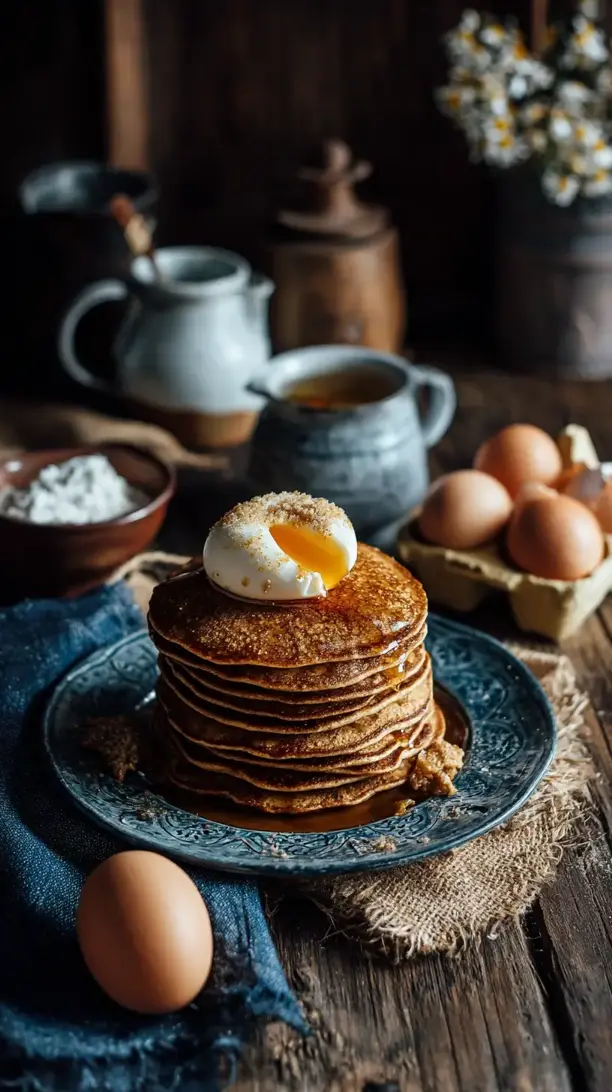
Gingerbread Pancakes
Turn breakfast into a holiday celebration with these fluffy Gingerbread Pancakes! My easy recipe delivers warm spices & molasses flavor in under 30 minutes. Perfect for a cozy brunch.
Ingredients
Ingredients
-
250 g all-purpose flour (2 cups)
-
2 tsp baking powder
-
1/2 tsp baking soda
-
1/2 tsp salt
-
2 tsp ground ginger
-
1 1/2 tsp ground cinnamon
-
1/4 tsp ground cloves
-
1/4 tsp ground nutmeg
-
2 large eggs
-
360 ml buttermilk (1 1/2 cups)
-
80 ml molasses (1/3 cup, not blackstrap)
-
60 g unsalted butter (1/4 cup, melted and slightly cooled)
-
2 tbsp light brown sugar
-
1 tsp pure vanilla extract
Instructions
-
First, let's get our dry ingredients together. In your large mixing bowl, whisk together the flour, baking powder, baking soda, salt, and all the spices—the ginger, cinnamon, cloves, and nutmeg. Whisking them well at this stage ensures the leavening agents and spices are evenly distributed, so you get a consistent flavor and rise in every single pancake. You'll notice the mixture will already smell incredible.01
-
In the medium bowl, combine the wet ingredients. Crack in the eggs and whisk them lightly. Then, pour in the buttermilk, molasses, melted (and slightly cooled) butter, brown sugar, and vanilla extract. Whisk it all together until it's smooth and homogenous. The molasses might be a bit stubborn to incorporate at first, but just keep whisking—it'll blend in beautifully.02
-
Now for the most important part: combining the two. Create a well in the center of your dry ingredients and pour the wet mixture into it. Using your whisk, gently stir everything together. The trick is to stop stirring the moment you no longer see streaks of dry flour. The batter will be thick and yes, a little lumpy. That's exactly what you want. Set it aside for a minute while you heat your pan.03
-
Place your skillet or griddle over medium heat. Let it get properly hot—this is non-negotiable for a golden-brown exterior. To test it, flick a few drops of water onto the surface; they should dance and evaporate almost immediately. Lightly grease the surface with a tiny bit of butter or a neutral oil like avocado or canola.04
-
Using a ladle or a 1/4 cup measure, pour the batter onto the hot griddle. You'll see it start to bubble almost immediately around the edges. Cook for about 2-3 minutes, until the bubbles on the surface begin to pop and the edges look set. The underside should be a deep golden brown when you peek.05
-
Now, slide your spatula underneath and flip those pancakes with confidence! Cook for another 1-2 minutes on the second side, until it's also golden brown and the pancake is cooked through. You can press the center gently—it should spring back. Transfer the cooked pancakes to a wire rack set over a baking sheet in a warm (200°F / 95°C) oven while you finish the rest of the batch. This keeps them all perfectly warm and prevents the bottoms from getting soggy.06


