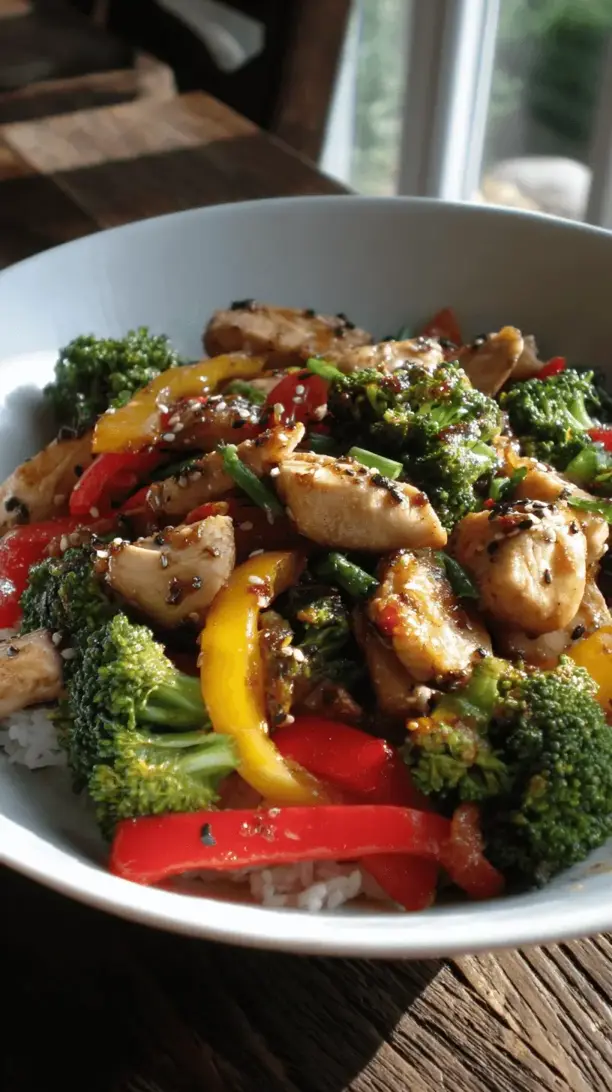

Why You’ll Love This Ginger Sesame Chicken Stir Fry
- It’s a total flavor bomb. The combination of fresh ginger, garlic, and that incredible sesame sauce creates a depth of flavor that’s seriously addictive. It’s not just one-note; each bite is a little different.
- It comes together in a flash. We’re talking about 30 minutes from start to finish, making it perfect for a busy weeknight. The prep is straightforward, and the actual cooking time is lightning-fast.
- It’s incredibly versatile. Don’t have broccoli? Use green beans. Not a fan of chicken? Tofu or shrimp work beautifully. This recipe is a fantastic template you can adapt based on what’s in your fridge.
- It feels like a healthier indulgence. You control the ingredients, so you can dial back the sugar or sodium if you like, but honestly, it’s so flavorful you won’t feel like you’re missing out on anything.
Ingredients & Tools
- 500 g boneless, skinless chicken breasts or thighs, cut into bite-sized pieces
- 1 tbsp cornstarch
- 1 tbsp soy sauce (or tamari for gluten-free)
- 2 tbsp neutral oil (like avocado or grapeseed), divided
- 1 large head of broccoli, cut into small florets
- 1 red bell pepper, thinly sliced
- 1 medium carrot, julienned or thinly sliced
- 3 cloves garlic, minced
- 1 tbsp freshly grated ginger (trust me, fresh makes all the difference!)
- 3 spring onions, sliced, whites and greens separated
- For the Sauce: 1/4 cup soy sauce, 2 tbsp rice vinegar, 1 tbsp honey or maple syrup, 1 tbsp toasted sesame oil, 1 tsp sriracha or chili garlic paste (optional, for heat), 1 tbsp sesame seeds, plus more for garnish
Tools: A large wok or a very large, heavy-bottomed skillet, a good sharp knife, a microplane or fine grater for the ginger, and a small whisk or fork for the sauce.
Getting the ingredients right is half the battle. Using fresh ginger instead of powdered is non-negotiable here—it provides a bright, spicy warmth that powder just can’t replicate. And that toasted sesame oil? It’s the secret weapon, so make sure yours is fragrant. If it doesn’t smell like much, it’s probably lost its oomph.
Serves: 4 | Prep Time: 15 minutes | Cook Time: 15 minutes | Total Time: 30 minutes
Before You Start: Tips & Ingredient Notes
- Prep everything first. Stir-frying is a fast-paced dance. Once you start cooking, there’s no time to stop and mince garlic or measure sauce. Have all your ingredients chopped, measured, and within arm’s reach—this is called ‘mise en place’ and it’s a game-changer.
- Cut your protein and veggies uniformly. Try to get your chicken pieces and vegetables around the same size. This ensures everything cooks evenly, so you don’t end up with crunchy broccoli and overcooked chicken.
- Don’t skip the cornstarch on the chicken. This little step is a pro-move. It gives the chicken a light coating that helps it sear beautifully and also helps thicken the sauce slightly later on.
- What’s the deal with toasted vs. regular sesame oil? Toasted sesame oil is a finishing oil, packed with flavor. Regular sesame oil is more neutral. We use the toasted kind for its intense nutty aroma—but it has a low smoke point, so we add it to the sauce, not the hot wok.
How to Make Ginger Sesame Chicken Stir Fry
Step 1: Marinate the Chicken. In a medium bowl, toss the bite-sized chicken pieces with 1 tablespoon of soy sauce and 1 tablespoon of cornstarch. Make sure each piece is lightly coated. This might seem like a small step, but it’s the first layer of flavor and helps create a nice texture on the chicken. Let it sit for about 10 minutes while you prep the rest of your ingredients.
Step 2: Whisk the Sauce. In a small bowl or a liquid measuring cup, combine the 1/4 cup soy sauce, rice vinegar, honey, 1 tablespoon of toasted sesame oil, and the sriracha (if using). Whisk it all together until the honey is dissolved. Stir in the sesame seeds. Doing this now means you can just pour it in later without fumbling—your future self will thank you.
Step 3: Cook the Chicken. Heat 1 tablespoon of your neutral oil in your wok or large skillet over medium-high heat. Once the oil is shimmering hot, add the chicken in a single layer. You’ll hear that satisfying sizzle. Let it cook undisturbed for 2-3 minutes to get a good sear on one side before stirring. Cook for another 3-4 minutes, stirring occasionally, until the chicken is cooked through and golden brown. Transfer the chicken to a clean plate.
Step 4: Sauté the Aromatics. Add the remaining 1 tablespoon of oil to the same wok. Toss in the white parts of your spring onions, the minced garlic, and the grated ginger. Stir-fry for just 30-60 seconds—you just want it to become incredibly fragrant. Be careful not to burn it, or it will turn bitter. This is where the magic base of your sauce is built!
Step 5: Cook the Veggies. Add the harder vegetables first: the broccoli florets and carrots. Stir-fry for about 2-3 minutes until they start to brighten in color and soften slightly. Then, add the bell pepper. Continue cooking for another 2 minutes. You want the veggies to be tender-crisp, still having a bit of a bite to them. A little splash of water (a tablespoon or two) can help create steam to cook the broccoli through if needed.
Step 6: Bring It All Together. Return the cooked chicken to the wok, pouring in any juices that accumulated on the plate. Give everything a good toss to combine. Now, pour your pre-mixed sauce over the chicken and vegetables. The sauce will bubble up and thicken almost immediately as it hits the hot pan. Toss everything continuously for about a minute until every piece is glistening and beautifully coated in that glossy, fragrant sauce.
Step 7: Final Touches and Serve. Take the wok off the heat. Stir in most of the green parts of your spring onions, saving a few for a pretty garnish. Give it one final toss. Taste it—this is your moment! Does it need a pinch more salt or a tiny extra drizzle of honey? Adjust to your liking. Serve immediately over steamed rice or noodles, garnished with the remaining spring onions and an extra sprinkle of sesame seeds.
Serving Suggestions
Complementary Dishes
- Steamed Jasmine Rice — The classic, fluffy base that soaks up every last drop of the delicious sauce. It’s the perfect neutral canvas.
- Simple Cucumber Salad — Thinly sliced cucumbers with a quick dressing of rice vinegar, a pinch of sugar, and a sprinkle of red pepper flakes provides a cool, crunchy, and acidic contrast that cuts through the richness.
- Vegetable Spring Rolls — A few crispy spring rolls on the side turn this stir-fry into a full-on feast, adding different textures and a fun, dippable element.
Drinks
- Iced Green Tea — The slight bitterness and clean finish of green tea is a fantastic palate cleanser that complements the ginger and sesame flavors without overpowering them.
- A Crisp Lager or Pilsner — The carbonation and light hop character in a cold beer work wonders to balance the savory and slightly sweet notes of the dish.
- Gewürztraminer or an Off-Dry Riesling — If you’re a wine person, a slightly sweet white wine with floral notes is a stunning pairing that loves the spice of the ginger.
Something Sweet
- Mango Sorbet — The tropical sweetness and bright acidity of mango is a refreshing and light way to end the meal, cleansing the palate beautifully.
- Fortune Cookies — It’s a cliché for a reason! They’re fun, crunchy, and that little bit of vanilla-scented sweetness is the perfect final bite.
- Lychees in Syrup — Chilled lychees are incredibly refreshing and their delicate, floral sweetness feels like a sophisticated and simple dessert.
Top Mistakes to Avoid
- Mistake: Overcrowding the pan. If you dump all the chicken in at once, it will steam instead of sear. Cook in batches if your pan isn’t large enough to hold everything in a single layer. A good sear equals big flavor.
- Mistake: Using old, dull toasted sesame oil. Toasted sesame oil loses its potency over time. If yours doesn’t have a strong, nutty aroma when you open the bottle, it’s time for a new one. This is the key flavor here!
- Mistake: Overcooking the vegetables. You want that vibrant color and a bit of crunch. Mushy, dull veggies are a sad sight in a stir-fry. Add them in order of cooking time and keep things moving.
- Mistake: Adding the sauce too early. The sauce thickens very quickly. If you add it before your chicken and veggies are cooked, it can reduce too much and become overly salty and sticky.
Expert Tips
- Tip: Velvet the chicken for extra tenderness. For restaurant-quality tender chicken, try velveting. After tossing with cornstarch and soy, add 1 tablespoon of water or egg white, mix well, and let it sit for 15-30 minutes before cooking. It creates a silky, protective coating.
- Tip: Bloom your aromatics. When you add the ginger and garlic to the oil, don’t just stir-fry it—press it into the oil with your spatula for a few seconds. This helps release even more of their essential oils and fragrance into the dish.
- Tip: Add a splash of orange juice. For a subtle citrusy twist, replace 1-2 tablespoons of the rice vinegar in the sauce with fresh orange juice. It adds a lovely brightness that pairs wonderfully with the ginger.
- Tip: Make it a freezer meal. You can prep a freezer bag with the chopped chicken (and its marinade) and all the chopped vegetables (except the spring onions). When ready to cook, just thaw and you’re halfway there!
FAQs
Can I make this Ginger Sesame Chicken Stir Fry ahead of time?
You can absolutely prep the components ahead! Chop the vegetables and store them in an airtight container in the fridge for up to 2 days. You can also mix the sauce and cut the chicken (toss it with the cornstarch/soy) a day in advance. When you’re ready to cook, everything comes together in minutes. I don’t recommend cooking the entire stir-fry and reheating it, as the vegetables will lose their crisp-tender texture and become soggy.
What’s the best substitute for chicken?
This sauce is a dream with so many proteins. Firm tofu (pressed and cubed), shrimp, or even thinly sliced beef are fantastic. For tofu, follow the same searing step as the chicken. For shrimp, they cook very quickly, so add them after the veggies are almost done. For beef, use a tender cut like sirloin and slice it very thinly against the grain for the most tender result.
My sauce isn’t thickening. What did I do wrong?
This usually happens if the heat wasn’t high enough when you added the sauce. The cornstarch from the chicken needs that high heat to activate and thicken the liquid. If your sauce is too thin, you can mix 1 teaspoon of cornstarch with 1 tablespoon of cold water to create a “slurry,” then stir it into the stir-fry and cook for another minute until it bubbles and thickens.
Is this recipe gluten-free?
It can be very easily! Just ensure you use tamari instead of regular soy sauce, as tamari is typically wheat-free (but always check the label). All the other ingredients are naturally gluten-free. It’s a simple swap that makes this dish accessible to almost everyone.
How can I make this dish spicier?
I love a good kick! You have a few options. You can increase the sriracha or chili garlic paste in the sauce. For a more aromatic heat, add a thinly sliced fresh red chili pepper (like a Fresno or bird’s eye chili) when you sauté the ginger and garlic. Or, for a finishing touch, a drizzle of chili oil or a sprinkle of crushed red pepper flakes at the table lets everyone customize their own bowl.