
Why You’ll Love This Ginger Miso Roasted Vegetables
- It’s a flavor explosion in vegetable form. The combination of salty, fermented miso, sweet maple syrup, and zingy fresh ginger creates a deeply savory, complex glaze that caramelizes beautifully in the oven, making each vegetable bite incredibly moreish.
- It’s incredibly versatile and forgiving. You can use almost any sturdy vegetable you have on hand—sweet potatoes, carrots, broccoli, Brussels sprouts—so it’s perfect for a clean-out-the-fridge meal. The roasting times are flexible, so don’t stress about perfection.
- The texture is absolutely divine. You get the best of both worlds: tender, almost creamy interiors and those delightfully crispy, slightly charred edges that are packed with concentrated flavor. It’s a textural dream.
- It makes vegetables the star of the show. This is one of those rare side dishes that people genuinely get excited about. It’s so flavorful and satisfying that it can easily stand alone as a main course for a light lunch or dinner.
Ingredients & Tools
- 500 g mixed roasting vegetables (e.g., sweet potato, carrot, parsnip, red onion, broccoli, Brussels sprouts)
- 2 tbsp white or yellow miso paste
- 2 tbsp maple syrup or honey
- 1 tbsp freshly grated ginger
- 2 cloves garlic, minced
- 2 tbsp rice vinegar
- 2 tbsp olive oil or avocado oil
- 1 tbsp sesame oil
- 1 tsp toasted sesame seeds, for garnish
- 1 spring onion, thinly sliced, for garnish
Tools: A large baking tray, a small whisk or fork, a large mixing bowl
A couple of ingredient notes right off the bat—don’t skip the fresh ginger here. That pungent, aromatic quality is what makes the glaze so vibrant. And while any miso works, I find white (shiro) miso has a milder, slightly sweeter flavor that blends beautifully with the other ingredients without overpowering them.
Nutrition (per serving)
- Calories: 180 kcal
- Protein: 4 g
- Fat: 8 g
- Carbohydrates: 25 g
- Fiber: 5 g
Serves: 4 | Prep Time: 15 minutes | Cook Time: 30-35 minutes | Total Time: 50 minutes
Before You Start: Tips & Ingredient Notes
- Choosing Your Miso. White (shiro) miso is milder and sweeter, while red (aka) miso is saltier and more robust. For this recipe, I really prefer white miso as it creates a more balanced, gentle umami base that lets the ginger shine.
- The Vegetable Cut is Key. Try to cut all your vegetables into roughly similar-sized pieces—about 1-inch chunks or so. This isn’t about being perfectly precise, but it ensures everything cooks evenly, so you don’t end up with some bits burnt and others still hard.
- Don’t Crowd the Pan. This is the golden rule of roasting! If you pile all the veggies onto one small tray, they’ll steam instead of roast. Use a large baking sheet and give them some space. If needed, use two trays. You want that hot air to circulate and create crispiness.
- Fresh Ginger vs. Powdered. Honestly, fresh is non-negotiable here for the best flavor. The bright, sharp notes of freshly grated ginger are irreplaceable. Powdered ginger will taste dusty and flat in comparison.
How to Make Ginger Miso Roasted Vegetables
Step 1: First, get your oven nice and hot—preheat it to 200°C (400°F). This high heat is crucial for getting those beautifully caramelized edges rather than just soft, steamed veggies. While it’s heating up, wash and chop all your chosen vegetables. I like a mix of colors and textures: sweet potato and carrot for sweetness, red onion for a savory punch, and broccoli or cauliflower for those lovely little crispy florets. Just remember to keep the pieces a similar size for even cooking.
Step 2: Now, let’s make that magical glaze. In a small bowl, add the miso paste, maple syrup, grated ginger, minced garlic, rice vinegar, olive oil, and sesame oil. The miso can be a little stubborn to mix at first, so use a small whisk or a fork and really go to town, whisking until everything is completely smooth and emulsified. You’ll notice the sauce will go from separated and grainy to glossy and unified. Taste it—it should be a perfect balance of salty, sweet, tangy, and spicy.
Step 3: Place all your chopped vegetables in a large mixing bowl. Pour about three-quarters of the miso ginger glaze over them. Now, get your hands in there! Toss everything together, making sure every single piece of vegetable is lovingly coated in that glossy sauce. This hands-on method is the best way to ensure even coverage. Reserve that last quarter of the glaze for later—it’s our secret weapon.
Step 4: Spread the coated vegetables out in a single layer on your large baking tray. Remember, no crowding! A little space between each piece is what gives you crispiness. Slide the tray into the preheated oven and let them roast for about 20 minutes. You’ll start to smell that incredible savory-sweet aroma filling your kitchen.
Step 5: After 20 minutes, pull the tray out of the oven. The veggies should be starting to soften and you might see some browning on the edges. This is when we use that reserved glaze. Drizzle the remaining sauce over the partially cooked vegetables and give everything a good toss or flip with a spatula. This second glazing adds another layer of flavor and helps create a beautiful, sticky coating.
Step 6: Return the tray to the oven for the final 10-15 minutes of roasting. Keep an eye on them now—you’re looking for the vegetables to be tender when pierced with a fork and for the edges to be deeply caramelized and even a little bit charred in spots. That char is pure flavor gold.
Step 7: Once they’re perfectly roasted, take the tray out of the oven. Let the vegetables rest for just a minute—they’re screaming hot! Then, transfer them to a serving platter and immediately garnish with a sprinkle of toasted sesame seeds and the thinly sliced spring onion. The fresh green onion adds a lovely pop of color and a sharp, fresh contrast to the rich, roasted veggies. Serve them hot and watch them disappear.
Serving Suggestions
Complementary Dishes
- Simple Grilled Chicken or Salmon — The clean, protein-rich flavor of grilled meat or fish provides a perfect, neutral canvas that lets the complex flavors of the ginger miso veggies truly shine.
- A Bed of Fluffy Jasmine Rice or Quinoa — The grains are fantastic for soaking up any extra sticky glaze left on the plate, ensuring you get every last bit of that delicious sauce.
- Crispy Pan-Fried Tofu — For a fantastic vegan meal, add some cubes of extra-firm tofu that have been pan-fried until golden and crispy. The textures play off each other beautifully.
Drinks
- A Crisp, Dry White Wine like Sauvignon Blanc — The wine’s acidity and citrus notes cut through the richness of the miso and provide a refreshing palate cleanser between bites.
- Iced Green Tea with a Mint Sprig — The slight bitterness and herbal quality of the green tea complements the umami depth, while the mint adds a cooling, aromatic finish.
- A Light, Hoppy Pale Ale — The bitterness of the hops stands up well to the savory-sweet profile of the dish, creating a really satisfying combination.
Something Sweet
- Matcha White Chocolate Cookies — The earthy, slightly bitter matcha is a wonderful follow-up to the savory umami of the meal, and the white chocolate adds a creamy sweetness.
- Fresh Sliced Mango with Lime Zest — This is so simple but so effective. The bright, tropical sweetness and acidity of the mango cleanses the palate and feels light and refreshing.
- Ginger Sesame Brittle — A fun, thematic dessert that echoes the ginger and sesame in the main course, offering a satisfying sweet and crunchy end to the meal.
Top Mistakes to Avoid
- Mistake: Using a dark-colored baking tray. Dark trays absorb more heat and can cause the bottom of your vegetables to burn before the insides are cooked through. A light-colored, shiny tray reflects heat and promotes more even browning.
- Mistake: Skipping the second glaze. I know it’s tempting to just dump all the sauce on at the start, but reserving some for halfway through roasting is a pro-move. It prevents the miso and maple from burning and gives you a more complex, layered flavor.
- Mistake: Not preheating the oven properly. If you put the veggies into a lukewarm oven, they will start to stew and steam in their own moisture instead of roasting. A properly preheated, screaming hot oven is non-negotiable for that perfect caramelization.
- Mistake: Stirring too frequently. I’ve messed this up before too—you want to check on them, but constant stirring prevents the vegetables from developing those delicious, crispy, caramelized edges. Let them sit and do their thing for at least 20 minutes before the first toss.
Expert Tips
- Tip: Add delicate greens at the end. If you’re using something like kale or spinach, toss it in during the last 5 minutes of roasting. It will wilt perfectly in the residual heat and add a lovely color and texture without turning to mush.
- Tip: Grate your ginger frozen. This is a little life hack! If you keep a knob of ginger in the freezer, it grates incredibly easily into a fine pulp, skin and all, and you’ll get maximum juice and flavor with minimal effort.
- Tip: Make a double batch of the glaze. This miso-ginger sauce is so good you’ll want to put it on everything. Make extra and keep it in a jar in the fridge for up to a week. It’s amazing as a salad dressing, a marinade for fish, or a dip for spring rolls.
- Tip: Use the convection/fan setting if you have it. The circulating air in a convection oven promotes more even browning and extra crispiness all over the vegetables, not just on the bottom. Just remember to reduce the temperature by about 15°C (25°F).
FAQs
Can I make this recipe ahead of time?
Absolutely, you can prep this a few hours in advance. Chop all the vegetables and make the glaze, but keep them separate in the fridge until you’re ready to roast. Tossing the veggies in the sauce too far ahead can make them release water and become soggy. For the best texture, roast them just before serving, though leftovers are still delicious reheated the next day.
What’s the best substitute for miso paste if I can’t find any?
This is a tough one because miso’s unique fermented, salty-umami flavor is hard to replicate. In a real pinch, you could try using a tablespoon of soy sauce or tamari mixed with a tablespoon of tahini for body. The flavor profile will be different—more straightforwardly salty and nutty—but it will still be tasty. Honestly, it’s worth seeking out miso!
My vegetables are browning too quickly. What should I do?
This usually means your oven is running hot or your rack is too high. If you see them getting too dark before they’re tender, simply lower the oven temperature by 15°C (25°F) and tent the tray loosely with a piece of aluminum foil. This will slow down the browning while allowing the vegetables to continue cooking through.
Is this recipe gluten-free and vegan?
It is naturally vegan as written, using maple syrup. To ensure it’s gluten-free, you just need to check your miso paste. Many miso pastes are made with rice or soybeans and are gluten-free, but some varieties, especially those with barley (like mugi miso), contain gluten. Always check the label if it’s a concern.
Can I use dried ginger instead of fresh?
I really don’t recommend it for this particular recipe. The flavor profiles are completely different. Fresh ginger is bright, pungent, and aromatic, while dried ginger is warmer, spicier, and much more earthy. Using dried will result in a less vibrant, more one-dimensional flavor that lacks the zing that makes this dish so special.
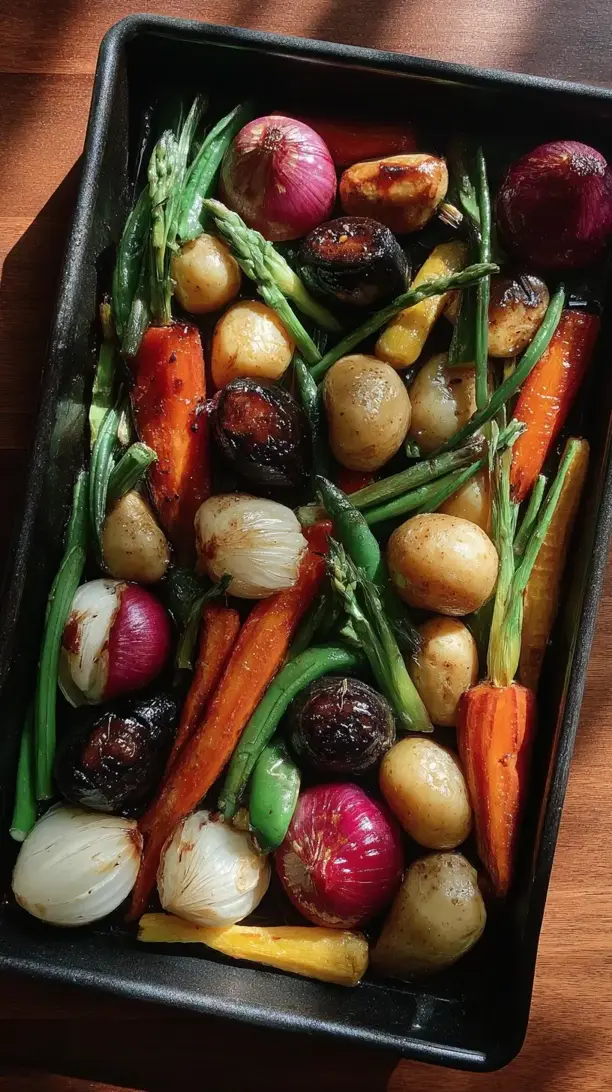
Ginger Miso Roasted Vegetables
Make incredible Ginger Miso Roasted Vegetables with this easy recipe. Perfectly caramelized & full of umami flavor. Get the simple steps now!
Ingredients
For the vegetables and glaze
-
500 g mixed roasting vegetables (e.g., sweet potato, carrot, parsnip, red onion, broccoli, Brussels sprouts)
-
2 tbsp white or yellow miso paste
-
2 tbsp maple syrup or honey
-
1 tbsp freshly grated ginger
-
2 cloves garlic (minced)
-
2 tbsp rice vinegar
-
2 tbsp olive oil or avocado oil
-
1 tbsp sesame oil
-
1 tsp toasted sesame seeds (for garnish)
-
1 spring onion spring onion (thinly sliced, for garnish)
Instructions
-
First, get your oven nice and hot—preheat it to 200°C (400°F). While it’s heating up, wash and chop all your chosen vegetables. I like a mix of colors and textures: sweet potato and carrot for sweetness, red onion for a savory punch, and broccoli or cauliflower for those lovely little crispy florets. Just remember to keep the pieces a similar size for even cooking.01
-
Now, let’s make that magical glaze. In a small bowl, add the miso paste, maple syrup, grated ginger, minced garlic, rice vinegar, olive oil, and sesame oil. The miso can be a little stubborn to mix at first, so use a small whisk or a fork and really go to town, whisking until everything is completely smooth and emulsified. You’ll notice the sauce will go from separated and grainy to glossy and unified. Taste it—it should be a perfect balance of salty, sweet, tangy, and spicy.02
-
Place all your chopped vegetables in a large mixing bowl. Pour about three-quarters of the miso ginger glaze over them. Now, get your hands in there! Toss everything together, making sure every single piece of vegetable is lovingly coated in that glossy sauce. This hands-on method is the best way to ensure even coverage. Reserve that last quarter of the glaze for later—it’s our secret weapon.03
-
Spread the coated vegetables out in a single layer on your large baking tray. Remember, no crowding! A little space between each piece is what gives you crispiness. Slide the tray into the preheated oven and let them roast for about 20 minutes. You’ll start to smell that incredible savory-sweet aroma filling your kitchen.04
-
After 20 minutes, pull the tray out of the oven. The veggies should be starting to soften and you might see some browning on the edges. This is when we use that reserved glaze. Drizzle the remaining sauce over the partially cooked vegetables and give everything a good toss or flip with a spatula. This second glazing adds another layer of flavor and helps create a beautiful, sticky coating.05
-
Return the tray to the oven for the final 10-15 minutes of roasting. Keep an eye on them now—you’re looking for the vegetables to be tender when pierced with a fork and for the edges to be deeply caramelized and even a little bit charred in spots. That char is pure flavor gold.06
-
Once they’re perfectly roasted, take the tray out of the oven. Let the vegetables rest for just a minute—they’re screaming hot! Then, transfer them to a serving platter and immediately garnish with a sprinkle of toasted sesame seeds and the thinly sliced spring onion. The fresh green onion adds a lovely pop of color and a sharp, fresh contrast to the rich, roasted veggies. Serve them hot and watch them disappear.07