
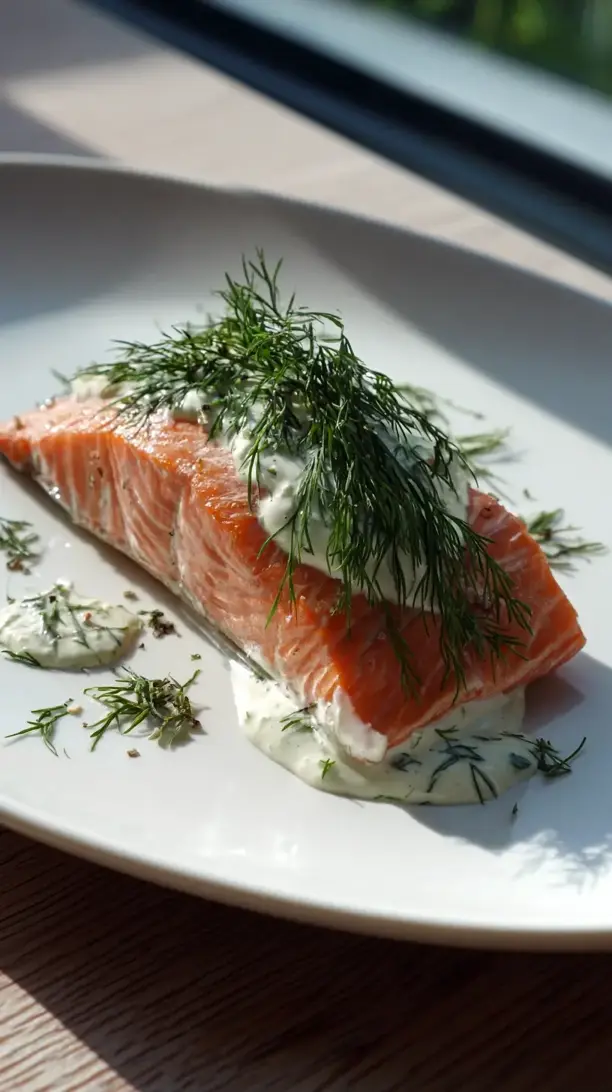
This Dill Cream Salmon is a restaurant-worthy meal you can pull together in under 30 minutes. The creamy, herbaceous sauce clings to perfectly cooked salmon fillets, creating a luxurious yet simple dish. It’s a little slice of Scandinavian-inspired comfort that’s sure to become a regular in your rotation.
Why You’ll Love This Dill Cream Salmon
- Deceptively simple: One pan and 25 minutes from start to finish.
- Creamy, tangy sauce: Packed with fresh herb flavor you’ll want to spoon over everything.
- Fancy yet approachable: Perfect for date night or impressing guests without stress.
- Incredibly versatile: Pairs beautifully with many sides, from asparagus to mashed potatoes.
Ingredients & Tools
- 4 salmon fillets, skin-on or skinless (about 150-180 g each)
- 1 tbsp olive oil
- 1 small shallot, finely minced
- 2 cloves garlic, minced
- 120 ml dry white wine (like Sauvignon Blanc or Pinot Grigio)
- 180 ml heavy cream (or double cream)
- 1 large lemon (you’ll need juice and zest)
- 15 g fresh dill, finely chopped, plus more for garnish
- 1 tbsp Dijon mustard
- To taste salt and freshly ground black pepper
Tools: A large, oven-safe skillet is ideal.
Notes: Don’t be tempted to use dried dill here—the fresh herb is non-negotiable for that vibrant, aromatic punch. And a good, crisp white wine for the sauce isn’t just for drinking while you cook; it adds a crucial layer of acidity that balances the rich cream.
Nutrition (per serving)
| Calories: | 485 kcal |
| Protein: | 35 g |
| Fat: | 34 g |
| Carbs: | 6 g |
| Fiber: | 1 g |
Serves: 4 | Prep Time: 10 minutes | Cook Time: 15 minutes | Total Time: 25 minutes
Before You Start: Tips & Ingredient Notes
- Pat your salmon dry. This is the golden rule for a beautiful sear. Use a paper towel to thoroughly dry the fillets right before they hit the pan. A dry surface means crisp skin and no sticking.
- Why a shallot? Shallots have a milder, sweeter flavor than onions, which melds perfectly into the creamy sauce without overpowering the delicate salmon and dill. If you must substitute, use about 2 tablespoons of very finely minced red onion.
- Don’t skip the wine. The alcohol cooks off, leaving behind a wonderful depth of flavor that you just can’t get from other liquids. If you absolutely need a substitute, use an equal amount of chicken or vegetable broth with a squeeze of lemon juice.
- Zest your lemon first. It’s infinitely easier to zest a whole, firm lemon than one you’ve already juiced. Trust me on this one—it’s a tiny step that saves a lot of frustration.
How to Make Dill Cream Salmon
Step 1: Start by preparing your ingredients. This is a fast-moving recipe, so having everything prepped and within arm’s reach—what the French call *mise en place*—makes the process smooth and enjoyable. Pat the salmon fillets completely dry with paper towels and season both sides generously with salt and pepper. Finely mince your shallot and garlic, chop the dill, and zest and juice your lemon.
Step 2: Heat the olive oil in your large skillet over medium-high heat. Once the oil is shimmering hot, carefully place the salmon fillets in the pan, presentation-side (the side that wasn’t against the skin) down. You should hear a satisfying sizzle. Sear for 4-5 minutes, without moving them, until a golden-brown crust forms. Flip the fillets and cook for another 1-2 minutes on the other side just to cook through. You’ll notice the color change creeping up the sides of the fillet. Remove the salmon to a clean plate and set aside.
Step 3: Reduce the heat to medium. In the same skillet, add the minced shallot. Sauté for about 2 minutes until it becomes soft and translucent. Now, add the garlic and cook for just 30 seconds more until fragrant—be careful not to let it burn, or it will turn bitter. The aroma at this stage is just incredible.
Step 4: Pour in the white wine to deglaze the pan. Use your spatula to scrape up all those delicious browned bits from the bottom of the pan. Let the wine simmer and reduce by about half, which will take 2-3 minutes. This cooks off the raw alcohol taste and concentrates the flavor.
Step 5: Lower the heat to medium-low and stir in the heavy cream, Dijon mustard, and most of your fresh dill (save a little for garnish). Whisk everything together until the mustard is fully incorporated and the sauce begins to gently simmer. Let it bubble away for 2-3 minutes to thicken slightly. You’re looking for a sauce that nicely coats the back of a spoon.
Step 6: Stir in the lemon zest and a good squeeze of the fresh lemon juice. Taste the sauce now—this is your chance to adjust the seasoning. Add more salt, pepper, or even a touch more lemon juice if you like it extra bright. The sauce should be a perfect balance of rich, tangy, and herby.
Step 7: Return the salmon fillets to the pan, nestling them into the creamy sauce. Spoon some of the sauce over the top of each fillet. Let them warm through in the sauce for a final 1-2 minutes over low heat. This allows the flavors to marry beautifully. Garnish with the remaining fresh dill and serve immediately.
Storage & Freshness Guide
- Fridge: Store leftovers in an airtight container for up to 2 days.
- Freezer: Not recommended; cream sauce may separate upon thawing.
- Reviving: Reheat gently in a covered skillet with a splash of water or cream.
Serving Suggestions
Complementary Dishes
- Buttery Mashed Potatoes — The ultimate comfort pairing. The creamy potatoes act as a perfect canvas for that glorious dill sauce.
- Simple Steamed Asparagus — The fresh, green flavor of asparagus is a classic companion to salmon and cuts through the richness of the dish.
- Lemon Herb Rice Pilaf — A fluffy, fragrant rice soaks up every last drop of sauce and echoes the lemony notes in the salmon.
Drinks
- A Crisp Sauvignon Blanc — The wine’s citrus and herbaceous notes are a mirror image of the flavors in the sauce, creating a harmonious pairing.
- A Light Pilsner — The clean, crisp bitterness of a good pilsner helps cleanse the palate between bites of the rich, creamy salmon.
Something Sweet
- Lemon Sorbet — A light, palate-cleansing dessert that continues the citrus theme without feeling too heavy after a rich meal.
- Almond Shortbread Cookies — Their buttery, nutty flavor and delicate crunch provide a simple, elegant finish that doesn’t overpower.
Top Mistakes to Avoid
- Overcooking the salmon. Salmon continues to cook after it’s removed from the heat (carryover cooking). Taking it out of the pan when it’s just slightly underdone in the very center ensures it will be perfectly moist and flaky by the time it reaches the table.
- Burning the garlic. Garlic cooks in a flash and turns bitter if it burns. Add it after the shallots have softened and only let it cook for 30 seconds until fragrant before adding the liquid.
- Using dried dill. I know I’ve said it before, but it’s worth repeating. Dried dill lacks the vibrant, aromatic quality of fresh and will make your sauce taste dusty and dull. Fresh is a must.
- Not reducing the wine enough. If you add the cream before the wine has reduced by half, your sauce can taste boozy and sharp. Let it simmer until it’s noticeably less in volume and the sharp alcohol smell has cooked off.
Expert Tips
- Tip: For an extra layer of flavor, add a tablespoon of capers to the sauce along with the cream. Their briny, salty pop contrasts wonderfully with the rich, creamy base.
- Tip: If your sauce seems a little too thin after adding the cream, let it simmer for another minute or two. If you’re in a real hurry, you can create a quick slurry with a teaspoon of cornstarch and a tablespoon of cold water, then whisk it in to thicken it up almost instantly.
- Tip: To check for doneness, look for the salmon to be opaque and flake easily with a fork at its thickest part. A digital thermometer is your best friend here—aim for an internal temperature of 52-54°C for medium, as it will continue to rise to the perfect 57°C.
- Tip: Let the salmon sit at room temperature for 10-15 minutes before cooking. This helps it cook more evenly, preventing a cold, undercooked center and an overcooked exterior.
FAQs
Can I use a different type of fish?
Absolutely! This dill cream sauce is incredibly versatile. It pairs beautifully with other firm-fleshed white fish like cod, halibut, or sea bass. Just adjust the cooking time depending on the thickness of your fillets. The key is to sear the fish until just cooked through before setting it aside and proceeding with the sauce.
How can I make this dairy-free?
You can achieve a lovely creamy texture using full-fat canned coconut milk. The flavor profile will shift slightly, becoming a bit more tropical, but it’s still delicious. Another great option is to use a plain, unsweetened oat cream, which has a neutral flavor that works well with the dill and lemon.
What’s the best way to store and reheat leftovers?
Store any leftover salmon and sauce in an airtight container in the fridge for up to 2 days. The best way to reheat is gently, in a covered skillet over low heat with a splash of water or cream to loosen the sauce. Avoid the microwave, as it can make the salmon rubbery and cause the sauce to separate.
Can I prepare the sauce ahead of time?
You can make the base of the sauce (through reducing the wine) a few hours ahead. When you’re ready to eat, gently reheat the base, then stir in the cream, dill, and lemon juice before adding the salmon. This helps preserve the vibrant color and fresh flavor of the herbs.
My sauce split or looks curdled. What happened?
This usually occurs if the heat was too high when you added the cream, causing it to break. To fix it, immediately remove the pan from the heat and whisk in a tablespoon of cold cream or a splash of hot water. Whisk vigorously—this can often bring it back together. If all else fails, a quick blitz with an immersion blender will save the day.
Dill Cream Salmon
Make restaurant-worthy Dill Cream Salmon in under 30 minutes with this easy recipe. A creamy, herbaceous sauce makes it perfect for date night. Get the recipe now!
Ingredients
For the Ingredients & Tools
-
4 salmon fillets (skin-on or skinless (about 150-180 g each))
-
1 tbsp olive oil
-
1 small shallot (finely minced)
-
2 cloves garlic (minced)
-
120 ml dry white wine (like Sauvignon Blanc or Pinot Grigio)
-
180 ml heavy cream (or double cream)
-
1 large lemon (you'll need juice and zest)
-
15 g fresh dill (finely chopped, plus more for garnish)
-
1 tbsp Dijon mustard
-
salt and freshly ground black pepper (to taste)
Instructions
-
Start by preparing your ingredients. This is a fast-moving recipe, so having everything prepped and within arm's reach—what the French call *mise en place*—makes the process smooth and enjoyable. Pat the salmon fillets completely dry with paper towels and season both sides generously with salt and pepper. Finely mince your shallot and garlic, chop the dill, and zest and juice your lemon.01
-
Heat the olive oil in your large skillet over medium-high heat. Once the oil is shimmering hot, carefully place the salmon fillets in the pan, presentation-side (the side that wasn't against the skin) down. You should hear a satisfying sizzle. Sear for 4-5 minutes, without moving them, until a golden-brown crust forms. Flip the fillets and cook for another 1-2 minutes on the other side just to cook through. You’ll notice the color change creeping up the sides of the fillet. Remove the salmon to a clean plate and set aside.02
-
Reduce the heat to medium. In the same skillet, add the minced shallot. Sauté for about 2 minutes until it becomes soft and translucent. Now, add the garlic and cook for just 30 seconds more until fragrant—be careful not to let it burn, or it will turn bitter. The aroma at this stage is just incredible.03
-
Pour in the white wine to deglaze the pan. Use your spatula to scrape up all those delicious browned bits from the bottom of the pan. Let the wine simmer and reduce by about half, which will take 2-3 minutes. This cooks off the raw alcohol taste and concentrates the flavor.04
-
Lower the heat to medium-low and stir in the heavy cream, Dijon mustard, and most of your fresh dill (save a little for garnish). Whisk everything together until the mustard is fully incorporated and the sauce begins to gently simmer. Let it bubble away for 2-3 minutes to thicken slightly. You’re looking for a sauce that nicely coats the back of a spoon.05
-
Stir in the lemon zest and a good squeeze of the fresh lemon juice. Taste the sauce now—this is your chance to adjust the seasoning. Add more salt, pepper, or even a touch more lemon juice if you like it extra bright. The sauce should be a perfect balance of rich, tangy, and herby.06
-
Return the salmon fillets to the pan, nestling them into the creamy sauce. Spoon some of the sauce over the top of each fillet. Let them warm through in the sauce for a final 1-2 minutes over low heat. This allows the flavors to marry beautifully. Garnish with the remaining fresh dill and serve immediately.07