
Why You’ll Love This Dark Chocolate Almond Bark
- It’s deceptively simple. With just a handful of ingredients and no baking required, this is a foolproof recipe that delivers impressive results every single time.
- The texture is everything. You get the smooth, rich snap of dark chocolate combined with the hearty, satisfying crunch of toasted almonds—it’s a symphony in your mouth.
- It’s endlessly customizable. Once you master the base, you can start playing around. Think dried cherries, a sprinkle of chili powder, or even some orange zest for a citrusy twist.
- It makes a fantastic homemade gift. Package this bark in a cute box or cellophane bag, and you’ve got a present that looks and tastes a million times more thoughtful than anything store-bought.
Ingredients & Tools
- 300 g high-quality dark chocolate (around 70% cocoa solids), chopped
- 150 g whole raw almonds
- 1/2 tsp flaky sea salt
- 1/4 tsp vanilla extract (optional, but lovely)
Tools: A medium-sized baking sheet, parchment paper, a double boiler (or a heatproof bowl over a pot of simmering water), a spatula, and a small skillet for toasting.
The quality of your chocolate really is the star here, so don’t skimp. A good 70% dark chocolate will give you that deep, complex flavor without being bitter. As for the almonds, toasting them yourself is non-negotiable—it unlocks their nutty, aromatic potential and makes all the difference.
Nutrition (per serving)
- Calories: 180 kcal
- Protein: 4 g
- Fat: 14 g
- Carbohydrates: 12 g
- Fiber: 3 g
Serves: 8 | Prep Time: 15 mins | Cook Time: 5 mins | Total Time: 20 mins (plus setting time)
Before You Start: Tips & Ingredient Notes
- Chocolate Choice is Key. Use the best chocolate you comfortably can. Chocolate chips often have stabilizers that can hinder perfect melting, so a bar of good eating chocolate that you chop yourself is the way to go.
- Don’t Skip the Toasting. Raw almonds are pale and mild. Toasting them transforms their flavor, making them deeply nutty and fragrant, which stands up beautifully to the robust dark chocolate.
- Embrace the Flaky Salt. That final sprinkle of flaky sea salt isn’t just for looks. It creates tiny bursts of salinity that cut through the richness and make the chocolate taste even more chocolatey. It’s a game-changer.
- Patience is a Virtue. Rushing the setting process by putting warm bark in the fridge can cause the chocolate to “bloom” (get those white streaks). Letting it set slowly at room temperature gives you a gorgeous, glossy finish.
How to Make Dark Chocolate Almond Bark
Step 1: Toast Your Almonds. Place your raw almonds in a dry skillet over medium heat. Toast them for 4-5 minutes, shaking the pan frequently, until they are golden brown and you can smell that wonderful, nutty aroma. Keep a close eye on them—they can go from perfectly toasted to burnt in a flash. Once done, pour them onto a cutting board to cool completely.
Step 2: Chop and Melt the Chocolate. While the almonds cool, chop your dark chocolate bar into small, uniform pieces—this helps it melt evenly and smoothly. Set up your double boiler, ensuring the bottom of the bowl isn’t touching the simmering water. Add the chocolate and stir gently and constantly with a spatula until it’s about 75% melted. Then, take it off the heat and keep stirring. The residual heat will melt the remaining chocolate, which helps you avoid overheating it.
Step 3: Combine and Flavor. Once your chocolate is completely smooth and glossy, stir in the vanilla extract if you’re using it. Now, take your cooled almonds and give them a rough chop—you want a mix of bigger chunks and smaller pieces for varied texture. Fold about two-thirds of the chopped almonds into the melted chocolate, reserving the rest for the top.
Step 4: Spread and Decorate. Line your baking sheet with parchment paper. Pour the chocolate-almond mixture onto the center of the sheet. Use your spatula to spread it into an even layer, about 1/4 to 1/2 inch thick. It doesn’t need to be a perfect rectangle—rustic is charming! Now, sprinkle the remaining chopped almonds evenly over the top, pressing them in gently so they adhere.
Step 5: The Final Touch. This is the moment! Take your flaky sea salt and give it a generous sprinkle over the entire surface of the bark. You’ll see the crystals glitter against the dark chocolate—it’s a beautiful thing. Now, the hardest part: walk away. Let the bark set at cool room temperature for at least 2-3 hours, or until firm and snappable.
Step 6: Break and Enjoy. Once the bark is completely set, lift the entire slab off the parchment paper. The fun part is breaking it. Use your hands to crack it into irregular, generous shards. You can also place it on a cutting board and use a knife, but honestly, the random shapes you get from hand-breaking are part of its homemade charm.
Serving Suggestions
Complementary Dishes
- A simple cheese board — The sharpness of an aged cheddar or the creaminess of a brie creates a fantastic savory contrast to the sweet, rich bark.
- Fresh berries like raspberries or strawberries — Their bright, tart acidity cleanses the palate and makes each bite of chocolate feel new again.
Drinks
- A bold cup of black coffee — There’s no better partner for dark chocolate. The bitterness of the coffee and the bitterness of the cocoa are a match made in heaven.
- A glass of full-bodied red wine — A Cabernet Sauvignon or Malbec with dark fruit notes will complement the deep flavors of the bark beautifully.
Something Sweet
- Vanilla bean ice cream — Crumble a piece of the bark over a scoop. The warm-cold, creamy-crunchy contrast is an absolute dream.
- Orange segments dipped in chocolate — Continue the citrus-chocolate theme for a decadent, fruit-forward dessert pairing.
Top Mistakes to Avoid
- Mistake: Getting water in your melting chocolate. Even a single drop of water can cause the chocolate to “seize,” turning it from smooth and liquid to a grainy, stiff mess. Make sure all your tools are completely dry.
- Mistake: Overheating the chocolate. Chocolate is delicate. If you melt it over too high a heat or in the microwave for too long, it can burn or become lumpy. Low and slow, with constant stirring, is the only way.
- Mistake: Adding warm almonds to the chocolate. If your almonds are still warm from toasting, they can melt the chocolate further and make the final texture greasy. Always, always let them cool completely.
- Mistake: Skipping the salt. I know it might seem counterintuitive, but trust me on this. The salt doesn’t make it taste salty; it makes it taste more profoundly of chocolate. It elevates the entire experience.
Expert Tips
- Tip: Add a tiny bit of coconut oil. For an even snappier bark with a beautiful sheen, stir in half a teaspoon of coconut oil into the melted chocolate before spreading. It alters the temper slightly for a fantastic break.
- Tip: Use a marble or granite slab. If your kitchen is particularly warm, place the parchment-lined baking sheet on a cool stone surface to help the chocolate set faster and more evenly.
- Tip: Create layers for a showstopper. Melt half the chocolate, spread it thin, let it set for 10 minutes, then spread the remaining melted chocolate on top and add your almonds. This creates a stunning double-decker effect.
- Tip: Get creative with toppings. Beyond almonds, try a mix of pumpkin seeds, dried cranberries, and a hint of cinnamon for a fall-inspired version. The possibilities are truly endless.
FAQs
Can I use milk chocolate instead of dark chocolate?
You absolutely can, but the experience will be quite different. Milk chocolate is much sweeter and less intense, so it will create a milder, more child-friendly bark. Just be aware that it can be a bit softer and more prone to melting in your hands. If you do use milk chocolate, you might want to reduce or omit the extra sea salt on top, as the sweetness balance will be different.
How should I store the finished bark, and how long will it last?
Store your bark in an airtight container at cool room temperature. It will keep beautifully for up to two weeks. Please, do not refrigerate it unless your house is very hot and humid, as the fridge can cause condensation and sugar bloom (those white streaks), which, while safe to eat, isn’t as pretty. A cool, dark pantry is perfect.
My chocolate seized and became grainy. Can I fix it?
Oh, I’ve been there! It’s frustrating, but sometimes salvageable. If it seized from a tiny bit of moisture, try stirring in a teaspoon of a neutral oil (like vegetable or coconut oil) for every 100g of chocolate. This can sometimes bring it back to a spreadable consistency, though it won’t set as firmly. It’s a good save for a sauce, but for bark, prevention is truly the best medicine.
Can I make this bark with other nuts?
Of course! This recipe is a fantastic template. Pecans, walnuts, hazelnuts, and pistachios all work wonderfully. Just make sure to toast any raw nuts you use to maximize their flavor. You could even do a mixed nut bark for a real flavor party. The toasting step is non-negotiable for getting that deep, roasted taste.
Why is my bark soft and not snappy?
A soft bark usually points to two things: the chocolate wasn’t properly tempered (which is tricky without a thermometer) or it was set in too warm an environment. Ensuring your chocolate is melted gently and allowed to set in a cool spot (around 18-20°C / 65-68°F is ideal) will give you that satisfying snap. If it’s a humid day, that can also affect the setting time and final texture.
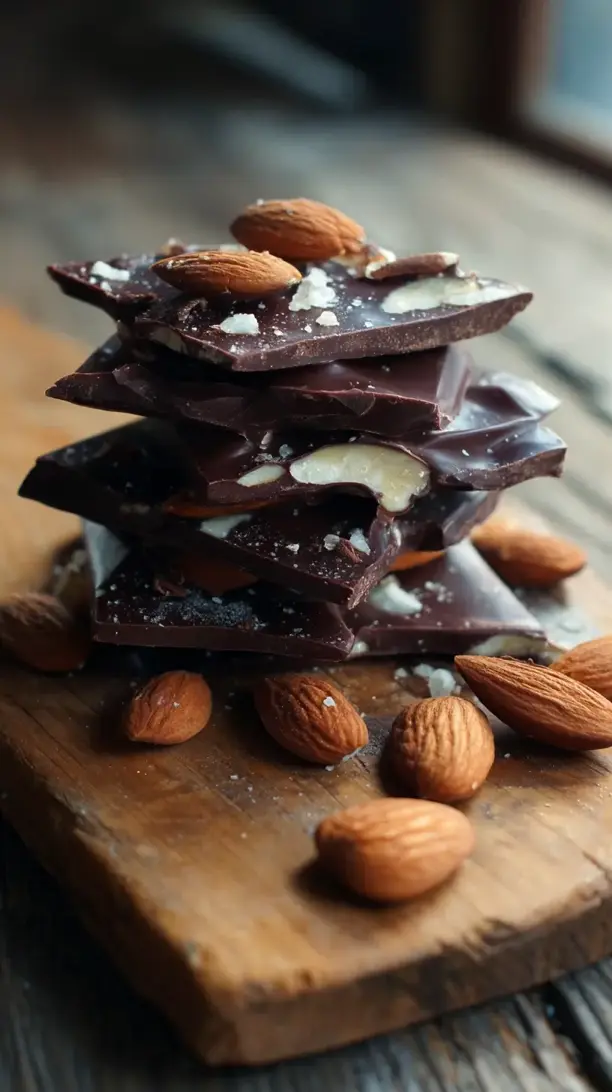
Dark Chocolate Almond Bark
Make this easy Dark Chocolate Almond Bark with just 3 ingredients! A no-bake, gift-worthy treat that's perfectly crunchy and rich. Get the simple recipe here.
Ingredients
For the Ingredients
-
300 g high-quality dark chocolate (around 70% cocoa solids, chopped)
-
150 g whole raw almonds
-
1/2 tsp flaky sea salt
-
1/4 tsp vanilla extract (optional, but lovely)
Instructions
-
Toast Your Almonds. Place your raw almonds in a dry skillet over medium heat. Toast them for 4-5 minutes, shaking the pan frequently, until they are golden brown and you can smell that wonderful, nutty aroma. Keep a close eye on them—they can go from perfectly toasted to burnt in a flash. Once done, pour them onto a cutting board to cool completely.01
-
Chop and Melt the Chocolate. While the almonds cool, chop your dark chocolate bar into small, uniform pieces—this helps it melt evenly and smoothly. Set up your double boiler, ensuring the bottom of the bowl isn't touching the simmering water. Add the chocolate and stir gently and constantly with a spatula until it’s about 75% melted. Then, take it off the heat and keep stirring. The residual heat will melt the remaining chocolate, which helps you avoid overheating it.02
-
Combine and Flavor. Once your chocolate is completely smooth and glossy, stir in the vanilla extract if you're using it. Now, take your cooled almonds and give them a rough chop—you want a mix of bigger chunks and smaller pieces for varied texture. Fold about two-thirds of the chopped almonds into the melted chocolate, reserving the rest for the top.03
-
Spread and Decorate. Line your baking sheet with parchment paper. Pour the chocolate-almond mixture onto the center of the sheet. Use your spatula to spread it into an even layer, about 1/4 to 1/2 inch thick. It doesn't need to be a perfect rectangle—rustic is charming! Now, sprinkle the remaining chopped almonds evenly over the top, pressing them in gently so they adhere.04
-
The Final Touch. This is the moment! Take your flaky sea salt and give it a generous sprinkle over the entire surface of the bark. You’ll see the crystals glitter against the dark chocolate—it’s a beautiful thing. Now, the hardest part: walk away. Let the bark set at cool room temperature for at least 2-3 hours, or until firm and snappable.05
-
Break and Enjoy. Once the bark is completely set, lift the entire slab off the parchment paper. The fun part is breaking it. Use your hands to crack it into irregular, generous shards. You can also place it on a cutting board and use a knife, but honestly, the random shapes you get from hand-breaking are part of its homemade charm.06