

Why You’ll Love These Coconut Flour Chocolate Chip Cookies
- Unbelievably Soft and Chewy. The texture is honestly the star here. Thanks to a careful balance of wet and dry ingredients, these cookies bake up with a wonderfully tender, almost brownie-like center that stays soft for days.
- Naturally Gluten-Free. Coconut flour is the sole flour in this recipe, making these cookies a fantastic option for anyone avoiding gluten. You get all the comfort of a classic chocolate chip cookie without any of the wheat.
- Rich, Buttery Flavor with a Hint of the Tropics. The coconut flour adds a delicate, sweet aroma that pairs beautifully with the brown sugar and chocolate. It’s not overpowering—just a lovely, warm background note that makes these cookies uniquely delicious.
- Surprisingly Simple to Make. You don’t need any fancy equipment or hard-to-find ingredients. It’s a straightforward, one-bowl kind of recipe that comes together in minutes. Perfect for a spontaneous baking session.
Ingredients & Tools
- 120 g (1 cup) coconut flour
- 1/2 tsp baking soda
- 1/4 tsp fine sea salt
- 115 g (1/2 cup) unsalted butter, softened
- 150 g (3/4 cup) light brown sugar, packed
- 50 g (1/4 cup) granulated sugar
- 2 large eggs, at room temperature
- 2 tsp pure vanilla extract
- 170 g (1 cup) semi-sweet chocolate chips
Tools: A medium mixing bowl, a hand mixer or a sturdy whisk, a baking sheet, and parchment paper or a silicone baking mat.
Getting the ingredients right is key here. Using room temperature eggs and properly softened butter is non-negotiable for a smooth, emulsified dough. And don’t be tempted to skimp on the chocolate chips—a little extra never hurt anybody!
Serves: 18 cookies | Prep Time: 10 minutes | Cook Time: 10-12 minutes | Total Time: 25 minutes (plus cooling)
Before You Start: Tips & Ingredient Notes
- Measure your coconut flour correctly. This is the most important step! Coconut flour is incredibly absorbent. For accuracy, always spoon the flour into your measuring cup and level it off with a knife. Scooping directly from the bag will pack it down and you’ll end up with way too much, leading to a dry, crumbly dough.
- Why room temperature ingredients matter. When your butter and eggs are at the same cool room temperature, they emulsify much more easily, creating a smooth, cohesive dough that traps air. This helps the cookies rise properly and gives them a better texture. If your butter is too cold, it won’t cream properly; if it’s melted, the cookies will spread too much.
- Don’t skip the chilling time. I know, I know—waiting is the hardest part. But giving the dough a quick 10-minute rest in the fridge allows the coconut flour to fully hydrate. This prevents the cookies from being gritty and helps them hold their shape better in the oven.
- Experiment with your mix-ins. While classic semi-sweet chips are perfection, feel free to get creative! Dark chocolate chunks, a mix of white and milk chocolate, or even a handful of toasted coconut flakes would be wonderful here.
How to Make Coconut Flour Chocolate Chip Cookies
Step 1: Combine the Dry Ingredients. In a medium bowl, whisk together the coconut flour, baking soda, and salt. You’ll want to whisk this really well to ensure the baking soda is evenly distributed—no one wants a bite of concentrated baking soda! This also helps to aerate the coconut flour a little, which is always a good thing.
Step 2: Cream the Butter and Sugars. In a separate, larger bowl, combine the softened butter, brown sugar, and granulated sugar. Using a hand mixer (or a lot of elbow grease with a whisk), beat them together on medium speed for about 1-2 minutes, until the mixture is pale, fluffy, and well-combined. You should see the mixture lighten in color significantly. This step is crucial for creating a light texture in the final cookie.
Step 3: Incorporate the Eggs and Vanilla. Add the room-temperature eggs one at a time, beating well after each addition until fully incorporated. Then beat in the vanilla extract. The mixture might look a little curdled at this point—that’s okay! It will all come together once we add the dry ingredients. The vanilla aroma will start to fill your kitchen, which is always a welcome sign.
Step 4: Bring the Dough Together. Now, add the dry ingredient mixture to the wet ingredients. Switch to a spatula or wooden spoon and mix until a thick, cohesive dough forms. It will come together quickly, and you’ll notice it has a different, slightly more pasty texture than a traditional wheat-flour cookie dough—that’s perfectly normal for coconut flour.
Step 5: Fold in the Chocolate Chips. This is the best part. Dump in all those glorious chocolate chips and fold them gently into the dough until they’re evenly distributed. Try to resist eating all the dough straight from the bowl… though I won’t judge if you sneak a little taste.
Step 6: Chill the Dough. Cover the bowl with plastic wrap or a lid and pop it into the refrigerator for at least 10 minutes. This short rest is magic—it allows the coconut flour to fully absorb the liquid, resulting in a cookie that’s moist and not crumbly. Meanwhile, preheat your oven to 175°C (350°F) and line a baking sheet with parchment paper.
Step 7: Scoop and Bake. Using a tablespoon or a small cookie scoop, portion the dough onto your prepared baking sheet, leaving about 5 cm (2 inches) between each one. These cookies don’t spread a huge amount, but they need a little room to breathe. Bake for 10-12 minutes, until the edges are lightly golden and the centers look just set.
Step 8: The Most Important Step: Cool! As soon as you take the baking sheet out of the oven, let the cookies cool on the sheet for at least 10 minutes. They will be very soft and fragile when hot. Transferring them too early is a top mistake! They will firm up beautifully as they cool on the pan, developing that perfect chewy texture.
Serving Suggestions
Complementary Dishes
- A cold glass of milk — It’s a classic for a reason. The cool, creamy milk is the perfect partner to the warm, rich cookies.
- A scoop of vanilla bean ice cream — Sandwich a slightly warm cookie around a scoop for an incredible ice cream sandwich. The contrast of temperatures and textures is sublime.
- Fresh berries on the side — A handful of raspberries or strawberries adds a lovely, bright, tart contrast to the sweet, rich cookies.
Drinks
- Black coffee — The bitterness of a good, strong brew cuts through the sweetness of the chocolate and highlights the subtle notes of the coconut flour.
- Chai latte — The warm spices in chai—cinnamon, cardamom, ginger—complement the tropical hint of coconut beautifully, creating a really cozy pairing.
- A glass of unsweetened almond milk — For a dairy-free option, the nutty flavor of almond milk works wonderfully with the coconut and chocolate.
Something Sweet
- A simple fruit sorbet — A light mango or passion fruit sorbet served alongside the cookie makes for a refreshing and elegant dessert duo.
- Dark chocolate-dipped strawberries — Double down on the chocolate theme! The fresh, juicy strawberry paired with more chocolate is a guaranteed crowd-pleaser.
- A dollop of coconut whipped cream — Enhance the coconut flavor with a fluffy, dairy-free whipped cream made from the chilled top layer of a can of full-fat coconut milk.
Top Mistakes to Avoid
- Mistake: Packing the coconut flour into the measuring cup. This is the number one reason these cookies can turn out dry. Remember, spoon and level for perfect results every time. I’ve messed this up before too, and the difference is night and day.
- Mistake: Using melted butter. If your butter is liquid, it won’t trap air during the creaming process. Your cookies will spread too much and become greasy. True softened butter should hold a thumbprint but still be cool to the touch.
- Mistake: Skipping the chill time. That 10 minutes in the fridge isn’t a suggestion—it’s a crucial step for hydration. Without it, the cookies can have a gritty texture and may spread unevenly.
- Mistake: Overbaking. Coconut flour cookies continue to set as they cool. You want to take them out when the edges are just golden and the centers still look a tiny bit soft. They’ll be perfect once cooled. An overbaked coconut flour cookie is a sad, dry cookie.
Expert Tips
- Tip: Weigh your ingredients. For absolute precision, especially with finicky flours like coconut, using a kitchen scale is a game-changer. It removes all the guesswork from measuring and guarantees consistent results.
- Tip: Make them uniform. Using a cookie scoop isn’t just for neatness—it ensures all your cookies are the same size, so they bake evenly. No more burnt little ones and underdone big ones!
- Tip: Add a sprinkle of flaky salt. Right when the cookies come out of the oven, sprinkle a tiny bit of flaky sea salt over the top. It enhances the chocolate flavor and creates an incredible sweet-and-salty situation.
- Tip: Freeze the dough for later. This dough freezes beautifully. Scoop the dough balls onto a tray, freeze until solid, then transfer to a zip-top bag. You can bake them straight from frozen, just adding a minute or two to the baking time for fresh, warm cookies anytime the mood strikes.
FAQs
Can I make these cookies dairy-free?
Absolutely! You can easily substitute the butter with an equal amount of solid coconut oil. Just make sure it’s in a softened, solid state (not melted) when you cream it with the sugars. The cookies will have a slightly more pronounced coconut flavor, which is a delicious bonus.
Why is my dough so thick and pasty?
Don’t worry, that’s exactly how coconut flour dough should be! It’s much thicker and less greasy than a standard cookie dough because coconut flour absorbs a massive amount of liquid. This is a good sign that you’ve measured correctly. It will bake up into a soft and tender cookie, I promise.
Can I use a different type of sugar?
You can experiment, but it will change the texture. The brown sugar is key for moisture and chewiness. Using all granulated sugar will result in a crisper, cakier cookie. For a less refined option, coconut sugar can be used in place of the brown sugar, though the cookies will be darker in color and have a deeper, caramel-like taste.
How should I store these cookies?
Once completely cool, store them in an airtight container at room temperature. They’ll stay soft and delicious for up to 4 days. Because of their high moisture content, I don’t recommend storing them in the fridge, as it can dry them out.
My cookies are crumbly. What happened?
This usually points to two possible issues: either the coconut flour was packed into the measuring cup (using too much flour), or the dough wasn’t chilled before baking. The chilling step is essential for allowing the flour to fully hydrate. If you find they are still a bit crumbly, try adding one more tablespoon of softened butter to the dough next time.
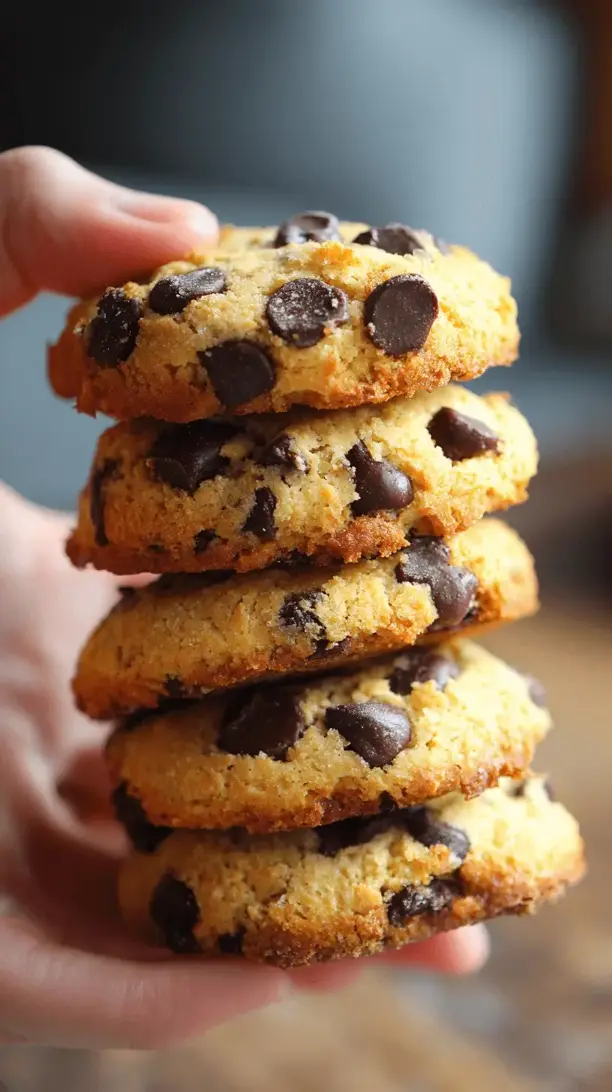
Coconut Flour Chocolate Chip Cookies
My foolproof recipe for soft, chewy Coconut Flour Chocolate Chip Cookies! Naturally gluten-free, easy to make, & packed with rich flavor. Get the secret to perfect texture every time.
Ingredients
Ingredients
-
120 g coconut flour ((1 cup))
-
1/2 tsp baking soda
-
1/4 tsp fine sea salt
-
115 g unsalted butter, softened ((1/2 cup))
-
150 g light brown sugar, packed ((3/4 cup))
-
50 g granulated sugar ((1/4 cup))
-
2 large eggs (at room temperature)
-
2 tsp pure vanilla extract
-
170 g semi-sweet chocolate chips ((1 cup))
Instructions
-
Combine the Dry Ingredients. In a medium bowl, whisk together the coconut flour, baking soda, and salt. You'll want to whisk this really well to ensure the baking soda is evenly distributed—no one wants a bite of concentrated baking soda! This also helps to aerate the coconut flour a little, which is always a good thing.01
-
Cream the Butter and Sugars. In a separate, larger bowl, combine the softened butter, brown sugar, and granulated sugar. Using a hand mixer (or a lot of elbow grease with a whisk), beat them together on medium speed for about 1-2 minutes, until the mixture is pale, fluffy, and well-combined. You should see the mixture lighten in color significantly. This step is crucial for creating a light texture in the final cookie.02
-
Incorporate the Eggs and Vanilla. Add the room-temperature eggs one at a time, beating well after each addition until fully incorporated. Then beat in the vanilla extract. The mixture might look a little curdled at this point—that's okay! It will all come together once we add the dry ingredients. The vanilla aroma will start to fill your kitchen, which is always a welcome sign.03
-
Bring the Dough Together. Now, add the dry ingredient mixture to the wet ingredients. Switch to a spatula or wooden spoon and mix until a thick, cohesive dough forms. It will come together quickly, and you'll notice it has a different, slightly more pasty texture than a traditional wheat-flour cookie dough—that's perfectly normal for coconut flour.04
-
Fold in the Chocolate Chips. This is the best part. Dump in all those glorious chocolate chips and fold them gently into the dough until they're evenly distributed. Try to resist eating all the dough straight from the bowl… though I won't judge if you sneak a little taste.05
-
Chill the Dough. Cover the bowl with plastic wrap or a lid and pop it into the refrigerator for at least 10 minutes. This short rest is magic—it allows the coconut flour to fully absorb the liquid, resulting in a cookie that's moist and not crumbly. Meanwhile, preheat your oven to 175°C (350°F) and line a baking sheet with parchment paper.06
-
Scoop and Bake. Using a tablespoon or a small cookie scoop, portion the dough onto your prepared baking sheet, leaving about 5 cm (2 inches) between each one. These cookies don't spread a huge amount, but they need a little room to breathe. Bake for 10-12 minutes, until the edges are lightly golden and the centers look just set.07
-
The Most Important Step: Cool! As soon as you take the baking sheet out of the oven, let the cookies cool on the sheet for at least 10 minutes. They will be very soft and fragile when hot. Transferring them too early is a top mistake! They will firm up beautifully as they cool on the pan, developing that perfect chewy texture.08


