
This Coconut Curry Salmon Soup is a vibrant, fragrant one-pot wonder that comes together in under 30 minutes. The rich coconut milk base is infused with red curry paste and ginger, creating a spicy and soothing broth for tender poached salmon. It’s a restaurant-quality meal that’s both nourishing and deeply satisfying.
Why You’ll Love This Coconut Curry Salmon Soup
- Flavor explosion: Creamy coconut, spicy curry, and fresh herbs create a complex, comforting taste.
- Quick & easy: Comes together in under 30 minutes with minimal active cooking time.
- Nourishing & indulgent: Packed with lean protein and veggies, it feels like a treat.
- Highly adaptable: Easily swap vegetables or adjust the spice level to your liking.
Ingredients & Tools
- 1 tbsp coconut or avocado oil
- 1 medium yellow onion, thinly sliced
- 3 cloves garlic, minced
- 1 tbsp fresh ginger, grated
- 2-3 tbsp red curry paste
- 1 (400 ml) can full-fat coconut milk
- 4 cups fish or vegetable broth
- 1 tbsp fish sauce
- 1 tbsp brown sugar or maple syrup
- 1 red bell pepper, sliced
- 150 g shiitake or cremini mushrooms, sliced
- 450 g skinless salmon fillet, cut into 1-inch chunks
- Juice of 1 lime
- For serving: fresh cilantro, Thai basil, sliced red chili, lime wedges
Tools: A large pot or Dutch oven, a wooden spoon, and a sharp knife.
Notes: Use full-fat coconut milk for a luxuriously creamy texture that won’t split. Fish sauce adds deep umami flavor.
Nutrition (per serving)
| Calories: | 485 kcal |
| Protein: | 32 g |
| Fat: | 32 g |
| Carbs: | 18 g |
| Fiber: | 3 g |
Serves: 4 | Prep Time: 15 minutes | Cook Time: 20 minutes | Total Time: 35 minutes
Before You Start: Tips & Ingredient Notes
- Choosing your salmon. I recommend using skinless, center-cut fillets for the most even cooking. You can use fresh or frozen—just be sure to pat frozen-thawed salmon completely dry with paper towels to avoid watering down the broth.
- Red curry paste is key. Different brands vary wildly in spice level and saltiness. Start with 2 tablespoons, taste the broth before adding the salmon, and then you can always stir in more if you want a bigger kick.
- Don’t skip the acid. The lime juice at the end is non-negotiable. It brightens up the rich coconut broth and balances all the flavors perfectly. Taste and adjust right before serving.
- Prep your veggies uniformly. Slicing the onion, pepper, and mushrooms to a similar thickness means they’ll all cook at the same rate, giving you a perfect texture in every bite without any one ingredient being over or under-done.
How to Make Coconut Curry Salmon Soup
Step 1: Heat the oil in your large pot over medium heat. Add the sliced onion and cook for about 4-5 minutes, stirring occasionally, until it becomes soft and translucent. You’ll notice the kitchen starting to smell amazing already. This gentle cooking softens the onion’s bite and brings out its natural sweetness, which forms a fantastic flavor base for the soup.
Step 2: Stir in the minced garlic and grated ginger. Cook for just one minute—until incredibly fragrant—but be careful not to let the garlic burn. Burnt garlic will turn bitter, and we want all those aromatic notes to shine. Now, add the red curry paste. Cook it for another minute, mashing and stirring it into the onion mixture. This “blooms” the spices in the paste, unlocking their full depth and flavor potential.
Step 3: Pour in the coconut milk, broth, fish sauce, and brown sugar. Give everything a good stir, scraping the bottom of the pot to lift any tasty browned bits. Bring the liquid to a lively simmer. You’ll see the color become a beautiful, uniform orange-red. Let it simmer for about 5 minutes to allow the flavors to start melding together.
Step 4: Add the sliced bell pepper and mushrooms to the simmering broth. Let them cook for 5-7 minutes, until the peppers have softened slightly and the mushrooms are tender. They should still have a bit of a bite, as they’ll continue to soften from the residual heat. This is also the perfect time to taste your broth and adjust the seasoning—add more curry paste for heat or a pinch of salt if needed.
Step 5: Reduce the heat to low, so the broth is just barely bubbling. Gently add the chunks of salmon to the pot, ensuring they’re submerged in the liquid. The trick is to not stir vigorously here—you want to keep those beautiful chunks intact. Let the salmon poach gently for 4-6 minutes. It’s done when it’s opaque and flakes easily with a fork.
Step 6: Turn off the heat. Stir in the fresh lime juice—this is the magic touch that makes all the flavors pop. Ladle the soup into deep bowls, making sure each one gets plenty of salmon, veggies, and that glorious broth. Top generously with fresh cilantro, Thai basil, and a few slices of red chili for a fresh, vibrant finish.
Storage & Freshness Guide
- Fridge: Store cooled leftovers in an airtight container for up to 2 days.
- Freezer: Freezing is not recommended as the coconut broth may separate and the salmon texture will suffer.
- Reviving: Reheat gently over low heat, adding a splash of broth or water if the soup has thickened.
Serving Suggestions
Complementary Dishes
- Jasmine Rice — A fluffy bed of jasmine rice is the perfect neutral canvas to soak up the extra curry broth. It turns the soup into a heartier, more complete meal.
- Simple Cucumber Salad — Thinly sliced cucumbers with a quick dressing of rice vinegar, sugar, and salt provides a cool, crisp, and refreshing contrast to the warm, spicy soup.
- Spring Rolls — A few fresh or fried spring rolls on the side make the meal feel like a true feast. Their light, crispy texture is a wonderful complement.
Drinks
- Off-dry Riesling — The slight sweetness and bright acidity in this white wine beautifully cut through the richness of the coconut milk and balance the spice from the curry.
- Iced Lemongrass Tea — Brew a strong lemongrass tea, chill it, and serve over ice. Its herbal, citrusy notes are a fantastic non-alcoholic pairing that echoes the soup’s flavors.
- Light Lager — A crisp, clean lager is always a winner with spicy food. It cleanses the palate between bites and is incredibly refreshing.
Something Sweet
- Mango with Sticky Rice — This classic Thai dessert is a natural follow-up. The sweet, creamy mango and chewy coconut rice are a dreamy way to end the meal.
- Coconut Ice Cream — A simple scoop of high-quality coconut ice cream continues the tropical theme and provides a cool, sweet finish that soothes the palate.
- Lychee Sorbet — The floral, delicate flavor of lychee is a light and elegant option that feels refreshing and not too heavy after a rich soup.
Top Mistakes to Avoid
- Overcooking the salmon. Once you add the salmon to the hot broth, it will continue to cook even after you turn off the heat. Take it off the stove as soon as it’s just opaque and flaky. Overcooked salmon becomes tough and dry, which is a real shame.
- Adding the lime juice too early. If you add the lime juice while the soup is at a rolling boil, the high heat can make it taste bitter. Always stir it in at the very end, right before serving, to preserve its bright, fresh acidity.
- Not tasting as you go. Curry pastes and broths have different salt and spice levels. Taste the broth after it simmers and again after adding the lime juice. This is your chance to adjust and make it perfect for your palate.
- Using a pot that’s too small. You need enough surface area for the salmon to poach in a single layer without being crowded. A large Dutch oven or soup pot is ideal for even cooking and preventing a messy boil-over.
Expert Tips
- Tip: For an extra layer of flavor, quickly pan-sear the salmon chunks for just 30-60 seconds on each side before adding them to the soup. This creates a delicious, slightly crispy exterior that adds wonderful textural contrast to the tender, flaky interior.
- Tip: If you have time, let the broth (without the salmon and lime) sit for 15-20 minutes after the veggies are cooked. This resting period allows the flavors to deepen and marry together, resulting in a much more complex and developed soup.
- Tip: To make this soup ahead, prepare the entire base (through step 4) and store it in the fridge. When you’re ready to eat, gently reheat the base, then poach the fresh salmon in it and add the lime juice. This keeps the salmon’s texture perfect.
- Tip: For a richer, more velvety broth, use an immersion blender to puree just half of the soup base (before adding the salmon) and then stir it back in. This thickens the broth beautifully without needing any cream or starch.
FAQs
Can I use a different type of fish?
Absolutely! Firm white fish like cod, halibut, or sea bass work wonderfully. Just adjust the poaching time accordingly, as thinner fillets may cook even faster than salmon. Shrimp or scallops are also fantastic alternatives—add them in the last 3-4 minutes of cooking until they’re just opaque and cooked through.
How do I store and reheat leftovers?
Store cooled leftovers in an airtight container in the refrigerator for up to 2 days. Reheat very gently over low heat on the stovetop, just until warm. Avoid bringing it to a boil, as this will overcook the salmon. The broth may thicken when chilled; just thin it out with a splash of broth or water when reheating.
Is this soup spicy?
It has a gentle warmth that you can easily control. The spice level depends entirely on your curry paste. Start with 2 tablespoons for a mild soup, and you can always add more at the end. If you accidentally make it too spicy, a extra squeeze of lime juice or a dollop of plain yogurt or coconut cream can help tame the heat.
Can I make this dairy-free and gluten-free?
It’s naturally dairy-free! To ensure it’s gluten-free, just double-check the labels on your curry paste and fish sauce, as some brands may contain gluten or be processed in facilities that handle wheat. Most major brands are safe, but it’s always best to verify.
My coconut milk looks separated in the can. Is it okay to use?
Yes, that’s completely normal and actually a sign of a good, high-quality coconut milk with a high fat content. The solid coconut cream separates from the water. Just scoop it all into the pot—it will melt and incorporate beautifully into the broth as it heats, creating a luxuriously creamy soup.
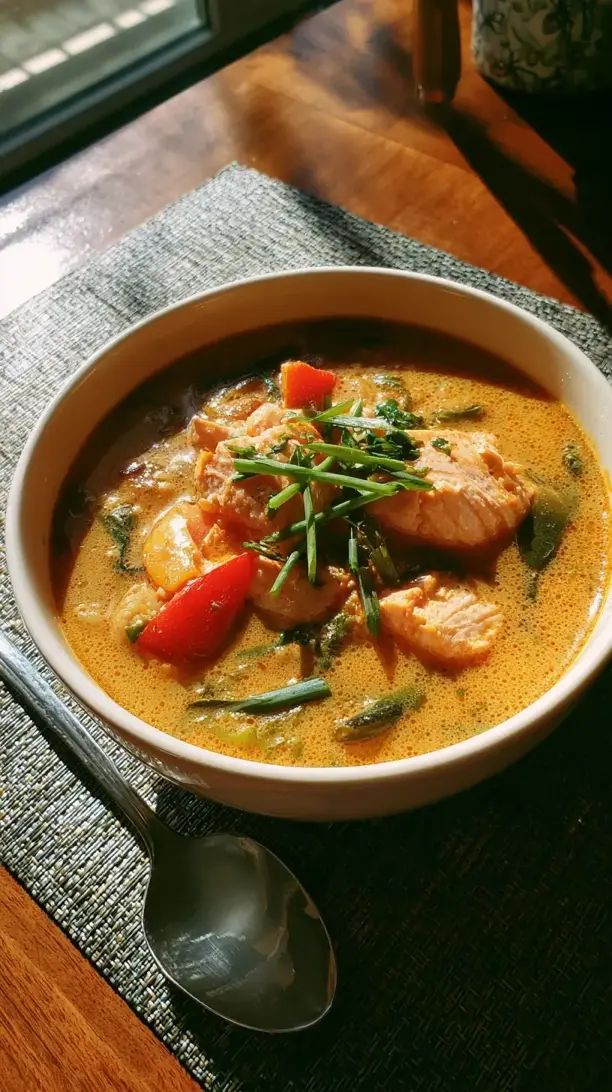
Coconut Curry Salmon Soup
Make this easy Coconut Curry Salmon Soup in under 30 minutes! A creamy, spicy broth with tender salmon. Get the simple one-pot recipe now.
Ingredients
For the soup:
-
1 tbsp coconut or avocado oil
-
1 medium yellow onion (thinly sliced)
-
3 cloves garlic (minced)
-
1 tbsp fresh ginger (grated)
-
2-3 tbsp red curry paste
-
1 can full-fat coconut milk (400 ml)
-
4 cups fish or vegetable broth
-
1 tbsp fish sauce
-
1 tbsp brown sugar or maple syrup
-
1 red bell pepper (sliced)
-
150 g shiitake or cremini mushrooms (sliced)
-
450 g skinless salmon fillet (cut into 1-inch chunks)
-
Juice of 1 lime
For serving:
-
fresh cilantro
-
Thai basil
-
sliced red chili
-
lime wedges
Instructions
-
Heat the oil in your large pot over medium heat. Add the sliced onion and cook for about 4-5 minutes, stirring occasionally, until it becomes soft and translucent.01
-
Stir in the minced garlic and grated ginger. Cook for just one minute—until incredibly fragrant—but be careful not to let the garlic burn. Now, add the red curry paste. Cook it for another minute, mashing and stirring it into the onion mixture.02
-
Pour in the coconut milk, broth, fish sauce, and brown sugar. Give everything a good stir, scraping the bottom of the pot to lift any tasty browned bits. Bring the liquid to a lively simmer. Let it simmer for about 5 minutes to allow the flavors to start melding together.03
-
Add the sliced bell pepper and mushrooms to the simmering broth. Let them cook for 5-7 minutes, until the peppers have softened slightly and the mushrooms are tender.04
-
Reduce the heat to low, so the broth is just barely bubbling. Gently add the chunks of salmon to the pot, ensuring they’re submerged in the liquid. Let the salmon poach gently for 4-6 minutes. It’s done when it’s opaque and flakes easily with a fork.05
-
Turn off the heat. Stir in the fresh lime juice. Ladle the soup into deep bowls, making sure each one gets plenty of salmon, veggies, and that glorious broth. Top generously with fresh cilantro, Thai basil, and a few slices of red chili for a fresh, vibrant finish.06