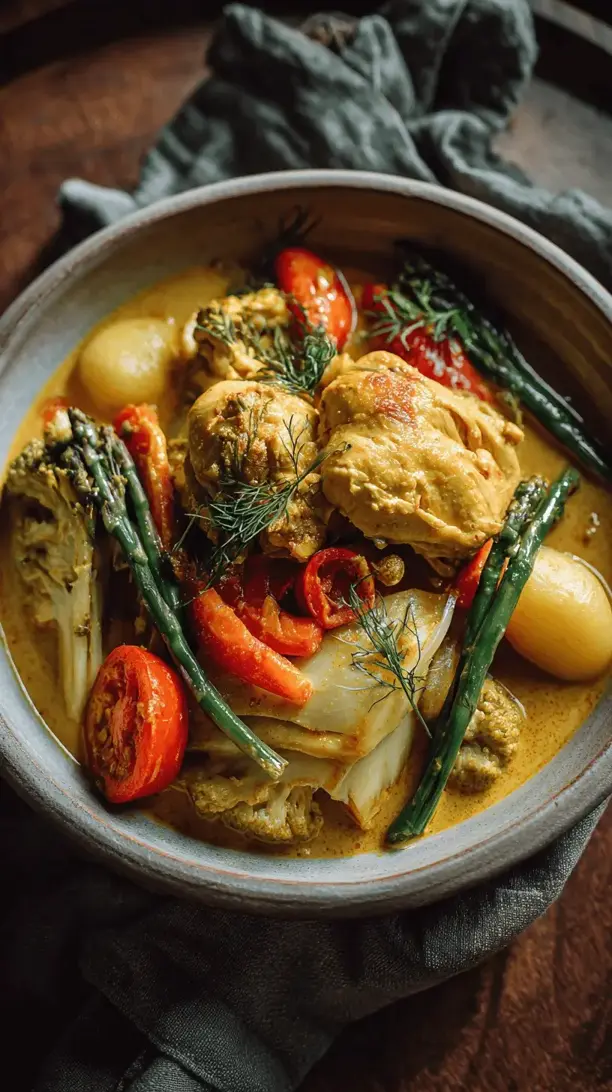

Why You’ll Love This Coconut Curry Chicken with Vegetables
- It’s a complete, balanced meal in one pot. You get your lean protein from the chicken, a rainbow of nutrients from the vegetables, and that creamy, dreamy sauce that brings it all together. No need to fuss with multiple side dishes—this is dinner, sorted.
- The flavour is complex but the process is simple. We’re building layers of flavour with aromatics like ginger and garlic, but it’s not a fussy, hours-long affair. The active cooking time is really manageable, and the simmering does most of the work for you.
- It’s incredibly versatile and forgiving. Not a fan of bell peppers? Swap in green beans. Have some sweet potato that needs using? Cube it up and throw it in! This recipe is a fantastic template that encourages improvisation.
- It makes fantastic leftovers. Honestly, I think it might even taste better the next day. The flavours have more time to mingle and deepen, making it a perfect make-ahead lunch that will have your coworkers green with envy.
Ingredients & Tools
- 1.5 lbs (680 g) boneless, skinless chicken thighs or breasts, cut into 1-inch pieces
- 1 tbsp neutral oil (like avocado or grapeseed)
- 1 large yellow onion, thinly sliced
- 1 red bell pepper, sliced
- 2 medium carrots, sliced on a diagonal
- 3-4 tbsp red or yellow curry paste (adjust for spice preference)
- 4 cloves garlic, minced
- 1 tbsp fresh ginger, grated
- 1 can (13.5 oz / 400 ml) full-fat coconut milk
- 1 cup chicken broth or water
- 1 tbsp fish sauce (or soy sauce/tamari for a vegetarian version)
- 1 tbsp coconut sugar or brown sugar
- 1 tbsp fresh lime juice
- To garnish: Fresh cilantro, basil, and/or sliced red chilli
Tools: A large, heavy-bottomed pot or Dutch oven, a wooden spoon, a sharp knife, and a microplane or fine grater for the ginger.
A quick note on the curry paste—this is where a lot of the flavour comes from, so try to find a good-quality one. The brand can make a real difference! And please, for the creamiest result, use full-fat coconut milk. The light version just won’t give you the same rich, luxurious texture.
Serves: 4-5 | Prep Time: 15 minutes | Cook Time: 25 minutes | Total Time: 40 minutes
Before You Start: Tips & Ingredient Notes
- Chicken thighs vs. breasts? I’m team thigh all the way for curries. They have more fat, which means they stay incredibly juicy and tender even through the simmering process. Breast meat can work, but you have to be much more careful not to overcook it.
- Is your curry paste the star? Absolutely. Taste a tiny bit straight from the jar to gauge its heat level. This will help you decide how much to use. Remember, you can always add more later, but you can’t take it out!
- Don’t skip the fish sauce. I know, it smells strong, but I promise it won’t make your curry taste fishy. It adds a deep, savoury, umami backbone that balances the sweetness of the coconut milk perfectly. It’s the secret weapon.
- Prep everything before you heat the oil. This is a fast-moving recipe once you start cooking. Having your onions sliced, chicken cubed, and ginger grated and ready to go—what chefs call *mise en place*—will make the process smooth and stress-free.
How to Make Coconut Curry Chicken with Vegetables
Step 1: Brown the Chicken. Pat your chicken pieces completely dry with a paper towel—this is crucial for getting a nice sear instead of steaming. Heat the oil in your large pot over medium-high heat. Once the oil is shimmering, add the chicken in a single layer (you may need to do this in two batches to avoid crowding the pan). Sear for about 2-3 minutes per side, until you get a beautiful golden-brown colour. The chicken doesn’t need to be cooked through at this point. Remove the chicken to a clean plate and set aside.
Step 2: Sauté the Aromatics and Veggies. Reduce the heat to medium. In the same pot, you’ll have all those delicious browned bits from the chicken. Add the sliced onion and carrots and cook for about 4-5 minutes, until the onion starts to soften and become translucent. Now, add the bell pepper and cook for another 2 minutes. You’re building a flavour base here.
Step 3: Bloom the Curry Paste. Push the vegetables to the side of the pot. Add the curry paste, minced garlic, and grated ginger to the centre. Let it cook for 30-60 seconds, stirring constantly. You’ll notice the aroma become incredibly fragrant—this step, called “blooming,” wakes up the spices in the paste and deepens their flavour dramatically.
Step 4: Create the Luxurious Sauce. Pour in about half of the coconut milk, using your wooden spoon to scrape up all those browned bits from the bottom of the pot. This is where all the flavour lives! Stir everything together, then add the remaining coconut milk, chicken broth, fish sauce, and coconut sugar. Give it a good stir until everything is well combined.
Step 5: Simmer to Perfection. Return the seared chicken (and any accumulated juices) to the pot. Bring the curry to a gentle simmer, then reduce the heat to low, cover, and let it cook for about 10-15 minutes. This gives the chicken time to cook through and the flavours time to meld. The sauce should thicken slightly.
Step 6: The Final Flourish. Turn off the heat. Stir in the fresh lime juice. Taste the curry—this is your moment to adjust the seasoning. Does it need a pinch more salt? A bit more lime for acidity? Maybe another teaspoon of sugar to balance the heat? Adjust to your liking. Finally, stir in a big handful of fresh cilantro or basil right before serving for a burst of freshness.
Serving Suggestions
Complementary Dishes
- Steamed Jasmine Rice — The classic, fluffy companion that soaks up the creamy sauce perfectly. Its subtle floral note is a match made in heaven.
- Basmati Rice or Quinoa — For a slightly different texture and nutty flavour. Quinoa is a great way to add a extra protein boost if you like.
- Simple Roti or Naan Bread — Absolutely essential for scooping up every last bit of sauce from your bowl. Warm it up for the best experience.
Drinks
- A Crisp, Off-Dry Riesling — The slight sweetness and high acidity cut through the richness of the coconut milk beautifully, cleansing the palate between bites.
- A Light Lager or Pale Ale — The carbonation and mild bitterness are a fantastic contrast to the spicy, creamy curry. It’s a refreshing pairing.
- Sparkling Water with Lime — A non-alcoholic option that provides a crisp, clean counterpoint to the dish’s complexity.
Something Sweet
- Fresh Mango Slices — The ultimate, simple finish. The sweet, juicy mango is a refreshing contrast and continues the tropical theme.
- Coconut Ice Cream — Double down on the coconut flavour! The cold, creamy sweetness is a perfect end to the meal.
- A Dark Chocolate Square — A small piece of high-quality dark chocolate with a high cocoa percentage offers a rich, slightly bitter note that contrasts nicely.
Top Mistakes to Avoid
- Mistake: Not tasting your curry paste first. The heat level can vary wildly between brands. Tasting it beforehand prevents your curry from being unexpectedly mouth-on-fire or disappointingly bland.
- Mistake: Crowding the pan when browning the chicken. If you add too much chicken at once, the pan temperature drops, and the chicken steams instead of sears. You lose that lovely caramelized flavour. Take the time to brown in batches.
- Mistake: Skipping the step of blooming the curry paste. Just stirring it into the liquid doesn’t unlock its full potential. That quick fry in the oil transforms the flavour from flat and one-dimensional to deep and complex.
- Mistake: Adding the lime juice too early. If you add it during the simmer, its bright, fresh acidity will cook out. Stirring it in at the very end preserves that zingy lift that makes the dish pop.
Expert Tips
- Tip: Shake your can of coconut milk before opening. Sometimes the cream and liquid separate. Giving it a good shake ensures you get a homogenous, creamy mixture right from the start.
- Tip: For a thicker sauce, let it reduce. If you prefer a thicker, more coating consistency, simply simmer the curry uncovered for the last 5-7 minutes. The extra evaporation will concentrate the flavours and thicken the sauce nicely.
- Tip: Make it ahead for deeper flavour. This curry is a fantastic candidate for making a day in advance. Let it cool completely, store it in the fridge, and gently reheat it. The flavours meld and intensify wonderfully overnight.
- Tip: Freeze individual portions. This curry freezes exceptionally well. Portion it into airtight containers (leave a little space for expansion) and freeze for up to 3 months for a ready-made future meal.
FAQs
Can I make this curry vegetarian or vegan?
Absolutely! It’s a very easy swap. Instead of chicken, use a sturdy vegetable like cubed sweet potato or cauliflower florets, and add them when you would add the chicken back in. Use vegetable broth instead of chicken broth, and substitute the fish sauce with soy sauce or tamari. The cooking time might be slightly longer to ensure the vegetables are tender. For a protein boost, you could also add a can of drained and rinsed chickpeas in the last 5 minutes of cooking.
My curry is too spicy! How can I tone it down?
Don’t worry, this happens to the best of us! The quickest fix is to stir in a bit more full-fat coconut milk or a splash of regular cream. You can also add a touch more coconut sugar or even a spoonful of plain yogurt or sour cream (stir it in off the heat to prevent curdling). Adding more non-spicy vegetables, like extra bell peppers or zucchini, can also help dilute the heat.
What other vegetables can I add?
This recipe is a blank canvas! Think about cooking times: sturdy veggies like potatoes, sweet potatoes, or cauliflower should go in with the chicken to simmer. Quick-cooking veggies like zucchini, spinach, or green beans can be stirred in during the last 5 minutes of cooking. Frozen peas are a great addition right at the end, just to heat through. Get creative!
How should I store and reheat leftovers?
Store cooled leftovers in an airtight container in the refrigerator for up to 4 days. Reheat gently on the stovetop over low heat, stirring occasionally. You may need to add a small splash of water or broth to loosen the sauce as it will thicken when chilled. Avoid boiling it vigorously when reheating.
Can I use light coconut milk?
You can, but honestly, I wouldn’t recommend it for this recipe. Full-fat coconut milk provides the rich, creamy texture and mouthfeel that is essential to a great curry. Light coconut milk is more watery and can make the sauce taste thin and less satisfying. If you’re concerned about calories, it’s better to enjoy a smaller portion of the real, decadent thing!