
Why You’ll Love This Chickpea Pasta with Spinach and Feta
- It’s a true one-pot wonder. Well, one pot and a colander, but you know what I mean. The sauce comes together in the same pan you toast the chickpeas, which means less cleanup and more flavor built right into the dish.
- The textures are a dream. You get the satisfying al dente pasta, the creamy-soft feta, the slight pop of the chickpeas, and the tender spinach all in one forkful. It’s a really satisfying eating experience that never feels boring.
- It’s lightning fast. From start to finish, you’re looking at about 25 minutes, and most of that is passive time while the pasta cooks. It’s the perfect solution for those “what’s for dinner?!” moments that sneak up on you.
- It feels fancy without the fuss. The combination of salty feta, bright lemon, and earthy spinach tastes sophisticated, like something you’d order at a cute little trattoria. The trick is in the simple, high-quality ingredients doing all the work for you.
Ingredients & Tools
- 225 g short pasta, like fusilli, penne, or orecchiette
- 1 can (400 g) chickpeas, rinsed and drained
- 2 tbsp olive oil
- 3 cloves garlic, minced
- 1/2 tsp red pepper flakes (adjust to your heat preference)
- 120 g fresh baby spinach
- 150 g feta cheese, crumbled
- Zest and juice of 1 lemon
- Salt and freshly ground black pepper to taste
- Handful of fresh parsley or dill, chopped (optional, for garnish)
Tools: A large pot for boiling pasta, a large skillet or Dutch oven, a microplane or zester for the lemon.
Don’t be tempted to skip rinsing the chickpeas—it washes away that starchy canning liquid and lets their lovely, nutty flavor shine. And when it comes to the feta, buying a block and crumbling it yourself makes a world of difference in both texture and taste compared to the pre-crumbled stuff.
Serves: 3-4 | Prep Time: 10 minutes | Cook Time: 15 minutes | Total Time: 25 minutes
Before You Start: Tips & Ingredient Notes
- Pasta shape matters. I really recommend a short, sturdy shape with nooks and crannies. Fusilli or orecchiette are perfect because they trap the chickpeas and little bits of feta, ensuring every bite is well-dressed.
- Don’t shy away from the red pepper flakes. Even if you’re not a spice-lover, a half teaspoon adds a gentle, warming background heat that beautifully balances the saltiness of the feta. You can always add more at the end!
- Reserve that pasta water! This is the golden rule of pasta-making, but it’s especially crucial here. The starchy, salty water is the magic ingredient that will help emulsify the oil, lemon juice, and melting feta into a silky, clingy sauce.
- Fresh lemon zest is non-negotiable. The juice provides the tang, but the zest is where all the fragrant, sunny lemon oil lives. It lifts the entire dish and makes the flavors pop in a way bottled juice just can’t replicate.
How to Make Chickpea Pasta with Spinach and Feta
Step 1: Bring a large pot of well-salted water to a rolling boil. Add your pasta and cook according to package directions until al dente. Just before draining, carefully scoop out about a cup of the starchy pasta water and set it aside. This is our sauce secret weapon!
Step 2: While the pasta cooks, heat the olive oil in a large skillet over medium heat. Add the rinsed and drained chickpeas and cook for about 5-7 minutes, shaking the pan occasionally, until they start to turn golden and slightly crispy on the outside. You’ll hear a gentle popping sound—that’s a good sign!
Step 3: Push the chickpeas to one side of the skillet and add the minced garlic and red pepper flakes to the cleared space. Cook for just 30-60 seconds until the garlic is incredibly fragrant. Be careful not to let it burn, or it will turn bitter. Now, stir everything together so the chickpeas are coated in the garlicky oil.
Step 4: Reduce the heat to low. Add the entire bag of fresh spinach to the skillet. It will look like a mountain, but don’t worry! Use tongs to gently toss and wilt the spinach into the warm chickpeas. This should only take a couple of minutes. You’re aiming for it to be just wilted and bright green.
Step 5: Now, add the drained, cooked pasta directly into the skillet with the chickpea and spinach mixture. Sprinkle over about two-thirds of the crumbled feta, the lemon zest, and the lemon juice. Toss everything to combine.
Step 6: Here’s where the magic happens. Start adding the reserved pasta water, a few tablespoons at a time, tossing continuously. You’ll see the feta start to melt and create a creamy, light sauce that clings to every piece of pasta. You probably won’t need the full cup—stop when the sauce looks glossy and coats the back of a spoon.
Step 7: Give it a taste and season with black pepper. Be cautious with adding salt at this stage, as the feta is quite salty. You might not need any at all! Divide the pasta among bowls and top with the remaining crumbled feta and the fresh herbs, if using. Serve immediately while it’s wonderfully warm.
Serving Suggestions
Complementary Dishes
- Simple Garlic Bread — There’s nothing better for soaking up every last bit of the lemony, cheesy sauce. A crusty baguette, toasted with a little garlic butter, is the perfect sidekick.
- Grilled Chicken or Shrimp — If you’re looking to add a little more protein, some simply seasoned grilled chicken breasts or shrimp tossed right into the pasta make it a heartier meal.
- A Crisp Green Salad — A simple arugula salad with a sharp lemon vinaigrette provides a fresh, peppery contrast that cuts through the richness of the pasta beautifully.
Drinks
- A Crisp Sauvignon Blanc — The bright acidity and citrus notes in the wine will mirror the lemon in the dish perfectly, creating a really harmonious pairing.
- Sparkling Water with Lemon — For a non-alcoholic option, the bubbles and citrus are incredibly refreshing and help cleanse the palate between bites.
- A Light Italian Lager — The crisp, clean finish of a cold beer is a fantastic, casual match for the savory, salty flavors in the pasta.
Something Sweet
- Lemon Sorbet — Continuing the lemon theme with a light, palate-cleansing dessert feels just right. It’s a bright and refreshing way to end the meal.
- Almond Biscotti — The nutty, crunchy texture of biscotti is lovely for dipping into a cup of espresso after dinner, offering a simple, not-too-sweet finish.
- Fresh Berries with a Dollop of Cream — A bowl of mixed summer berries, maybe with a tiny sprinkle of sugar and a spoonful of Greek yogurt or whipped cream, is effortless and satisfying.
Top Mistakes to Avoid
- Mistake: Overcooking the pasta. Since the pasta will be tossed in the warm skillet, it continues to cook a little. If you boil it to a soft mush, it’ll become unpleasantly soggy by the time you serve it. Al dente is the goal!
- Mistake: Burning the garlic. Garlic goes from fragrant and golden to bitter and burnt in a matter of seconds. Keep a close eye on it and have your next ingredients ready to go so you can move quickly.
- Mistake: Skipping the pasta water. This is the biggest one! Using regular tap water will result in a watery, separated sauce. The starch in the pasta water is essential for creating a creamy, emulsified sauce that clings to every ingredient.
- Mistake: Adding all the feta at once. Saving some for the top not only makes the dish look more appealing, but it gives you pockets of cool, salty cheese that haven’t fully melted, which is a wonderful textural contrast.
Expert Tips
- Tip: Toast your chickpeas well. Don’t just warm them through. Giving them a proper toast until they’re golden and slightly crispy adds a whole new dimension of nutty flavor and a better texture that stands up to the pasta.
- Tip: Wilt the spinach off the heat. After you’ve added the spinach, you can often turn the heat off entirely. The residual heat in the pan is usually enough to wilt it perfectly without overcooking it, preserving its vibrant color and nutrients.
- Tip: Let the pasta finish cooking in the sauce. When you add the pasta to the skillet, it should be just shy of al dente. Let it simmer for the last minute or two in the sauce with the pasta water. This allows the pasta to absorb the flavors directly.
- Tip: Customize with your favorite veggies. This recipe is a fantastic base. Feel free to add in some halved cherry tomatoes in the last minute of cooking, or some sautéed mushrooms or zucchini along with the chickpeas.
FAQs
Can I make this dish ahead of time?
You can prep the components ahead to save time! You can toast the chickpeas and have your garlic and spinach prepped. However, I highly recommend assembling and eating it fresh. The pasta can absorb the sauce and become a bit dry if left to sit. If you do have leftovers, reheating them in a skillet with a splash of water or extra lemon juice will help revive it.
What can I use instead of feta?
If you’re not a feta fan, goat cheese would be a fantastic substitute, offering a similar creamy, tangy profile. For a dairy-free version, a good vegan feta or even some nutritional yeast mixed with a little olive oil and lemon juice can provide a cheesy, salty flavor. The texture will be different, but the spirit of the dish remains.
My sauce seems too watery. How can I fix it?
Don’t panic! The sauce will often thicken up as it sits for a minute off the heat. If it’s still too thin, let it simmer on low for another minute or two to reduce. Conversely, if it becomes too thick, just stir in another tablespoon or two of warm water until it reaches the desired consistency.
Can I use frozen spinach?
You can, but you’ll lose a bit of the fresh vibrancy. Thaw the frozen spinach completely and then squeeze out every last drop of water using your hands or a clean kitchen towel. If you don’t, you’ll add a lot of excess moisture to the dish and make the sauce watery.
Is this recipe gluten-free?
It easily can be! Just ensure you use your favorite gluten-free pasta. Many chickpea-based or lentil-based pastas work wonderfully here and actually complement the chickpeas in the dish. The rest of the ingredients are naturally gluten-free.
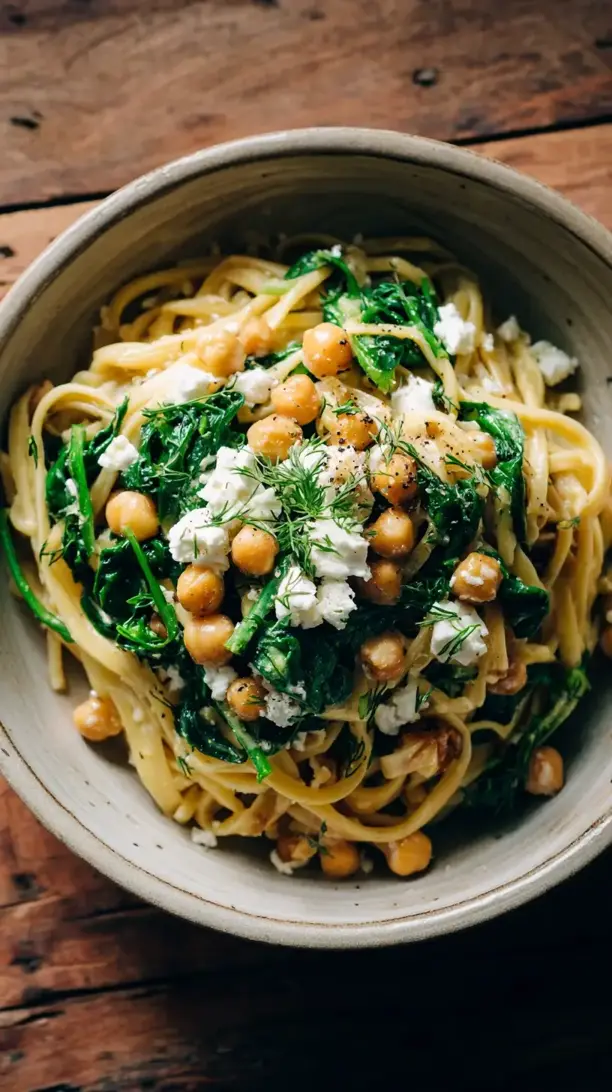
Chickpea Pasta With Spinach And Feta
Whip up this easy chickpea pasta with spinach & feta in just 25 minutes! A creamy, one-pot wonder that's perfect for busy weeknights. Get Mike's simple, flavorful recipe.
Ingredients
Ingredients
-
225 g short pasta, like fusilli, penne, or orecchiette
-
1 can chickpeas (400 g, rinsed and drained)
-
2 tbsp olive oil
-
3 cloves garlic (minced)
-
1/2 tsp red pepper flakes (adjust to your heat preference)
-
120 g fresh baby spinach
-
150 g feta cheese (crumbled)
-
1 lemon (zest and juice)
-
salt and freshly ground black pepper (to taste)
-
Handful fresh parsley or dill (chopped (optional, for garnish))
Instructions
-
Bring a large pot of well-salted water to a rolling boil. Add your pasta and cook according to package directions until al dente. Just before draining, carefully scoop out about a cup of the starchy pasta water and set it aside. This is our sauce secret weapon!01
-
While the pasta cooks, heat the olive oil in a large skillet over medium heat. Add the rinsed and drained chickpeas and cook for about 5-7 minutes, shaking the pan occasionally, until they start to turn golden and slightly crispy on the outside. You'll hear a gentle popping sound—that's a good sign!02
-
Push the chickpeas to one side of the skillet and add the minced garlic and red pepper flakes to the cleared space. Cook for just 30-60 seconds until the garlic is incredibly fragrant. Be careful not to let it burn, or it will turn bitter. Now, stir everything together so the chickpeas are coated in the garlicky oil.03
-
Reduce the heat to low. Add the entire bag of fresh spinach to the skillet. It will look like a mountain, but don't worry! Use tongs to gently toss and wilt the spinach into the warm chickpeas. This should only take a couple of minutes. You're aiming for it to be just wilted and bright green.04
-
Now, add the drained, cooked pasta directly into the skillet with the chickpea and spinach mixture. Sprinkle over about two-thirds of the crumbled feta, the lemon zest, and the lemon juice. Toss everything to combine.05
-
Here's where the magic happens. Start adding the reserved pasta water, a few tablespoons at a time, tossing continuously. You'll see the feta start to melt and create a creamy, light sauce that clings to every piece of pasta. You probably won't need the full cup—stop when the sauce looks glossy and coats the back of a spoon.06
-
Give it a taste and season with black pepper. Be cautious with adding salt at this stage, as the feta is quite salty. You might not need any at all! Divide the pasta among bowls and top with the remaining crumbled feta and the fresh herbs, if using. Serve immediately while it's wonderfully warm.07