
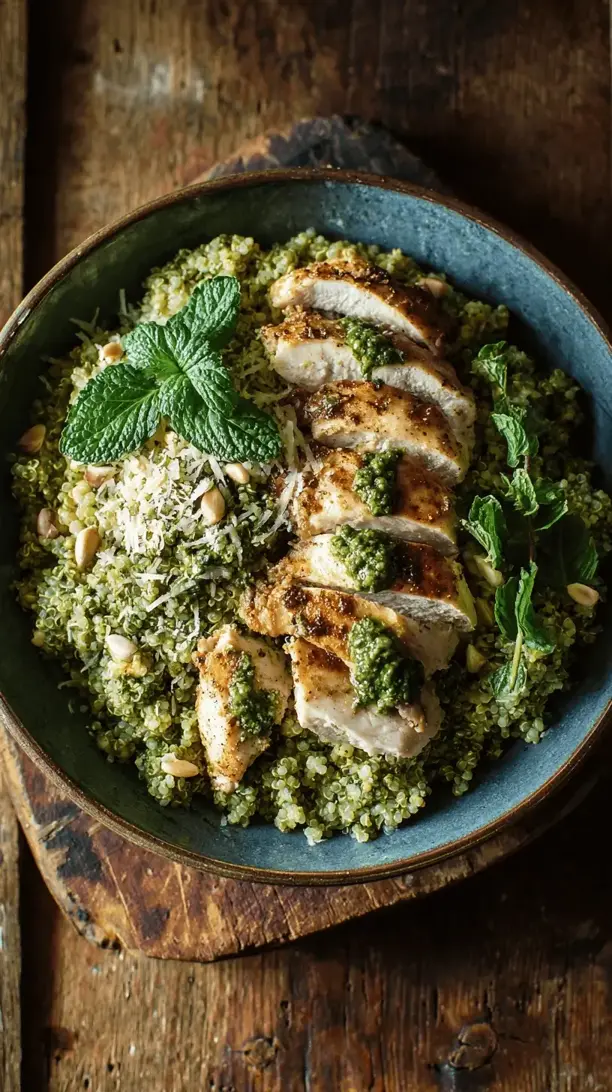

Why You’ll Love This Chicken Pesto Quinoa Bowl
- It’s a complete meal in one bowl. You get your lean protein, your whole grains, and your veggies all mingling together beautifully. No need for complicated side dishes—this bowl has got you covered from every nutritional angle.
- The pesto is a total game-changer. We’re making a quick, vibrant basil pesto from scratch, and it’s so much better than the jarred stuff. It coats every single ingredient in a layer of herby, garlicky, cheesy goodness that ties the whole bowl together.
- It’s meal-prep heaven. Every component can be made ahead of time. Cook the quinoa and chicken on Sunday, whisk up the pesto, and chop your veggies. Come lunch or dinner time, it’s just a matter of assembly. Your future, less-stressed self will thank you.
- Endlessly customizable. Not a fan of cherry tomatoes? Try roasted red peppers. Want to make it vegetarian? Chickpeas are a fantastic swap for the chicken. This recipe is a wonderful foundation for your own creative twists.
Ingredients & Tools
- For the Chicken & Quinoa:
- 2 boneless, skinless chicken breasts (about 1 lb or 450 g)
- 1 tbsp olive oil
- 1 cup (180 g) uncooked quinoa, rinsed well
- 2 cups (480 ml) low-sodium chicken broth or water
- 1/2 tsp salt, plus more for seasoning
- 1/4 tsp black pepper
- For the Pesto:
- 2 cups packed fresh basil leaves
- 1/3 cup (35 g) pine nuts, toasted
- 2 cloves garlic, roughly chopped
- 1/2 cup (50 g) freshly grated Parmesan cheese
- 1/2 cup (120 ml) extra-virgin olive oil
- 2 tbsp fresh lemon juice
- 1/4 tsp salt
- For the Bowl Assembly:
- 1 cup cherry tomatoes, halved
- 1 medium cucumber, diced
- 1 avocado, sliced
- 2 cups baby spinach or arugula
- 1/4 cup toasted pine nuts (for garnish)
- Lemon wedges for serving
Tools: A medium saucepan with a lid, a large skillet, a food processor or high-speed blender, measuring cups and spoons.
Using a good, flavorful broth for the quinoa instead of water makes a surprising difference—it adds a subtle savory depth. And honestly, toasting the pine nuts for the pesto is a non-negotiable step for me; it unlocks their nutty, buttery flavor and takes the pesto from good to absolutely incredible.
Serves: 4 | Prep Time: 20 minutes | Cook Time: 25 minutes | Total Time: 45 minutes
Before You Start: Tips & Ingredient Notes
- Rinse your quinoa! This is the single most important tip for avoiding bitterness. Quinoa has a natural coating called saponin that can taste soapy. A quick rinse in a fine-mesh strainer under cold water until the water runs clear makes all the difference.
- Don’t skip toasting the nuts. Whether you’re using pine nuts or a substitute like walnuts, toasting them in a dry skillet for a few minutes until fragrant is a game-changer. It deepens their flavor so much and gives the pesto a richer, more complex profile.
- Use fresh, high-quality basil. The pesto is the star here, so you want vibrant, green basil without any black spots. If you have a plant, even better! The aroma alone will make you happy.
- Let the chicken rest. After cooking, transfer your chicken breasts to a cutting board and let them sit for 5-10 minutes before slicing. This allows the juices to redistribute throughout the meat, ensuring every bite is moist and tender, not dry.
How to Make Chicken Pesto Quinoa Bowl
Step 1: Cook the Quinoa. First, rinse your quinoa thoroughly in a fine-mesh strainer. In a medium saucepan, combine the rinsed quinoa with the chicken broth (or water) and a pinch of salt. Bring it to a boil over high heat. Once boiling, immediately reduce the heat to low, cover the pot with a tight-fitting lid, and let it simmer for about 15 minutes. You’ll know it’s done when the grains are translucent and the little white “tails” (the germ) have spiraled out. Remove it from the heat and let it sit, still covered, for another 10 minutes. This steaming time is key for fluffy quinoa. Then, fluff it gently with a fork.
Step 2: Cook the Chicken. While the quinoa is cooking, pat the chicken breasts dry with a paper towel and season both sides generously with salt and pepper. Heat the olive oil in a large skillet over medium-high heat. Once the oil is shimmering, add the chicken. Cook for 5-7 minutes per side, depending on thickness, until the outside is golden brown and the internal temperature reaches 165°F (74°C). Transfer the chicken to a clean cutting board to rest. This is the perfect time to start your pesto.
Step 3: Make the Pesto. In the bowl of a food processor, combine the fresh basil, toasted pine nuts, garlic, and Parmesan cheese. Pulse a few times until everything is coarsely chopped. With the processor running, slowly drizzle in the extra-virgin olive oil until the pesto is smooth and emulsified. Stop and scrape down the sides as needed. Finally, add the fresh lemon juice and salt, and pulse a few more times to combine. Taste it and adjust seasoning—you might want more salt or another squeeze of lemon. The aroma at this point is just… heavenly.
Step 4: Prepare the Veggies. This is the easy part. While the chicken rests, halve your cherry tomatoes, dice the cucumber, slice the avocado, and get your greens ready. Toasting the extra pine nuts for garnish in the same skillet you used for the chicken (just wipe it out quickly) adds a nice final crunch.
Step 5: Slice and Assemble. After the chicken has rested, slice it against the grain into thin strips. Now, for the fun part: building your bowls! Start with a base of baby spinach or arugula. Then, add a generous scoop of the fluffy quinoa. Arrange the sliced chicken, tomatoes, cucumber, and avocado artfully around the bowl. The trick is to get a little bit of everything in each bite. Drizzle a hefty amount of that glorious green pesto over the top, and finish with a sprinkle of those extra toasted pine nuts and a lemon wedge on the side for squeezing over just before eating.
Serving Suggestions
Complementary Dishes
- A simple garlic bread — There’s pesto involved, so having something to mop up any extra sauce is always a good idea. A warm, crusty slice of bread is the perfect companion.
- A light white bean soup — If you’re serving this for a dinner party, a simple, brothy soup made with cannellini beans, garlic, and rosemary makes for a lovely, light starter that won’t compete with the flavors of the bowl.
Drinks
- A crisp Sauvignon Blanc — The herbal notes in the wine will mirror the basil in the pesto beautifully, and its bright acidity will cut through the richness of the dish perfectly.
- Sparkling water with lemon — For a non-alcoholic option, the bubbles and citrus are incredibly refreshing and help cleanse the palate between bites of this flavorful bowl.
Something Sweet
- Lemon sorbet — The clean, sharp, citrusy finish of a good sorbet is the ideal way to end this meal. It feels light and refreshing, continuing the bright theme of the bowl itself.
- Almond biscotti — The nuttiness of the biscotti echoes the pine nuts in the pesto, and its crunchy texture provides a nice contrast after the soft components of the bowl.
Top Mistakes to Avoid
- Mistake: Not rinsing the quinoa. I’ve said it before and I’ll say it again! You risk a bitter, unpleasant aftertaste that can really throw off the whole dish. It only takes a minute, so just do it.
- Mistake: Overcooking the chicken. This is the fastest way to end up with dry, tough chicken. Use a meat thermometer if you have one—165°F (74°C) is your target. Letting it rest is just as important.
- Mistake: Adding oil too quickly to the pesto. If you just dump all the oil in at once, the pesto might not emulsify properly and can separate, becoming oily. A slow, steady stream while the processor is running is the key to a creamy, cohesive sauce.
- Mistake: Assembling the bowls too far in advance. If you add the pesto to the spinach and let it sit, the greens will wilt. For the best texture, assemble just before you’re ready to eat.
Expert Tips
- Tip: Massage your kale. If you decide to use kale instead of spinach or arugula, tear the leaves from the tough stems, chop them, and add a tiny drizzle of olive oil and a pinch of salt. Then, literally massage it with your hands for a minute until it softens and darkens in color. It makes it so much more tender and enjoyable to eat raw.
- Tip: Make a double batch of pesto. Pesto freezes beautifully. Spoon any extra into an ice cube tray, freeze it solid, then pop the cubes into a freezer bag. You’ll have instant summer flavor ready for pasta, sandwiches, or another round of these bowls on a busy night.
- Tip: Use the residual heat. After you’ve cooked the chicken and set it aside to rest, you can toss your cherry tomatoes into the still-warm skillet for just a minute. They’ll get a slight char and warm up, which intensifies their sweetness—a delicious variation.
- Tip: Add a protein-powered punch. For an even bigger protein boost, stir a tablespoon or two of hemp hearts or nutritional yeast into the cooked quinoa before assembling the bowls. You won’t really taste them, but they’ll add a nutritional punch.
FAQs
Can I make this recipe vegetarian?
Absolutely! The chicken is an easy swap. My favorite vegetarian option is to use chickpeas—either drained and rinsed from a can, or patted dry and roasted with a little oil and spices until slightly crispy. Cubed, pan-fried halloumi cheese or crispy tofu would also be fantastic protein substitutes that hold up well to the pesto.
How long do the leftovers keep?
It’s best to store the components separately in airtight containers in the fridge. The cooked quinoa and chicken will last for 3-4 days. The pesto will stay vibrant green for about 5 days if you press a piece of plastic wrap directly onto its surface before sealing the container. The chopped veggies are best eaten within 1-2 days. Assemble your bowls fresh when you’re ready to eat.
My pesto turned out bitter. What happened?
This can happen for a couple of reasons. First, you might not have rinsed the quinoa, and that bitterness transferred. More likely, the garlic was a bit old or you accidentally over-processed it, which can release harsh compounds. Next time, try using one smaller, fresher garlic clove to start, and pulse rather than blend continuously. Also, toasting your nuts is crucial, as raw nuts can sometimes have a slightly bitter edge.
Can I use a different nut for the pesto?
Of course! Pine nuts can be pricey. Walnuts are a classic, affordable substitute with a great earthy flavor. Blanched almonds or even cashews work wonderfully too. Just make sure to toast whatever nut you choose to bring out its best flavor. You could even use sunflower seeds for a nut-free version.
Is there a way to make the pesto creamier?
For an extra creamy, almost restaurant-style pesto, try adding a tablespoon or two of plain Greek yogurt or a splash of heavy cream when you’re blending it. This creates a richer, smoother sauce that clings to the quinoa and chicken beautifully. It’s a little indulgent, but oh-so-good.


