
Why You’ll Love This Cauliflower Tabbouleh
- It’s incredibly light and fresh. Without the bulgur, the cauliflower base lets the herbs and lemon really sing. Each bite is a crisp, clean burst of flavor that won’t weigh you down, even on the hottest day.
- The texture is a delightful surprise. When you grate the cauliflower to a rice-like consistency, it creates this wonderfully fluffy and absorbent base that mimics the mouthfeel of grains perfectly—but it’s entirely vegetable-based.
- It’s a fantastic make-ahead option. Unlike grain-based salads that can get soggy, this cauliflower version actually benefits from a little time in the fridge. The flavors meld together beautifully, making it an ideal prep-ahead lunch or a stress-free dish for entertaining.
- It’s endlessly adaptable. Feel like adding some crunch from diced cucumber or a pop of sweetness from pomegranate seeds? Go for it! This recipe is a wonderful canvas for your own creative touches.
Ingredients & Tools
- 1 large head of cauliflower (about 600-700g), cut into florets
- 1 large bunch fresh flat-leaf parsley (about 2 cups, finely chopped)
- 1/2 bunch fresh mint (about 1/2 cup, finely chopped)
- 4-5 spring onions, finely sliced
- 150 g cherry tomatoes, quartered
- Juice of 2 large lemons (about 1/3 to 1/2 cup)
- 3 tbsp extra virgin olive oil
- 1/2 tsp sea salt, plus more to taste
- 1/4 tsp freshly ground black pepper
Tools: A box grater or food processor with a grating blade, a large mixing bowl, a sharp knife, a clean kitchen towel or several layers of paper towels.
Honestly, the quality of your ingredients really shines here. Since there are so few components, a good, grassy olive oil and fresh, vibrant herbs make all the difference. Don’t be shy with the lemon juice—it’s the backbone of the dressing and balances the earthiness of the cauliflower perfectly.
Serves: 4 as a main, 6 as a side | Prep Time: 20 minutes | Cook Time: 0 minutes | Total Time: 20 minutes
Before You Start: Tips & Ingredient Notes
- Choosing your cauliflower. Look for a head that feels heavy for its size with tight, creamy-white florets and bright green, crisp leaves. Avoid any with significant brown spots or a loose, spreading appearance.
- The parsley prep is key. You want mostly leaves and very tender stems. The trick is to hold the bunch by the stems and run your knife down the leaves—it’s faster than picking each leaf. But do take the time to chop it finely; a rough chop can make the salad feel messy.
- To grate or to process? A food processor is undeniably faster, but pulse carefully—you want a rice-like texture, not a puree. If using a box grater, the large holes work best. Just watch your knuckles!
- Don’t skip the draining step. Cauliflower contains a lot of water. Giving the grated cauliflower a good squeeze in a towel removes excess moisture, preventing a watery salad and ensuring the dressing clings perfectly.
How to Make Cauliflower Tabbouleh
Step 1: First, prepare your cauliflower ‘rice’. If using a food processor, working in batches, pulse the cauliflower florets until they resemble coarse crumbs or grains of rice. If using a box grater, grate the florets on the large holes. You’ll notice it creates a lovely, fluffy texture. Transfer all the grated cauliflower to a clean kitchen towel or a few layers of strong paper towels.
Step 2: This next part is crucial for the perfect texture. Gather the edges of the towel and twist it tightly over the sink, squeezing out as much liquid as you possibly can. You’ll be surprised by how much water comes out! This step ensures your tabbouleh isn’t soggy. Place the squeezed-dry cauliflower into a large mixing bowl.
Step 3: Now, for the herbs. Wash and thoroughly dry your parsley and mint. Strip the leaves from the tougher stems—you can use the tender, thinner stems. Pile them all together and chop them as finely as you can. This fine chop is traditional and allows the herb flavors to distribute evenly throughout the salad. Add them to the bowl with the cauliflower.
Step 4: Time for the remaining veggies. Thinly slice the spring onions, using both the white and light green parts. Quarter the cherry tomatoes. Add them to the bowl. You’ll get a beautiful mix of colors and textures already—the white cauliflower, deep green herbs, vibrant red tomatoes, and pale green onions.
Step 5: Let’s make the simplest, zingiest dressing. In a small bowl or a jug, whisk together the fresh lemon juice, extra virgin olive oil, salt, and pepper. The trick is to taste it now—it should be quite sharp and lemony, as the cauliflower will mellow it out a little. Adjust the salt if needed.
Step 6: Pour the dressing over the cauliflower and herb mixture. Now, using your hands or two large spoons, toss everything together gently but thoroughly. You want every little bit of cauliflower to get coated in that lemony, herby goodness. The aroma at this point is just incredible.
Step 7: Let it rest! This is the secret step. Cover the bowl and let the tabbouleh sit at room temperature for about 10-15 minutes before serving. This allows the flavors to marry and the cauliflower to soften just slightly, becoming even more grain-like. Give it one final toss, taste for seasoning (adding more salt, pepper, or lemon if you like), and serve.
Serving Suggestions
Complementary Dishes
- Grilled Halloumi or Chicken Skewers — The salty, firm texture of halloumi or the smoky char from chicken provides a fantastic protein-packed contrast to the light, acidic salad.
- Hummus and Warm Pita Bread — Create a mezze feast! The creamy, earthy hummus and soft pita are the perfect vehicles for scooping up mouthfuls of this fresh tabbouleh.
- Stuffed Vine Leaves (Dolmas) — Their tangy, briny flavor profile complements the lemony notes in the tabbouleh beautifully, making for a cohesive and elegant spread.
Drinks
- A Crisp, Dry Rosé — The bright acidity and berry notes in a good rosé cut through the herbs and mirror the freshness of the dish perfectly.
- Sparkling Water with Lemon and Mint — A non-alcoholic option that literally extends the flavors of the salad into your glass. It’s incredibly refreshing and cleansing.
- A Citrusy Pale Ale — The hoppy, grapefruit-like notes in many pale ales pair wonderfully with the lemon dressing, creating a lively and satisfying combination.
Something Sweet
- Orange and Almond Cake — A flourless, moist cake that’s not overly sweet. Its citrus aroma is a lovely, gentle follow-up to the meal.
- Baklava — For a truly authentic finish, the honey-soaked, nutty flakiness of baklava offers a decadent and texturally exciting contrast.
- Lemon Sorbet — Simple, clean, and palate-cleansing. It amplifies the lemon theme in the most delightful, refreshing way imaginable.
Top Mistakes to Avoid
- Mistake: Not squeezing the cauliflower dry. This is the number one reason for a watery, disappointing tabbouleh. That excess moisture will dilute your dressing and make the salad soggy in minutes. Really put some muscle into it!
- Mistake: Chopping the herbs too roughly. A fine chop is traditional for a reason—it allows the parsley and mint to become one with the cauliflower, creating a cohesive bite. Large pieces can be overwhelming and make the salad harder to eat.
- Mistake: Skipping the resting time. I know it’s tempting to dig right in, but those 10-15 minutes are magic. The cauliflower softens slightly and absorbs the dressing, transforming from separate ingredients into a harmonious dish.
- Mistake: Using bottled lemon juice. Just don’t. The flavor is flat and often bitter. Freshly squeezed lemon juice is non-negotiable for that bright, vibrant, authentic taste.
Expert Tips
- Tip: Toast your cauliflower ‘rice’ for a nutty flavor. For a deeper, more complex flavor, spread the squeezed-dry cauliflower on a baking tray and toast it in a 190°C (375°F) oven for 10-15 minutes, stirring once, until it just starts to turn golden. Let it cool completely before proceeding. It adds a whole new dimension.
- Tip: Add a pinch of allspice. This is a little secret from some regional variations. A tiny pinch (about 1/8 tsp) of allspice mixed into the dressing adds a warm, subtle depth that beautifully complements the herbs.
- Tip: Use herb scissors for lightning-fast prep. If you have a pair of herb scissors (the multi-bladed kind), they can chop your parsley and mint in seconds. It’s a fantastic little kitchen hack that saves a lot of time.
- Tip: Make it a complete meal. Stir in a can of drained and rinsed chickpeas or some flaked cooked salmon right into the salad. It instantly becomes a hearty, balanced, and protein-rich lunch that’s ready to go.
FAQs
Can I make this cauliflower tabbouleh ahead of time?
Absolutely, and it’s actually a great idea! You can prepare it up to a day in advance. Store it covered in the fridge. The flavors will meld and intensify. You might notice a little more liquid at the bottom after chilling—just give it a good stir before serving. The texture holds up remarkably well, unlike grain-based salads that can become mushy.
How long does it keep in the refrigerator?
It will stay fresh and tasty for about 2-3 days. The herbs will gradually lose their vibrant color and the tomatoes may soften a bit, but it will still be delicious. I don’t recommend freezing it, as the high water content in the cauliflower and tomatoes will result in a very watery, limp texture upon thawing.
Can I use frozen cauliflower rice?
You can, but you’ll need to adjust the method. Thaw the frozen cauliflower rice completely, then squeeze it even more aggressively than fresh to remove all the excess water it releases during freezing. The texture might be a bit softer than when using fresh, but it’s a perfectly good shortcut on a busy day.
My tabbouleh is a bit too acidic. How can I fix it?
No problem, this is an easy fix! A little sweetness can balance out the sharpness. Try stirring in a tiny drizzle of honey or maple syrup (about 1/2 tsp) or even a pinch of sugar. Alternatively, adding a bit more olive oil or a few more chopped tomatoes can also help mellow the acidity.
Is this recipe gluten-free and vegan?
Yes, it is naturally both! By replacing the traditional bulgur wheat with cauliflower, it becomes entirely gluten-free. And as long as you use a vegan-friendly sweetener if needed (like maple syrup instead of honey), it’s also fully plant-based and vegan. It’s a wonderfully inclusive dish for gatherings with diverse dietary needs.
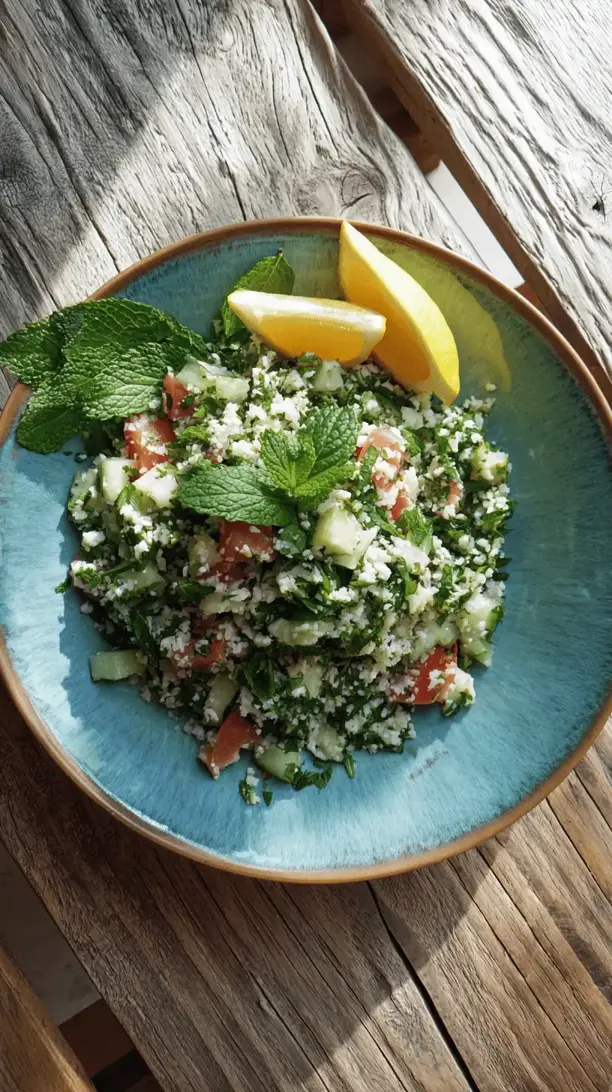
Cauliflower Tabbouleh
My light & fresh cauliflower tabbouleh swaps bulgur for grated cauliflower! This gluten-free, no-cook salad is ready in 20 minutes. Perfect for summer meals & meal prep.
Ingredients
Ingredients
-
1 large head cauliflower (about 600-700g, cut into florets)
-
1 large bunch fresh flat-leaf parsley (about 2 cups, finely chopped)
-
1/2 bunch fresh mint (about 1/2 cup, finely chopped)
-
4-5 spring onions (finely sliced)
-
150 g cherry tomatoes (quartered)
-
2 large lemons (juice only, about 1/3 to 1/2 cup)
-
3 tbsp extra virgin olive oil
-
1/2 tsp sea salt (plus more to taste)
-
1/4 tsp freshly ground black pepper
Instructions
-
First, prepare your cauliflower 'rice'. If using a food processor, working in batches, pulse the cauliflower florets until they resemble coarse crumbs or grains of rice. If using a box grater, grate the florets on the large holes. You'll notice it creates a lovely, fluffy texture. Transfer all the grated cauliflower to a clean kitchen towel or a few layers of strong paper towels.01
-
This next part is crucial for the perfect texture. Gather the edges of the towel and twist it tightly over the sink, squeezing out as much liquid as you possibly can. You'll be surprised by how much water comes out! This step ensures your tabbouleh isn't soggy. Place the squeezed-dry cauliflower into a large mixing bowl.02
-
Now, for the herbs. Wash and thoroughly dry your parsley and mint. Strip the leaves from the tougher stems—you can use the tender, thinner stems. Pile them all together and chop them as finely as you can. This fine chop is traditional and allows the herb flavors to distribute evenly throughout the salad. Add them to the bowl with the cauliflower.03
-
Time for the remaining veggies. Thinly slice the spring onions, using both the white and light green parts. Quarter the cherry tomatoes. Add them to the bowl. You'll get a beautiful mix of colors and textures already—the white cauliflower, deep green herbs, vibrant red tomatoes, and pale green onions.04
-
Let's make the simplest, zingiest dressing. In a small bowl or a jug, whisk together the fresh lemon juice, extra virgin olive oil, salt, and pepper. The trick is to taste it now—it should be quite sharp and lemony, as the cauliflower will mellow it out a little. Adjust the salt if needed.05
-
Pour the dressing over the cauliflower and herb mixture. Now, using your hands or two large spoons, toss everything together gently but thoroughly. You want every little bit of cauliflower to get coated in that lemony, herby goodness. The aroma at this point is just incredible.06
-
Let it rest! This is the secret step. Cover the bowl and let the tabbouleh sit at room temperature for about 10-15 minutes before serving. This allows the flavors to marry and the cauliflower to soften just slightly, becoming even more grain-like. Give it one final toss, taste for seasoning (adding more salt, pepper, or lemon if you like), and serve.07