
Why You’ll Love This Butternut Squash Hummus with Veggies
- A Flavor and Texture Dream. The roasted butternut squash brings a natural, caramelized sweetness and an incredibly velvety texture that makes this hummus unbelievably smooth. It’s a welcome departure from the ordinary that still feels familiar and comforting.
- It’s a Total Showstopper. The vibrant orange color is just stunning. Placing this bowl on a table surrounded by colorful veggies instantly elevates any gathering, from casual weeknight dinners to festive holiday parties. It looks like you put in a ton of effort, when really, it’s quite straightforward.
- Meal-Prep Magic. This hummus gets even better after a day in the fridge, as the flavors have more time to meld together. Making a batch on Sunday means you have a delicious, healthy snack or quick lunch component ready to go for the busy week ahead.
- Incredibly Versatile. While we’re serving it with fresh veggies here, this hummus is so much more than a dip. You can spread it on sandwiches, use it as a nourishing bowl base, or even thin it out slightly for a unique pasta sauce. Its uses are practically endless.
Ingredients & Tools
- 1 small butternut squash (about 1.5 lbs / 680 g), peeled, seeded, and cubed
- 1 tbsp olive oil, plus more for drizzling
- 1 can (15 oz / 425 g) chickpeas, rinsed and drained
- 1/3 cup (80 ml) well-stirred tahini
- 1/4 cup (60 ml) fresh lemon juice (from about 1-2 lemons)
- 1 small garlic clove, minced
- 1/2 tsp ground cumin
- 1/4 tsp smoked paprika, plus more for garnish
- 4-6 tbsp (60-90 ml) ice water
- Salt to taste (start with 3/4 tsp)
- For serving: A selection of fresh vegetables like cucumber spears, carrot sticks, bell pepper strips, radishes, and snap peas.
Tools: A large baking sheet, parchment paper, a food processor or high-speed blender.
The quality of your tahini really makes a difference here—look for one that’s smooth and runny with a pleasant nutty aroma, not bitter or chalky. And don’t skip the ice water! It’s the secret to achieving that light, fluffy, cloud-like texture we’re after.
Serves: 6 | Prep Time: 20 minutes | Cook Time: 25 minutes | Total Time: 45 minutes
Before You Start: Tips & Ingredient Notes
- Choosing Your Squash. Look for a squash that feels heavy for its size with a firm, matte skin. A smaller squash tends to be sweeter and less fibrous than a massive one, which is perfect for creating a smooth puree.
- To Peel or Not to Peel? I highly recommend peeling the squash for this recipe. While you can roast it with the skin on and scoop out the flesh, the skin can sometimes impart a slight bitterness and prevents the cubes from getting those nice caramelized edges.
- The Tahini Test. Give your tahini a good stir—really get to the bottom of the jar! The oil separates naturally, and you want to incorporate it all back in for the creamiest consistency. A little separation is normal, but a thorough stir is non-negotiable.
- Ice Water is Key. This might seem like a small detail, but using ice-cold water is a pro trick. It helps emulsify the ingredients, much like making a mayonnaise, resulting in a hummus that’s noticeably lighter and airier than if you used tap water.
How to Make Butternut Squash Hummus with Veggies
Step 1: Roast the Squash to Perfection. Preheat your oven to 400°F (200°C). Line a baking sheet with parchment paper for easy cleanup. Toss the cubed butternut squash with the tablespoon of olive oil and a generous pinch of salt. Spread it out in a single layer—this is important for getting evenly roasted, slightly caramelized pieces, not steamed ones. Roast for 20-25 minutes, or until the squash is fork-tender and has some golden-brown spots. You’ll know it’s ready when the edges are just starting to crisp up. Let it cool for about 10 minutes before adding it to the processor; adding it piping hot can sometimes make the hummus a bit gummy.
Step 2: Combine the Base Ingredients. To the bowl of your food processor, add the slightly cooled roasted squash, drained chickpeas, tahini, fresh lemon juice, minced garlic, cumin, smoked paprika, and your starting amount of salt. Now, secure the lid and pulse a few times to break everything down, then let it run for a full minute. You’ll notice it will look a bit thick and pasty at first—this is totally normal and exactly what we want before adding the water.
Step 3: The Magical Emulsification. With the food processor running, slowly stream in the ice water through the feed tube. Start with 4 tablespoons and let the machine run for another two to three minutes. Seriously, let it go! This is where the magic happens. The hummus will transform before your eyes, becoming pale, incredibly smooth, and wonderfully whipped. Stop and scrape down the sides if needed. If it still seems a bit thick for your liking, add the remaining water one tablespoon at a time.
Step 4: Taste and Adjust. This is the most important step. Turn off the processor and taste your creation. Does it need more salt? A bit more tang from lemon juice? Maybe another pinch of smoked paprika for warmth? Adjust the seasonings to your preference and blend for another 30 seconds to incorporate. The flavor should be balanced—sweet from the squash, nutty from the tahini, and bright from the lemon.
Step 5: Prepare Your Veggies and Serve. While the hummus is blending or while it chills, wash and cut your chosen vegetables into dippable shapes. I love a variety of colors and textures: crisp cucumber, sweet carrots, crunchy bell peppers, and peppery radishes. To serve, transfer the hummus to a shallow bowl, use the back of a spoon to create swirls on the surface, and drizzle with a little extra olive oil and a dusting of smoked paprika for a beautiful finish. Arrange the fresh veggies around the bowl and dig in!
Serving Suggestions
Complementary Dishes
- Warm Pita Bread or Flatbreads — There’s nothing quite like the combination of creamy, cool hummus and a soft, warm piece of bread. It provides a lovely textural contrast and is perfect for scooping up every last bit.
- A Simple Grain Salad — Serve this hummus alongside a quinoa or farro salad with chopped herbs, dried cranberries, and a lemon vinaigrette. The hummus acts as a rich, flavorful component that ties the whole plate together.
- Grilled Chicken or Halloumi — For a more substantial meal, add some slices of simply grilled chicken or pan-fried halloumi cheese. The savory, salty protein pairs beautifully with the sweet and creamy hummus.
Drinks
- A Crisp White Wine — A Sauvignon Blanc or Pinot Grigio with its bright acidity cuts through the richness of the tahini and complements the squash’s sweetness perfectly.
- Sparkling Water with Citrus — For a non-alcoholic option, nothing beats ice-cold sparkling water with a squeeze of lemon or lime. The bubbles are refreshing and help cleanse the palate between bites.
- Earl Grey Iced Tea — The bergamot notes in Earl Grey tea offer a floral, slightly citrusy backbone that I find unexpectedly wonderful with the warm spices in the hummus.
Something Sweet
- Dark Chocolate and Orange Biscotti — The bitter dark chocolate and bright orange zest are a classic pairing that continues the autumnal theme without being too heavy after a light meal.
- Apple and Honey Galette — A rustic, free-form tart feels just right. The tender apples and drizzle of honey provide a simple, elegant sweetness that echoes the notes in the hummus.
- Medjool Dates Stuffed with Almonds — This is the simplest option, but oh-so-satisfying. The natural caramel flavor of the dates feels like a natural progression from the sweet squash.
Top Mistakes to Avoid
- Mistake: Using warm or hot squash. Adding the roasted squash straight from the oven can sometimes cause the fats in the tahini to break, resulting in a hummus that’s a bit greasy or grainy instead of creamy. Letting it cool for even 10 minutes makes a big difference.
- Mistake: Not processing long enough. Patience is key! The transformation from a thick paste to a light, airy dip happens during those few minutes of continuous blending after adding the water. Rushing this step is the main reason for hummus that’s not perfectly smooth.
- Mistake: Skipping the taste-and-adjust step. The exact seasoning needed can vary based on your squash’s sweetness and your personal tahini. Always taste at the end and don’t be afraid to add more salt, lemon, or spice—it’s what makes the flavors pop.
- Mistake: Using old, bitter tahini. Tahini can go rancid over time. If yours smells sharp or bitter rather than nutty and pleasant, it’s best to replace it. It’s a core flavor component, so using a fresh, high-quality product is essential.
Expert Tips
- Tip: For an ultra-silky texture, peel your chickpeas. Yes, it’s a bit of a tedious task, but popping the skins off the chickpeas removes the main source of fiber that can prevent a perfectly smooth hummus. It’s a game-changer for texture purists.
- Tip: Make it ahead of time. This hummus tastes even better the next day. The flavors have time to fully meld and harmonize. Just store it in an airtight container in the fridge and give it a good stir before serving.
- Tip: Get creative with garnishes. Beyond a drizzle of oil and paprika, try topping your hummus with toasted pumpkin seeds for crunch, a swirl of chili crisp for heat, or some fresh pomegranate arils for a burst of juicy sweetness.
- Tip: If your hummus is too thick, don’t panic. Simply add more ice water, one tablespoon at a time, with the processor running until it reaches your desired consistency. The hummus will thicken slightly once chilled, so you can err on the side of a little looser.
FAQs
Can I use frozen butternut squash?
Absolutely! Frozen cubed butternut squash is a fantastic time-saver. There’s no need to thaw it—just toss the frozen cubes with oil and salt and roast them straight from the bag. You might need to add a few extra minutes to the roasting time. The result is just as good and saves you the effort of peeling and chopping a whole squash.
How long does this hummus last in the fridge?
Stored in an airtight container, this butternut squash hummus will keep beautifully for up to 5 days. The color might deepen slightly, but the flavor will be fantastic. I don’t recommend freezing it, as the texture can become watery and grainy upon thawing.
My hummus turned out a bit bitter. What happened?
Bitterness usually comes from one of two places: the tahini or the garlic. Some tahini brands, especially if not fresh, can have a bitter edge. As for garlic, a large or old clove can be very pungent. Next time, try using a very small, fresh clove, or even just a pinch of garlic powder for a milder flavor.
Can I make this without a food processor?
You can, but it will require more effort. A high-speed blender will work very well, though you may need to stop and scrape down the sides more frequently. An immersion blender is possible, but it will likely struggle to get the hummus completely smooth. A standard food processor is really the ideal tool for the job.
Is there a substitute for tahini?
Tahini is pretty integral to the classic hummus flavor and texture. However, if you have a nut allergy, you could try substituting an equal amount of unsweetened, creamy sunflower seed butter. The flavor will be different—more earthy and seedy—but it will still provide the necessary fat and creaminess.
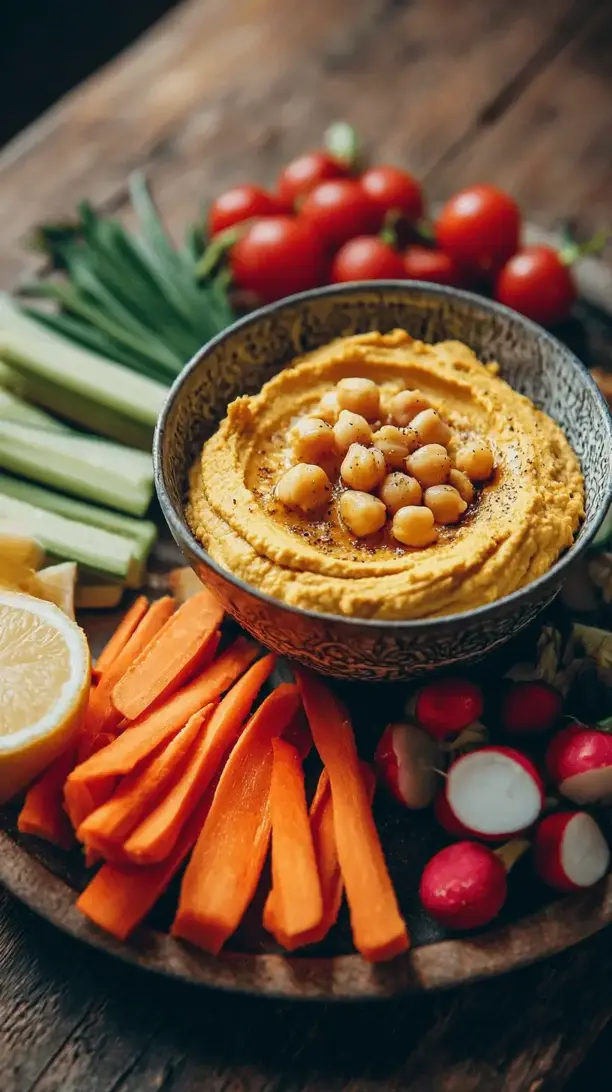
Butternut Squash Hummus With Veggies
Whip up this vibrant Butternut Squash Hummus! A creamy, sweet & savory dip perfect for veggie platters or meal prep. Easy recipe with roasted squash & warm spices.
Ingredients
Ingredients
-
1 small butternut squash (about 1.5 lbs / 680 g, peeled, seeded, and cubed)
-
1 tbsp olive oil (plus more for drizzling)
-
1 can chickpeas (15 oz / 425 g, rinsed and drained)
-
1/3 cup tahini (80 ml, well-stirred)
-
1/4 cup lemon juice (60 ml, fresh (from about 1-2 lemons))
-
1 small garlic clove (minced)
-
1/2 tsp ground cumin
-
1/4 tsp smoked paprika (plus more for garnish)
-
4-6 tbsp ice water (60-90 ml)
-
Salt (to taste (start with 3/4 tsp))
-
fresh vegetables (for serving: cucumber spears, carrot sticks, bell pepper strips, radishes, and snap peas)
Instructions
-
Preheat your oven to 400°F (200°C). Line a baking sheet with parchment paper for easy cleanup. Toss the cubed butternut squash with the tablespoon of olive oil and a generous pinch of salt. Spread it out in a single layer—this is important for getting evenly roasted, slightly caramelized pieces, not steamed ones. Roast for 20-25 minutes, or until the squash is fork-tender and has some golden-brown spots. You'll know it's ready when the edges are just starting to crisp up. Let it cool for about 10 minutes before adding it to the processor; adding it piping hot can sometimes make the hummus a bit gummy.01
-
To the bowl of your food processor, add the slightly cooled roasted squash, drained chickpeas, tahini, fresh lemon juice, minced garlic, cumin, smoked paprika, and your starting amount of salt. Now, secure the lid and pulse a few times to break everything down, then let it run for a full minute. You'll notice it will look a bit thick and pasty at first—this is totally normal and exactly what we want before adding the water.02
-
With the food processor running, slowly stream in the ice water through the feed tube. Start with 4 tablespoons and let the machine run for another two to three minutes. Seriously, let it go! This is where the magic happens. The hummus will transform before your eyes, becoming pale, incredibly smooth, and wonderfully whipped. Stop and scrape down the sides if needed. If it still seems a bit thick for your liking, add the remaining water one tablespoon at a time.03
-
This is the most important step. Turn off the processor and taste your creation. Does it need more salt? A bit more tang from lemon juice? Maybe another pinch of smoked paprika for warmth? Adjust the seasonings to your preference and blend for another 30 seconds to incorporate. The flavor should be balanced—sweet from the squash, nutty from the tahini, and bright from the lemon.04
-
While the hummus is blending or while it chills, wash and cut your chosen vegetables into dippable shapes. I love a variety of colors and textures: crisp cucumber, sweet carrots, crunchy bell peppers, and peppery radishes. To serve, transfer the hummus to a shallow bowl, use the back of a spoon to create swirls on the surface, and drizzle with a little extra olive oil and a dusting of smoked paprika for a beautiful finish. Arrange the fresh veggies around the bowl and dig in!05