
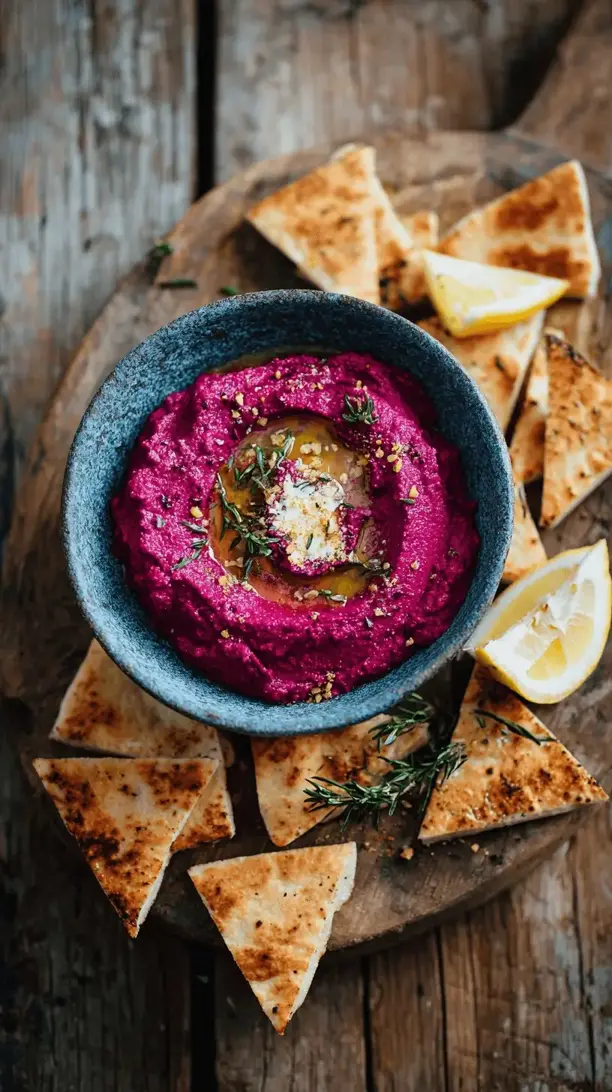

Why You’ll Love This Beet Hummus with Pita Chips
- A Total Showstopper. The color alone is worth the price of admission. That deep, vibrant pink is just gorgeous on a table and is guaranteed to get people talking.
- The Flavor is Unforgettable. It’s not just a pretty face. The roasted beets add a subtle, earthy sweetness that complements the savory tahini and lemon so perfectly. It’s a more complex, interesting flavor than your standard hummus.
- It’s Surprisingly Good for You. We’re packing in the goodness of chickpeas, beets, and healthy fats from olive oil and tahini. It’s a snack that’s as nourishing as it is delicious.
- Incredibly Versatile. Sure, it’s amazing with pita chips, but this hummus is also fantastic as a sandwich spread, a vibrant dollop on a grain bowl, or even as a unique dip for crudités.
Ingredients & Tools
- 1 medium beet (about the size of a baseball), scrubbed
- 1 can (15 oz / 425 g) chickpeas, rinsed and drained
- 1/4 cup (60 ml) fresh lemon juice (from about 1-2 lemons)
- 1/4 cup (60 ml) well-stirred tahini
- 1 small garlic clove, minced
- 3 tablespoons extra-virgin olive oil, plus more for drizzling
- 1/2 teaspoon ground cumin
- 2-4 tablespoons ice water
- Salt, to taste (I start with 1/2 tsp)
- For the Pita Chips:
- 4 pocketless pita breads (or regular pitas, split)
- 3 tablespoons extra-virgin olive oil
- 1/2 teaspoon garlic powder
- 1/2 teaspoon dried oregano
- Flaky sea salt, for sprinkling
Tools: A good food processor or high-speed blender, a baking sheet, parchment paper, a sharp knife, a small bowl for mixing the pita chip seasoning.
The quality of your tahini really matters here—look for one made from 100% sesame seeds with no added oils. A good tahini should be pourable and taste nutty, not bitter. And for the beets, roasting them yourself is key for the best, sweetest flavor, though you can use pre-cooked in a pinch.
Serves: 6 | Prep Time: 20 mins | Cook Time: 60 mins (for roasting beet) | Total Time: 1 hour 20 mins
Before You Start: Tips & Ingredient Notes
- Don’t Skip Roasting the Beet. Roasting caramelizes the natural sugars in the beet, giving you a much deeper, sweeter flavor than boiling ever could. It makes all the difference.
- The Ice Water Trick. This is my secret for the creamiest hummus. Adding ice water while the processor is running helps aerate the mixture and creates an unbelievably smooth, light texture.
- Taste, Taste, Taste! The flavor of your beet, tahini, and lemons can vary. After blending, always taste and adjust. You might need more salt, more lemon for brightness, or a pinch more cumin.
- Pocketless vs. Regular Pitas. Pocketless pitas (like Greek-style) are sturdier and make for a better chip. If you only have regular pitas, just carefully split them apart to create two thinner rounds before cutting.
How to Make Beet Hummus with Pita Chips
Step 1: Roast the Beet. Preheat your oven to 400°F (200°C). Tightly wrap the scrubbed beet in aluminum foil and place it directly on the oven rack. Roast for 45-60 minutes, or until you can easily pierce it to the center with a knife. The time will depend on the size of your beet. Let it cool until it’s safe to handle.
Step 2: Make the Pita Chips. While the beet roasts, lower the oven temp to 375°F (190°C). Line a baking sheet with parchment paper. Brush both sides of the pita breads with the 3 tablespoons of olive oil. Stack them and cut into 8 wedges each, like a pizza. Arrange them in a single layer on the baking sheet. Sprinkle with the garlic powder, oregano, and a good pinch of flaky sea salt. Bake for 10-15 minutes, flipping halfway through, until golden brown and crisp. Let them cool on the pan—they’ll crisp up even more.
Step 3: Peel and Prep the Beet. Once the beet is cool enough to handle, use your fingers or a paper towel to rub the skin off—it should slip off very easily. Chop the peeled beet into rough chunks. Don’t worry about perfection here; the food processor will take care of it.
Step 4: Blend the Hummus Base. In your food processor, combine the chickpeas, lemon juice, tahini, minced garlic, cumin, and a good pinch of salt. Process for a full minute, until the mixture is very smooth. You’ll notice it might look a bit thick and pasty at first—that’s totally normal.
Step 5: Add the Beet and Oil. Scrape down the sides of the bowl, then add the chopped roasted beet and the 3 tablespoons of olive oil. Process again until everything is completely smooth and a vibrant, uniform pink color.
Step 6: Achieve Creamy Perfection. With the food processor running, slowly stream in the ice water, one tablespoon at a time. Process for another minute after adding the water. You’re looking for a beautifully smooth, creamy, and spreadable consistency. Taste and adjust seasoning with more salt or lemon juice if needed.
Step 7: Serve and Enjoy. Transfer the hummus to a shallow bowl. Use the back of a spoon to create swirls on the surface. Drizzle with a little more olive oil, and maybe a sprinkle of sesame seeds or fresh herbs like dill. Serve immediately with the warm, homemade pita chips.
Serving Suggestions
Complementary Dishes
- A Mezze Platter — This hummus is the star of any spread. Surround it with other Mediterranean favorites like olives, stuffed grape leaves, marinated feta, and cucumber slices for a feast.
- Grilled Chicken or Fish — A generous dollop of this hummus adds incredible moisture and flavor to simply grilled proteins. It’s like a built-in sauce.
- Falafel Wraps — Use it as a vibrant, creamy spread inside a warm pita stuffed with crispy falafel, lettuce, and tomato.
Drinks
- A Crisp Rosé — The berry notes in a dry rosé complement the earthy sweetness of the beet beautifully, making for a very elegant pairing.
- Sparkling Water with Lemon — The effervescence and citrus cut through the richness of the hummus perfectly, cleansing the palate between bites.
- Mint Iced Tea — The cool, refreshing flavor of mint is a classic partner for Middle Eastern flavors and makes for a wonderfully non-alcoholic option.
Something Sweet
- Baklava — The honey-soaked, nutty layers of baklava are a classic and decadent way to end a meal that started with these Mediterranean flavors.
- Orange and Almond Cake — A flourless orange-almond cake is moist, not too sweet, and feels like a natural, sophisticated progression.
- Dark Chocolate-Dipped Figs — Simple, elegant, and the deep chocolate and sweet fig feel like a perfect little bite after the savory hummus.
Top Mistakes to Avoid
- Mistake: Using canned beets. I know it’s tempting for speed, but canned beets are often packed in vinegar and have a completely different, much sharper flavor that will overpower your hummus. Roasting fresh is non-negotiable for the best taste.
- Mistake: Not processing the base long enough. That initial minute of processing the chickpeas and tahini without the beet is crucial for breaking down the chickpeas and creating a smooth base. Patience here pays off in texture.
- Mistake: Skipping the taste test at the end. Your hummus might need a little personal touch. Maybe your lemon wasn’t very juicy or your beet was extra sweet. Always taste and adjust the salt and acid to make it perfect for you.
- Mistake: Crowding the pita chips on the pan. If the chips are overlapping, they’ll steam instead of bake and you’ll end up with soft, chewy chips instead of crispy ones. Use two pans if you need to!
Expert Tips
- Tip: For an ultra-smooth hummus, peel your chickpeas. Yes, it’s a bit fussy, but if you have the time, popping the skins off each chickpea results in the silkiest hummus imaginable. It’s a game-changer for texture purists.
- Tip: Let the hummus rest before serving. If you can resist, cover the hummus and let it sit at room temperature for 30 minutes before serving. This allows the flavors to meld and deepen beautifully.
- Tip: Get creative with your pita chip seasoning. Try adding a pinch of smoked paprika, sumac, or even a little za’atar to the oil before brushing for a different flavor profile every time.
- Tip: Make it ahead! Both the hummus and the pita chips can be made a day in advance. Store the hummus in an airtight container in the fridge (it will keep for up to 4 days) and the chips in a paper bag at room temperature.
FAQs
Can I use a different nut or seed butter instead of tahini?
You can, but the flavor will be quite different. Tahini has a distinct, nutty, and slightly bitter taste that is fundamental to classic hummus. Almond butter or sunflower seed butter would work in a pinch and will still be tasty, but it will create a sweeter, less traditional flavor profile. I’d really recommend seeking out tahini for this one—it’s worth it!
My hummus turned out a bit too thick. How can I thin it?
No problem at all! This happens. The easiest fix is to simply add a bit more liquid. With the food processor running, stream in a little more ice water, a tablespoon at a time, until it reaches your desired consistency. You could also use a touch more lemon juice or olive oil, but water works perfectly without altering the flavor.
Can I make this without a food processor?
A high-powered blender is your next best bet and will actually give you an incredibly smooth result. If you only have an immersion blender, it’s possible but will be much more difficult to get it perfectly smooth—you’ll need to blend for a long time and scrape the sides constantly. A standard countertop blender might struggle with the thick mixture.
Why did my pita chips get soft after they cooled?
This usually means they needed a bit more time in the oven. They should be deeply golden and feel completely dry and crisp to the touch when you take them out. If they soften after storing, they likely absorbed moisture from the air. You can re-crisp them in a 350°F (175°C) oven for 3-5 minutes. Always let them cool completely before storing in an airtight container—a paper bag is actually better than plastic to keep them crisp.
How long will the beet hummus last in the fridge?
It will keep beautifully in an airtight container for about 4 to 5 days. The color might deepen a little, but the flavor will still be great. Give it a good stir before serving, and you might want to add a fresh drizzle of olive oil to brighten it up.


