

Why You’ll Love This Balsamic Glazed Carrots
- Effortless Elegance. This recipe transforms an everyday ingredient into a side dish that feels special enough for company. The glossy, dark glaze makes the vibrant orange carrots look absolutely stunning on any plate.
- The Perfect Balance of Flavors. You get the natural sweetness of the roasted carrots, a hint of savory from the butter or oil, and that incredible tangy-sweet punch from the reduced balsamic. It’s a symphony in your mouth that’s never boring.
- Incredibly Versatile. These carrots are a fantastic partner to so many main courses, from a simple roast chicken to a fancy holiday ham. They bridge the gap between casual and elegant effortlessly.
- It’s Mostly Hands-Off. Once you’ve got the carrots in the oven, your main job is to keep an eye on the glaze reducing on the stovetop. It’s the kind of relaxed cooking that leaves you free to work on the rest of your meal.
Ingredients & Tools
- 1.5 lbs carrots, peeled and cut into even-sized sticks or coins
- 2 tablespoons olive oil or melted butter
- 1/2 teaspoon salt, plus more to taste
- 1/4 teaspoon black pepper
- 1/2 cup good-quality balsamic vinegar
- 2 tablespoons honey or maple syrup
- 1 clove garlic, minced (optional, but lovely)
- 1 tablespoon fresh thyme leaves, for garnish
Tools: A large baking sheet, parchment paper (for easy cleanup!), a small saucepan, and a mixing bowl.
The quality of your balsamic vinegar really matters here—it’s the star of the glaze. You don’t need a crazy expensive aged one, but a decent, moderately-priced bottle will yield a much smoother, richer flavor compared to a super-cheap, harsh one. And cutting the carrots evenly is non-negotiable; it ensures they all cook at the same rate.
Serves: 4 | Prep Time: 10 minutes | Cook Time: 25-30 minutes | Total Time: 35-40 minutes
Before You Start: Tips & Ingredient Notes
- Carrot Cut Consistency. However you cut them—into sticks, coins, or even on a bias—just make sure the pieces are roughly the same size. This is the secret to avoiding a mix of mushy and crunchy carrots on the same tray.
- Understanding the Glaze. The glaze is simply balsamic vinegar and a sweetener reduced over heat. It will thicken significantly as it cools, so don’t worry if it seems a bit runny in the pan. It will coat the carrots beautifully once tossed.
- Parchment Paper is Your Friend. Lining your baking sheet isn’t just about easy cleanup. It prevents the sugary glaze from sticking and burning onto the pan, which can create a bitter, smoky mess.
- Taste Your Vinegar. Before you start, give your balsamic a quick taste. If it’s particularly sharp or acidic, you might want to add an extra teaspoon of honey to balance it out. Trust your palate!
How to Make Balsamic Glazed Carrots
Step 1: Preheat your oven to 400°F (200°C). While it’s heating up, peel your carrots. Now, cut them. You can do classic sticks, about 3-4 inches long and ½-inch thick, or simple ½-inch thick coins. The goal is uniformity. Toss them in a large bowl with the olive oil (or melted butter), salt, and pepper until they’re evenly coated.
Step 2: Spread the carrots in a single layer on your parchment-lined baking sheet. This is crucial—if they’re crowded, they’ll steam instead of roast and you’ll miss out on those lovely caramelized edges. Pop the tray into the preheated oven and roast for 20-25 minutes. You’re looking for the carrots to be tender enough to easily pierce with a fork and have some nice golden-brown spots.
Step 3: While the carrots are roasting, let’s make the magic glaze. In your small saucepan, combine the balsamic vinegar, honey (or maple syrup), and the minced garlic if you’re using it. Bring it to a gentle simmer over medium heat, then immediately reduce the heat to low. Let it bubble away gently for about 8-12 minutes. You’ll notice it will slowly reduce in volume by about half. It’s ready when it coats the back of a spoon—it will thicken more as it cools. Stir it occasionally to prevent burning.
Step 4: Once the carrots are perfectly roasted, take them out of the oven. Carefully transfer them back to the mixing bowl. Pour the warm balsamic glaze over the top. Using a spatula, toss everything together gently but thoroughly. You want every single carrot piece to be glistening with that beautiful, dark glaze. The aroma at this point is just… wow.
Step 5: Do a final taste test. Does it need another pinch of salt? A crack of black pepper? Adjust now. Then, transfer the glazed carrots to a serving dish and sprinkle generously with the fresh thyme leaves. That little hit of herbal freshness cuts through the richness perfectly. Serve them immediately while they’re warm and glorious.
Serving Suggestions
Complementary Dishes
- Herb-Roasted Chicken — The simplicity of a classic roast chicken lets the sweet and tangy carrots truly shine. They’re a match made in heaven.
- Pan-Seared Pork Chops — The savory, juicy pork pairs wonderfully with the acidity of the glaze, creating a really well-rounded plate.
- Creamy Polenta or Mashed Potatoes — The carrots become a fantastic topping, their glaze mingling with the creamy base in the most delightful way.
Drinks
- A Light-Bodied Red Wine — Like a Pinot Noir or Gamay, which has enough acidity to complement the balsamic without overpowering the carrots.
- A Crisp Hard Cider — The apple notes are a fantastic friend to the sweet carrots, and the bubbles help cleanse the palate.
- Sparkling Water with Lemon — A non-alcoholic option that provides a crisp, clean contrast to the rich glaze.
Something Sweet
- Lemon Olive Oil Cake — The bright, citrusy finish of the cake is a beautiful, light follow-up to the savory-sweet carrots.
- Vanilla Bean Panna Cotta — Its cool, creamy simplicity is the perfect palate-soother after the vibrant flavors of the main meal.
- Dark Chocolate Truffles — Just one or two rich, bitter-sweet truffles provide a sophisticated and simple ending.
Top Mistakes to Avoid
- Mistake: Overcrowding the Baking Sheet. I’ve messed this up before too… if the carrots are piled on top of each other, they’ll steam and become soggy instead of developing those delicious roasted, caramelized edges. Use two trays if you need to!
- Mistake: Boiling the Glaze Too Hard. A gentle simmer is all you need. A rolling boil can cause the glaze to reduce too quickly, potentially burning the sugars and leaving you with a bitter taste. Low and slow is the way to go.
- Mistake: Adding the Glaze Before Roasting. The high sugar content in the glaze will burn in the oven long before the carrots are cooked through. Always add the glaze after the carrots are already tender and roasted.
- Mistake: Skipping the Taste Test. Vegetables and vinegars can vary in sweetness and acidity. Always taste the finished dish and adjust the seasoning with an extra pinch of salt or a drizzle of honey right at the end.
Expert Tips
- Tip: Use a Variety of Carrots. For a real show-stopper, seek out a bunch of multi-colored carrots—deep purple, sunny yellow, and bright orange. They look absolutely incredible with the dark glaze drizzled over them.
- Tip: Infuse the Glaze. While the glaze is reducing, you can add a sprig of fresh rosemary or a few peppercorns to the saucepan. Just remember to fish them out before tossing with the carrots for a subtle, layered flavor.
- Tip: Make it a One-Pan Meal. Toss some chickpeas and red onion wedges onto the baking sheet with the carrots. They’ll roast together, and once glazed, you have a fantastic vegetarian main course over a bed of greens or grains.
- Tip: Prep Ahead. You can peel and cut the carrots a day in advance; just keep them submerged in water in the fridge. The balsamic glaze can also be made ahead and gently reheated when you need it.
FAQs
Can I use baby carrots instead?
Absolutely! Whole baby carrots work wonderfully and look very charming. Just be aware that they might cook a minute or two faster than cut pieces, so start checking for tenderness around the 18-minute mark. The key, as always, is to make sure they are all roughly the same size so they cook evenly.
My glaze is too thin/too thick. What happened?
If it’s too thin, you likely just need to simmer it a bit longer. Remember, it continues to thicken as it cools. If it’s too thick—almost like tar—you may have reduced it a little too much. No worries! Just whisk in a teaspoon of warm water at a time until it reaches a pourable consistency again.
Can I make this recipe vegan?
Easily! Simply use olive oil instead of butter for tossing the carrots, and use maple syrup or agave nectar instead of honey for the glaze. The result is just as delicious and 100% plant-based.
How should I store leftovers, and can I reheat them?
Store any leftovers in an airtight container in the fridge for up to 3 days. Reheating is best done in the oven or a toaster oven at 350°F until warm. This helps them regain some of their texture. The microwave will work in a pinch but can make them a bit soft.
The glaze tastes very sharp. How can I fix it?
This usually means your balsamic vinegar was particularly acidic. The best fix is balance! Whisk in another half teaspoon of honey or maple syrup into the warm glaze until it tastes right to you. A tiny pinch of salt can also help round out sharp flavors.
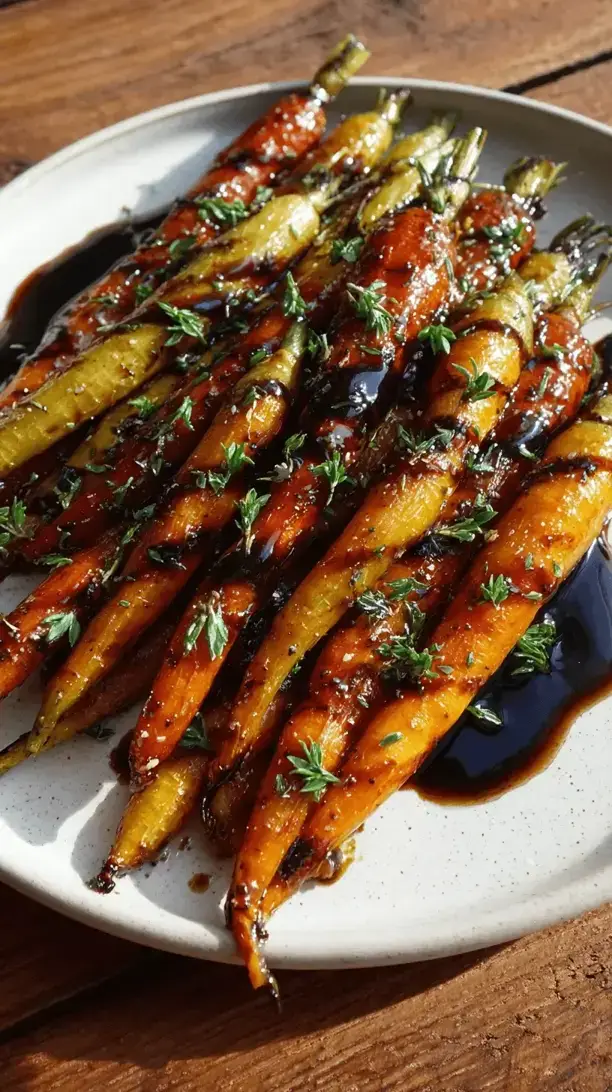
Balsamic Glazed Carrots
Transform simple carrots into an elegant side dish with this easy balsamic glaze recipe. Sweet, tangy, and perfect for weeknights or holiday feasts. Ready in under 40 minutes!
Ingredients
Ingredients
-
1.5 lbs carrots (peeled and cut into even-sized sticks or coins)
-
2 tablespoons olive oil or melted butter
-
1/2 teaspoon salt (plus more to taste)
-
1/4 teaspoon black pepper
-
1/2 cup balsamic vinegar (good-quality)
-
2 tablespoons honey or maple syrup
-
1 clove garlic (minced (optional, but lovely))
-
1 tablespoon fresh thyme leaves (for garnish)
Instructions
-
Preheat your oven to 400°F (200°C). While it's heating up, peel your carrots. Now, cut them. You can do classic sticks, about 3-4 inches long and ½-inch thick, or simple ½-inch thick coins. The goal is uniformity. Toss them in a large bowl with the olive oil (or melted butter), salt, and pepper until they're evenly coated.01
-
Spread the carrots in a single layer on your parchment-lined baking sheet. This is crucial—if they're crowded, they'll steam instead of roast and you'll miss out on those lovely caramelized edges. Pop the tray into the preheated oven and roast for 20-25 minutes. You're looking for the carrots to be tender enough to easily pierce with a fork and have some nice golden-brown spots.02
-
While the carrots are roasting, let's make the magic glaze. In your small saucepan, combine the balsamic vinegar, honey (or maple syrup), and the minced garlic if you're using it. Bring it to a gentle simmer over medium heat, then immediately reduce the heat to low. Let it bubble away gently for about 8-12 minutes. You'll notice it will slowly reduce in volume by about half. It's ready when it coats the back of a spoon—it will thicken more as it cools. Stir it occasionally to prevent burning.03
-
Once the carrots are perfectly roasted, take them out of the oven. Carefully transfer them back to the mixing bowl. Pour the warm balsamic glaze over the top. Using a spatula, toss everything together gently but thoroughly. You want every single carrot piece to be glistening with that beautiful, dark glaze. The aroma at this point is just… wow.04
-
Do a final taste test. Does it need another pinch of salt? A crack of black pepper? Adjust now. Then, transfer the glazed carrots to a serving dish and sprinkle generously with the fresh thyme leaves. That little hit of herbal freshness cuts through the richness perfectly. Serve them immediately while they're warm and glorious.05


