

Why You’ll Love This Balsamic Glazed Carrots
- Effortless Elegance. With just a handful of pantry staples, you can create a side dish that looks and tastes like it came from a fancy restaurant. The glossy, dark glaze makes the orange carrots pop with color, making your whole plate look more inviting.
- The Perfect Sweet & Savory Balance. This recipe hits all the right notes. The carrots become wonderfully sweet as they caramelize in the oven, and the balsamic vinegar adds a complex, tangy depth that keeps everything from being one-dimensional. A hint of garlic and fresh thyme ties it all together beautifully.
- Incredibly Versatile. These carrots are the ultimate team player. They pair beautifully with everything from a simple roast chicken to a holiday ham or even a hearty vegetarian grain bowl. You can easily double the batch for a crowd, and they reheat like a dream.
- A Textural Dream. When roasted correctly, the carrots become tender and almost creamy on the inside while the glaze creates a slightly sticky, caramelized exterior. It’s a contrast that keeps every single bite interesting.
Ingredients & Tools
- 1.5 lbs carrots, peeled
- 2 tablespoons olive oil
- 1/2 teaspoon salt, plus more to taste
- 1/4 teaspoon black pepper
- 2 cloves garlic, minced
- 1/3 cup balsamic vinegar
- 2 tablespoons pure maple syrup or honey
- 1 tablespoon fresh thyme leaves, plus more for garnish
- 1 tablespoon unsalted butter (optional, but recommended)
Tools: A large rimmed baking sheet, parchment paper (for easy cleanup), a small saucepan, and a good sharp knife.
The quality of your balsamic vinegar really matters here—you don’t need a crazy expensive aged one, but a decent, moderately-priced bottle will have a better flavor than a super cheap, harsh one. The maple syrup adds a lovely, nuanced sweetness, but honey works just as well if that’s what you have on hand.
Serves: 4 | Prep Time: 10 minutes | Cook Time: 25-30 minutes | Total Time: 35-40 minutes
Before You Start: Tips & Ingredient Notes
- Carrot Shape Matters. For even cooking, try to cut your carrots into uniform sizes. I like to slice them on a sharp diagonal into 1/2-inch thick pieces—this creates more surface area for browning and gives them a lovely shape. If you’re using slender carrots, you can often just leave them whole.
- Don’t Skip the Parchment Paper. The balsamic glaze is sugary and will create a sticky mess on your baking sheet. Lining it with parchment paper makes cleanup an absolute breeze and prevents the carrots from sticking. Trust me on this one.
- Understanding the Glaze. The glaze is a simple reduction of balsamic vinegar and maple syrup. As it simmers, the water evaporates, leaving behind a thicker, more concentrated, and less acidic syrup. You’ll know it’s ready when it coats the back of a spoon.
- Fresh vs. Dried Herbs. Fresh thyme is fantastic here, offering a subtle, floral note. If you must use dried, use about 1 teaspoon, but the flavor will be much more pungent. The fresh stuff really makes a difference.
How to Make Balsamic Glazed Carrots
Step 1: Prep the Carrots and Oven. First things first, preheat your oven to 400°F (200°C). This high heat is key for getting those beautiful caramelized edges on the carrots. While the oven heats up, peel your carrots. Then, using a sharp knife, slice them on a diagonal into pieces that are about 1/2-inch thick. The diagonal cut isn’t just for looks—it gives each piece a larger surface area, which means more browning and more flavor. Place all the carrot pieces in a large bowl.
Step 2: Season the Carrots. To the bowl with the carrots, add the olive oil, salt, and black pepper. Now, get your hands in there! Toss everything together until every single carrot piece is evenly coated in the oil and seasoning. This ensures they’ll cook evenly and taste great from the inside out. Line your baking sheet with parchment paper and spread the carrots out in a single layer. Crowding the pan will steam them instead of roast them, so give them a little space.
Step 3: Roast to Tender-Perfection. Pop the baking sheet into the preheated oven and roast for 20-25 minutes. You’re looking for the carrots to be fork-tender and have some nice browned spots around the edges. About halfway through the roasting time, give the pan a good shake or use a spatula to flip the carrots. This helps them cook evenly on all sides. The aroma filling your kitchen at this point will be absolutely heavenly.
Step 4: Create the Glaze. While the carrots are roasting, it’s glaze time! In a small saucepan, combine the balsamic vinegar and maple syrup. Bring this to a gentle simmer over medium heat, then reduce the heat to medium-low. Let it bubble away for about 5-8 minutes, stirring occasionally. You’ll notice it will slowly reduce in volume and thicken. The trick is to simmer until it’s thick enough to coat the back of a spoon. Be careful not to over-reduce it, or it can become too thick and sticky. Remove it from the heat and stir in the minced garlic—the residual heat will cook the garlic just enough to mellow its bite.
Step 5: Bring It All Together. Once the carrots are beautifully roasted, take the pan out of the oven. Immediately pour the warm balsamic glaze over the hot carrots. Add the fresh thyme leaves and the optional tablespoon of butter. The butter adds a lovely richness and helps make the glaze extra glossy. Toss everything together gently but thoroughly, making sure each carrot is gleaming with that dark, delicious glaze. The sizzle when the glaze hits the hot pan is pure music.
Step 6: Final Seasoning and Serve. Give the carrots a final taste test. Do they need another pinch of salt? A crack of fresh pepper? Adjust the seasoning to your liking. Transfer them to a serving dish and garnish with a few extra fresh thyme leaves for a pop of color and freshness. Serve them immediately while they’re hot and glorious.
Serving Suggestions
Complementary Dishes
- Herb-Roasted Chicken — The simplicity of a perfectly roasted bird lets the tangy-sweet flavor of the carrots truly stand out. They are a classic pairing for a reason.
- Creamy Parmesan Polenta — The soft, cheesy polenta is a dreamy base that soaks up any extra glaze, and the textures play off each other beautifully.
- Pan-Seared Pork Chops — The savory, juicy pork provides a fantastic contrast to the sweet and acidic carrots, creating a really well-rounded plate.
Drinks
- A Crisp Rosé — The bright berry notes and acidity in a dry rosé cut through the sweetness of the glaze and cleanse the palate beautifully.
- Sparkling Water with Lemon — For a non-alcoholic option, the bubbles and citrus are incredibly refreshing against the rich, sticky glaze.
- Pinot Noir — A light-bodied red with earthy and cherry notes can handle the sweetness of the dish without overpowering it.
Something Sweet
- Dark Chocolate Pots de Crème — The deep, bitter notes of dark chocolate are a sophisticated and delightful way to end the meal after the sweet carrots.
- Lemon Sorbet — This is the ultimate palate cleanser. Its sharp, clean citrus flavor is the perfect reset after the richer main course.
- Simple Shortbread Cookies — A buttery, not-too-sweet cookie is a lovely, simple finish that doesn’t try to compete with the meal.
Top Mistakes to Avoid
- Mistake: Overcrowding the Baking Sheet. If you pile all the carrots on top of each other, they’ll steam instead of roast. You’ll miss out on that crucial caramelization and end up with soft, rather than crisp-tender, carrots. Use two sheets if necessary!
- Mistake: Burning the Glaze. Balsamic vinegar and sugar can go from perfectly reduced to a burnt, sticky mess in seconds. Keep a close eye on it and pull it from the heat as soon as it coats the back of a spoon. I’ve messed this up before too, and it’s a real heartbreaker.
- Mistake: Using Low-Quality Vinegar. A super cheap, harsh balsamic vinegar will result in a sharp, unpleasant glaze. It’s worth spending a few extra dollars on a decent bottle—the flavor difference is night and day.
- Mistake: Skipping the Final Toss. Don’t just drizzle the glaze over the carrots on the serving platter. Tossing them right on the hot baking sheet ensures every nook and cranny gets coated in that glossy goodness.
Expert Tips
- Tip: Add a Splash of Orange Juice. For an extra layer of citrusy brightness, add a tablespoon of fresh orange juice to the glaze along with the balsamic. It complements the carrots’ flavor wonderfully.
- Tip: Toast Some Nuts. Right before serving, sprinkle the glazed carrots with some toasted pine nuts or chopped walnuts. The nutty crunch adds a fantastic textural contrast that takes the dish to another level.
- Tip: Make it a Main Course. Turn this side into a vegetarian feast by serving the carrots over a bed of creamy goat cheese polenta or lentil salad. They add so much flavor and substance.
- Tip: Prep Ahead. You can peel and slice the carrots a day in advance; just keep them submerged in water in the fridge to prevent browning. The glaze can also be made ahead and gently reheated.
FAQs
Can I use baby carrots for this recipe?
Absolutely! Baby carrots (the real, petite ones, not the bagged “baby-cut” carrots) work beautifully and often don’t even need to be cut—just give them a good scrub. If using bagged baby-cut carrots, note that they contain more water and might take a minute or two less to roast. Just keep an eye on them and test for tenderness.
My glaze is too thin/too thick. How can I fix it?
If it’s too thin, simply return it to the saucepan and simmer for another minute or two. If it’s too thick—perhaps you got distracted and it’s now like tar—don’t panic! Whisk in a teaspoon of warm water at a time until it reaches a pourable, syrupy consistency again. A little goes a long way, so add water slowly.
Can I make these carrots ahead of time?
You can definitely get a head start! Roast the carrots and make the glaze separately up to a day ahead. Store them in separate containers in the fridge. When ready to serve, reheat the carrots in a 350°F oven until warm, gently rewarm the glaze on the stove, and then toss them together. The texture is best when served immediately after combining.
Is there a substitute for maple syrup?
Of course! Honey is the most direct and delicious substitute. You could also use brown sugar, though you’ll want to dissolve it completely in the vinegar over low heat before bringing it to a simmer. Agave nectar would work as well. The goal is just a touch of sweetness to balance the vinegar.
Why did my glaze become hard and sticky on the carrots?
This usually happens if the glaze was reduced for too long, making it more like a hard candy. Another culprit could be letting the tossed carrots sit for too long before serving. The sugar in the glaze continues to set as it cools. For the best texture, toss and serve immediately. If it does happen, a very brief warm-up in the oven or microwave can help soften it again.
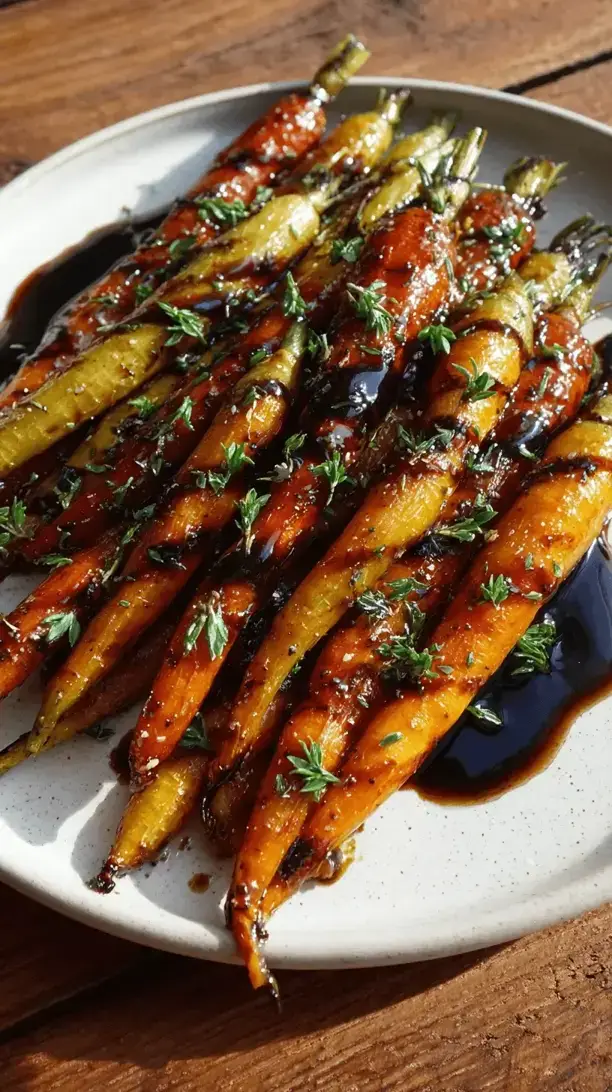
Balsamic Glazed Carrots
Transform humble carrots into an elegant side dish! This easy balsamic glazed carrots recipe delivers sweet, tangy perfection in under 40 minutes. Perfect for weeknights or holiday dinners.
Ingredients
Ingredients
-
1.5 lbs carrots (peeled)
-
2 tablespoons olive oil
-
1/2 teaspoon salt (plus more to taste)
-
1/4 teaspoon black pepper
-
2 cloves garlic (minced)
-
1/3 cup balsamic vinegar
-
2 tablespoons pure maple syrup or honey
-
1 tablespoon fresh thyme leaves (plus more for garnish)
-
1 tablespoon unsalted butter (optional, but recommended)
Instructions
-
Prep the Carrots and Oven. First things first, preheat your oven to 400°F (200°C). This high heat is key for getting those beautiful caramelized edges on the carrots. While the oven heats up, peel your carrots. Then, using a sharp knife, slice them on a diagonal into pieces that are about 1/2-inch thick. The diagonal cut isn't just for looks—it gives each piece a larger surface area, which means more browning and more flavor. Place all the carrot pieces in a large bowl.01
-
Season the Carrots. To the bowl with the carrots, add the olive oil, salt, and black pepper. Now, get your hands in there! Toss everything together until every single carrot piece is evenly coated in the oil and seasoning. This ensures they'll cook evenly and taste great from the inside out. Line your baking sheet with parchment paper and spread the carrots out in a single layer. Crowding the pan will steam them instead of roast them, so give them a little space.02
-
Roast to Tender-Perfection. Pop the baking sheet into the preheated oven and roast for 20-25 minutes. You're looking for the carrots to be fork-tender and have some nice browned spots around the edges. About halfway through the roasting time, give the pan a good shake or use a spatula to flip the carrots. This helps them cook evenly on all sides. The aroma filling your kitchen at this point will be absolutely heavenly.03
-
Create the Glaze. While the carrots are roasting, it's glaze time! In a small saucepan, combine the balsamic vinegar and maple syrup. Bring this to a gentle simmer over medium heat, then reduce the heat to medium-low. Let it bubble away for about 5-8 minutes, stirring occasionally. You'll notice it will slowly reduce in volume and thicken. The trick is to simmer until it's thick enough to coat the back of a spoon. Be careful not to over-reduce it, or it can become too thick and sticky. Remove it from the heat and stir in the minced garlic—the residual heat will cook the garlic just enough to mellow its bite.04
-
Bring It All Together. Once the carrots are beautifully roasted, take the pan out of the oven. Immediately pour the warm balsamic glaze over the hot carrots. Add the fresh thyme leaves and the optional tablespoon of butter. The butter adds a lovely richness and helps make the glaze extra glossy. Toss everything together gently but thoroughly, making sure each carrot is gleaming with that dark, delicious glaze. The sizzle when the glaze hits the hot pan is pure music.05
-
Final Seasoning and Serve. Give the carrots a final taste test. Do they need another pinch of salt? A crack of fresh pepper? Adjust the seasoning to your liking. Transfer them to a serving dish and garnish with a few extra fresh thyme leaves for a pop of color and freshness. Serve them immediately while they're hot and glorious.06


