
Why You’ll Love This Avocado Cream Pasta
- It’s unbelievably quick and easy. Seriously, we’re talking 15 minutes from start to finish. The sauce is a simple blitz in a blender or food processor while your pasta cooks, meaning you can have a gourmet-feeling dinner on the table with almost zero effort.
- The texture is pure magic. When blended, avocado creates this incredibly smooth, rich, and creamy emulsion that clings to every strand of pasta. It’s decadent without any actual cream, which is a pretty neat trick if you ask me.
- It’s a fantastic way to use up ripe avocados. You know that moment when your avocados go from perfectly ripe to almost-too-soft in the blink of an eye? This recipe is their glorious destiny. Instead of guacamole, why not pasta?
- It’s endlessly customizable. This is a fantastic base recipe. Feel like adding some grilled chicken, sautéed shrimp, or a handful of cherry tomatoes? Go for it. It’s a wonderfully adaptable canvas for your favorite flavors.
Ingredients & Tools
- 350 g of your favorite long pasta (like spaghetti, linguine, or fettuccine)
- 2 large, ripe Hass avocados
- 2 cloves garlic, minced
- Juice of 1 large lime (about 2-3 tablespoons)
- 60 ml extra-virgin olive oil, plus more for drizzling
- 45 g fresh basil leaves, packed
- 60 ml reserved pasta water
- Salt and freshly ground black pepper to taste
- A pinch of red pepper flakes (optional, for a little heat)
- Parmesan cheese or nutritional yeast for serving (optional)
Tools: A large pot for pasta, a blender or food processor, a colander, tongs.
The quality of your ingredients really shines here, so use the best you can. A perfectly ripe avocado is non-negotiable—it should yield gently to a soft press. And that fresh lime juice? It’s not just for flavor; its acidity keeps the sauce a beautiful, bright green color.
Serves: 3-4 | Prep Time: 10 minutes | Cook Time: 10-12 minutes | Total Time: 20 minutes
Before You Start: Tips & Ingredient Notes
- Avocado ripeness is everything. If your avocados are hard, the sauce will be bland and lack that essential creamy texture. If they’re overripe and brown inside, the flavor and color will be off. Look for avocados that are dark in color and yield to gentle pressure.
- Don’t skip the acid. The lime juice is crucial. It brightens the rich flavor of the avocado and, just as importantly, acts as a barrier against oxidation. This helps prevent your beautiful green sauce from turning brown too quickly.
- Reserve that pasta water! I know it’s tempting to just drain the pasta and move on, but the starchy, salty water is liquid gold. It’s the key to making the sauce the perfect consistency and helping it cling to the pasta.
- Blend, don’t mash. While you could theoretically mash the avocado by hand, using a blender or food processor is what gives you that incredibly smooth, restaurant-quality texture. A little goes a long way here.
How to Make Avocado Cream Pasta
Step 1: Bring a large pot of generously salted water to a rolling boil. You want the water to taste like the sea—this is your only chance to season the pasta itself from the inside out. Add your pasta and cook according to the package directions for al dente.
Step 2: While the pasta is cooking, let’s make the sauce. It’s almost too easy. Halve and pit your avocados, then scoop the flesh into your blender or food processor. Add the minced garlic, fresh basil leaves, lime juice, and olive oil.
Step 3: Now, here’s a crucial part: before you drain the pasta, use a ladle or a measuring cup to scoop out about 60 ml of the starchy pasta water. Add this hot water to the blender with the other ingredients. The heat will help gently cook the garlic and wilt the basil just enough, taking the raw edge off.
Step 4: Blend everything until it’s completely smooth and creamy. You might need to stop and scrape down the sides once. The sauce should be pourable but still thick, like a runny mayonnaise. Season generously with salt and black pepper, and give it one last quick blend to combine. Taste it! This is your moment to adjust the seasoning—maybe it needs more lime or another pinch of salt.
Step 5: Drain your pasta, but do not rinse it. You want that starch on the surface. Immediately return the hot pasta to the pot, off the heat. Pour the avocado cream sauce over the top.
Step 6: Using tongs, toss the pasta vigorously with the sauce. You’ll notice the sauce will coat every single strand beautifully. If the sauce seems a little too thick, add another tablespoon or two of the reserved pasta water to loosen it up. The goal is a silky, glossy coating.
Step 7: Serve immediately! Divide the pasta among bowls, and finish with a final drizzle of olive oil, a crack of black pepper, a sprinkle of red pepper flakes if you like, and some grated Parmesan or nutritional yeast. The warmth of the pasta will make the sauce even more aromatic.
Serving Suggestions
Complementary Dishes
- A simple arugula salad with lemon vinaigrette — The peppery bite of arugula and the sharp lemon cut through the richness of the pasta perfectly, creating a lovely balance on the plate.
- Pan-seared lemon garlic shrimp — For a protein boost, a few juicy shrimp sautéed with garlic and a splash of white wine elevate this dish into something truly special for a weekend dinner.
- Garlic bread or grissini — Because you’ll want something to scoop up every last bit of that delicious sauce left in the bowl. It’s practically a requirement.
Drinks
- A crisp Sauvignon Blanc or Pinot Grigio — The high acidity and citrus notes in these white wines mirror the lime in the sauce and cleanse the palate beautifully between bites.
- A sparkling water with lime — For a non-alcoholic option, the bubbles and citrus are incredibly refreshing and prevent the creamy texture from feeling too heavy.
- A light lager or pilsner — The crisp, clean finish of a cold beer works wonders with the herbal notes of the basil and the richness of the avocado.
Something Sweet
- Lemon sorbet — After a rich and creamy meal, a scoop of tangy, palate-cleansing sorbet feels like the most perfect, light ending imaginable.
- Fresh berries with a dollop of whipped cream — Simple, fresh, and not too heavy. The sweetness of the berries provides a lovely contrast to the savory main course.
- Amaretti cookies — These little Italian almond cookies are delightfully crunchy and not too sweet, offering a nice textural change and a subtle almond flavor that pairs surprisingly well.
Top Mistakes to Avoid
- Mistake: Using underripe or overripe avocados. This is the foundation of your sauce. An underripe avocado won’t blend smoothly and will taste grassy, while an overripe one can have off flavors and a murky color. The trick is finding that sweet spot.
- Mistake: Skipping the pasta water. Using plain water or, worse, rinsing the pasta, will result in a sauce that doesn’t properly emulsify and slides right off the noodles. The starch in the pasta water is what binds the sauce to the pasta.
- Mistake: Blending the sauce too far in advance. Avocado oxidizes and turns brown when exposed to air. For the brightest green color, make the sauce right before you’re ready to toss it with the hot pasta. The lime helps, but time is not on your side here.
- Mistake: Overcooking the pasta. Since the sauce is raw and you’re tossing it with hot pasta, you want that pasta to be perfectly al dente. Mushy pasta will make the whole dish feel a bit sad and heavy.
Expert Tips
- Tip: Toast your garlic. If you’re sensitive to raw garlic, try lightly sautéing the minced garlic in a tablespoon of the olive oil for just 30-60 seconds until fragrant before adding it to the blender. It mellows the flavor significantly.
- Tip: Experiment with herbs. While basil is classic, this sauce is a fantastic canvas for other soft herbs. Try swapping in a handful of fresh cilantro for a more vibrant, Mexican-inspired twist, or use parsley for a more neutral, grassy note.
- Tip: Make it a complete meal in the pot. While the pasta is tossing in the sauce, you can add a couple of handfuls of fresh baby spinach. The residual heat will wilt it perfectly, adding color, nutrients, and volume without any extra pans to wash.
- Tip: For extra richness, add a tablespoon of Greek yogurt. If you want an even creamier, tangier sauce, a spoonful of thick Greek yogurt blended in adds a wonderful depth and protein boost without overpowering the avocado.
FAQs
Can I make this avocado pasta sauce ahead of time?
Honestly, I don’t recommend making the sauce more than an hour or two in advance. Avocado is prone to browning due to oxidation. If you must prep ahead, press a piece of plastic wrap directly onto the surface of the sauce to limit its contact with air, and store it in the coldest part of your fridge. Even then, it might darken a bit around the edges—a good stir will help, but the vibrant green color is best enjoyed fresh.
How do I store and reheat leftovers?
Leftovers can be tricky because the avocado can separate and the pasta can absorb the sauce. Store them in an airtight container in the fridge for up to a day. To reheat, do NOT use the microwave, which will make the sauce grainy. Instead, gently warm it in a skillet over low heat, adding a tiny splash of water or milk to loosen the sauce back up while you toss it.
Can I make this recipe vegan?
Absolutely! This recipe is naturally vegan if you omit the Parmesan cheese topping. For a cheesy flavor, use nutritional yeast instead—it gives a wonderful savory, umami depth that mimics Parmesan beautifully. Just sprinkle it on at the end, or even blend a tablespoon into the sauce itself.
My sauce turned out a bit thin. What happened?
This usually happens if the avocados were very large or particularly watery, or if you added a bit too much pasta water. Don’t worry! You can thicken it by blending in a handful of raw cashews or a tablespoon of blanched almonds. Alternatively, just let it sit for a few minutes; it will often thicken up slightly as it settles.
What other pasta shapes work well?
While long pasta is great for twirling, this sauce works wonderfully with short shapes too! Try it with penne, fusilli, or farfalle (bow-ties). The nooks and crannies in these shapes are perfect for trapping the creamy sauce. Just remember to reserve that pasta water regardless of the shape you choose.
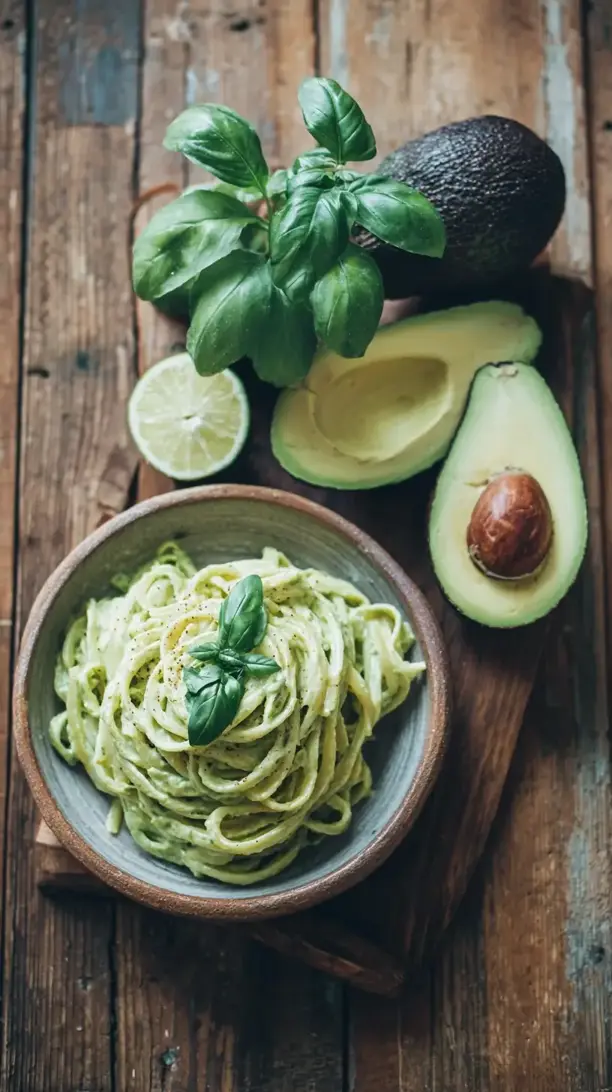
Avocado Cream Pasta
Creamy avocado pasta sauce in just 15 minutes! This easy, no-cook sauce is a light & healthy alternative to heavy cream sauces. Perfect for a quick, delicious weeknight dinner.
Ingredients
Ingredients
-
350 g your favorite long pasta (like spaghetti, linguine, or fettuccine)
-
2 large, ripe Hass avocados
-
2 cloves garlic (minced)
-
1 large lime (juice of (about 2-3 tablespoons))
-
60 ml extra-virgin olive oil (plus more for drizzling)
-
45 g fresh basil leaves (packed)
-
60 ml reserved pasta water
-
Salt and freshly ground black pepper (to taste)
-
A pinch red pepper flakes (optional, for a little heat)
-
Parmesan cheese or nutritional yeast (for serving (optional))
Instructions
-
Bring a large pot of generously salted water to a rolling boil. You want the water to taste like the sea—this is your only chance to season the pasta itself from the inside out. Add your pasta and cook according to the package directions for al dente.01
-
While the pasta is cooking, let's make the sauce. It's almost too easy. Halve and pit your avocados, then scoop the flesh into your blender or food processor. Add the minced garlic, fresh basil leaves, lime juice, and olive oil.02
-
Now, here's a crucial part: before you drain the pasta, use a ladle or a measuring cup to scoop out about 60 ml of the starchy pasta water. Add this hot water to the blender with the other ingredients. The heat will help gently cook the garlic and wilt the basil just enough, taking the raw edge off.03
-
Blend everything until it's completely smooth and creamy. You might need to stop and scrape down the sides once. The sauce should be pourable but still thick, like a runny mayonnaise. Season generously with salt and black pepper, and give it one last quick blend to combine. Taste it! This is your moment to adjust the seasoning—maybe it needs more lime or another pinch of salt.04
-
Drain your pasta, but do not rinse it. You want that starch on the surface. Immediately return the hot pasta to the pot, off the heat. Pour the avocado cream sauce over the top.05
-
Using tongs, toss the pasta vigorously with the sauce. You'll notice the sauce will coat every single strand beautifully. If the sauce seems a little too thick, add another tablespoon or two of the reserved pasta water to loosen it up. The goal is a silky, glossy coating.06
-
Serve immediately! Divide the pasta among bowls, and finish with a final drizzle of olive oil, a crack of black pepper, a sprinkle of red pepper flakes if you like, and some grated Parmesan or nutritional yeast. The warmth of the pasta will make the sauce even more aromatic.07