
Why You’ll Love This Avocado Basil Pesto Pasta
- It’s unbelievably creamy without any dairy. The ripe avocado does all the heavy lifting here, creating a luxuriously smooth texture that feels decadent but is completely plant-based.
- It comes together in under 20 minutes. Seriously, the most time-consuming part is waiting for the pasta water to boil. It’s the ultimate fast, flavorful meal for those nights when you’re short on time but not on taste.
- The flavor is incredibly fresh and vibrant. The combination of sweet basil, sharp garlic, and nutty Parmesan (or nutritional yeast) is a classic for a reason, and the avocado adds a subtle, buttery richness that ties it all together beautifully.
- It’s a fantastic way to use up herbs and avocados. Got a basil plant that’s going wild? A lone avocado that’s perfectly ripe? This recipe is their delicious destiny, preventing food waste in the most delicious way possible.
Ingredients & Tools
- 1 large, ripe avocado
- 2 cups fresh basil leaves, packed
- 1/3 cup pine nuts
- 2 cloves garlic, roughly chopped
- 1/2 cup freshly grated Parmesan cheese (or 1/4 cup nutritional yeast for a vegan version)
- 3 tablespoons fresh lemon juice (from about 1 large lemon)
- 1/4 cup extra-virgin olive oil, plus more for drizzling
- Kosher salt and freshly ground black pepper to taste
- 1 pound (450-500 g) pasta of choice (linguine, spaghetti, or fusilli work wonderfully)
- Optional for serving: Cherry tomatoes, halved; red pepper flakes; additional Parmesan.
Tools: A large pot for pasta, a food processor or high-speed blender, a colander, and a large mixing bowl.
The quality of your ingredients really shines here, so use the best you can find. A perfectly ripe avocado—yielding slightly to gentle pressure—is non-negotiable for that dreamy texture. And fresh basil, not dried, is what gives the pesto its signature aromatic punch.
Serves: 4 | Prep Time: 10 minutes | Cook Time: 10 minutes | Total Time: 20 minutes
Before You Start: Tips & Ingredient Notes
- Avocado ripeness is key. You want an avocado that is soft but not mushy. If it’s underripe, the sauce won’t be creamy. If it’s overripe and brown inside, it can impart a slightly bitter flavor to your beautiful green sauce.
- Don’t skip toasting the pine nuts. Honestly, this tiny extra step makes a world of difference. Toasting them in a dry pan for a few minutes until golden brown unlocks a deep, nutty aroma that elevates the entire pesto.
- Reserve that pasta water! Before you drain your pasta, scoop out about a cup of the starchy, salty water. This liquid gold is the secret to making your sauce silky and helping it cling to the pasta perfectly.
- Why lemon juice? Besides adding a necessary zing that balances the richness, the acidity in the lemon juice also helps slow down the oxidation process, keeping your pesto a brighter green for longer.
How to Make Avocado Basil Pesto Pasta
Step 1: Toast the Pine Nuts. Place the pine nuts in a small, dry skillet over medium-low heat. Toast them for 3-5 minutes, shaking the pan frequently, until they are fragrant and lightly golden. Keep a close eye on them—they can burn in a flash! Once toasted, immediately transfer them to a plate to cool. This prevents them from overcooking in the hot pan.
Step 2: Cook the Pasta. Bring a large pot of generously salted water to a rolling boil. Add your pasta and cook according to the package directions until al dente. Just before draining, remember to reserve about 1 cup of the starchy pasta water. This is crucial for the sauce later. Drain the pasta in a colander but do not rinse it; you want that starch to remain.
Step 3: Make the Pesto Sauce. While the pasta cooks, make the pesto. Cut the avocado in half, remove the pit, and scoop the flesh into the bowl of a food processor or blender. Add the cooled pine nuts, fresh basil leaves, garlic, Parmesan cheese, lemon juice, and a good pinch of salt and pepper. Pulse a few times to break everything down.
Step 4: Blend to Creamy Perfection. With the motor running, slowly stream in the 1/4 cup of olive oil. Blend until the mixture is completely smooth and creamy. You might need to stop and scrape down the sides once. Taste the pesto and adjust the seasoning—you’ll probably need more salt and maybe another squeeze of lemon juice. The flavor should be bright, herby, and well-balanced.
Step 5: Combine Pasta and Pesto. Transfer the hot, drained pasta to a large mixing bowl. Add the avocado pesto and a splash (about 1/4 cup) of the reserved pasta water. Using tongs or two large spoons, toss everything together vigorously. The sauce should look glossy and coat every strand. If it seems a bit thick, add another splash of pasta water until it reaches your desired consistency. The starch in the water will help emulsify the sauce, making it cling beautifully.
Step 6: Serve Immediately. Divide the pasta among bowls. Finish with a drizzle of extra virgin olive oil, a crack of black pepper, and any optional toppings like halved cherry tomatoes for a burst of freshness or a sprinkle of red pepper flakes for a little heat. Serve right away while it’s warm and wonderfully aromatic.
Serving Suggestions
Complementary Dishes
- Simple Arugula Salad with Lemon Vinaigrette — The peppery bite of arugula and the sharpness of the lemon dressing cut through the richness of the pasta perfectly, making the meal feel balanced and complete.
- Garlic Bread or Grilled Ciabatta — You’ll want something to scoop up every last bit of that creamy pesto left in the bowl. A crunchy, garlicky bread is the perfect vehicle for that important mission.
- Pan-Seared Lemon Chicken or White Beans — For a heartier meal, top the pasta with slices of simply seasoned chicken or a handful of warm, creamy cannellini beans tossed in olive oil and herbs.
Drinks
- A Crisp Sauvignon Blanc or Pinot Grigio — The high acidity and citrus notes in these white wines mirror the lemon in the pesto, cleansing the palate between each delicious bite.
- Sparkling Water with Lemon — A non-alcoholic option that provides the same refreshing, bubbly contrast that works so well with the creamy, herbal flavors of the dish.
- A Light Italian Lager — The crisp, clean finish of a cold beer is a fantastic, casual pairing that doesn’t overpower the delicate flavors of the basil and avocado.
Something Sweet
- Lemon Sorbet — Continuing the citrus theme, a scoop of tangy, refreshing lemon sorbet is the perfect palate-cleansing dessert that feels light and uplifting after the meal.
- Almond Biscotti — The nutty flavor of the biscotti echoes the pine nuts in the pesto, and their crunchy texture makes for a lovely, not-too-sweet ending.
- Fresh Berries with a Dollop of Whipped Cream — Simple, fresh, and effortless. The natural sweetness of ripe strawberries or raspberries provides a beautiful, colorful finish.
Top Mistakes to Avoid
- Mistake: Using an underripe or overripe avocado. This is the foundation of your sauce! An underripe avocado will leave you with a chunky, not-creamy pesto, while an overripe one can make the whole dish taste off.
- Mistake: Blending the pesto for too long and heating it up. If you run the food processor or blender for a long time, the friction can actually heat the sauce, which might cook the basil and avocado slightly, dulling the fresh, bright flavor. Pulse and blend just until smooth.
- Mistake: Not using the pasta water. I’ve messed this up before too… and ended up with a thick, pasty sauce that just sits on top of the noodles. The starchy pasta water is the magic ingredient that transforms the pesto into a silky, restaurant-quality sauce that coats perfectly.
- Mistake: Rinsing the pasta after draining. You wash away all the precious starch that helps the sauce stick! Just drain it and immediately add it to the bowl with the pesto.
Expert Tips
- Tip: Make it a complete meal in one pot. In the last minute of the pasta’s cooking time, throw a handful of frozen peas or chopped asparagus into the boiling water. Drain them with the pasta, and you’ve instantly added veggies to your dish.
- Tip: Prevent browning for leftovers. Avocado oxidizes, so if you think you’ll have leftovers, press a piece of plastic wrap directly onto the surface of the pesto in the storage container before sealing the lid. This limits air exposure and keeps it greener longer.
- Tip: Toast extra pine nuts for garnish. It adds a lovely textural contrast and makes the dish look professionally presented. A little goes a long way for visual appeal and a extra nutty crunch.
- Tip: Experiment with different nuts and greens. No pine nuts? Try walnuts or almonds. Want to stretch your basil? Use half basil and half baby spinach. The recipe is wonderfully adaptable once you understand the basic formula.
FAQs
Can I make this avocado pesto ahead of time?
You can, but it’s best made fresh. The avocado will start to brown over time. If you must prep it, make the pesto and press plastic wrap directly onto its surface to limit air exposure. Store it in the fridge for up to 24 hours. The lemon juice helps, but some browning is inevitable. The flavor will still be great, even if the color isn’t as vibrant. I’d recommend making the pesto component ahead rather than mixing it with the pasta until you’re ready to serve.
How should I store leftovers, and can I reheat them?
Store any leftovers in an airtight container in the refrigerator for up to 2 days. Reheating can be tricky because the avocado can separate. The best method is to gently reheat it in a skillet over low heat with a tiny splash of water or milk to re-emulsify the sauce. The microwave can make it oily, so if you use it, do so in short bursts and stir well in between.
Is this pasta dish good served cold, like a pasta salad?
Absolutely! It makes a fantastic cold pasta salad. Just prepare the recipe as directed, toss it well, and then let it chill completely in the fridge for an hour or two. The flavors will meld together beautifully. You might want to add a little extra lemon juice or a drizzle of olive oil after chilling, as the pasta tends to absorb the sauce.
Can I freeze the avocado pesto?
I don’t recommend it, honestly. Avocados have a very high water content, and when frozen and thawed, they tend to become watery and grainy, losing that creamy texture that makes this sauce so special. This is truly a “make and eat” recipe for the best experience.
My sauce turned out too thick. How can I thin it?
No problem at all! This happens sometimes depending on the size of your avocado. The easiest fix is to simply add more of that reserved pasta water, a tablespoon at a time, while tossing the pasta until it reaches your preferred consistency. You can also use a little more olive oil or even a splash of regular water in a pinch.
Avocado Basil Pesto Pasta
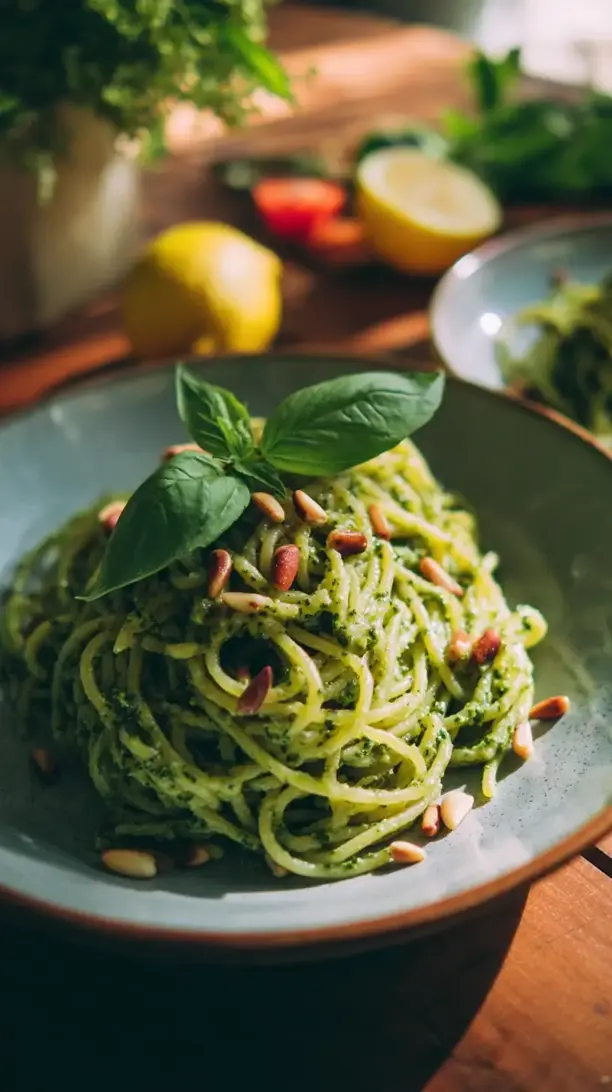
Creamy avocado basil pesto pasta ready in 20 minutes! This dairy-free recipe uses ripe avocado for a luxuriously smooth sauce that clings to every strand. Perfect for busy weeknights.
Ingredients
Ingredients
-
1 large, ripe avocado
-
2 cups fresh basil leaves (packed)
-
1/3 cup pine nuts
-
2 cloves garlic (roughly chopped)
-
1/2 cup freshly grated Parmesan cheese (or 1/4 cup nutritional yeast for a vegan version)
-
3 tablespoons fresh lemon juice (from about 1 large lemon)
-
1/4 cup extra-virgin olive oil (plus more for drizzling)
-
Kosher salt (to taste)
-
freshly ground black pepper (to taste)
-
1 pound pasta of choice (linguine, spaghetti, or fusilli work wonderfully)
-
Cherry tomatoes (halved; optional for serving)
-
red pepper flakes (optional for serving)
-
additional Parmesan (optional for serving)
Instructions
-
Toast the Pine Nuts. Place the pine nuts in a small, dry skillet over medium-low heat. Toast them for 3-5 minutes, shaking the pan frequently, until they are fragrant and lightly golden. Keep a close eye on them—they can burn in a flash! Once toasted, immediately transfer them to a plate to cool. This prevents them from overcooking in the hot pan.01
-
Cook the Pasta. Bring a large pot of generously salted water to a rolling boil. Add your pasta and cook according to the package directions until al dente. Just before draining, remember to reserve about 1 cup of the starchy pasta water. This is crucial for the sauce later. Drain the pasta in a colander but do not rinse it; you want that starch to remain.02
-
Make the Pesto Sauce. While the pasta cooks, make the pesto. Cut the avocado in half, remove the pit, and scoop the flesh into the bowl of a food processor or blender. Add the cooled pine nuts, fresh basil leaves, garlic, Parmesan cheese, lemon juice, and a good pinch of salt and pepper. Pulse a few times to break everything down.03
-
Blend to Creamy Perfection. With the motor running, slowly stream in the 1/4 cup of olive oil. Blend until the mixture is completely smooth and creamy. You might need to stop and scrape down the sides once. Taste the pesto and adjust the seasoning—you'll probably need more salt and maybe another squeeze of lemon juice. The flavor should be bright, herby, and well-balanced.04
-
Combine Pasta and Pesto. Transfer the hot, drained pasta to a large mixing bowl. Add the avocado pesto and a splash (about 1/4 cup) of the reserved pasta water. Using tongs or two large spoons, toss everything together vigorously. The sauce should look glossy and coat every strand. If it seems a bit thick, add another splash of pasta water until it reaches your desired consistency. The starch in the water will help emulsify the sauce, making it cling beautifully.05
-
Serve Immediately. Divide the pasta among bowls. Finish with a drizzle of extra virgin olive oil, a crack of black pepper, and any optional toppings like halved cherry tomatoes for a burst of freshness or a sprinkle of red pepper flakes for a little heat. Serve right away while it's warm and wonderfully aromatic.06