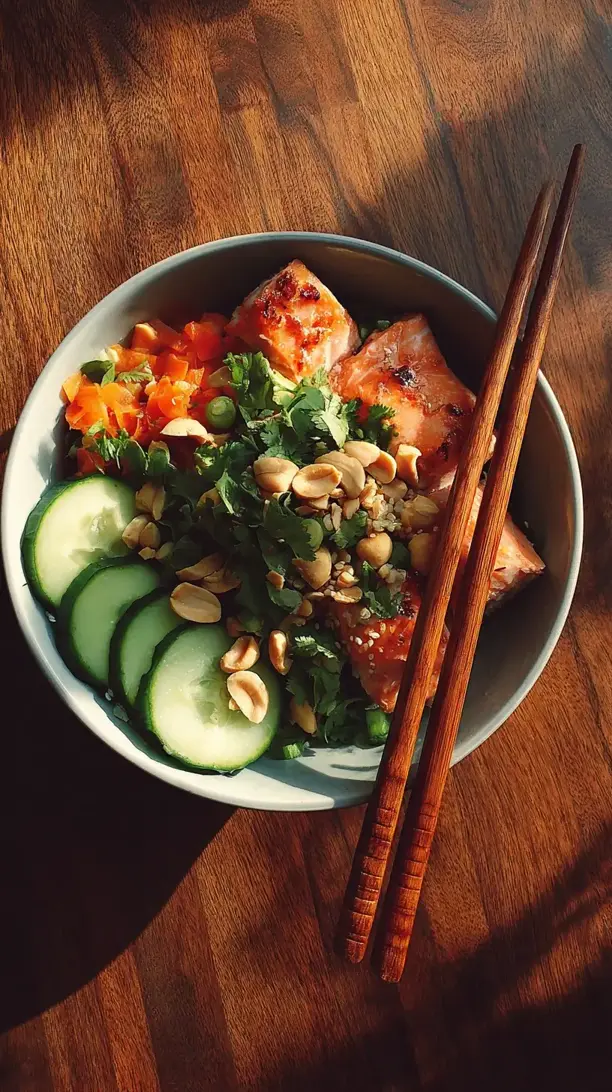

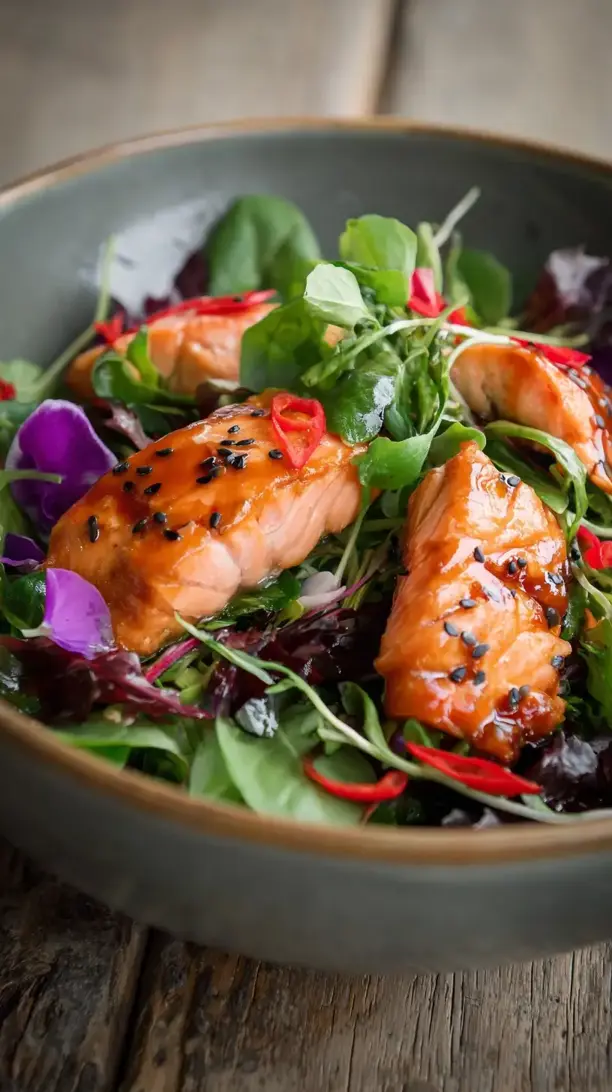
This Asian Salmon Salad delivers a vibrant, restaurant-worthy meal in about 30 minutes. Tender, glazed salmon rests on a crisp bed of fresh veggies and herbs, all tossed in a zesty, umami-packed dressing. It’s a nourishing and exciting dish perfect for lunch or an easy dinner.
Why You’ll Love This Asian Salmon Salad
- Flavor explosion: Sweet-savory glazed salmon meets bright, tangy dressing and fresh, crunchy veggies.
- Easy to customize: Swap greens, adjust spice, or change proteins—it’s versatile and forgiving.
- Nutritious & indulgent: Packed with healthy fats, protein, vitamins, and fiber without sacrificing taste.
- Faster than takeout: Ready in about 30 minutes with minimal prep and simple multitasking.
Ingredients & Tools
- 2 salmon fillets (about 150 g each), skin on or off
- 2 tbsp soy sauce (or tamari for gluten-free)
- 1 tbsp maple syrup (or honey)
- 1 tbsp rice vinegar
- 1 tsp sesame oil
- 2 cloves garlic, minced
- 1 tsp fresh ginger, grated
- 4 cups mixed greens (like romaine, butter lettuce, or arugula)
- 1 cup red cabbage, thinly sliced
- 1 carrot, julienned or grated
- 1/2 cucumber, thinly sliced
- 2 radishes, sliced
- 2 tbsp cilantro, chopped
- 2 tbsp mint leaves, roughly torn
- 1 green onion, sliced
- 1 tbsp sesame seeds, for garnish
- For the dressing: 3 tbsp lime juice, 1 tbsp fish sauce, 1 tsp sugar, 1 red chili (finely sliced, optional)
Tools: mixing bowls, whisk, non-stick skillet or grill pan, sharp knife, cutting board
Notes: A little goes a long way with these ingredients—the fresh herbs and that hit of chili in the dressing really wake up the whole dish. And don’t skip the sesame oil; it adds that nutty, aromatic depth that makes this salad unmistakably Asian-inspired.
Nutrition (per serving)
| Calories: | 420 kcal |
| Protein: | 28 g |
| Fat: | 22 g |
| Carbs: | 24 g |
| Fiber: | 6 g |
Serves: 2 | Prep Time: 15 minutes | Cook Time: 10 minutes | Total Time: 25 minutes
Before You Start: Tips & Ingredient Notes
- Can I use a different type of fish? Absolutely! This recipe works beautifully with trout, tuna steaks, or even firm tofu for a vegetarian twist. Just adjust the cooking time based on thickness—the marinade and dressing will complement almost any protein.
- What if I don’t have fresh ginger or garlic? While fresh is ideal for that bright, pungent kick, you can substitute with 1/2 tsp ginger powder and 1/2 tsp garlic powder. The flavor will be slightly mellower but still delicious.
- Is the dressing too salty or tangy? The balance of salty (soy, fish sauce), sweet (maple), and sour (lime, vinegar) is key. Taste as you go—you can always add a touch more maple syrup or lime juice to suit your preference.
- How do I prevent the salmon from sticking? Make sure your pan is properly heated before adding the salmon, and don’t move it around too much. A well-seasoned cast iron or non-stick skillet is your best friend here.
- Can I prepare components ahead? Yes! You can chop the veggies, make the dressing, and even marinate the salmon (up to 30 minutes) in advance. Just wait to cook the salmon until you’re ready to serve for the best texture.
How to Make Asian Salmon Salad
Step 1: Start by prepping the salmon marinade. In a small bowl, whisk together the soy sauce, maple syrup, rice vinegar, sesame oil, minced garlic, and grated ginger. Place the salmon fillets in a shallow dish and pour about two-thirds of the marinade over them, turning to coat evenly. Set aside for 10–15 minutes—this is just enough time for the flavors to penetrate without making the fish mushy. Reserve the remaining marinade for glazing later.
Step 2: While the salmon marinates, prepare your salad base. In a large bowl, combine the mixed greens, sliced red cabbage, julienned carrot, cucumber slices, radishes, cilantro, mint, and green onion. Toss everything gently with your hands to distribute the colors and textures evenly. You’ll notice how vibrant and fresh it looks already—that crunch is going to be so satisfying.
Step 3: Now, make the dressing. In a separate small bowl or jar, whisk together the lime juice, fish sauce, sugar, and finely sliced red chili (if using). Taste and adjust—you might want a hint more sweetness or acidity depending on your lime. Set this aside; the flavors will meld and intensify while you cook the salmon.
Step 4: Heat a non-stick skillet over medium-high heat. Once hot, add the marinated salmon fillets (shake off excess marinade). Cook for about 4–5 minutes on the first side, until you see a golden-brown crust forming and the salmon releases easily from the pan. Brush the top with the reserved marinade, then flip and cook for another 3–4 minutes, until the salmon is cooked through but still moist inside. The internal temperature should reach 145°F (63°C).
Step 5: While the salmon rests for a minute, drizzle about half of the dressing over the salad base and toss well to coat every leaf and veggie. You want everything lightly dressed, not soggy. Divide the salad between two serving bowls.
Step 6: Place the warm salmon fillets on top of the dressed salad. Drizzle the remaining dressing over the salmon and garnish with sesame seeds and extra herbs. The heat from the salmon will slightly wilt the greens nearest to it, creating a wonderful contrast with the cooler, crispier parts of the salad. Serve immediately and enjoy!
Storage & Freshness Guide
- Fridge: Store components separately for up to 2 days—undressed salad mix, cooked salmon, and dressing in airtight containers.
- Freezer: Freeze cooked salmon (without salad) for up to 1 month. Thaw in fridge before reheating gently.
- Reviving: Bring salmon to room temperature or warm gently in a skillet. Toss salad with fresh greens if needed.
Serving Suggestions
Complementary Dishes
- Steamed jasmine rice — For a more substantial meal, a small bowl of fluffy jasmine rice on the side soaks up the extra dressing beautifully and adds a comforting element.
- Vegetable spring rolls — Crispy or fresh spring rolls add even more texture and make the meal feel like a festive, restaurant-style spread without much extra work.
- Edamame beans with sea salt — A simple starter or side, these lightly salted soybeans are fun to nibble on and complement the Asian flavors seamlessly.
Drinks
- Iced green tea with lemon — The subtle bitterness and citrus notes cleanse the palate between bites of the rich salmon and zesty dressing, making each mouthful taste fresh again.
- Light, crisp lager or a citrusy wheat beer — If you’re enjoying this for dinner, a cold beer with bright carbonation cuts through the oiliness of the salmon and enhances the herbal notes.
- Ginger-infused sparkling water — For a non-alcoholic option, this adds a refreshing, spicy kick that mirrors the ginger in the marinade and keeps things light.
Something Sweet
- Mango and sticky rice — The creamy, sweet coconut rice and ripe mango are a classic Southeast Asian dessert that feels like a natural, tropical finale to this meal.
- Lychee sorbet — Light, floral, and refreshing, a scoop of lychee sorbet cleanses the palate and provides a cool, sweet finish without feeling too heavy.
- Matcha white chocolate cookies — If you’re craving something baked, these offer a delicate bitterness from the matcha that contrasts wonderfully with the sweet white chocolate.
Top Mistakes to Avoid
- Overcooking the salmon. Salmon continues to cook a bit after you take it off the heat, so aim for slightly underdone in the center. Overcooked salmon becomes dry and loses that lovely, buttery texture—a real shame when it’s the star of the dish.
- Drowning the salad in dressing. You can always add more dressing, but you can’t take it away. Start with a light toss, taste, and add more if needed. A soggy salad loses its refreshing crunch, which is half the appeal here.
- Skipping the fresh herbs. I know it’s tempting to omit cilantro or mint if you’re not a huge fan, but they add crucial brightness and complexity. If you really dislike cilantro, try parsley or basil instead—but don’t leave them out entirely.
- Not letting the pan get hot enough. If your skillet isn’t properly preheated, the salmon will steam instead of sear, and you’ll miss out on that delicious, caramelized crust. I’ve messed this up before too—patience with preheating is key.
Expert Tips
- Tip: For extra crispy salmon skin, pat the skin completely dry with paper towels before marinating, and press the fillet skin-side down in the hot pan for the first half of cooking. Place a small lid or foil loosely over the top to contain splatters but still allow steam to escape.
- Tip: To make the salad ahead for lunches, keep the dressing separate and pack it in a small container. Assemble the salad and cooked (cooled) salmon in your meal prep container, then drizzle with dressing just before eating to keep everything crisp.
- Tip: If you love a bit of heat, add a teaspoon of sriracha or chili garlic sauce to the marinade. It’ll give the salmon a subtle, building warmth that plays nicely with the sweet and savory notes.
- Tip: For a more substantial salad, add avocado slices or crispy roasted chickpeas. The creaminess of avocado or the crunch of chickpeas introduces another layer of texture and makes the meal even more filling.
- Tip: If your salmon fillets are very thick, you can finish them in a 375°F (190°C) oven for 3–4 minutes after searing. This ensures they cook evenly without burning the exterior.
FAQs
Can I use frozen salmon for this recipe?
Yes, absolutely—just make sure to thaw it completely in the refrigerator overnight first. Pat it very dry with paper towels before marinating, as excess moisture can prevent proper searing and make the marinade dilute. Frozen salmon works just fine here; the key is that thorough drying step so you still get that beautiful crust.
How long will leftovers keep in the fridge?
Leftover assembled salad (with dressing already added) is best eaten within a few hours, as the greens will wilt. However, you can store components separately for up to 2 days: cooked salmon in one container, undressed veggie mix in another, and dressing in a jar. The salmon is delicious cold, too—flake it over a fresh salad the next day.
Is there a substitute for fish sauce in the dressing?
If you don’t have fish sauce or prefer a vegetarian version, you can use soy sauce or tamari, though the flavor will be less complex. For a closer umami hit, try a teaspoon of white miso paste dissolved in a tablespoon of water. It won’t be identical, but it’ll still add that savory depth we’re after.
Can I grill the salmon instead of pan-searing?
Definitely! Grilling adds a lovely smoky flavor. Preheat your grill to medium-high and brush the grates with oil. Grill the salmon skin-side down for 4–5 minutes, then flip and cook for another 3–4 minutes, brushing with the reserved marinade. Just be careful—the sugary marinade can cause flare-ups, so keep a spray bottle of water handy.
My dressing tastes too sharp—how can I balance it?
A sharp dressing usually needs a touch more sweetness or fat. Add another half teaspoon of maple syrup or a drizzle of neutral oil (like avocado or grapeseed) and whisk again. Taste as you go—sometimes all it needs is that hint of sweetness to round out the acidity from the lime and vinegar.
Asian Salmon Salad
Make this easy Asian Salmon Salad in 30 minutes! Featuring glazed salmon and a fresh, zesty salad. Get the recipe for a healthy, flavorful meal now!
Ingredients
For the salmon marinade:
-
2 fillets salmon (about 150 g each, skin on or off)
-
2 tbsp soy sauce (or tamari for gluten-free)
-
1 tbsp maple syrup (or honey)
-
1 tbsp rice vinegar
-
1 tsp sesame oil
-
2 cloves garlic (minced)
-
1 tsp fresh ginger (grated)
For the salad base:
-
4 cups mixed greens (like romaine, butter lettuce, or arugula)
-
1 cup red cabbage (thinly sliced)
-
1 carrot (julienned or grated)
-
1/2 cucumber (thinly sliced)
-
2 radishes (sliced)
-
2 tbsp cilantro (chopped)
-
2 tbsp mint leaves (roughly torn)
-
1 green onion (sliced)
-
1 tbsp sesame seeds (for garnish)
For the dressing:
-
3 tbsp lime juice
-
1 tbsp fish sauce
-
1 tsp sugar
-
1 red chili (finely sliced, optional)
Instructions
-
Start by prepping the salmon marinade. In a small bowl, whisk together the soy sauce, maple syrup, rice vinegar, sesame oil, minced garlic, and grated ginger. Place the salmon fillets in a shallow dish and pour about two-thirds of the marinade over them, turning to coat evenly. Set aside for 10–15 minutes—this is just enough time for the flavors to penetrate without making the fish mushy. Reserve the remaining marinade for glazing later.01
-
While the salmon marinates, prepare your salad base. In a large bowl, combine the mixed greens, sliced red cabbage, julienned carrot, cucumber slices, radishes, cilantro, mint, and green onion. Toss everything gently with your hands to distribute the colors and textures evenly. You’ll notice how vibrant and fresh it looks already—that crunch is going to be so satisfying.02
-
Now, make the dressing. In a separate small bowl or jar, whisk together the lime juice, fish sauce, sugar, and finely sliced red chili (if using). Taste and adjust—you might want a hint more sweetness or acidity depending on your lime. Set this aside; the flavors will meld and intensify while you cook the salmon.03
-
Heat a non-stick skillet over medium-high heat. Once hot, add the marinated salmon fillets (shake off excess marinade). Cook for about 4–5 minutes on the first side, until you see a golden-brown crust forming and the salmon releases easily from the pan. Brush the top with the reserved marinade, then flip and cook for another 3–4 minutes, until the salmon is cooked through but still moist inside. The internal temperature should reach 145°F (63°C).04
-
While the salmon rests for a minute, drizzle about half of the dressing over the salad base and toss well to coat every leaf and veggie. You want everything lightly dressed, not soggy. Divide the salad between two serving bowls.05
-
Place the warm salmon fillets on top of the dressed salad. Drizzle the remaining dressing over the salmon and garnish with sesame seeds and extra herbs. The heat from the salmon will slightly wilt the greens nearest to it, creating a wonderful contrast with the cooler, crispier parts of the salad. Serve immediately and enjoy!06