
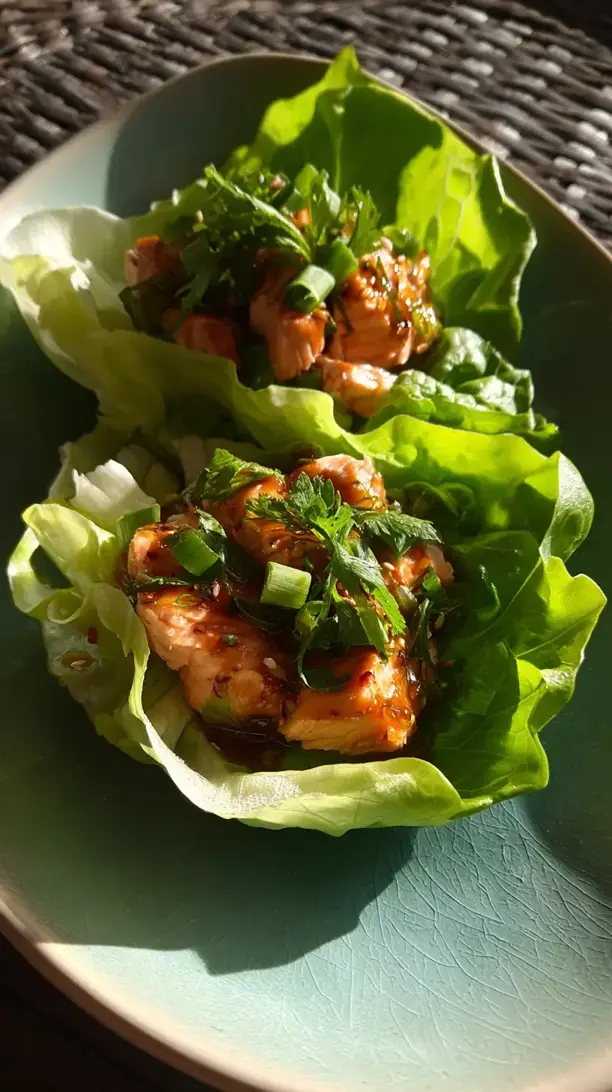
These Asian Salmon Lettuce Cups are a fresh, hands-on meal that’s both vibrant and satisfying. Tender salmon cubes are seared and glazed in a sweet-savory sauce, then piled into crisp butter lettuce leaves with crunchy toppings. It’s a quick, flavorful dish perfect for weeknights or entertaining.
Why You’ll Love This Asian Salmon Lettuce Cups
- Flavor explosion: The sticky-sweet glaze with ginger, garlic, and soy creates a perfect savory-sweet-tangy balance.
- Light yet satisfying: Fresh lettuce cups swap heavier carbs for a crunchy, vibrant base.
- Interactive eating: Building your own cups makes mealtime fun and engaging.
- Simple & quick: Ready in about 30 minutes but tastes restaurant-worthy.
Ingredients & Tools
- 500 g skinless salmon fillet, cut into 2.5 cm cubes
- 2 tbsp soy sauce (or tamari for gluten-free)
- 1 tbsp honey or maple syrup
- 1 tbsp rice vinegar
- 2 tsp freshly grated ginger
- 2 garlic cloves, minced
- 1 tbsp sesame oil
- 1 tbsp neutral oil (like avocado or grapeseed)
- 1 head butter lettuce, leaves separated
- 2 spring onions, thinly sliced
- 1 small red chilli, deseeded and finely chopped
- A handful of fresh coriander, roughly chopped
- 2 tbsp toasted sesame seeds, for garnish
- 1 lime, cut into wedges, for serving
Tools: A large non-stick skillet, a small bowl for the sauce, a microplane or fine grater for the ginger and garlic.
Notes: The quality of your salmon really matters here—look for fresh, bright pink fillets with a pleasant sea breeze aroma. And don’t skip toasting the sesame seeds; that little extra step brings out a nutty fragrance that elevates the whole dish.
Nutrition (per serving)
| Calories: | 320 kcal |
| Protein: | 28 g |
| Fat: | 18 g |
| Carbs: | 10 g |
| Fiber: | 2 g |
Serves: 4 | Prep Time: 15 minutes | Cook Time: 10 minutes | Total Time: 25 minutes
Before You Start: Tips & Ingredient Notes
- Get your mise en place ready. This recipe comes together quickly once you start cooking. Having all your ingredients chopped, measured, and within arm’s reach will make the process smooth and enjoyable, not frantic.
- Why cut the salmon into cubes? Cubing the salmon gives you more surface area for that delicious sear and ensures every piece gets nicely coated in the glaze. It also makes it much easier to spoon into the lettuce cups later on.
- Butter lettuce is your best friend here. Its cup-like shape and tender, flexible leaves are perfect for holding the filling without tearing. If you can’t find it, little gem or romaine hearts are good backups, but butter lettuce is the gold standard.
- Don’t be shy with the aromatics. Fresh ginger and garlic are non-negotiable for that authentic, pungent base flavor. Using the jarred stuff just won’t give you the same bright, zingy kick that makes this dish so special.
How to Make Asian Salmon Lettuce Cups
Step 1: Start by prepping your salmon. Pat the skinless fillet completely dry with paper towels—this is crucial for getting a good sear and not steaming the fish. Then, use a sharp knife to cut it into roughly 2.5 cm cubes. Season the cubes lightly with a pinch of black pepper. In a small bowl, whisk together the soy sauce, honey, rice vinegar, grated ginger, and minced garlic. This is your magic glaze, so give it a good mix until the honey is fully dissolved.
Step 2: Place your large non-stick skillet over medium-high heat and add the neutral oil. Once the oil is shimmering hot—you can test this by adding a small piece of salmon; it should sizzle immediately—carefully add the salmon cubes in a single layer. You’ll hear that satisfying sizzle. Let them cook undisturbed for about 2 minutes to develop a beautiful golden-brown crust on one side.
Step 3: Now, gently flip the salmon cubes to sear the other sides. You’re not looking to cook them all the way through just yet. After another minute or so, when the cubes are seared on a couple of sides but still rare in the middle, reduce the heat to medium-low. This control is key to preventing the glaze from burning in the next step.
Step 4: Pour your pre-mixed sauce into the skillet. It will bubble and sizzle dramatically—that’s exactly what you want! As you gently toss the salmon in the sauce, you’ll notice it start to thicken and turn glossy, coating each piece beautifully. Continue to cook for another 2-3 minutes, just until the salmon is cooked through and flakes easily with a fork. Be careful not to overcook it, as salmon can dry out quickly.
Step 5: Right at the end, drizzle in the sesame oil and give everything one final toss. The aroma will be incredible—toasty, nutty, and deeply savory. Remove the skillet from the heat immediately. Your salmon is now perfectly glazed, tender, and ready to be assembled.
Step 6: Time to build your cups! Arrange the clean, dry butter lettuce leaves on a large platter, like little edible bowls. Spoon the warm glazed salmon generously into each cup. Top with a scattering of sliced spring onions, chopped red chilli for a bit of heat, and a generous sprinkle of fresh coriander and toasted sesame seeds. Serve immediately with lime wedges on the side for squeezing over.
Storage & Freshness Guide
- Fridge: Store leftover glazed salmon in an airtight container for up to 3 days.
- Freezer: Freeze cooked salmon (without toppings) for up to 1 month. Thaw in fridge before reheating.
- Reviving: Gently reheat salmon in a skillet or microwave. Assemble lettuce cups fresh to maintain crispness.
Serving Suggestions
Complementary Dishes
- Sticky Coconut Rice — The slight sweetness and creamy texture of the rice is a fantastic, comforting base that soaks up any extra glaze from the salmon beautifully.
- Quick-Pickled Cucumber Salad — A sharp, vinegary crunch from some quick-pickled cucumbers and red onions provides a brilliant, palate-cleansing contrast to the rich salmon.
- Steamed Edamame with Sea Salt — It’s a simple, fun starter that gets everyone interacting and sets a casual, shareable tone for the meal to come.
Drinks
- Iced Jasmine Green Tea — Its delicate, floral notes are incredibly refreshing and won’t overpower the complex flavors of the salmon, making it a perfect non-alcoholic pairing.
- A Crisp Pinot Gris — This white wine has enough acidity to cut through the richness of the fish and a fruity profile that complements the sweet and savory glaze wonderfully.
- Classic Mojito (virgin or regular) — The mint and lime are a powerhouse duo that mirror the fresh herbs and citrus in the dish, creating a super vibrant and zingy combination.
Something Sweet
- Mango Sticky Rice — It’s a classic for a reason. The sweet, ripe mango and creamy coconut rice continue the Southeast Asian theme and provide a lush, satisfying end to the meal.
- Lychee and Raspberry Sorbet — This is a light, fruity, and incredibly refreshing option that cleanses the palate and feels like a little burst of sunshine after the savory main.
- Fortune Cookies with Green Tea Ice Cream — A playful, slightly whimsical finish that brings a fun, creamy element and a bit of crunch to the table.
Top Mistakes to Avoid
- Overcrowding the pan. If you put too many salmon cubes in the skillet at once, they’ll steam instead of sear. You’ll miss out on that lovely caramelized crust that adds so much texture and flavor. Cook in batches if your pan is small.
- Using a sugar-heavy glaze too early. The honey in the sauce can burn if you add it over very high heat. That’s why we sear the salmon first and then add the glaze to a slightly reduced heat, allowing it to thicken and coat without turning bitter.
- Overcooking the salmon. Salmon continues to cook from residual heat even after it’s off the stove. The trick is to take it off the heat when it’s just barely opaque in the center—it should still be very moist and flake apart gently.
- Skipping the fresh herbs and lime. I’ve messed this up before too, thinking the salmon was flavorful enough on its own. But the coriander and a big squeeze of lime at the end are what make the flavors pop and feel truly fresh and balanced.
Expert Tips
- Tip: For an extra layer of flavor, marinate the salmon cubes in a tablespoon of the soy sauce mixture for 10-15 minutes before cooking. This gives the fish a chance to absorb the savory notes from the inside out, making it even more delicious.
- Tip: If your sauce isn’t thickening to a glaze-like consistency, mix a teaspoon of cornflour with a tablespoon of cold water and stir it into the skillet. It will thicken up almost instantly, giving you that perfect sticky coating.
- Tip: To make this a fantastic next-day lunch, pack the cooled salmon and the lettuce leaves separately. Assemble just before eating to keep the lettuce crisp and prevent it from getting soggy.
- Tip: For a beautiful presentation, serve all the components—the warm salmon in the skillet, the platter of lettuce cups, and bowls of toppings—family-style in the middle of the table. It encourages everyone to dig in and customize their own perfect bite.
FAQs
Can I use a different type of fish?
Absolutely! While salmon is our top pick for its rich flavor and flaky texture, this method works wonderfully with firm white fish like cod or halibut. Just be a little more gentle when flipping the cubes, as these fish can be more delicate. Tuna is another great option if you prefer to keep the center a little pink, like a tataki. The cooking time might vary slightly depending on the thickness of your fish, so always use a fork to check for doneness.
My glaze burned a little. Can I fix it?
It happens to the best of us if the heat is a touch too high. If you notice it starting to catch and smoke, immediately remove the pan from the heat and transfer the salmon to a bowl. You can try making a fresh half-batch of the sauce in a separate small saucepan and then tossing the salmon in it. To prevent it next time, ensure you lower the heat before adding the sauce and have all your ingredients ready to go so you’re not scrambling.
How can I make this recipe gluten-free?
It’s super easy! Simply swap the regular soy sauce for tamari or a certified gluten-free soy sauce. All the other core ingredients—like the honey, rice vinegar, and sesame oil—are naturally gluten-free. Just always double-check the labels on any pre-made sauces or condiments you might be using to be completely safe.
Is it possible to meal prep this dish?
Yes, with a little strategy. You can fully cook the glazed salmon and store it in an airtight container in the fridge for up to 3 days. I’d recommend keeping the lettuce leaves, chopped herbs, and toppings separate. When you’re ready to eat, you can enjoy the salmon cold, or gently reheat it in a microwave or skillet before assembling your cups. The lettuce must be assembled fresh to stay crisp.
What can I use instead of butter lettuce?
Butter lettuce is ideal for its pliable, cup-like leaves, but little gem lettuce is a fantastic second choice. You can also use the inner, smaller leaves of romaine hearts—they’re sturdier and have a great crunch, though they won’t form as neat a cup. In a real pinch, you can even use large, sturdy cabbage leaves, blanched briefly to soften them, for a different but still delicious experience.
Asian Salmon Lettuce Cups
Make these easy Asian Salmon Lettuce Cups in 25 minutes! A light, flavorful meal with glazed salmon and fresh toppings. Get the simple recipe here.
Ingredients
For the salmon and sauce:
-
500 g skinless salmon fillet (cut into 2.5 cm cubes)
-
2 tbsp soy sauce (or tamari for gluten-free)
-
1 tbsp honey or maple syrup
-
1 tbsp rice vinegar
-
2 tsp freshly grated ginger
-
2 garlic cloves (minced)
-
1 tbsp sesame oil
-
1 tbsp neutral oil (like avocado or grapeseed)
For the assembly:
-
1 head butter lettuce (leaves separated)
-
2 spring onions (thinly sliced)
-
1 small red chilli (deseeded and finely chopped)
-
A handful fresh coriander (roughly chopped)
-
2 tbsp toasted sesame seeds (for garnish)
-
1 lime (cut into wedges, for serving)
Instructions
-
Start by prepping your salmon. Pat the skinless fillet completely dry with paper towels—this is crucial for getting a good sear and not steaming the fish. Then, use a sharp knife to cut it into roughly 2.5 cm cubes. Season the cubes lightly with a pinch of black pepper. In a small bowl, whisk together the soy sauce, honey, rice vinegar, grated ginger, and minced garlic. This is your magic glaze, so give it a good mix until the honey is fully dissolved.01
-
Place your large non-stick skillet over medium-high heat and add the neutral oil. Once the oil is shimmering hot—you can test this by adding a small piece of salmon; it should sizzle immediately—carefully add the salmon cubes in a single layer. You’ll hear that satisfying sizzle. Let them cook undisturbed for about 2 minutes to develop a beautiful golden-brown crust on one side.02
-
Now, gently flip the salmon cubes to sear the other sides. You’re not looking to cook them all the way through just yet. After another minute or so, when the cubes are seared on a couple of sides but still rare in the middle, reduce the heat to medium-low. This control is key to preventing the glaze from burning in the next step.03
-
Pour your pre-mixed sauce into the skillet. It will bubble and sizzle dramatically—that’s exactly what you want! As you gently toss the salmon in the sauce, you’ll notice it start to thicken and turn glossy, coating each piece beautifully. Continue to cook for another 2-3 minutes, just until the salmon is cooked through and flakes easily with a fork. Be careful not to overcook it, as salmon can dry out quickly.04
-
Right at the end, drizzle in the sesame oil and give everything one final toss. The aroma will be incredible—toasty, nutty, and deeply savory. Remove the skillet from the heat immediately. Your salmon is now perfectly glazed, tender, and ready to be assembled.05
-
Time to build your cups! Arrange the clean, dry butter lettuce leaves on a large platter, like little edible bowls. Spoon the warm glazed salmon generously into each cup. Top with a scattering of sliced spring onions, chopped red chilli for a bit of heat, and a generous sprinkle of fresh coriander and toasted sesame seeds. Serve immediately with lime wedges on the side for squeezing over.06