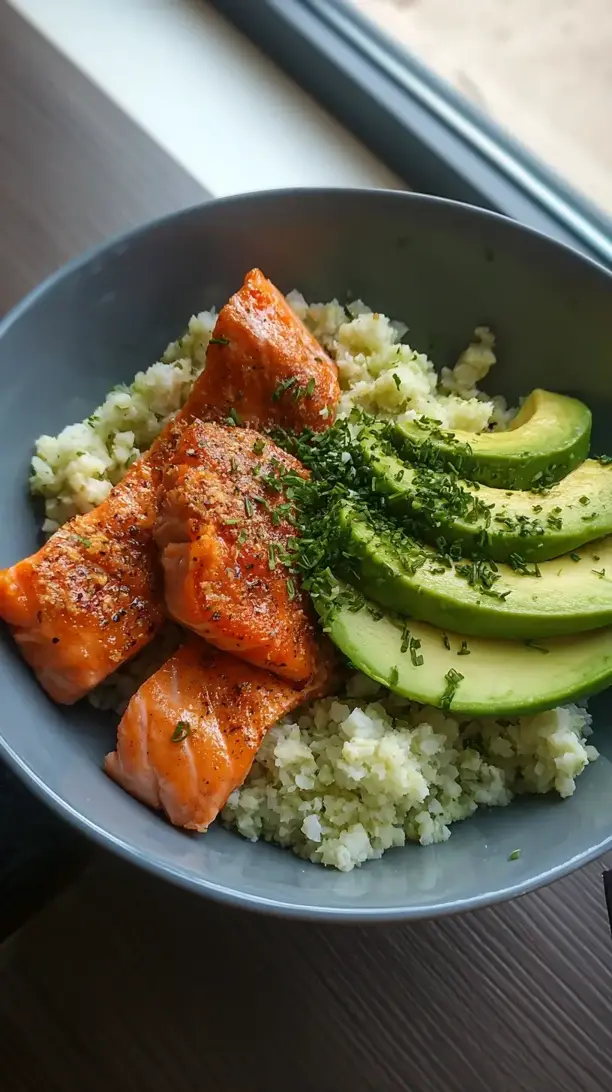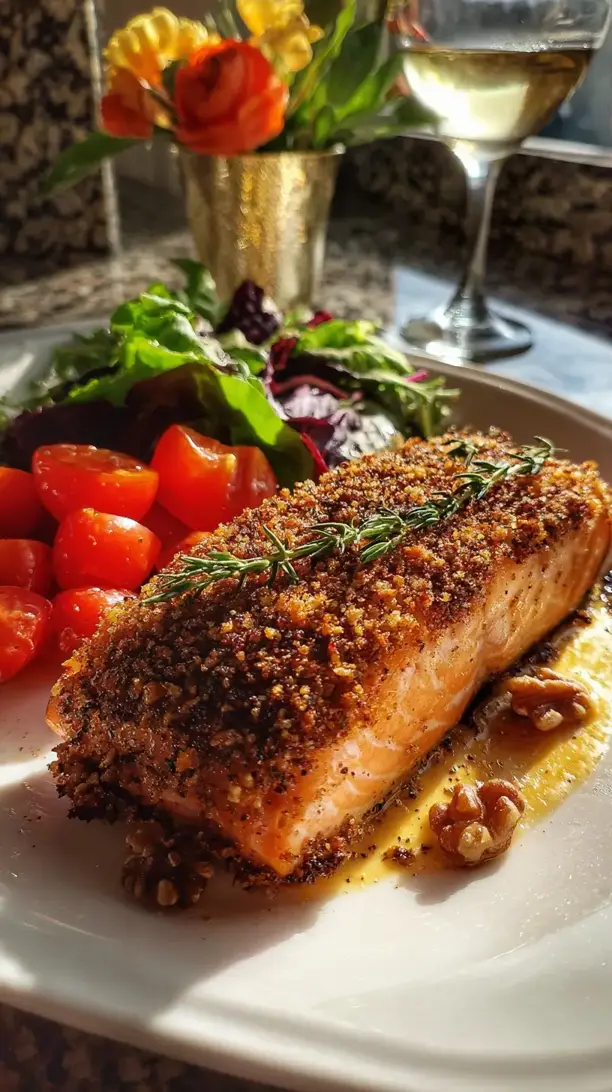

This Artichoke and Spinach Salmon is a restaurant-worthy dish you can make in under 30 minutes. Tender salmon fillets bake atop a creamy, garlicky spinach and artichoke base for a rich yet light meal. It’s an elegant one-pan wonder perfect for busy weeknights or date nights.
Why You’ll Love This Artichoke and Spinach Salmon
- One-Pan Elegance: Protein and veggies cook together for incredible flavor and easy cleanup.
- Divine Flavor: Briny artichokes and earthy spinach pair perfectly with rich, buttery salmon.
- Effortless Prep: Sauté garlic, mix a few ingredients, and let the oven do the work.
- Versatile Base: Easily swap herbs, cheeses, or fish to make it your own.
Ingredients & Tools
- 4 (6-ounce / 170 g) salmon fillets, skin-on or skinless
- 1 tablespoon olive oil
- 3 cloves garlic, minced
- 5 ounces fresh baby spinach
- 1 (14-ounce / 400 g) can artichoke hearts, drained and quartered
- 4 ounces cream cheese, softened
- 1/4 cup Greek yogurt or sour cream
- 1/2 cup shredded mozzarella cheese
- 1/4 cup grated Parmesan cheese
- 1 teaspoon Italian seasoning
- 1/2 teaspoon onion powder
- 1 lemon, juiced and zested
- To taste: salt and freshly ground black pepper
- For garnish: fresh parsley or dill, and lemon wedges
Tools: A large, oven-safe skillet (like cast iron or stainless steel) and a small mixing bowl.
Notes: Use high-quality salmon and fresh lemon for the best flavor.
Nutrition (per serving)
| Calories: | 485 kcal |
| Protein: | 42 g |
| Fat: | 29 g |
| Carbs: | 12 g |
| Fiber: | 4 g |
Serves: 4 | Prep Time: 15 minutes | Cook Time: 15 minutes | Total Time: 30 minutes
Before You Start: Tips & Ingredient Notes
- Pat your salmon dry. This is a small step with a huge impact. Taking a paper towel and thoroughly drying the salmon fillets will help them sear beautifully and get a lovely crust, rather than steaming in their own moisture.
- Use canned or jarred artichoke hearts in water. They’re convenient and work perfectly here. Just make sure you give them a good drain and a quick pat dry to remove excess liquid, which can make the spinach mixture a bit watery.
- Bring your cream cheese to room temperature. If it’s too cold, it won’t incorporate smoothly into the spinach and artichoke mixture, and you might end up with little lumps. Let it sit on the counter for 20-30 minutes before you start cooking.
- Don’t be shy with the seasoning. Salmon and the creamy base both need a good amount of salt and pepper to truly shine. Taste the spinach mixture before adding the salmon and adjust as needed—you’ll be glad you did.
How to Make Artichoke and Spinach Salmon
Step 1: Preheat and Prep. Start by preheating your oven to 400°F (200°C). This ensures it’s nice and hot when your skillet goes in, which is key for getting that perfect cook on the salmon. While it heats up, pat your salmon fillets completely dry with paper towels and season both sides generously with salt and pepper. Zest and juice your lemon, and get all your other ingredients measured and ready to go. A little mise en place makes the process so smooth.
Step 2: Wilt the Spinach. Place your oven-safe skillet over medium heat and add the olive oil. Once the oil is shimmering, add the minced garlic and sauté for about 30 seconds until it becomes fragrant—be careful not to let it burn! Add the entire bag of fresh spinach. It will look like a mountain at first, but it wilts down remarkably fast. Use tongs to toss it continuously in the garlic oil until it’s fully wilted, which should only take 2-3 minutes.
Step 3: Create the Creamy Base. Reduce the heat to low. To the skillet with the wilted spinach, add the softened cream cheese, Greek yogurt, mozzarella, Parmesan, Italian seasoning, onion powder, and most of your lemon juice (save a little for finishing). Stir everything together until the cheeses have melted and created a cohesive, creamy sauce. Now, fold in the drained and quartered artichoke hearts. Give the mixture a taste and season with more salt and pepper as needed. Spread the mixture into an even layer across the bottom of the skillet.
Step 4: Sear the Salmon. Push the spinach and artichoke mixture to the sides, creating four little nests in the center of the skillet. Increase the heat to medium-high. Place the seasoned salmon fillets, presentation-side down, in these clear spots. Let them cook undisturbed for 2-3 minutes to get a beautiful golden-brown sear. You’ll know it’s ready when the edges of the salmon start to look opaque.
Step 5: Bake to Perfection. Remove the skillet from the stovetop. Spoon some of the creamy spinach and artichoke mixture over the top of each salmon fillet—this not only adds flavor but also helps keep the fish moist. Carefully transfer the entire skillet to your preheated oven. Bake for 8-12 minutes, depending on the thickness of your fillets. The salmon is done when it flakes easily with a fork and the internal temperature reaches 125-130°F (52-54°C) for medium.
Step 6: Garnish and Serve. Using oven mitts, carefully remove the hot skillet from the oven. Let it rest for a couple of minutes—this allows the juices to redistribute. Right before serving, drizzle the reserved fresh lemon juice over the top and sprinkle with your fresh herbs and a bit of the saved lemon zest for a burst of freshness and color. Serve immediately right from the skillet for a gorgeous, rustic presentation.
Storage & Freshness Guide
- Fridge: Store leftovers in an airtight container for up to 2 days.
- Freezer: Not recommended; creamy sauce may separate upon thawing.
- Reviving: Reheat gently in a 300°F (150°C) oven until warmed through.
Serving Suggestions
Complementary Dishes
- Buttery Orzo or Couscous — These small pasta grains are fantastic for soaking up every last bit of the delicious, creamy sauce from the skillet.
- Garlic Roasted Asparagus — The crisp-tender texture and savory garlic flavor make a perfect side that complements the richness of the salmon without overpowering it.
- Crusty, Toasted Baguette — Honestly, you’ll want something to swipe through that spinach and artichoke bed. A slice of warm, crusty bread is absolutely non-negotiable for me.
Drinks
- A Crisp Sauvignon Blanc — Its bright acidity and citrus notes are a classic pairing that cuts through the fat of the salmon and cream cheese beautifully.
- Sparkling Water with Lemon — For a non-alcoholic option, the bubbles and citrus are incredibly refreshing and help cleanse the palate between bites.
- A Light Pinot Noir — If you prefer red, a light-bodied, fruity Pinot Noir has the subtlety to pair with the fish without clashing with the other flavors.
Something Sweet
- Lemon Sorbet — A scoop of tangy, refreshing sorbet continues the citrus theme and provides a clean, light finish to the meal.
- Dark Chocolate Truffles — Just one or two rich, intense truffles offer a sophisticated and simple way to end the evening on a sweet note.
- Almond Biscotti — Their nutty flavor and satisfying crunch are lovely for dipping into a final cup of coffee or tea.
Top Mistakes to Avoid
- Mistake: Not using an oven-safe skillet. This seems obvious, but it’s a common trip-up! If your skillet has a plastic handle, it cannot go in the oven. The transfer from stovetop to oven is crucial for this recipe’s success.
- Mistake: Overcooking the salmon. Salmon continues to cook from residual heat even after it’s out of the oven. Pull it out when it’s still a tiny bit translucent in the very center—it will be perfectly moist and flaky by the time you serve it.
- Mistake: Adding salt to the spinach while wilting. Hold off on salting the spinach until it’s fully wilted and mixed with the other ingredients. Salt draws out water, and if you add it too early, you’ll end up with a soggy, watery mess in your pan.
- Mistake: Skipping the sear. I’ve been tempted to skip this step to save time, but it’s a mistake. That initial sear on the stovetop creates a flavorful crust and texture that baking alone just can’t achieve.
Expert Tips
- Tip: Let the salmon come to room temperature. Taking the salmon out of the fridge 15-20 minutes before cooking helps it cook more evenly, preventing a cold center and an overcooked exterior.
- Tip: Use full-fat dairy for the creamiest result. Low-fat cream cheese and yogurt can sometimes separate or become grainy when heated. The full-fat versions will give you a much richer, more stable sauce.
- Tip: Get creative with the cheese blend. While mozzarella and Parmesan are classic, feel free to experiment. A little Gruyère or fontina would add a wonderful nutty flavor, and a sprinkle of feta on top before baking is also fantastic.
- Tip: Make it ahead for easy entertaining. You can prepare the entire spinach and artichoke mixture up to a day in advance and keep it refrigerated. When ready to cook, just warm it slightly in the skillet before adding and searing the salmon.
FAQs
Can I use frozen spinach instead of fresh?
Absolutely! You’ll need one 10-ounce block of frozen spinach. The key is to thaw it completely and then wring it out in a clean kitchen towel until it’s as dry as humanly possible. If you skip this step, you’ll add a ton of extra water to the dish and your sauce will be runny. Once it’s thoroughly squeezed, you can add it to the skillet in place of the fresh wilted spinach.
What’s the best way to tell when the salmon is done?
The most reliable method is to use an instant-read thermometer. Insert it into the thickest part of the fillet; you’re aiming for 125-130°F (52-54°C) for a perfectly moist, medium result. If you don’t have a thermometer, look for the salmon to be opaque and flake easily when gently pressed with a fork. Remember, it will continue to cook a bit after it comes out of the oven.
Can I make this dish dairy-free?
You can certainly try! For the cream cheese, a high-quality, plain vegan cream cheese substitute would be your best bet. For the Greek yogurt, a plain, unsweetened coconut or almond-based yogurt could work, and you could use a dairy-free mozzarella shred. The final texture and flavor will be a bit different, but it should still be delicious.
How should I store and reheat leftovers?
Store any leftovers in an airtight container in the refrigerator for up to 2 days. To reheat, I strongly recommend using an oven or toaster oven at a low temperature (around 300°F / 150°C) until just warmed through. The microwave will work in a pinch, but it can make the salmon rubbery and overcook it very quickly.
Can I use a different type of fish?
Of course! This creamy spinach and artichoke bed is a fantastic base for many firm-fleshed fish. Halibut, cod, or sea bass would all be wonderful substitutes. Just keep an eye on the cooking time, as thinner fillets may cook faster than the salmon.
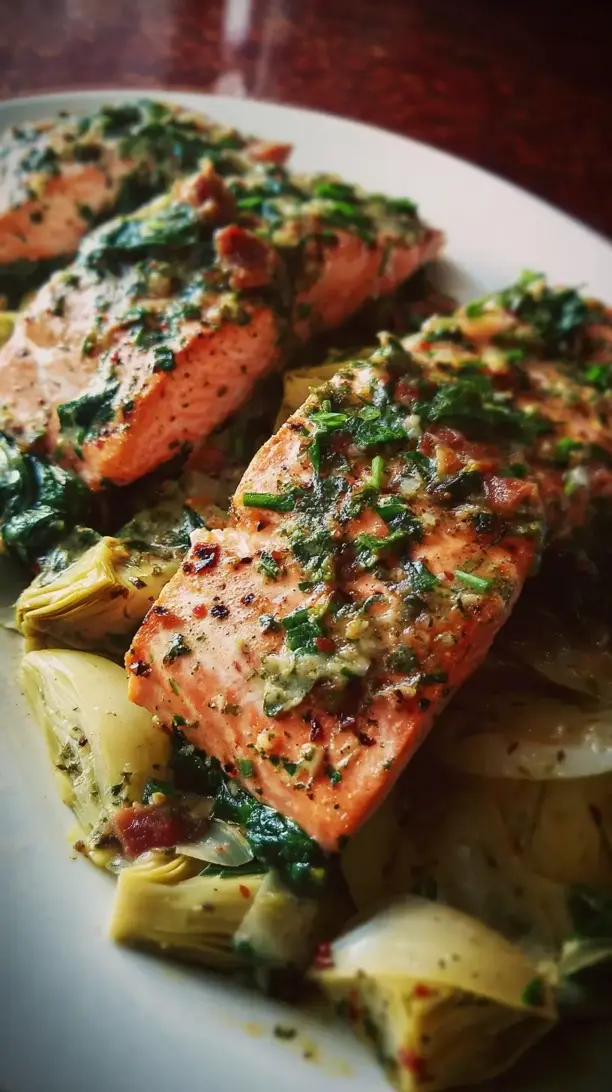
Artichoke And Spinach Salmon
Make this easy Artichoke and Spinach Salmon in 30 minutes! A creamy, one-pan meal perfect for date night or dinner. Get the simple recipe here.
Ingredients
For the salmon and base:
-
4 6-ounce salmon fillets (skin-on or skinless)
-
1 tablespoon olive oil
-
3 cloves garlic (minced)
-
5 ounces fresh baby spinach
-
1 14-ounce can artichoke hearts (drained and quartered)
-
4 ounces cream cheese (softened)
-
1/4 cup Greek yogurt or sour cream
-
1/2 cup shredded mozzarella cheese
-
1/4 cup grated Parmesan cheese
-
1 teaspoon Italian seasoning
-
1/2 teaspoon onion powder
-
1 lemon (juiced and zested)
-
salt and freshly ground black pepper (to taste)
-
fresh parsley or dill, and lemon wedges (for garnish)
Instructions
-
Start by preheating your oven to 400°F (200°C). This ensures it’s nice and hot when your skillet goes in, which is key for getting that perfect cook on the salmon. While it heats up, pat your salmon fillets completely dry with paper towels and season both sides generously with salt and pepper. Zest and juice your lemon, and get all your other ingredients measured and ready to go. A little mise en place makes the process so smooth.01
-
Place your oven-safe skillet over medium heat and add the olive oil. Once the oil is shimmering, add the minced garlic and sauté for about 30 seconds until it becomes fragrant—be careful not to let it burn! Add the entire bag of fresh spinach. It will look like a mountain at first, but it wilts down remarkably fast. Use tongs to toss it continuously in the garlic oil until it’s fully wilted, which should only take 2-3 minutes.02
-
Reduce the heat to low. To the skillet with the wilted spinach, add the softened cream cheese, Greek yogurt, mozzarella, Parmesan, Italian seasoning, onion powder, and most of your lemon juice (save a little for finishing). Stir everything together until the cheeses have melted and created a cohesive, creamy sauce. Now, fold in the drained and quartered artichoke hearts. Give the mixture a taste and season with more salt and pepper as needed. Spread the mixture into an even layer across the bottom of the skillet.03
-
Push the spinach and artichoke mixture to the sides, creating four little nests in the center of the skillet. Increase the heat to medium-high. Place the seasoned salmon fillets, presentation-side down, in these clear spots. Let them cook undisturbed for 2-3 minutes to get a beautiful golden-brown sear. You’ll know it’s ready when the edges of the salmon start to look opaque.04
-
Remove the skillet from the stovetop. Spoon some of the creamy spinach and artichoke mixture over the top of each salmon fillet—this not only adds flavor but also helps keep the fish moist. Carefully transfer the entire skillet to your preheated oven. Bake for 8-12 minutes, depending on the thickness of your fillets. The salmon is done when it flakes easily with a fork and the internal temperature reaches 125-130°F (52-54°C) for medium.05
-
Using oven mitts, carefully remove the hot skillet from the oven. Let it rest for a couple of minutes—this allows the juices to redistribute. Right before serving, drizzle the reserved fresh lemon juice over the top and sprinkle with your fresh herbs and a bit of the saved lemon zest for a burst of freshness and color. Serve immediately right from the skillet for a gorgeous, rustic presentation.06