
Why You’ll Love This Apple Cider Chicken Skillet
- It’s a one-pan wonder. Everything from searing the chicken to reducing the sauce happens in a single skillet, which means maximum flavor with minimal cleanup. You’ll appreciate not having a mountain of pots and pans to deal with afterwards.
- The flavor balance is just perfect. The natural sweetness of the apple cider and fresh apples mingles with the savory, herby notes from the thyme and the richness of the chicken. It’s not overly sweet at all—it’s a beautifully complex and comforting taste.
- It feels fancy without the fuss. This dish has a rustic elegance that makes it perfect for impressing guests, but the process is genuinely simple and forgiving. You don’t need any special skills to make a sauce that tastes like you spent all day on it.
- It’s incredibly versatile. You can easily swap the vegetables based on what’s in season or in your fridge. It pairs beautifully with so many different sides, from creamy mashed potatoes to a simple green salad, making it a reliable go-to recipe.
Ingredients & Tools
- 4 boneless, skinless chicken thighs (about 1.5 lbs / 680 g)
- 1 tbsp olive oil
- 1 large yellow onion, thinly sliced
- 2 crisp apples (like Honeycrisp or Granny Smith), cored and sliced
- 3 cloves garlic, minced
- 1.5 cups fresh, unfiltered apple cider
- 1/2 cup chicken broth
- 1 tbsp whole grain mustard
- 1 tsp fresh thyme leaves, plus more for garnish
- 2 tbsp heavy cream or crème fraîche (optional, for creaminess)
- To taste salt and freshly ground black pepper
Tools: A large (12-inch) oven-safe skillet is essential here.
The quality of your apple cider really makes a difference—look for the fresh, cloudy kind from a local farm stand if you can. It has a more intense apple flavor that reduces down into a gorgeous, rich sauce. And don’t skip the mustard; it’s not there to make things taste like mustard, but to add a subtle tang that keeps the sweetness in check.
Nutrition (per serving)
- Calories: 420 kcal
- Protein: 35 g
- Fat: 18 g
- Carbohydrates: 28 g
- Fiber: 4 g
Serves: 4 | Prep Time: 15 minutes | Cook Time: 30 minutes | Total Time: 45 minutes
Before You Start: Tips & Ingredient Notes
- Chicken thighs are your friend. I highly recommend them over chicken breasts for this recipe. They stay incredibly moist and juicy during the braising process and can handle the longer cooking time without drying out. Their richer flavor also stands up beautifully to the robust sauce.
- What kind of apple cider should you use? You want fresh, unpasteurized apple cider, not the clear, filtered apple juice. The fresh stuff has more body and a deeper, tangier apple flavor that will concentrate into a beautiful glaze. If you can only find filtered juice, the dish will still be tasty, but the sauce might be a bit thinner and sweeter.
- Don’t be shy with the sear. Getting a good, deep golden-brown color on your chicken thighs is the first step to building a ton of flavor. That fond—the little browned bits stuck to the pan—is pure gold. It will dissolve into the sauce later and give it a wonderful savory depth.
- Choose your apples wisely. Using a mix of apple varieties can be lovely. A tart apple like Granny Smith will hold its shape and provide a nice contrast to the sweet sauce, while a sweeter apple like Honeycrisp will soften and caramelize beautifully. A combination gives you the best of both worlds.
How to Make Apple Cider Chicken Skillet
Step 1: Pat your chicken thighs completely dry with paper towels. This is a small but crucial step for getting that perfect sear instead of steaming the chicken. Season both sides generously with salt and pepper. Place your large skillet over medium-high heat and add the olive oil. Once the oil is shimmering, add the chicken thighs, presentation-side down. You should hear a nice sizzle. Let them cook undisturbed for 5-7 minutes, until a beautiful golden-brown crust forms.
Step 2: Flip the chicken and cook for another 2-3 minutes on the other side just to color it slightly. The chicken will not be cooked through at this point—that’s exactly what we want. Transfer the chicken to a clean plate. It will finish cooking later in the sauce. You’ll notice those gorgeous browned bits left in the pan; that’s your flavor base.
Step 3: Reduce the heat to medium and add the sliced onion to the same skillet. Sauté for about 4-5 minutes, stirring occasionally and scraping up the browned bits, until the onions have softened and started to turn translucent. Add the sliced apples and cook for another 3-4 minutes, until they just begin to soften around the edges.
Step 4: Add the minced garlic and fresh thyme leaves to the skillet. Stir constantly and cook for just about 60 seconds—you’ll smell the garlic and thyme blooming—being careful not to let the garlic burn. Burnt garlic can turn the whole sauce bitter, so keep it moving.
Step 5: Pour in the apple cider and chicken broth, and then whisk in the whole grain mustard. Bring the liquid to a simmer, still scraping the bottom of the pan to dissolve all those flavorful bits. Let it bubble for a minute or two to let the flavors start to mingle.
Step 6: Nestle the seared chicken thighs back into the skillet, along with any juices that accumulated on the plate. The sauce should come about halfway up the sides of the chicken. Reduce the heat to maintain a gentle simmer, cover the skillet, and let it cook for 15-18 minutes. The chicken is done when it reaches an internal temperature of 165°F (74°C) and is tender.
Step 7: Using tongs, transfer the cooked chicken to a serving platter. Now, turn the heat up to medium-high and let the sauce boil vigorously, uncovered, for 5-8 minutes. You’re reducing it to a thicker, glaze-like consistency. It’s ready when it coats the back of a spoon. Stir in the heavy cream or crème fraîche at this stage if you’re using it, for a touch of velvety richness.
Step 8: Taste the sauce and adjust the seasoning with more salt or pepper if needed. Pour the glorious sauce, apples, and onions over the waiting chicken on the platter. Garnish with a few extra fresh thyme leaves for a pop of color and fresh aroma. Serve immediately while it’s hot and the sauce is gloriously glossy.
Serving Suggestions
Complementary Dishes
- Creamy mashed potatoes — The ultimate comfort food pairing. The fluffy, buttery potatoes are a perfect canvas for soaking up every last drop of that incredible apple cider sauce.
- Buttery egg noodles or polenta — Both provide a soft, neutral base that lets the chicken and sauce be the star of the show, creating a wonderfully cohesive and comforting bowl.
- A simple arugula salad with a lemon vinaigrette — The peppery arugula and sharp lemon dressing cut through the richness of the dish beautifully, balancing the palate.
Drinks
- A dry hard cider — It’s a natural pairing that echoes the apple flavors in the dish while the dryness cleanses the palate between bites.
- A crisp Chardonnay or Pinot Gris — Look for an unoaked version with good acidity to complement the sweet and savory notes without overpowering them.
Something Sweet
- Warm apple crisp with vanilla ice cream — Double down on the cozy apple theme for a truly autumnal feast that feels indulgent and perfectly thematic.
- Dark chocolate pot de crème — The deep, bitter notes of dark chocolate provide a sophisticated and rich contrast to the sweet and savory main course.
Top Mistakes to Avoid
- Mistake: Using apple juice instead of cider. Apple juice is often much sweeter and thinner, which can result in a cloying sauce that doesn’t reduce to a proper glaze. The complex, tangy flavor of real cider is foundational to the dish.
- Mistake: Crowding the pan when searing the chicken. If you put all the chicken in a pan that’s too small, they’ll steam instead of sear. You need space for the moisture to evaporate so the chicken can properly brown and develop flavor.
- Mistake: Skipping the reduction step at the end. Taking the time to boil the sauce after the chicken is cooked is what transforms it from a thin, soupy liquid into a luxurious, glossy glaze that clings to everything. Patience is key here.
- Mistake: Overcooking the garlic. Garlic burns in a flash and becomes bitter, which can ruin the entire sauce. Add it with the apples and thyme and stir constantly for just a minute until fragrant.
Expert Tips
- Tip: Get your skillet properly hot before adding the chicken. To test if it’s ready, flick a tiny drop of water into the oil—if it sizzles and dances, you’re good to go. A hot pan is non-negotiable for a good sear.
- Tip: Use an instant-read thermometer. This is the easiest way to guarantee perfectly cooked chicken. Pull it from the sauce when it hits 165°F (74°C) at the thickest part. No more guessing or cutting into it and losing precious juices.
- Tip: Let the chicken rest before serving. After you transfer the chicken to the platter, let it sit while you reduce the sauce. This allows the juices to redistribute throughout the meat, ensuring every bite is moist and tender.
- Tip: Add a splash of apple cider vinegar. If you taste your reduced sauce and feel it needs a little more brightness to balance the sweetness, a teaspoon of apple cider vinegar at the very end can work wonders.
FAQs
Can I make this with chicken breasts?
You can, but you’ll need to adjust the cooking time. Use two large chicken breasts, butterflied or pounded to an even thickness. Sear them as directed, but reduce the simmering time in the sauce to 10-12 minutes, or until they reach 165°F. Breast meat cooks faster and can dry out if overcooked, so keep a close eye on it. The result will be leaner but not quite as succulent as thighs.
I can’t find fresh apple cider. What can I use instead?
In a pinch, a good-quality, cloudy apple juice will work. To mimic the tang of fresh cider, add a tablespoon of lemon juice to the liquid. Another option is to use half apple juice and half chicken broth with a splash of vinegar. The flavor profile will be slightly different, but it will still be a delicious, apple-forward dish.
How should I store and reheat leftovers?
Store any leftovers in an airtight container in the refrigerator for up to 3 days. To reheat, gently warm it in a covered skillet over low heat with a tiny splash of water or broth to loosen the sauce. Avoid the microwave if you can, as it can make the chicken rubbery and overcook the apples. Slow and gentle is the way to go.
Can I freeze this dish?
I wouldn’t recommend it, honestly. The texture of the apples and the creamy element (if you used it) don’t hold up well to freezing and thawing. The apples can become mushy and watery, and the sauce may separate. This is a dish best enjoyed fresh or within a few days of making it.
What other herbs would work well in this?
Thyme is classic, but rosemary or sage would be fantastic autumnal substitutes. If using rosemary, just use half the amount as it’s very potent. A teaspoon of chopped fresh sage added with the garlic would be lovely. For a different twist, a pinch of rubbed sage stirred in at the end can add a warm, earthy note.
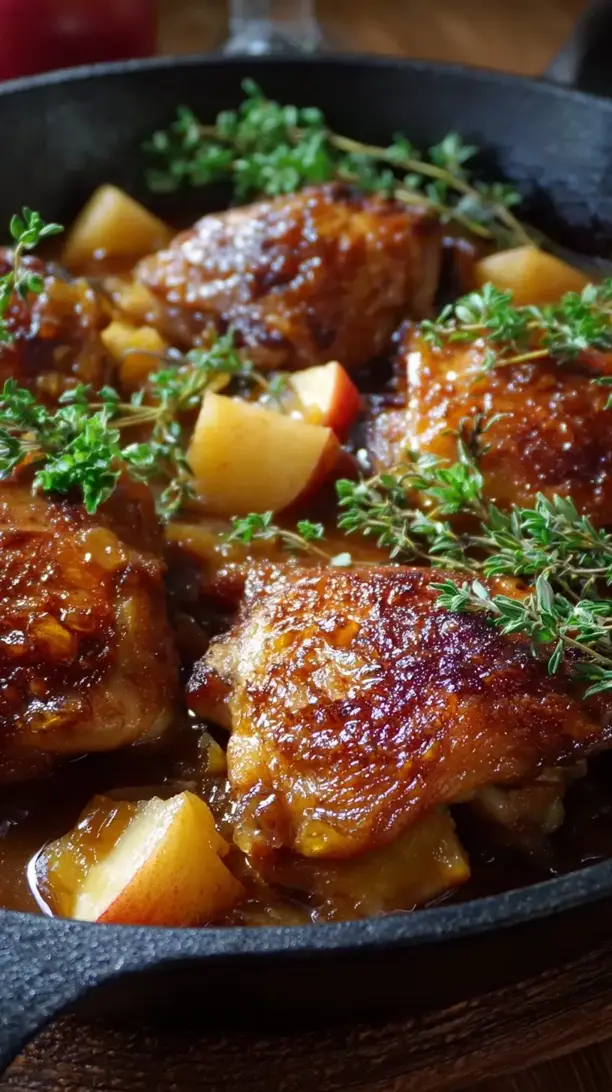
Apple Cider Chicken Skillet
Make this easy Apple Cider Chicken Skillet for a sweet and savory one-pan meal. Ready in 45 minutes with a rich, glossy glaze. Get the recipe now!
Ingredients
For the Ingredients
-
4 boneless, skinless chicken thighs (about 1.5 lbs / 680 g)
-
1 tbsp olive oil
-
1 large yellow onion (thinly sliced)
-
2 crisp apples (like Honeycrisp or Granny Smith, cored and sliced)
-
3 cloves garlic (minced)
-
1.5 cups fresh, unfiltered apple cider
-
0.5 cup chicken broth
-
1 tbsp whole grain mustard
-
1 tsp fresh thyme leaves (plus more for garnish)
-
2 tbsp heavy cream or crème fraîche (optional, for creaminess)
-
salt and freshly ground black pepper (to taste)
Instructions
-
Pat your chicken thighs completely dry with paper towels. Season both sides generously with salt and pepper. Place your large skillet over medium-high heat and add the olive oil. Once the oil is shimmering, add the chicken thighs, presentation-side down. Let them cook undisturbed for 5-7 minutes, until a beautiful golden-brown crust forms.01
-
Flip the chicken and cook for another 2-3 minutes on the other side just to color it slightly. Transfer the chicken to a clean plate.02
-
Reduce the heat to medium and add the sliced onion to the same skillet. Sauté for about 4-5 minutes, stirring occasionally and scraping up the browned bits, until the onions have softened and started to turn translucent. Add the sliced apples and cook for another 3-4 minutes, until they just begin to soften around the edges.03
-
Add the minced garlic and fresh thyme leaves to the skillet. Stir constantly and cook for just about 60 seconds—you’ll smell the garlic and thyme blooming—being careful not to let the garlic burn.04
-
Pour in the apple cider and chicken broth, and then whisk in the whole grain mustard. Bring the liquid to a simmer, still scraping the bottom of the pan to dissolve all those flavorful bits. Let it bubble for a minute or two to let the flavors start to mingle.05
-
Nestle the seared chicken thighs back into the skillet, along with any juices that accumulated on the plate. Reduce the heat to maintain a gentle simmer, cover the skillet, and let it cook for 15-18 minutes. The chicken is done when it reaches an internal temperature of 165°F (74°C) and is tender.06
-
Using tongs, transfer the cooked chicken to a serving platter. Now, turn the heat up to medium-high and let the sauce boil vigorously, uncovered, for 5-8 minutes. You’re reducing it to a thicker, glaze-like consistency. It’s ready when it coats the back of a spoon. Stir in the heavy cream or crème fraîche at this stage if you’re using it, for a touch of velvety richness.07
-
Taste the sauce and adjust the seasoning with more salt or pepper if needed. Pour the glorious sauce, apples, and onions over the waiting chicken on the platter. Garnish with a few extra fresh thyme leaves for a pop of color and fresh aroma. Serve immediately while it’s hot and the sauce is gloriously glossy.08