
Why You’ll Love This Almond Flour Sugar Cookies
- Incredibly Simple Process. You honestly don’t need any special skills for these. It’s a straightforward, one-bowl situation that comes together in minutes, with no chilling required unless it’s a particularly warm day.
- A Delightfully Unique Texture. Forget dry or crumbly gluten-free cookies. These are tender, slightly chewy, and have a melt-in-your-mouth quality that’s really hard to beat. The almond flour creates a wonderfully delicate crumb.
- Perfectly Sweet & Subtly Nutty. They hit that classic sugar cookie sweetness spot, but the almond flour adds a lovely, gentle depth of flavor that makes them feel a little more sophisticated.
- Wonderfully Versatile. This is your perfect blank canvas cookie. You can roll them in sparkling sugar, dip them in chocolate, or add a dash of citrus zest to the dough. They’re ready for your personal touch.
Ingredients & Tools
- 2 ½ cups blanched almond flour
- ⅓ cup coconut sugar or granulated sugar
- ¼ cup melted and cooled coconut oil or unsalted butter
- 1 large egg, at room temperature
- 1 tsp pure vanilla extract
- ½ tsp baking soda
- ¼ tsp fine sea salt
- 2-3 tbsp granulated or coarse sugar, for rolling
Tools: A medium mixing bowl, a whisk or spatula, a baking sheet, and parchment paper.
A quick note on the almond flour—using a finely ground, blanched variety really makes a difference here for that smooth, tender texture. And don’t skip letting your melted coconut oil or butter cool down a bit; you don’t want it to cook the egg when you mix it in!
Nutrition (per serving)
- Calories: 142 kcal
- Protein: 4 g
- Fat: 12 g
- Carbohydrates: 7 g
- Fiber: 2 g
Serves: 12 | Prep Time: 10 minutes | Cook Time: 10-12 minutes | Total Time: 22 minutes
Before You Start: Tips & Ingredient Notes
- Why room temperature egg? It blends into the dough much more smoothly and evenly, preventing the fat from the coconut oil from solidifying into little specks and ensuring a uniform texture in your baked cookies.
- Can I use a different sugar? Absolutely. Coconut sugar gives a deeper, almost caramel-like flavor, while standard granulated sugar keeps it classic and light. Just avoid liquid sweeteners like maple syrup, as they’ll throw off the dry-to-wet ratio.
- My dough is a bit sticky—is that normal? Yes, it can be! Almond flour dough is often a little more delicate and moist than traditional dough. If it’s too sticky to handle, popping it in the fridge for 15-20 minutes will firm it up perfectly.
- Don’t have parchment paper? A silicone baking mat is a great alternative. I’d avoid greasing the pan directly, as it can cause the bottoms to spread too much and become overly greasy.
How to Make Almond Flour Sugar Cookies
Step 1: First, preheat your oven to 350°F (175°C). This is a quick-baking cookie, so you want the oven ready to go. Line your baking sheet with parchment paper. Now, grab your medium mixing bowl. Add the almond flour, your chosen sugar, baking soda, and salt. Whisk these dry ingredients together until they’re completely combined and there are no lumps. You’ll notice this helps ensure the leavening and salt are evenly distributed, so every bite is consistent.
Step 2: In a separate small bowl or a liquid measuring cup, whisk together the melted (and cooled!) coconut oil, the room-temperature egg, and the vanilla extract. Whisk it until it’s smooth and fully emulsified—it should look like a homogenous, slightly pale liquid. The trick is to make sure the egg is fully incorporated so it doesn’t cook when it hits the warm oil.
Step 3: Pour the wet ingredients into the dry ingredients. Use a spatula to mix everything together. At first, it might seem a bit dry, but keep folding and stirring. You’ll soon see a soft, slightly sticky dough forming. Mix just until no dry streaks of flour remain. Overmixing isn’t a huge concern here, but we still want to be gentle.
Step 4: Now, place your 2-3 tablespoons of rolling sugar into a small bowl. Scoop out about 1 ½ tablespoons of dough for each cookie—I like using a cookie scoop for uniformity, but a tablespoon measure works great too. Roll the dough between your palms to form a smooth ball. If the dough is too sticky, lightly dampen your hands with water. Roll each ball in the sugar until it’s nicely coated.
Step 5: Place the sugar-coated dough balls onto your prepared baking sheet, leaving about 2 inches between them. These cookies will spread a little, so they need their space. Gently press down on each ball with the palm of your hand to flatten it slightly. You’re aiming for a disc that’s about ½-inch thick.
Step 6: It’s time to bake! Slide the tray into your preheated oven. Bake for 10 to 12 minutes. You’re looking for the edges to be set and just barely starting to turn a light golden brown. The centers might still look a tiny bit soft—that’s perfect! They will firm up as they cool. Honestly, pulling them out when they look *almost* underdone is the secret to a chewy, not crunchy, cookie.
Step 7: This is the most important step for texture: let the cookies cool on the baking sheet for at least 10 minutes before you even think about moving them. They are very fragile straight out of the oven. After that initial rest, you can transfer them to a wire rack to cool completely. They’ll firm up beautifully and develop that perfect tender-chewy texture.
Serving Suggestions
Complementary Dishes
- A scoop of vanilla bean ice cream — The creamy, cold ice cream melting into the warm, crumbly cookie is a textural dream come true.
- A fresh fruit platter with berries and mango — The bright, acidic fruit cuts through the cookie’s richness and makes the whole spread feel balanced.
- A sharp cheeseboard with aged cheddar — The salty, complex cheese creates a fantastic sweet-and-salty contrast that is unexpectedly delightful.
Drinks
- A glass of cold whole milk — It’s a classic for a reason. The creamy milk is the perfect partner to the sweet, nutty cookie.
- A cup of black coffee or espresso — The bitterness of the coffee highlights the subtle nutty notes in the almond flour and balances the sweetness.
- A hot chai tea latte — The warm spices in the chai—cinnamon, cardamom, cloves—complement the vanilla and almond flavors beautifully.
Something Sweet
- Dark chocolate-dipped strawberries — These offer a different kind of richness and a juicy, fresh element that pairs wonderfully without being overly heavy.
- A small bowl of lemon sorbet — The intense, clean citrus flavor is a fantastic palate cleanser and provides a bright, refreshing finish.
- A dollop of whipped coconut cream — It’s light, airy, and adds a touch of decadence that makes the cookies feel extra special.
Top Mistakes to Avoid
- Using warm melted fat. If your coconut oil or butter is too hot when you add the egg, it can start to cook the egg, creating little scrambled bits in your dough and compromising the texture.
- Overbaking. I’ve messed this up before too—it’s so tempting to leave them in until they look “done.” But with almond flour, they continue to firm up as they cool. Take them out when the edges are just set for that perfect chew.
- Skipping the cooling time on the pan. These cookies are incredibly soft and fragile right out of the oven. Moving them too soon will cause them to break apart. Patience is key here.
- Packing the almond flour. When you measure your almond flour, spoon it lightly into the measuring cup and level it off. Don’t scoop and pack it down, or you’ll end up with a dry, dense dough.
Expert Tips
- Tip: For an extra flavor boost, add the seeds from half a vanilla bean along with the extract. Those tiny black specks add a beautiful visual detail and an incredible depth of vanilla aroma.
- Tip: If you want a slightly cakier cookie, you can chill the shaped dough balls for 20-30 minutes before baking. This helps them hold their shape a bit better and can result in a slightly taller, softer cookie.
- Tip: Get creative with your rolling sugar! Try using turbinado sugar for a crunchy, caramel-like shell, or mix a little cinnamon into the sugar for a snickerdoodle vibe.
- Tip: For perfectly uniform cookies every single time, invest in a small cookie scoop (about 1.5 tablespoons). It makes the process faster, cleaner, and ensures they all bake at the same rate.
FAQs
Can I make these cookies ahead of time?
Absolutely! You have a couple of great options. You can bake them and store them in an airtight container at room temperature for up to 4 days. Alternatively, you can prepare the dough, roll it into balls, and freeze them on a baking sheet before transferring to a freezer bag. You can bake them straight from frozen, just add 1-2 minutes to the baking time. It’s a fantastic way to have fresh-baked cookies on demand.
Why did my cookies spread too much?
This usually comes down to two things: your oven temperature or your fat. If your oven isn’t hot enough, the cookies will spread before they set. An oven thermometer is a baker’s best friend! Also, if your dough was very warm or your fat wasn’t fully solidified when mixed, it can lead to excess spreading. A quick chill of the dough balls can fix this.
Can I use almond meal instead of blanched almond flour?
You can, but the results will be different. Almond meal is typically made from almonds with their skins on, so it’s coarser and has a darker color. Your cookies will have a more rustic, grainier texture and a stronger, nuttier flavor. They might also be a bit more fragile. For the classic tender texture, blanched almond flour is recommended.
My cookies are a bit crumbly. What happened?
A few things can cause this. The most common is overbaking—almond flour has a lot of natural oils that can dry out if baked too long. Another possibility is not using enough binding agent; make sure you’re using a large egg. Finally, check your almond flour; if it’s very old or was stored improperly, it can become dry and lead to a crumbly result.
Are these cookies suitable for people with nut allergies?
Unfortunately, no. Since the primary ingredient is almond flour, these cookies are not safe for anyone with a tree nut allergy. For a nut-free alternative, you would need to seek out a recipe specifically designed with a different gluten-free flour blend, such as one based on oat or coconut flour.
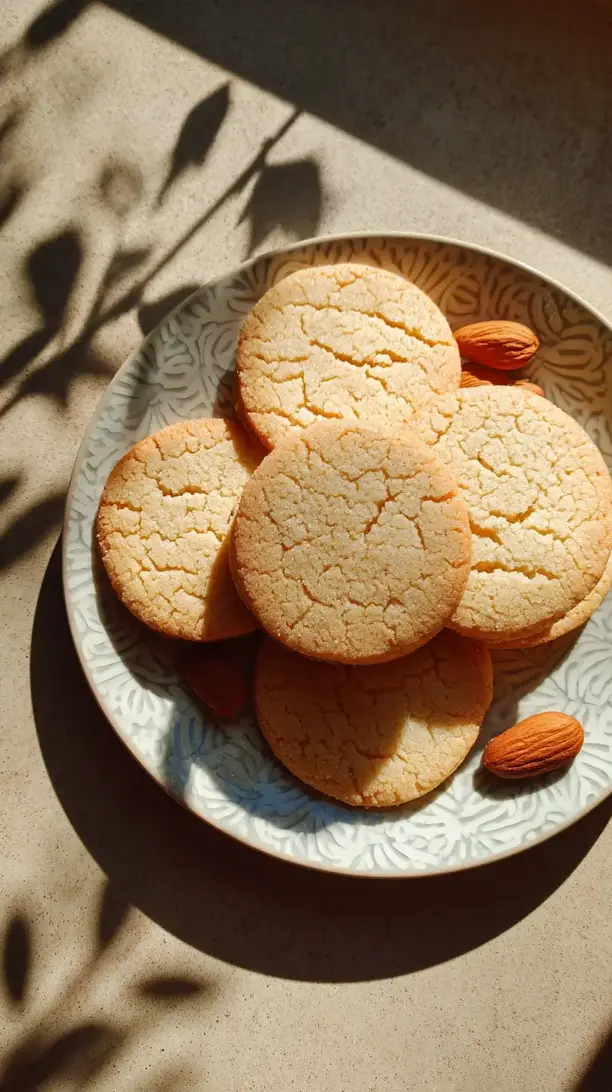
Almond Flour Sugar Cookies
Make the best soft & chewy Almond Flour Sugar Cookies with this easy one-bowl recipe. No chilling required! Get the simple, delicious recipe here.
Ingredients
For the Ingredients
-
2 ½ cups blanched almond flour
-
⅓ cup coconut sugar or granulated sugar
-
¼ cup melted and cooled coconut oil or unsalted butter
-
1 large egg (at room temperature)
-
1 tsp pure vanilla extract
-
½ tsp baking soda
-
¼ tsp fine sea salt
-
2-3 tbsp granulated or coarse sugar (for rolling)
Instructions
-
First, preheat your oven to 350°F (175°C). This is a quick-baking cookie, so you want the oven ready to go. Line your baking sheet with parchment paper. Now, grab your medium mixing bowl. Add the almond flour, your chosen sugar, baking soda, and salt. Whisk these dry ingredients together until they're completely combined and there are no lumps. You'll notice this helps ensure the leavening and salt are evenly distributed, so every bite is consistent.01
-
In a separate small bowl or a liquid measuring cup, whisk together the melted (and cooled!) coconut oil, the room-temperature egg, and the vanilla extract. Whisk it until it's smooth and fully emulsified—it should look like a homogenous, slightly pale liquid. The trick is to make sure the egg is fully incorporated so it doesn't cook when it hits the warm oil.02
-
Pour the wet ingredients into the dry ingredients. Use a spatula to mix everything together. At first, it might seem a bit dry, but keep folding and stirring. You'll soon see a soft, slightly sticky dough forming. Mix just until no dry streaks of flour remain. Overmixing isn't a huge concern here, but we still want to be gentle.03
-
Now, place your 2-3 tablespoons of rolling sugar into a small bowl. Scoop out about 1 ½ tablespoons of dough for each cookie—I like using a cookie scoop for uniformity, but a tablespoon measure works great too. Roll the dough between your palms to form a smooth ball. If the dough is too sticky, lightly dampen your hands with water. Roll each ball in the sugar until it's nicely coated.04
-
Place the sugar-coated dough balls onto your prepared baking sheet, leaving about 2 inches between them. These cookies will spread a little, so they need their space. Gently press down on each ball with the palm of your hand to flatten it slightly. You're aiming for a disc that's about ½-inch thick.05
-
It's time to bake! Slide the tray into your preheated oven. Bake for 10 to 12 minutes. You're looking for the edges to be set and just barely starting to turn a light golden brown. The centers might still look a tiny bit soft—that's perfect! They will firm up as they cool. Honestly, pulling them out when they look *almost* underdone is the secret to a chewy, not crunchy, cookie.06
-
This is the most important step for texture: let the cookies cool on the baking sheet for at least 10 minutes before you even think about moving them. They are very fragile straight out of the oven. After that initial rest, you can transfer them to a wire rack to cool completely. They'll firm up beautifully and develop that perfect tender-chewy texture.07