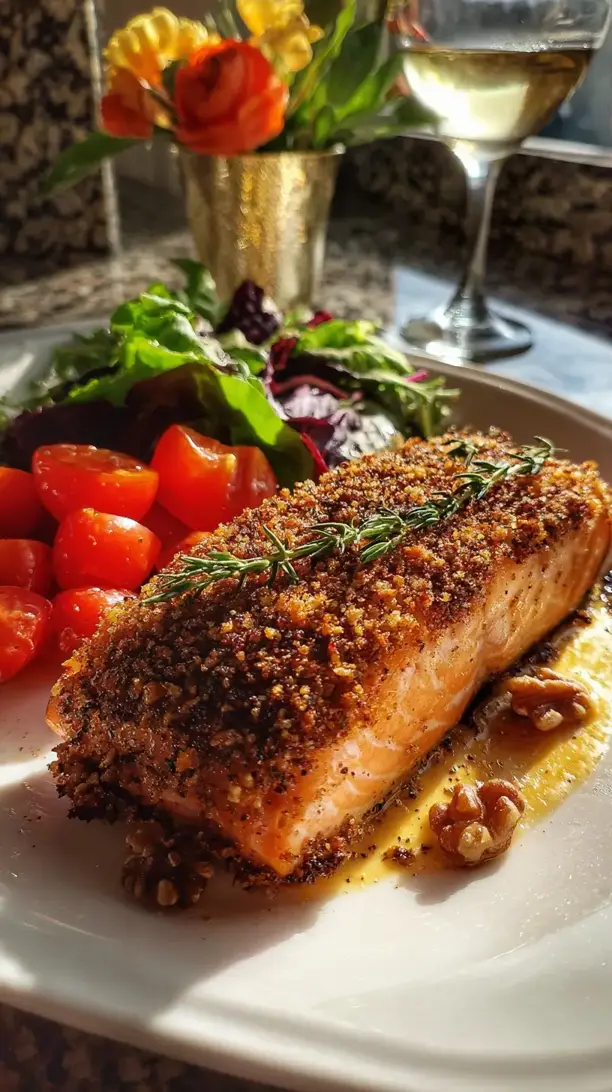

This Almond Crusted Salmon recipe delivers a crispy, nutty crust over tender fish in under 30 minutes. It’s elegant enough for guests but simple enough for a weeknight. The almond coating turns golden and fragrant, sealing in moisture for a truly satisfying meal.
Why You’ll Love This Almond Crusted Salmon
- Effortless elegance: Simple steps yield an impressive, restaurant-quality result.
- Perfect texture: Tender, flaky salmon meets a crunchy, nutty crust.
- Big flavor: Toasted almonds, lemon, and herbs complement without overpowering.
- Versatile pairing: Works beautifully with a wide variety of sides and drinks.
Ingredients & Tools
- 4 salmon fillets (about 150–180 g each), skin-on or skinless
- 100 g almonds, finely chopped
- 2 tbsp fresh parsley, finely chopped
- 1 lemon (zest and juice)
- 2 cloves garlic, minced
- 2 tbsp Dijon mustard
- 1 tbsp olive oil
- ½ tsp paprika
- Salt and black pepper to taste
Tools: Baking sheet, parchment paper, small bowl, brush (optional), knife, cutting board
Notes: Chop almonds yourself for better texture and even toasting. Dijon mustard acts as a glue for the crust.
Nutrition (per serving)
| Calories: | 380 kcal |
| Protein: | 35 g |
| Fat: | 25 g |
| Carbs: | 6 g |
| Fiber: | 3 g |
Serves: 4 | Prep Time: 10 minutes | Cook Time: 15 minutes | Total Time: 25 minutes
Before You Start: Tips & Ingredient Notes
- What’s the best salmon to use? I prefer center-cut fillets that are about 1-inch thick—they cook evenly and stay wonderfully moist. You can use skin-on or skinless; just know that skin-on can help protect the bottom from drying out.
- Can I use a different nut? Absolutely! Pecans or pistachios would be lovely here, but almonds really give that classic, slightly sweet crunch that pairs so well with the fish.
- Why fresh herbs matter. Dried parsley just won’t give you the same bright, fresh flavor. If you have other herbs like dill or chives, feel free to toss those in too—they’ll add another layer of freshness.
- Don’t skip the mustard. Even if you’re not a huge mustard fan, I promise you won’t taste it strongly. It mellows out in the oven and creates this amazing savory base for the almonds to cling to.
How to Make Almond Crusted Salmon
Step 1: Start by preheating your oven to 200°C (400°F) and lining a baking sheet with parchment paper. Pat the salmon fillets completely dry with a paper towel—this is a small step, but it really helps the crust adhere properly. Season both sides generously with salt, black pepper, and the paprika. You’ll notice how the paprika adds a subtle warmth and a beautiful color even before we add the almonds.
Step 2: In a small bowl, mix together the finely chopped almonds, minced garlic, lemon zest, and chopped parsley. The trick here is to make sure everything is evenly distributed so every bite has a bit of each flavor. You should smell the nuttiness of the almonds and the bright aroma of the lemon—it’s already starting to come together!
Step 3: Now, brush the top of each salmon fillet with the Dijon mustard. You can use the back of a spoon if you don’t have a brush—just make sure you cover the surface evenly. This layer is what’s going to hold all that delicious almond mixture in place, so don’t be shy with it.
Step 4: Press the almond mixture firmly onto the mustard-coated top of each fillet. Really use your hands to make sure it sticks and forms an even layer. You want a good coating, but not so thick that it falls off—a little pressure helps it adhere beautifully.
Step 5: Drizzle the olive oil lightly over the almond-crusted tops. This will help the almonds toast up to a perfect golden brown in the oven. Place the salmon on your prepared baking sheet, making sure there’s a little space between each fillet for even heat circulation.
Step 6: Bake for 12–15 minutes, depending on the thickness of your fillets. The salmon is done when it flakes easily with a fork and the almond crust is fragrant and golden. You might see some bubbling around the edges—that’s a good sign! If you want a little extra color, you can pop it under the grill for a minute at the end, but watch it closely.
Step 7: Remove the salmon from the oven and let it rest for 2–3 minutes. This allows the juices to redistribute, keeping the fish moist. Right before serving, squeeze a little fresh lemon juice over the top. The acidity will brighten everything up and cut through the richness perfectly.
Storage & Freshness Guide
- Fridge: Cool completely, store in an airtight container for up to 2 days.
- Freezer: Wrap tightly or freeze in a single layer, then transfer to a bag for up to 1 month.
- Reviving: Reheat in a 300°F oven until warm to preserve crispness; avoid microwaving.
Serving Suggestions
Complementary Dishes
- Garlic sautéed spinach — The slight bitterness of the greens balances the rich, nutty salmon beautifully, and it cooks in minutes.
- Quinoa pilaf with herbs — A light, fluffy quinoa base soaks up any extra lemon juice and adds a lovely texture contrast.
- Roasted asparagus with parmesan — Asparagus and salmon are a classic pair, and the salty parmesan echoes the savory notes in the crust.
Drinks
- A crisp Sauvignon Blanc — Its citrusy notes will mirror the lemon in the dish and cleanse the palate between bites.
- Sparkling water with lemon — For a non-alcoholic option, the bubbles and citrus keep things feeling fresh and light.
- A light-bodied Pinot Noir — If you prefer red, this one has enough acidity to stand up to the salmon without overpowering it.
Something Sweet
- Lemon sorbet — A refreshing, palate-cleansing dessert that continues the citrus theme from the main course.
- Almond biscotti — It’s a playful nod to the almond crust, and the crunch is a satisfying end to the meal.
- Fresh berry pavlova — The sweet, airy meringue and tart berries provide a lovely contrast to the savory main.
Top Mistakes to Avoid
- Not patting the salmon dry. If the surface is wet, the mustard won’t stick properly, and your crust might slide right off. I’ve learned this the hard way—it only takes a second, but it makes all the difference.
- Using almonds that are too coarse or too fine. If they’re too big, they won’t adhere well; if they’re like dust, they can burn. You’re aiming for a texture similar to coarse breadcrumbs for the perfect crunch.
- Overcooking the salmon. Salmon continues to cook a bit after it comes out of the oven, so take it out when it’s just slightly under your desired doneness. Overcooked salmon becomes dry and loses its lovely flaky texture.
- Skipping the rest time. Letting the salmon sit for a few minutes after baking allows the fibers to relax and reabsorb the juices. If you cut into it right away,
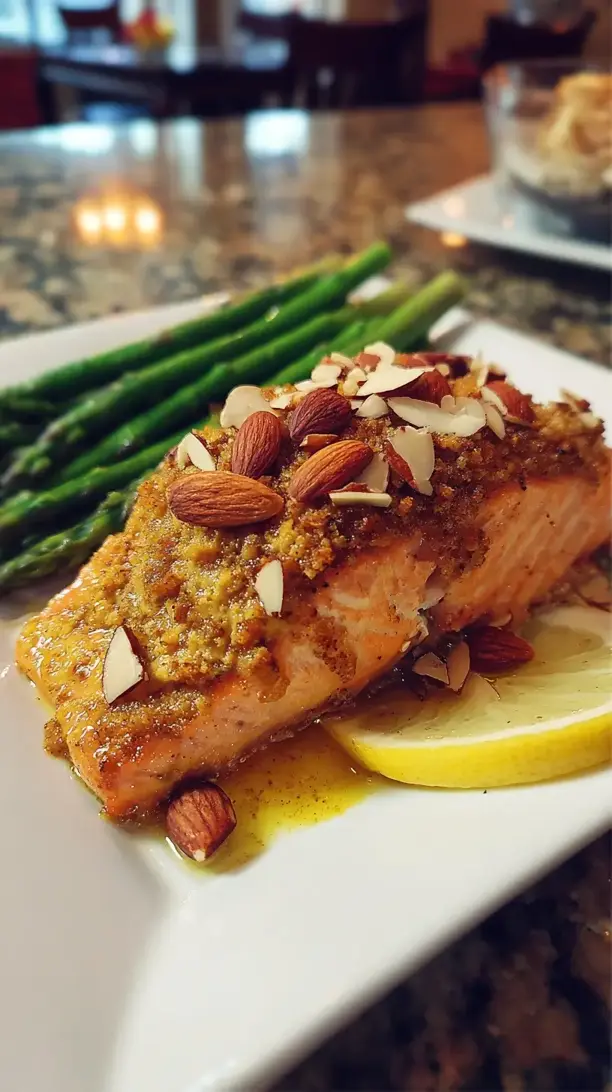
Almond Crusted Salmon
Make perfect Almond Crusted Salmon with a crispy, golden crust and tender fish in under 30 minutes. This easy, healthy recipe is a guaranteed crowd-pleaser. Get the recipe!
Ingredients
For the Ingredients
-
4 salmon fillets (about 150–180 g each, skin-on or skinless)
-
100 g almonds (finely chopped)
-
2 tbsp fresh parsley (finely chopped)
-
1 lemon (zest and juice)
-
2 cloves garlic (minced)
-
2 tbsp Dijon mustard
-
1 tbsp olive oil
-
½ tsp paprika
-
Salt and black pepper (to taste)
Instructions
-
Start by preheating your oven to 200°C (400°F) and lining a baking sheet with parchment paper. Pat the salmon fillets completely dry with a paper towel—this is a small step, but it really helps the crust adhere properly. Season both sides generously with salt, black pepper, and the paprika.01
-
In a small bowl, mix together the finely chopped almonds, minced garlic, lemon zest, and chopped parsley.02
-
Now, brush the top of each salmon fillet with the Dijon mustard.03
-
Press the almond mixture firmly onto the mustard-coated top of each fillet.04
-
Drizzle the olive oil lightly over the almond-crusted tops.05
-
Bake for 12–15 minutes, depending on the thickness of your fillets. The salmon is done when it flakes easily with a fork and the almond crust is fragrant and golden.06
-
Remove the salmon from the oven and let it rest for 2–3 minutes. Right before serving, squeeze a little fresh lemon juice over the top.07