
Why You’ll Love This Citrus Arugula Salad with Pomegranate
- A Symphony of Textures. You get the delicate, peppery crunch of arugula, the juicy burst of citrus segments, the satisfying pop of pomegranate seeds, and the rich creaminess of avocado all in one bite. It’s a party in your mouth, and everyone’s invited.
- Effortlessly Elegant. This salad looks like it came from a high-end restaurant, but the truth is, it’s incredibly simple to assemble. The vibrant colors—deep green, bright orange, and ruby red—make it a showstopper on any table, from a casual family meal to a holiday feast.
- It’s a Flavor Powerhouse. The combination isn’t just about looks. The peppery arugula stands up beautifully to the sweet and tart citrus, while the pomegranate seeds add a burst of fruity flavor that ties everything together. It’s a complex taste experience that’s surprisingly simple to achieve.
- Incredibly Versatile. Feel like adding some protein? Toss in some grilled chicken or shrimp. Want more crunch? Toasted walnuts or pecans are fantastic. This recipe is a wonderful base that you can easily adapt based on what you have on hand or what you’re craving.
Ingredients & Tools
- 5 oz (about 140 g) fresh arugula
- 1 large orange (like navel or cara cara)
- 1 grapefruit
- 1/2 cup pomegranate seeds (arils)
- 1 ripe avocado
- 1/4 cup extra virgin olive oil
- 2 tbsp fresh orange juice
- 1 tbsp fresh lemon juice
- 1 tsp honey or maple syrup
- 1/4 tsp sea salt, plus more to taste
- Pinch of black pepper
- Optional: 2 tbsp toasted pine nuts or slivered almonds
- Optional: 1/4 cup crumbled feta or goat cheese
Tools: A large salad bowl, a small bowl or jar for the dressing, a sharp knife, and a citrus juicer (helpful but not essential).
The quality of your ingredients really shines here, so use the best you can find. A good, peppery arugula is the foundation, and fresh, in-season citrus makes all the difference in the world. Don’t skip the fresh-squeezed juices for the dressing—it’s what gives it that bright, clean flavor.
Nutrition (per serving)
- Calories: 220 kcal
- Protein: 3 g
- Fat: 16 g
- Carbohydrates: 20 g
- Fiber: 6 g
Serves: 4 | Prep Time: 15 minutes | Cook Time: 0 minutes | Total Time: 15 minutes
Before You Start: Tips & Ingredient Notes
- Choosing Your Citrus. For the best flavor, look for citrus that feels heavy for its size, which indicates juiciness. Cara cara oranges have a beautiful pink flesh and a slightly sweeter, less acidic flavor than regular navels, which is lovely here. A ruby red grapefruit will be sweeter than a white one.
- The Arugula Situation. You want fresh, dry, and crisp arugula. If your greens are wet, they’ll wilt quickly and the dressing won’t cling properly. Give them a good spin in a salad spinner if you’ve washed them, or pat them very dry with a clean kitchen towel.
- Segmenting vs. Slicing. Taking the time to segment (or supreme) your citrus removes the bitter pith and membrane, leaving you with perfect, juicy little bursts of fruit. It seems fancy but it’s a simple technique that elevates the entire salad. I’ll walk you through it in the steps.
- Pomegranate Shortcuts. If you’re short on time, you can absolutely buy pre-packaged pomegranate seeds (arils). They’re a fantastic time-saver. If you’re seeding a whole pomegranate, do it submerged in a bowl of water—the seeds will sink and the pith will float, making cleanup a breeze.
How to Make Citrus Arugula Salad with Pomegranate
Step 1: Prepare the Citrus. First, let’s segment the orange and grapefruit. Slice a small piece off the top and bottom of each fruit so it sits flat on your cutting board. Using a sharp knife, carefully slice downward to remove the peel and white pith, following the curve of the fruit. You should now have a naked fruit. Hold it over your salad bowl to catch any juice. Carefully slice along the membrane on either side of each segment to release it. Let the beautiful segments fall into the bowl. Squeeze the remaining membrane over your small dressing bowl to get every last drop of juice—this is liquid gold for your vinaigrette!
Step 2: Make the Dressing. To the small bowl with your collected citrus juice, add the 2 tablespoons of fresh orange juice, 1 tablespoon of lemon juice, honey, salt, and a pinch of pepper. Whisk it all together until the honey and salt have dissolved. Now, slowly drizzle in the extra virgin olive oil while continuously whisking. You’ll notice the dressing will start to emulsify and look slightly thickened and glossy. Give it a quick taste—it should be a perfect balance of tangy and sweet. Adjust with a pinch more salt or a tiny bit more honey if needed. Set this aside for now.
Step 3: Assemble the Base. Place your dry arugula right on top of the citrus segments in the large bowl. Now, slice your avocado. The trick is to do this at the very last minute to prevent browning. Cut it in half, remove the pit, and slice the flesh while it’s still in the skin, then scoop it out with a spoon. Gently scatter the avocado slices over the arugula. You want to be gentle to keep those creamy slices intact.
Step 4: Add the Final Flourishes. Now for the fun part—the confetti! Sprinkle the vibrant pomegranate seeds all over the top of the salad. If you’re using the optional toasted nuts or cheese, now is the time to add them. A little crumbled feta adds a lovely salty tang, while toasted pine nuts bring a warm, buttery crunch. Honestly, both are fantastic additions if you have them.
Step 5: Dress and Serve Immediately. Right before you’re ready to serve, give your dressing one final whisk and drizzle about half of it over the salad. Use salad tongs or two large spoons to gently toss everything together, making sure the leaves are lightly coated. You might not need all the dressing—a little goes a long way. Add a bit more if it looks dry, but it’s better to start with less. The goal is to coat the greens, not drown them. Serve immediately while everything is fresh and crisp!
Serving Suggestions
Complementary Dishes
- Pan-Seared Salmon — The rich, oily fish is a classic partner for the bright, acidic notes in the salad, creating a perfectly balanced and satisfying meal.
- Roasted Chicken with Herbs — A simple, savory roast chicken allows the salad to shine as a refreshing side, cutting through the richness of the meat beautifully.
- Creamy Lentil Soup — For a lighter meal, this salad pairs wonderfully with a hearty soup, adding a fresh, crisp counterpoint to the warm, earthy lentils.
Drinks
- A Crisp Sauvignon Blanc — The wine’s citrusy and grassy notes mirror the flavors in the salad, making each bite and sip feel like they were made for each other.
- Sparkling Water with a Citrus Twist — A non-alcoholic option that amplifies the freshness; a squeeze of lime or orange in fizzy water is incredibly refreshing.
- Earl Grey Iced Tea — The bergamot in the tea has a subtle citrus flair that complements the salad without overpowering it, perfect for a brunch or lunch.
Something Sweet
- Lemon Olive Oil Cake — Continuing the citrus theme, a slice of moist, not-too-sweet cake feels like a natural and elegant progression after the vibrant salad.
- Dark Chocolate and Orange Truffles — Just one or two of these rich, intense truffles provide a decadent finish, with the dark chocolate and orange echoing the salad’s flavor profile.
- Vanilla Bean Panna Cotta — The simplicity and creamy texture of a panna cotta is a wonderful, soothing contrast to the sharp and crunchy elements of the salad.
Top Mistakes to Avoid
- Dressing the salad too early. Arugula is delicate and will wilt almost instantly when it comes into contact with the acidic dressing. Always dress this salad at the very last second before serving to maintain that lovely crisp texture.
- Using bottled citrus juice. The flavor is just not the same. The fresh, bright complexity you get from squeezing an orange and lemon yourself is irreplaceable in this simple dressing. It’s the heart of the recipe, so don’t skip this step.
- Not drying your greens. Any extra water clinging to the arugula will dilute your beautifully crafted dressing, making it watery and bland. A salad spinner is your best friend here.
- Overcomplicating the dressing. This isn’t the place for strong flavors like raw garlic or onion. They can overpower the delicate citrus. Keep it simple and let the fresh fruits be the stars.
Expert Tips
- Tip: Massage your avocado. If your avocado is slightly underripe, try this trick: after slicing, gently toss the slices with a teaspoon of the dressing in a separate bowl before adding them to the salad. The acid helps soften them up a bit.
- Tip: Toast your own nuts. If you’re adding nuts, toasting them in a dry pan for a few minutes until fragrant makes a world of difference. It unlocks their oils and gives them a much deeper, richer flavor.
- Tip: Make a double batch of dressing. The vinaigrette is so good you’ll want to have extra on hand. It keeps well in a jar in the fridge for up to a week—just shake it up before using it on another salad or even as a marinade for chicken.
- Tip: Use the citrus shells. After juicing and segmenting, don’t just toss the citrus carcasses! You can use them to infuse a pitcher of water, or even rough chop them and add them to your compost bin if you have one.
FAQs
Can I make this salad ahead of time?
You can do most of the prep ahead, but assemble and dress it at the last minute. Prepare the citrus segments and the dressing a few hours in advance, storing them separately in the fridge. Keep the arugula dry and in its own bag. Chop the avocado and add the pomegranate seeds right before you toss everything together. The arugula wilts very quickly, so this is one salad that doesn’t love sitting around dressed for long.
What can I use instead of arugula?
If you’re not a fan of arugula’s peppery kick, baby spinach or a mix of butter lettuce and radicchio would work beautifully. Spinach will be milder, while radicchio will add a pleasant bitterness that pairs well with the sweet citrus. Just make sure whatever greens you use are sturdy enough to hold up to the juicy citrus and dressing.
My pomegranate seeds are a bit tart. What should I do?
That’s not uncommon! If your pomegranate seeds are on the sour side, you can balance it out by adding just a tiny bit more honey or maple syrup to the dressing. The sweetness will coat the seeds and balance their tartness perfectly when you toss the salad. You could also add a few more orange segments for extra natural sweetness.
Is there a way to make this more of a main course?
Absolutely! This salad is a fantastic base for protein. Grilled shrimp or chicken breast, flaked canned tuna, or even some chickpeas for a vegetarian option would be wonderful. Just cook your protein separately, let it cool slightly if needed, and place it on top or toss it in with the rest of the ingredients. A little crumbled goat cheese or feta also adds substance.
How do I store leftovers?
Honestly, this salad is best eaten immediately. If you do have leftovers, they’ll be a bit wilted but still tasty for lunch the next day. Store them in an airtight container in the fridge. The avocado will brown a little, but it’s still perfectly safe to eat. I wouldn’t keep it for more than a day, though.
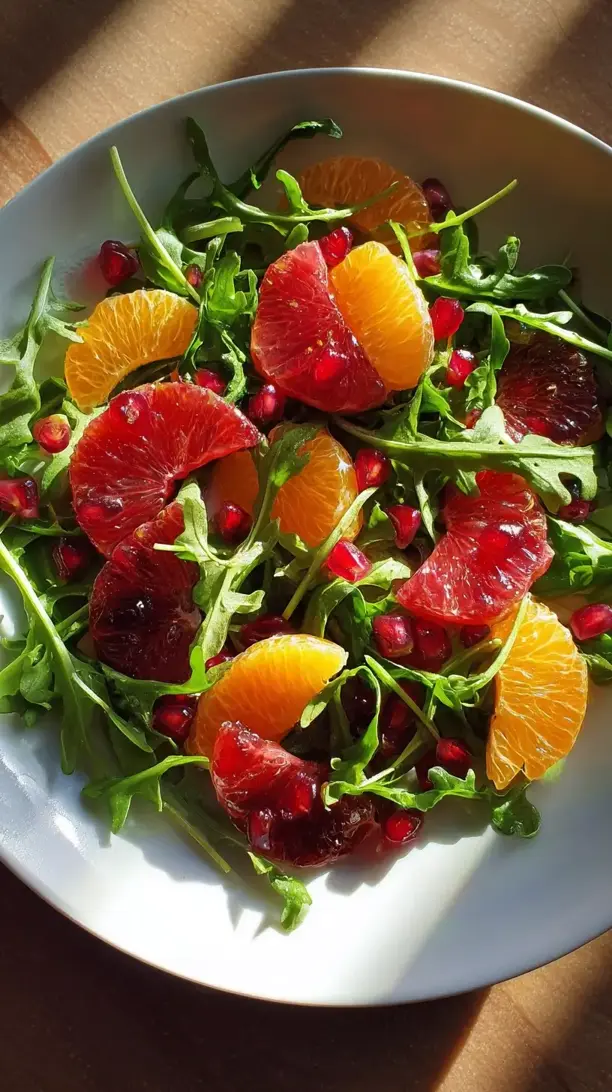
Citrus Arugula Salad With Pomegranate
Make this stunning Citrus Arugula Salad with Pomegranate in just 15 minutes! A perfect blend of peppery greens, sweet citrus & crunchy seeds. Get the recipe now!
Ingredients
For the Salad
-
5 oz fresh arugula
-
1 large orange (like navel or cara cara)
-
1 grapefruit
-
1/2 cup pomegranate seeds (arils)
-
1 ripe avocado
-
2 tbsp toasted pine nuts or slivered almonds
-
1/4 cup crumbled feta or goat cheese
For the Dressing
-
1/4 cup extra virgin olive oil
-
2 tbsp fresh orange juice
-
1 tbsp fresh lemon juice
-
1 tsp honey or maple syrup
-
1/4 tsp sea salt (plus more to taste)
-
1 pinch black pepper
Instructions
-
Prepare the Citrus. First, let's segment the orange and grapefruit. Slice a small piece off the top and bottom of each fruit so it sits flat on your cutting board. Using a sharp knife, carefully slice downward to remove the peel and white pith, following the curve of the fruit. You should now have a naked fruit. Hold it over your salad bowl to catch any juice. Carefully slice along the membrane on either side of each segment to release it. Let the beautiful segments fall into the bowl. Squeeze the remaining membrane over your small dressing bowl to get every last drop of juice—this is liquid gold for your vinaigrette!01
-
Make the Dressing. To the small bowl with your collected citrus juice, add the 2 tablespoons of fresh orange juice, 1 tablespoon of lemon juice, honey, salt, and a pinch of pepper. Whisk it all together until the honey and salt have dissolved. Now, slowly drizzle in the extra virgin olive oil while continuously whisking. You'll notice the dressing will start to emulsify and look slightly thickened and glossy. Give it a quick taste—it should be a perfect balance of tangy and sweet. Adjust with a pinch more salt or a tiny bit more honey if needed. Set this aside for now.02
-
Assemble the Base. Place your dry arugula right on top of the citrus segments in the large bowl. Now, slice your avocado. The trick is to do this at the very last minute to prevent browning. Cut it in half, remove the pit, and slice the flesh while it's still in the skin, then scoop it out with a spoon. Gently scatter the avocado slices over the arugula. You want to be gentle to keep those creamy slices intact.03
-
Add the Final Flourishes. Now for the fun part—the confetti! Sprinkle the vibrant pomegranate seeds all over the top of the salad. If you're using the optional toasted nuts or cheese, now is the time to add them. A little crumbled feta adds a lovely salty tang, while toasted pine nuts bring a warm, buttery crunch. Honestly, both are fantastic additions if you have them.04
-
Dress and Serve Immediately. Right before you're ready to serve, give your dressing one final whisk and drizzle about half of it over the salad. Use salad tongs or two large spoons to gently toss everything together, making sure the leaves are lightly coated. You might not need all the dressing—a little goes a long way. Add a bit more if it looks dry, but it's better to start with less. The goal is to coat the greens, not drown them. Serve immediately while everything is fresh and crisp!05