
Why You’ll Love This Spaghetti Squash with Pesto and Cherry Tomatoes
- It’s a textural dream. You get the tender, slightly al dente squash strands, the creamy, unctuous pesto, and the little pops of juicy, blistered tomatoes all in one forkful. It’s a party in your mouth.
- It’s incredibly versatile. Serve it warm on a cozy evening, or chill it and take it on a picnic the next day. It works beautifully as a main course, a side for grilled chicken, or even a packed lunch.
- The colors are just stunning. The vibrant green pesto against the golden squash and deep red tomatoes makes this dish look like a work of art on the plate. It’s honestly almost too pretty to eat… almost.
- It feels indulgent but is naturally light. You get that wonderful pasta-like experience without the heaviness, making it a meal you can enjoy fully without feeling sluggish afterwards.
Ingredients & Tools
- 1 large spaghetti squash (about 2-2.5 lbs)
- 2 tablespoons olive oil, divided
- 1/2 teaspoon sea salt, plus more to taste
- 1/4 teaspoon black pepper
- 2 cups fresh basil leaves, packed
- 1/3 cup pine nuts
- 2 cloves garlic, peeled
- 1/2 cup grated Parmesan cheese, plus more for serving
- 1/3 cup extra virgin olive oil
- 1 pint cherry tomatoes
- 1 tablespoon balsamic glaze (optional, for drizzling)
Tools: A sharp chef’s knife, a sturdy baking sheet, a food processor or blender, a large mixing bowl.
Don’t stress if you’re missing an ingredient or two—this recipe is wonderfully adaptable. The key is using the freshest basil you can find for that truly vibrant pesto, and don’t be shy with the Parmesan. It adds a salty, umami depth that brings everything together.
Nutrition (per serving)
- Calories: 320 kcal
- Protein: 8 g
- Fat: 25 g
- Carbohydrates: 22 g
- Fiber: 6 g
Serves: 4 | Prep Time: 15 minutes | Cook Time: 45 minutes | Total Time: 60 minutes
Before You Start: Tips & Ingredient Notes
- Choosing your squash. Look for a squash that feels heavy for its size and has a firm, matte skin without any soft spots or significant blemishes. A heavier squash usually means more moisture and better “noodle” yield.
- Don’t skip toasting the pine nuts. It only takes a minute in a dry pan, but toasting them until they’re lightly golden completely transforms their flavor, bringing out a deep, nutty aroma that makes your pesto next-level.
- To salt or not to salt the squash? I like to season the squash halves with a little salt before roasting. This helps draw out a bit of moisture and seasons the squash from the inside out, preventing it from tasting bland.
- Embrace the blistered tomato. Let those tomatoes get a little charred and wrinkly in the oven! That concentrated, sweet, and slightly smoky flavor is what makes them so irresistible in this dish.
How to Make Spaghetti Squash with Pesto and Cherry Tomatoes
Step 1: Preheat your oven to 400°F (200°C). This is the perfect roasting temperature—hot enough to caramelize the squash and blister the tomatoes beautifully without burning them. While it heats up, tackle the squash. Carefully slice it in half lengthwise; this is the trickiest part, so use a sharp, sturdy knife and a steady hand. A rubber mallet can help gently tap the knife through if it’s being stubborn.
Step 2: Scoop out the seeds and stringy pulp from the center of each squash half using a spoon. It’s a lot like cleaning out a pumpkin! Drizzle the cut sides with about one tablespoon of the olive oil and rub it all over the surface. Season generously with the sea salt and black pepper. Place the halves cut-side down on your baking sheet. Roasting them face-down helps them steam in their own moisture, resulting in perfectly tender strands.
Step 3: Roast the squash for 35-45 minutes. You’ll know it’s ready when the skin is easily pierced with a fork and the edges have started to caramelize and brown slightly. The aroma in your kitchen will be wonderfully sweet and nutty. While the squash roasts, toss the cherry tomatoes with the remaining tablespoon of olive oil and a pinch of salt on a separate section of the baking sheet (or on a second, smaller tray) and add them to the oven for the last 15-20 minutes of cooking. They should be bursting and lightly charred.
Step 4: While everything is in the oven, make your pesto. In a food processor or blender, combine the fresh basil, toasted pine nuts, garlic, and Parmesan cheese. Pulse a few times until everything is finely chopped and combined. Then, with the motor running, slowly stream in the extra virgin olive oil until a vibrant, slightly coarse sauce forms. Season with a pinch of salt to taste. You want it to be flavorful and punchy!
Step 5: Once the squash is cool enough to handle, use a fork to scrape the flesh from the skin. You’ll see those incredible, long strands form right before your eyes. Transfer all the “spaghetti” to a large mixing bowl. Add the blistered cherry tomatoes and their juices directly from the pan—those juices are liquid gold!
Step 6: Now for the best part: bringing it all together. Pour the vibrant green pesto over the warm squash and tomatoes. Gently toss everything together until every strand is beautifully coated in the pesto. The warmth of the squash will help the pesto cling perfectly and its aroma will just bloom. Give it a final taste and adjust the seasoning if needed.
Step 7: To serve, divide the mixture among plates or a large serving platter. Finish with an extra sprinkle of Parmesan cheese and if you’re feeling fancy, a delicate drizzle of balsamic glaze for a touch of sweet acidity that cuts through the richness beautifully. Serve immediately and watch it disappear.
Serving Suggestions
Complementary Dishes
- Grilled Lemon Herb Chicken Breast — The bright, citrusy notes in the chicken pair wonderfully with the herby pesto, making for a complete and protein-packed meal.
- Garlic Sautéed White Beans — For a vegetarian protein boost, creamy white beans with a hint of garlic add a lovely heartiness and texture contrast.
- A Simple Arugula Salad with Lemon Vinaigrette — The peppery arugula and sharp lemon dressing provide a fresh, palate-cleansing counterpoint to the rich, savory squash.
Drinks
- A Crisp Sauvignon Blanc — Its herbaceous and citrusy profile mirrors the flavors in the basil pesto, creating a harmonious pairing that feels light and refreshing.
- Sparkling Water with Lemon & Mint — A non-alcoholic option that cleanses the palate between bites with its effervescence and fresh, cooling notes.
- A Light Italian Red like Chianti — The bright acidity and cherry notes in a young Chianti can stand up to the tomatoes and Parmesan without overwhelming the dish.
Something Sweet
- Lemon Sorbet — After a meal rich with savory, umami flavors, a scoop of sharp, clean lemon sorbet is the perfect, refreshing finish.
- Dark Chocolate Almond Clusters — A few pieces of rich dark chocolate with roasted almonds continue the nutty theme in a delightful, sweet way.
- Panna Cotta with a Berry Compote — The silky, delicate creaminess of panna cotta provides a lovely, smooth contrast to the textural dish you just enjoyed.
Top Mistakes to Avoid
- Mistake: Underseasoning the squash. The squash itself is quite mild, so if you don’t season it before roasting, the final dish can taste bland no matter how flavorful your pesto is. Salt each step!
- Mistake: Overcooking the pesto. If you toss the pesto with the squash while it’s piping hot and then let it sit, the basil can oxidize and turn a dull, dark green. Toss it just before serving for the brightest color.
- Mistake: Using a dull knife on the squash. Spaghetti squash is notoriously tough to cut. A dull knife is not only frustrating but also dangerous. Use your sharpest chef’s knife and take your time.
- Mistake: Skipping the tomato blistering. Just tossing raw tomatoes in won’t give you the same flavor payoff. That quick roast concentrates their sweetness and adds a smoky depth that is essential to the dish.
Expert Tips
- Tip: Make pesto in advance. You can make the pesto up to two days ahead. To keep it bright green, press a piece of plastic wrap directly onto its surface before sealing the container—this limits its exposure to air.
- Tip: Get creative with your “noodles”. After scraping the squash, give the strands a quick squeeze in a clean kitchen towel to remove excess water. This prevents a watery sauce and gives you a more pasta-like texture.
- Tip: Customize your pesto nuts. No pine nuts? Toasted walnuts, almonds, or even sunflower seeds work beautifully and add their own unique, delicious character to the sauce.
- Tip: Use the squash shells as bowls. For a really impressive presentation, carefully scrape out the squash, mix everything in a bowl, and then pile it back into the roasted shells to serve. It’s a total wow factor.
FAQs
Can I make this dish ahead of time?
Absolutely, and it’s a great timesaver! You can roast the squash and make the pesto up to 2 days in advance. Store them separately in the fridge. When ready to serve, let the squash come to room temperature or gently reheat it, then toss with the pesto and freshly roasted tomatoes. This method ensures the pesto stays vibrant and the texture remains perfect.
My squash is still really hard to cut, any tricks?
This is the most common hurdle! Here’s a pro tip: pierce the whole squash several times with a sharp knife and microwave it for 3-5 minutes. Let it cool slightly—this softens the skin just enough to make slicing through it much, much safer and easier. Just be careful, as it will be hot inside.
Is there a substitute for pine nuts in the pesto?
Of course! Pine nuts can be pricey. Toasted walnuts are a classic and affordable alternative with a deeper, earthier flavor. Blanched almonds will give you a milder, creamier pesto, and for a nut-free version, toasted sunflower seeds or even a tablespoon of nutritional yeast for cheesiness work wonderfully.
Why is my final dish watery?
This usually happens for one of two reasons. Either the squash wasn’t roasted long enough to evaporate its natural moisture, or it wasn’t seasoned before roasting. Salting draws out water. Next time, ensure the squash is fully tender and consider giving the scraped strands a quick squeeze in a tea towel to wick away any extra liquid before saucing.
Can I freeze the cooked spaghetti squash?
You can, but the texture will change. Once thawed, the strands will be much softer and release more water, making them best for soups, casseroles, or fritters where the texture is less central. For this specific pesto recipe, I’d recommend enjoying it fresh for the best noodle-like experience.
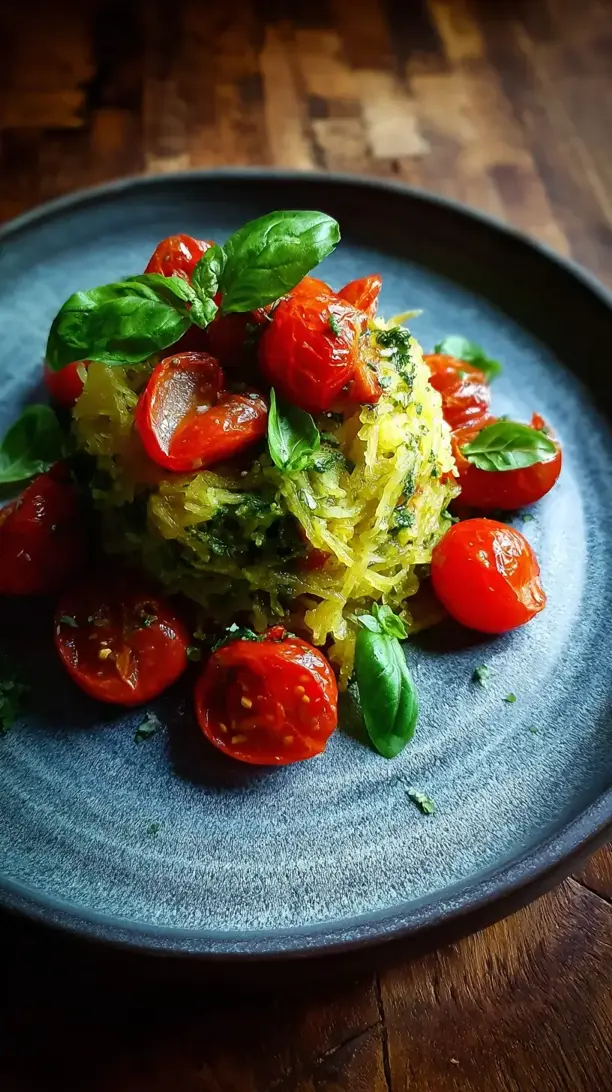
Spaghetti Squash With Pesto And Cherry Tomatoes
Make this easy Spaghetti Squash with Pesto and Cherry Tomatoes for a healthy, vibrant meal. A stunning vegetarian dish ready in an hour. Get the recipe now!
Ingredients
For the Squash and Tomatoes:
-
1 large spaghetti squash (about 2-2.5 lbs)
-
2 tablespoons olive oil (divided)
-
1/2 teaspoon sea salt (plus more to taste)
-
1/4 teaspoon black pepper
-
1 pint cherry tomatoes
-
1 tablespoon balsamic glaze (optional, for drizzling)
For the Pesto:
-
2 cups fresh basil leaves (packed)
-
1/3 cup pine nuts
-
2 cloves garlic (peeled)
-
1/2 cup grated Parmesan cheese (plus more for serving)
-
1/3 cup extra virgin olive oil