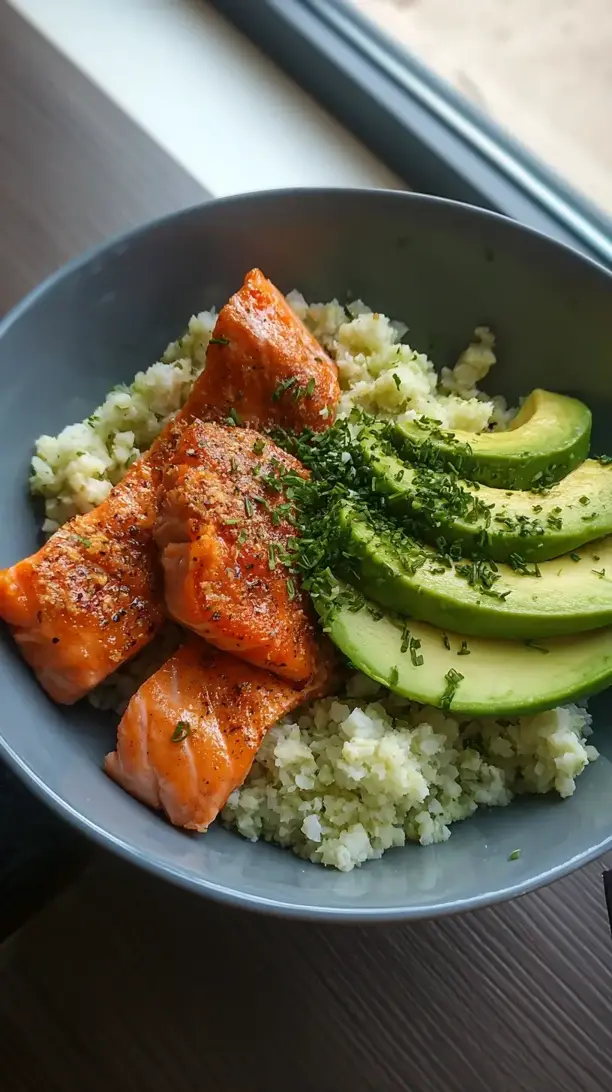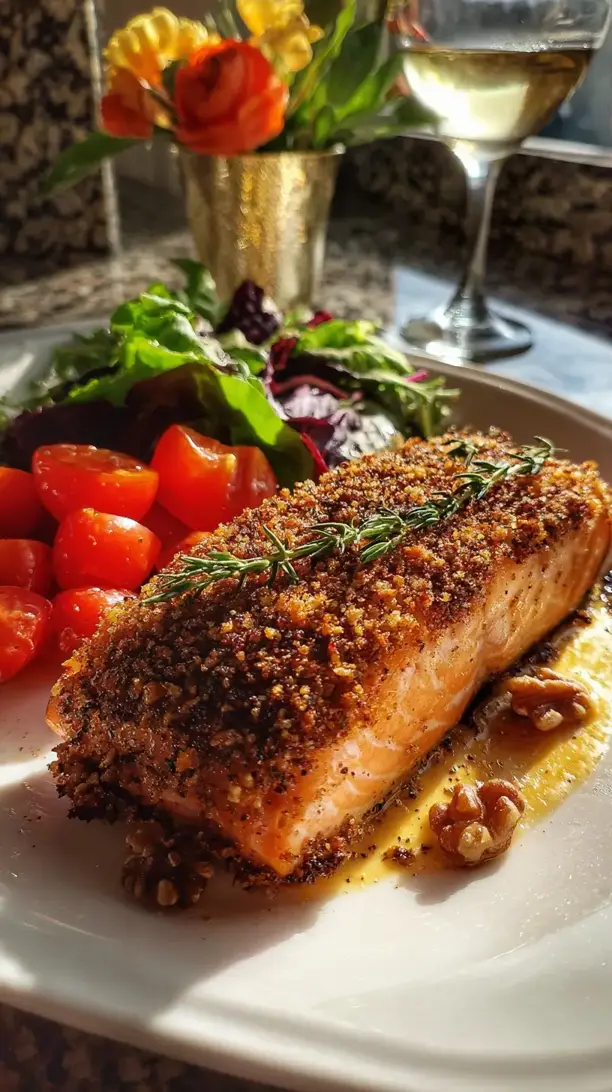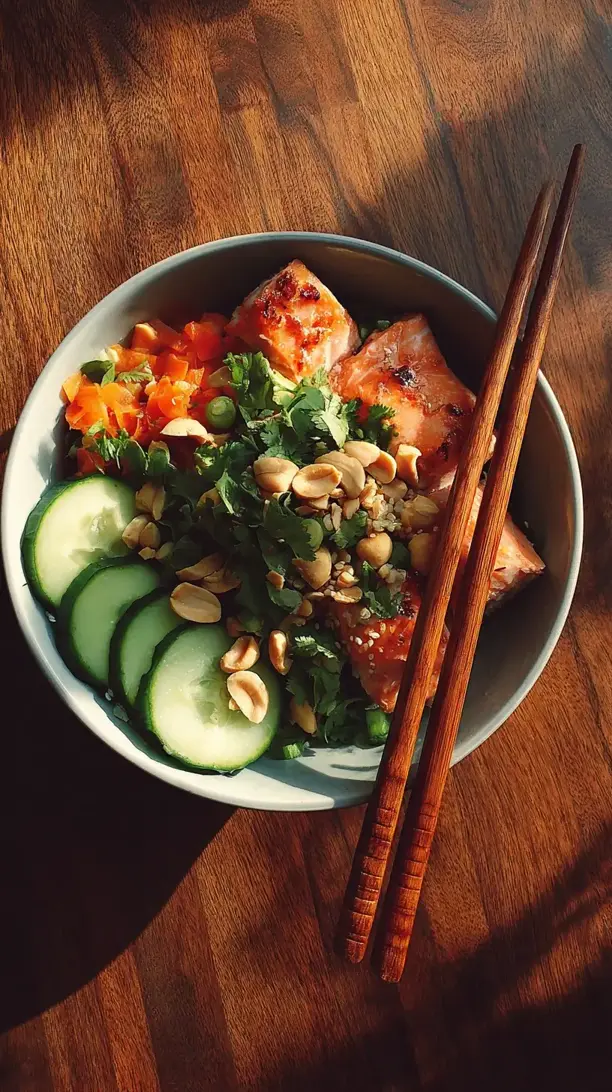

This Salmon Cauliflower Rice Bowl is a nourishing, satisfying meal that comes together in 30 minutes. It features flaky salmon over garlicky cauliflower rice with crisp veggies and a creamy sauce. You’ll love how easily this salmon cauliflower rice bowl adapts to what you have on hand.
Why You’ll Love This Salmon Cauliflower Rice Bowl
- Complete & balanced: Lean protein, veggies, and healthy fats in one colorful bowl.
- Versatile & forgiving: Swap ingredients based on what’s in your fridge.
- Delightful texture: Light cauliflower rice contrasts with crisp veggies and flaky salmon.
- Indulgent yet light: Creamy yogurt-tahini sauce without heaviness.
Ingredients & Tools
- 2 salmon fillets (about 150 g each), skin on or off
- 1 large head of cauliflower, riced (or 500 g pre-riced cauliflower)
- 1 red bell pepper, thinly sliced
- 1 small red onion, thinly sliced
- 100 g broccoli florets, cut into small pieces
- 3 cloves garlic, minced
- 2 tbsp olive oil, divided
- 1 tbsp fresh lemon juice
- 1 tsp smoked paprika
- 120 g plain Greek yogurt
- 1 tbsp tahini
- 1 tsp maple syrup or honey
- Salt and black pepper to taste
- Fresh dill or parsley for garnish
Tools: A large skillet, a medium bowl, a box grder or food processor (if making your own cauliflower rice), and a small bowl for the sauce.
Notes: Don’t stress if you’re missing an ingredient—the bowl is flexible. Pre-riced cauliflower saves time, but fresh has a less watery flavor.
Nutrition (per serving)
| Calories: | 485 kcal |
| Protein: | 35 g |
| Fat: | 28 g |
| Carbs: | 22 g |
| Fiber: | 8 g |
Serves: 2 | Prep Time: 15 minutes | Cook Time: 15 minutes | Total Time: 30 minutes
Before You Start: Tips & Ingredient Notes
- Pat that salmon dry. This is the single most important step for getting a beautiful, crispy sear on your salmon. Use a paper towel and really press down to absorb all the surface moisture.
- Don’t skip the smoked paprika. It adds a subtle, smoky depth that complements the salmon perfectly. If you only have sweet paprika, it will work, but the smoked version is a game-changer here.
- What if my cauliflower rice is soggy? The trick is to cook it quickly over medium-high heat. You’re not boiling it; you’re sautéing it to drive off excess moisture and give it a nice, toasty flavor.
- Taste your sauce as you go. The balance of tangy yogurt, rich tahini, and sweet maple syrup can vary based on your brands. Adjust the lemon, salt, and sweetness until it sings to you.
How to Make Salmon Cauliflower Rice Bowl
Step 1: Start by preparing your salmon. Pat the fillets completely dry with paper towels. This is non-negotiable for a good sear. Season both sides generously with salt, black pepper, and the smoked paprika. Let them sit at room temperature while you prep the veggies—this helps them cook more evenly.
Step 2: Make your creamy sauce. In a small bowl, whisk together the Greek yogurt, tahini, maple syrup, lemon juice, and a pinch of salt and pepper. The consistency should be smooth and drizzle-able. If it’s too thick, add a teaspoon of water at a time until it reaches your desired texture. Set this aside.
Step 3: Cook the vegetables. Heat one tablespoon of olive oil in a large skillet over medium-high heat. Add the sliced bell pepper, red onion, and broccoli florets. Sauté for 5-6 minutes, until they’re vibrant in color and crisp-tender. You’ll hear a nice sizzle. Add the minced garlic and cook for just one more minute until fragrant—be careful not to burn it. Transfer the cooked veggies to a plate.
Step 4: Now, for the cauliflower rice. Using the same skillet (no need to wash it—those browned bits are flavor!), add the remaining tablespoon of olive oil. Add the cauliflower rice and sauté for 4-5 minutes, stirring frequently. You’re looking for it to be tender but not mushy, and for any excess liquid to have evaporated. Season with a pinch of salt.
Step 5: Cook the salmon. While the cauliflower rice is cooking, heat a separate non-stick skillet over medium-high heat with a light drizzle of oil. Place the salmon fillets in the hot pan, skin-side down if they have skin. Cook for 4-5 minutes without moving them, until the skin is super crispy and the flesh is cooked about two-thirds of the way up the side. Flip and cook for another 1-2 minutes for medium, or longer if you prefer it well-done.
Step 6: Assemble your bowls. Divide the warm cauliflower rice between two bowls. Top with the sautéed vegetable mixture. Place the beautiful, flaky salmon fillet on top. Drizzle generously with the creamy yogurt-tahini sauce and garnish with a sprinkle of fresh dill or parsley. Dig in immediately while everything is warm!
Storage & Freshness Guide
- Fridge: Store components separately in airtight containers for up to 4 days.
- Freezer: Freeze cooked salmon and cauliflower rice for up to 3 months; sauce and veggies don’t freeze well.
- Reviving: Gently reheat salmon in a low oven; warm cauliflower rice and veggies in a skillet.
Serving Suggestions
Complementary Dishes
- A simple arugula salad with a lemon vinaigrette — The peppery arugula and sharp lemon provide a bright, clean contrast that cuts through the richness of the salmon and creamy sauce perfectly.
- Roasted asparagus with parmesan — Another green vegetable never hurts, and the earthy, savory notes of roasted asparagus are a classic pairing with salmon.
- Garlic sautéed kale — For an extra dose of greens, some quickly wilted kale with lots of garlic adds a wonderful texture and robust flavor that stands up well to the bowl.
Drinks
- A crisp Sauvignon Blanc — Its citrusy and herbal notes are a fantastic match for the dish, highlighting the lemon in the sauce and the freshness of the vegetables.
- A cold, hoppy IPA — The bitterness of the hops contrasts beautifully with the fatty, rich salmon and the creamy elements, cleansing the palate between bites.
- Sparkling water with lemon and mint — A non-alcoholic option that provides a refreshing, bubbly lift which is just what this hearty-yet-light bowl needs.
Something Sweet
- Lemon sorbet — It’s light, palate-cleansing, and continues the citrus theme from the bowl, making for a perfectly refreshing end to the meal.
- Dark chocolate with sea salt — Just a square or two of high-quality dark chocolate provides a rich, slightly bitter finish that doesn’t feel too heavy after your main course.
- Fresh berries with a dollop of whipped cream — Simple, sweet, and a little tart, this dessert feels celebratory without requiring any real baking effort.
Top Mistakes to Avoid
- Overcooking the salmon. Salmon continues to cook after you take it off the heat (carryover cooking). If you cook it until it’s completely opaque in the pan, it’ll be dry by the time you eat it. Pull it off when it’s still a touch translucent in the very center.
- Crowding the pan with vegetables. If you dump all the veggies in at once, they’ll steam instead of sauté. You want a single layer so they get some nice color and maintain their crisp-tender bite.
- Not drying the cauliflower rice. If you’re making your own cauliflower rice from fresh, wrap it in a clean kitchen towel and squeeze out as much water as you can. This is the secret to fluffy, not soggy, “rice”.
- Underseasoning the components. Season each element—the salmon, the veggies, the cauliflower rice, and the sauce—individually. This builds layers of flavor so your final bowl is anything but bland.
Expert Tips
- Tip: For the crispiest salmon skin, start it in a cold pan. Place the salmon skin-side down in the cool skillet, then turn the heat to medium. As the pan heats up, it slowly renders the fat under the skin, resulting in an unbelievably crisp, cracker-like texture.
- Tip: Add a splash of acid at the end. Right before serving, squeeze a little fresh lemon juice over the entire bowl. It brightens all the flavors and makes the dish taste fresher and more vibrant.
- Tip: Make a double batch of the sauce. It’s so good you’ll want to put it on everything—grilled chicken, salads, even as a dip for raw veggies. It keeps well in the fridge for up to 5 days.
- Tip: Let the salmon rest. Just like a steak, let your cooked salmon fillets rest for a couple of minutes on a cutting board before placing them on the bowl. This allows the juices to redistribute, ensuring every bite is moist and flavorful.
FAQs
Can I use frozen cauliflower rice?
Absolutely, and it’s a huge time-saver! The key is to cook it straight from frozen—do not thaw it first, or it will become a watery mess. Just add it to the hot skillet and cook it for a minute or two longer than fresh, breaking up any clumps, until all the excess moisture has evaporated. You might need to add a tiny pinch more salt, as frozen veggies can sometimes taste a bit bland.
How can I tell when the salmon is done?
The most reliable method is to use the touch test. Gently press the top of the salmon fillet with your finger. If it feels soft and mushy, it’s still rare. If it feels firm and springs back quickly, it’s well-done. You’re aiming for a medium doneness, where it feels like the fleshy part of your palm when you press your thumb and middle finger together. Alternatively, you can peek at the interior; it should be opaque and flake easily with a fork.
I don’t have tahini. What can I use instead?
No problem! The sauce will still be delicious. You can simply omit it for a tangier, more straightforward yogurt sauce. For a similar nutty, rich flavor, you could substitute with a tablespoon of smooth almond or peanut butter. If you go the nut butter route, you might want to add an extra squeeze of lemon to balance the sweetness.
Can I meal prep this bowl?
You can, but with a little strategy. I recommend storing all the components separately in airtight containers. The cauliflower rice, veggies, and sauce will keep for up to 4 days. Cook the salmon fresh if you can, as reheated salmon can become dry and a bit strong in flavor. If you must prep it, gently reheat the salmon in a low oven or eat it cold—it’s still very tasty!
What other proteins work well here?
This bowl is a fantastic template. Skinless chicken thighs or breast, cut into bite-sized pieces and sautéed, would be wonderful. For a vegetarian option, crispy pan-fried halloumi or seasoned chickpeas are excellent. Shrimp also cooks very quickly and pairs beautifully with the flavors in the bowl. The method remains largely the same—just adjust the cooking time for your chosen protein.

Salmon Cauliflower Rice Bowl
Make this easy Salmon Cauliflower Rice Bowl in just 30 minutes! A healthy, protein-packed meal with flaky salmon and creamy sauce. Get the recipe now!
Ingredients
For the main ingredients:
-
2 salmon fillets (about 150 g each, skin on or off)
-
1 large head cauliflower (riced (or 500 g pre-riced cauliflower))
-
1 red bell pepper (thinly sliced)
-
1 small red onion (thinly sliced)
-
100 g broccoli florets (cut into small pieces)
-
3 cloves garlic (minced)
-
2 tbsp olive oil (divided)
-
1 tbsp fresh lemon juice
-
1 tsp smoked paprika
-
120 g plain Greek yogurt
-
1 tbsp tahini
-
1 tsp maple syrup or honey
-
Salt and black pepper (to taste)
-
Fresh dill or parsley (for garnish)
Instructions
-
Start by preparing your salmon. Pat the fillets completely dry with paper towels. This is non-negotiable for a good sear. Season both sides generously with salt, black pepper, and the smoked paprika. Let them sit at room temperature while you prep the veggies—this helps them cook more evenly.01
-
Make your creamy sauce. In a small bowl, whisk together the Greek yogurt, tahini, maple syrup, lemon juice, and a pinch of salt and pepper. The consistency should be smooth and drizzle-able. If it's too thick, add a teaspoon of water at a time until it reaches your desired texture. Set this aside.02
-
Cook the vegetables. Heat one tablespoon of olive oil in a large skillet over medium-high heat. Add the sliced bell pepper, red onion, and broccoli florets. Sauté for 5-6 minutes, until they're vibrant in color and crisp-tender. You'll hear a nice sizzle. Add the minced garlic and cook for just one more minute until fragrant—be careful not to burn it. Transfer the cooked veggies to a plate.03
-
Now, for the cauliflower rice. Using the same skillet (no need to wash it—those browned bits are flavor!), add the remaining tablespoon of olive oil. Add the cauliflower rice and sauté for 4-5 minutes, stirring frequently. You're looking for it to be tender but not mushy, and for any excess liquid to have evaporated. Season with a pinch of salt.04
-
Cook the salmon. While the cauliflower rice is cooking, heat a separate non-stick skillet over medium-high heat with a light drizzle of oil. Place the salmon fillets in the hot pan, skin-side down if they have skin. Cook for 4-5 minutes without moving them, until the skin is super crispy and the flesh is cooked about two-thirds of the way up the side. Flip and cook for another 1-2 minutes for medium, or longer if you prefer it well-done.05
-
Assemble your bowls. Divide the warm cauliflower rice between two bowls. Top with the sautéed vegetable mixture. Place the beautiful, flaky salmon fillet on top. Drizzle generously with the creamy yogurt-tahini sauce and garnish with a sprinkle of fresh dill or parsley. Dig in immediately while everything is warm!06