
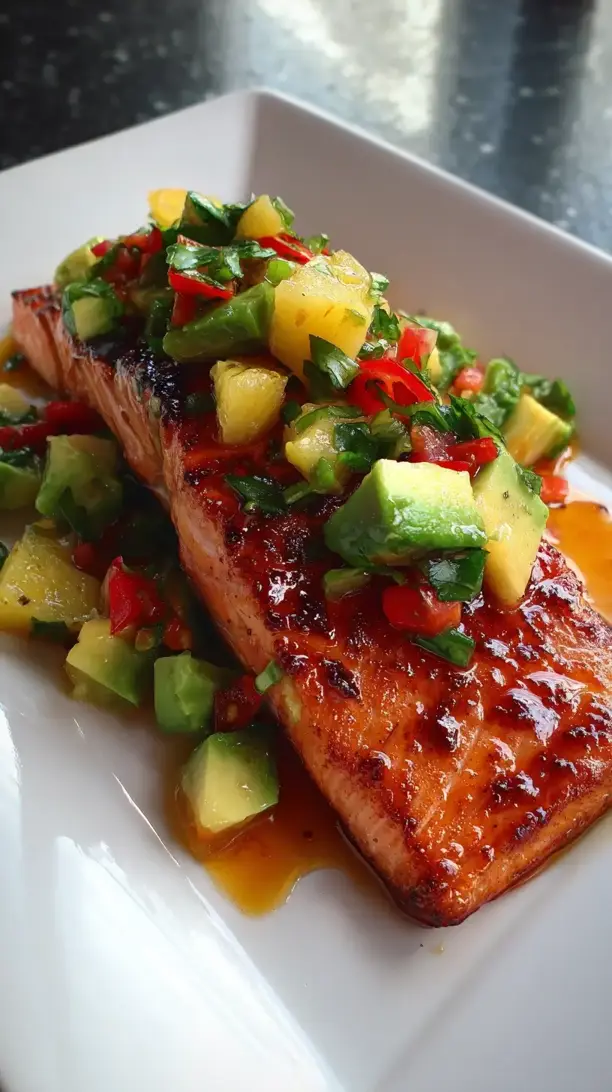
This Pineapple Salsa Salmon combines sweet, juicy pineapple with rich, flaky salmon for a vibrant and easy weeknight meal. The tropical salsa adds a fresh, zesty contrast to the savory fish, creating a perfect harmony of flavors. Ready in under 30 minutes, this dish is both impressive and simple to make.
Why You’ll Love This Pineapple Salsa Salmon
- Flavor explosion: Sweet pineapple and spicy jalapeño create a bright, complex salsa.
- Quick & easy: Ready in about 25 minutes with minimal cleanup.
- Healthy & delicious: Packed with lean protein, healthy fats, and fresh produce.
- Versatile serving: Great over rice, quinoa, greens, or in tacos.
Ingredients & Tools
- 4 salmon fillets (about 6 oz / 170 g each), skin-on or skinless
- 2 tbsp olive oil, divided
- 1 tsp smoked paprika
- 1/2 tsp garlic powder
- Salt and black pepper to taste
- 1.5 cups fresh pineapple, finely diced
- 1/4 cup red onion, finely diced
- 1/4 cup fresh cilantro, chopped
- 1 jalapeño, seeds removed and finely diced
- Juice of 1 lime
- 1 avocado, diced (optional, for serving)
Tools: A sharp knife, cutting board, medium mixing bowl, and a large oven-safe skillet (cast iron works great).
Notes: Don’t stress if you’re missing one herb or spice—this recipe is forgiving. But using fresh, ripe pineapple instead of canned really does make a world of difference in both texture and brightness.
Nutrition (per serving)
| Calories: | 385 kcal |
| Protein: | 35 g |
| Fat: | 22 g |
| Carbs: | 12 g |
| Fiber: | 3 g |
Serves: 4 | Prep Time: 15 minutes | Cook Time: 10-12 minutes | Total Time: 27 minutes
Before You Start: Tips & Ingredient Notes
- Salmon selection is key. Look for fillets that are of even thickness for consistent cooking. If they have skin, pat the skin super dry with a paper towel—this helps it get beautifully crisp.
- Don’t skip the jalapeño seeds. Well, you can remove them for a milder salsa, but leaving a few in adds a lovely, gentle heat that balances the pineapple’s sweetness perfectly.
- Dice everything roughly the same size. You want little bursts of flavor in every spoonful of salsa, so aim for a uniform, small dice on the pineapple, onion, and jalapeño.
- Let the salsa sit. If you have an extra five minutes, let the finished salsa sit at room temperature while the salmon cooks. This allows the flavors to meld and become even more incredible.
How to Make Pineapple Salsa Salmon
Step 1: First, preheat your oven to 400°F (200°C). While it’s heating up, pat your salmon fillets completely dry with paper towels. This is a crucial step for getting a nice sear and preventing the fish from steaming. Rub the fillets all over with one tablespoon of the olive oil, then season generously with salt, black pepper, smoked paprika, and garlic powder. Let them sit at room temperature while you make the salsa—this takes the chill off and helps them cook more evenly.
Step 2: Now, for the star of the show: the pineapple salsa. In your medium bowl, combine the finely diced pineapple, red onion, cilantro, and jalapeño. Squeeze the juice of one whole lime over everything. The acid from the lime not only adds zing but also keeps the avocado (if you’re adding it later) from browning. Give it a gentle stir to combine, then taste it. This is your chance to adjust the seasoning—maybe it needs another pinch of salt or a bit more lime juice. Set the salsa aside.
Step 3: Time to cook the salmon. Heat the remaining tablespoon of olive oil in your large, oven-safe skillet over medium-high heat. Once the oil is shimmering hot, carefully place the salmon fillets in the pan, presentation-side down (that’s the side that didn’t have the skin). You should hear a satisfying sizzle. Resist the urge to move them! Let them cook undisturbed for about 3-4 minutes, until a beautiful golden-brown crust has formed.
Step 4: Carefully flip the salmon fillets. If your skillet is oven-safe, you can now transfer the entire pan to the preheated oven. If not, just reduce the heat to medium and cover the skillet to finish cooking through the top. Bake (or simmer) for another 5-7 minutes. The exact time will depend on the thickness of your fillets. You’ll know it’s done when the salmon flakes easily with a fork and the internal temperature reaches 125-130°F (52-54°C) for medium.
Step 5: Once the salmon is perfectly cooked, remove it from the oven or stovetop. Let it rest for a minute or two on a plate—this allows the juices to redistribute throughout the fish, making it incredibly moist and tender. If you’re using avocado, now is the time to gently fold it into your waiting pineapple salsa. Spoon a generous amount of the vibrant salsa over each warm salmon fillet, and serve immediately.
Storage & Freshness Guide
- Fridge: Store leftover salmon and salsa separately in airtight containers for up to 2 days.
- Freezer: Freeze cooked salmon (without salsa) for up to 1 month. Thaw in fridge before reheating.
- Reviving: Reheat salmon gently in a 300°F (150°C) oven until warm. Refresh salsa with a squeeze of lime.
Serving Suggestions
Complementary Dishes
- Cilantro Lime Rice — The fresh, citrusy notes in the rice are a perfect base that soaks up all the delicious juices from the salmon and salsa.
- Simple Roasted Asparagus — A little char on the asparagus adds a smoky, earthy element that complements the sweet and spicy salsa beautifully.
- Black Bean Salad — A cool, protein-packed bean salad with corn and red bell pepper makes this a complete, satisfying meal.
Drinks
- A Crisp Sauvignon Blanc — The wine’s bright acidity and citrus flavors are a classic pairing that cuts through the richness of the salmon.
- Sparkling Water with Lime — A simple, refreshing non-alcoholic option that cleanses the palate between bites of the flavorful salsa.
- Light Mexican Lager — A cold, crisp beer provides a bubbly contrast that highlights the tropical and spicy notes in the dish.
Something Sweet
- Mango Sorbet — Continuing the tropical theme, a scoop of vibrant mango sorbet is a light and refreshing way to end the meal.
- Coconut Macaroons — These chewy, sweet cookies add a delightful texture contrast and enhance the island-vacation vibe.
- Dark Chocolate-Dipped Strawberries — The bittersweet chocolate and juicy berry offer a simple, elegant finish that isn’t too heavy.
Top Mistakes to Avoid
- Overcooking the salmon. Salmon continues to cook after it’s removed from the heat (carryover cooking). Taking it out when it’s just slightly under your desired doneness ensures it stays moist and flaky, not dry and chalky.
- Using canned pineapple in syrup. The syrup is far too sweet and the texture is too mushy. Fresh pineapple provides a necessary bright acidity and a pleasant, firm bite.
- Not getting the pan hot enough. If your skillet isn’t properly preheated, the salmon will stick and steam instead of developing that gorgeous, flavorful sear we’re after. Wait for the oil to shimmer.
- Adding the avocado too early. If you mix the avocado into the salsa before serving, it will turn brown and mushy. Fold it in at the very last second for perfect, creamy green cubes.
Expert Tips
- Tip: For an extra layer of flavor, try grilling the pineapple before dicing it for the salsa. A quick char adds a subtle smokiness that is absolutely incredible with the salmon.
- Tip: If you have time, lightly salt your salmon fillets and let them sit on a wire rack in the fridge for 30 minutes before cooking. This “dry-brine” draws out moisture, resulting in a firmer, more seasoned fillet with a better crust.
- Tip: To make the salsa ahead of time, simply prepare everything except the avocado and cilantro. Store it in the fridge, and then stir in the fresh herbs and avocado right before serving to keep everything bright and fresh.
- Tip: If you don’t have an oven-safe skillet, no problem! After searing the first side, just flip the salmon, reduce the heat to medium-low, add a tablespoon of water to the pan, and cover it to finish cooking through steam.
FAQs
Can I use frozen salmon?
Absolutely! Just make sure it’s fully thawed in the refrigerator overnight first. Pat it extremely dry with paper towels before seasoning and cooking. If you cook it from frozen, you’ll end up with a soggy exterior and it will be much harder to get that beautiful sear.
How long does the pineapple salsa last in the fridge?
The salsa will keep well in an airtight container for 2-3 days. The texture of the pineapple will soften a bit, and the onions will mellow out, but it will still taste great. Remember to only add the avocado right before you plan to eat it.
What if I don’t like cilantro?
No problem at all—this recipe is very adaptable. You can easily substitute fresh mint or flat-leaf parsley for a completely different, but equally delicious, herbal flavor profile. Basil could also be a fun, unexpected twist!
Can I cook the salmon entirely in the oven?
You can, but you’ll miss out on that lovely seared crust. For the best of both worlds, I highly recommend the stovetop-to-oven method. If you must bake it entirely, brush it with oil, season well, and bake at 400°F (200°C) for 12-15 minutes, but don’t expect a crispy exterior.
Is this recipe spicy?
It has a gentle kick, but it’s not overwhelmingly spicy. The heat level is entirely in your control. For no heat, omit the jalapeño. For mild heat, remove all the seeds and ribs from the jalapeño before dicing. For more heat, leave some or all of the seeds in, or even add a second pepper!
Pineapple Salsa Salmon
Make this easy Pineapple Salsa Salmon recipe in under 30 minutes for a healthy, flavorful dinner. Get the simple steps for a perfect tropical meal tonight!
Ingredients
For the salmon and seasoning:
-
4 salmon fillets (about 6 oz / 170 g each, skin-on or skinless)
-
2 tbsp olive oil (divided)
-
1 tsp smoked paprika
-
1/2 tsp garlic powder
-
Salt and black pepper (to taste)
For the pineapple salsa:
-
1.5 cups fresh pineapple (finely diced)
-
1/4 cup red onion (finely diced)
-
1/4 cup fresh cilantro (chopped)
-
1 jalapeño (seeds removed and finely diced)
-
Juice of 1 lime
-
1 avocado (diced (optional, for serving))
Instructions
-
First, preheat your oven to 400°F (200°C). While it's heating up, pat your salmon fillets completely dry with paper towels. This is a crucial step for getting a nice sear and preventing the fish from steaming. Rub the fillets all over with one tablespoon of the olive oil, then season generously with salt, black pepper, smoked paprika, and garlic powder. Let them sit at room temperature while you make the salsa—this takes the chill off and helps them cook more evenly.01
-
Now, for the star of the show: the pineapple salsa. In your medium bowl, combine the finely diced pineapple, red onion, cilantro, and jalapeño. Squeeze the juice of one whole lime over everything. The acid from the lime not only adds zing but also keeps the avocado (if you're adding it later) from browning. Give it a gentle stir to combine, then taste it. This is your chance to adjust the seasoning—maybe it needs another pinch of salt or a bit more lime juice. Set the salsa aside.02
-
Time to cook the salmon. Heat the remaining tablespoon of olive oil in your large, oven-safe skillet over medium-high heat. Once the oil is shimmering hot, carefully place the salmon fillets in the pan, presentation-side down (that's the side that didn't have the skin). You should hear a satisfying sizzle. Resist the urge to move them! Let them cook undisturbed for about 3-4 minutes, until a beautiful golden-brown crust has formed.03
-
Carefully flip the salmon fillets. If your skillet is oven-safe, you can now transfer the entire pan to the preheated oven. If not, just reduce the heat to medium and cover the skillet to finish cooking through the top. Bake (or simmer) for another 5-7 minutes. The exact time will depend on the thickness of your fillets. You'll know it's done when the salmon flakes easily with a fork and the internal temperature reaches 125-130°F (52-54°C) for medium.04
-
Once the salmon is perfectly cooked, remove it from the oven or stovetop. Let it rest for a minute or two on a plate—this allows the juices to redistribute throughout the fish, making it incredibly moist and tender. If you're using avocado, now is the time to gently fold it into your waiting pineapple salsa. Spoon a generous amount of the vibrant salsa over each warm salmon fillet, and serve immediately.05