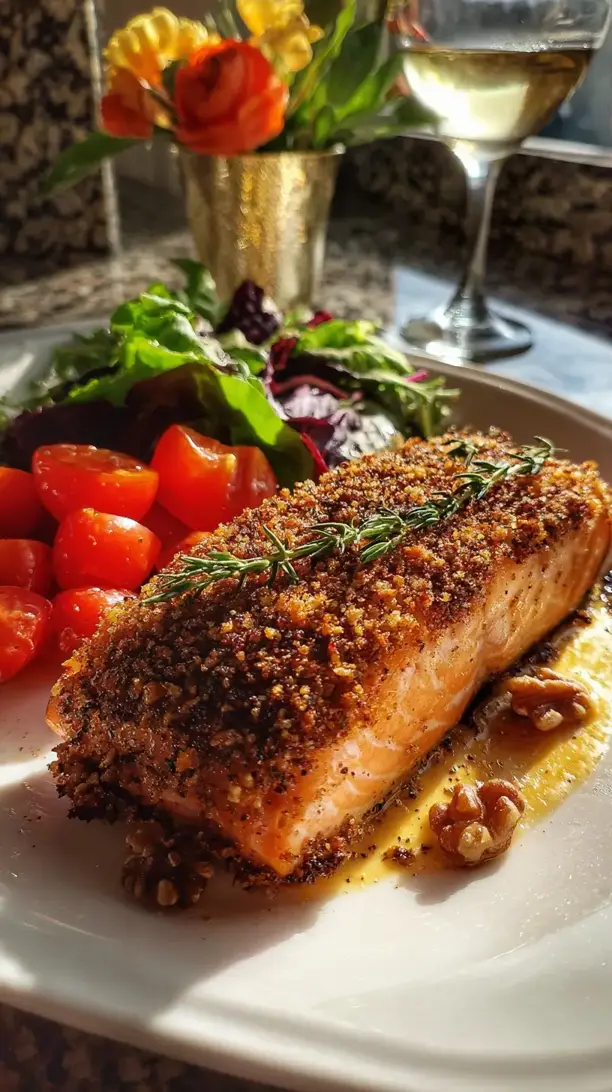

This Pecan Crusted Salmon is a restaurant-worthy main that comes together with ease. The nutty, savory crust transforms simple fillets into a spectacular meal. It’s perfect for busy weeknights or impressing guests.
Why You’ll Love This Pecan Crusted Salmon
- Effortless showstopper: Looks impressive but is simple to assemble.
- Divine texture: Crispy pecan crust with tender, flaky salmon underneath.
- Flavor-packed: Toasted pecans, maple, and herbs create a complex taste.
- Incredibly versatile: Pairs beautifully with many sides for any occasion.
Ingredients & Tools
- 4 (6-ounce) salmon fillets, skin-on or skinless
- 1 cup raw pecans
- 2 tablespoons maple syrup or light brown sugar
- 1 tablespoon Dijon mustard
- 1 tablespoon olive oil
- 1 teaspoon fresh thyme leaves, or ½ teaspoon dried
- ½ teaspoon garlic powder
- ½ teaspoon smoked paprika
- ¼ teaspoon salt, or to taste
- ¼ teaspoon black pepper
- 1 tablespoon chopped fresh parsley, for garnish
Tools: A food processor or a sharp knife and cutting board for chopping, a small bowl, a baking sheet, and parchment paper.
Notes: Use fresh, raw pecans for the best nutty flavor. Dijon mustard acts as a “glue” for the crust.
Nutrition (per serving)
| Calories: | 420 kcal |
| Protein: | 35 g |
| Fat: | 28 g |
| Carbs: | 9 g |
| Fiber: | 2 g |
Serves: 4 | Prep Time: 10 minutes | Cook Time: 12-15 minutes | Total Time: 25 minutes
Before You Start: Tips & Ingredient Notes
- Salmon selection is key. Try to get fillets that are similar in size and thickness so they cook at the same rate. If your fillets are very thick, you may need to add a couple of minutes to the baking time.
- Don’t use pre-toasted pecans. We’ll be toasting them ourselves in the food processor as we pulse, which brings out their oils and deep, nutty flavor. Starting with raw is essential for the best taste and texture.
- The mustard is your friend. Even if you’re not a huge mustard fan, trust me here. Its sharpness cuts through the richness of the salmon and nuts, and it provides a crucial sticky base for the crust to cling to.
- Get your mise en place ready. This recipe comes together quickly once you start, so having all your ingredients measured and your baking sheet lined will make the process smooth and stress-free.
How to Make Pecan Crusted Salmon
Step 1: Preheat your oven to 400°F (200°C). Line a rimmed baking sheet with parchment paper for easy cleanup. Pat the salmon fillets completely dry with paper towels—this is a crucial step for getting a nice sear and helping the crust stick. Place them on the prepared baking sheet, skin-side down if they have skin.
Step 2: Now, let’s make that incredible crust. Add the raw pecans to the bowl of a food processor. Pulse them 8-10 times until they resemble coarse sand with a few larger pecan pieces for texture. You don’t want pecan dust; a little texture is wonderful here. If you don’t have a processor, you can chop them by hand until they’re finely chopped but not powdery.
Step 3: In a small bowl, whisk together the maple syrup (or brown sugar), Dijon mustard, olive oil, thyme, garlic powder, smoked paprika, salt, and pepper. This is your flavor-packed wet mixture. It should look glossy and smell absolutely amazing—savory, sweet, and herby all at once.
Step 4: Pour this wet mixture over the chopped pecans in a separate bowl. Use a fork to mix everything together until the pecans are evenly coated and the mixture holds together when pinched. It should have the consistency of a coarse, damp sand. This is your pecan crust.
Step 5: Divide the pecan mixture evenly among the tops of the salmon fillets. Use your fingers or the back of a spoon to gently press the crust onto the salmon, creating an even layer that covers the entire surface. Pressing firmly helps ensure the crust doesn’t fall off during baking.
Step 6: Place the baking sheet in the preheated oven. Bake for 12-15 minutes. The exact time will depend on the thickness of your fillets. You’re looking for the pecan crust to be a deep golden brown and for the salmon to be opaque and flake easily with a fork at its thickest part.
Step 7: For an extra-crispy top, you can switch your oven to a high broil for the last 1-2 minutes of cooking. Watch it like a hawk during this time to prevent the nuts from burning! The crust will become even more fragrant and beautifully browned.
Step 8: Once out of the oven, let the salmon rest on the baking sheet for 2-3 minutes. This allows the juices to redistribute, ensuring a moist result. Just before serving, sprinkle with the fresh chopped parsley for a pop of color and freshness.
Storage & Freshness Guide
- Fridge: Store leftovers in an airtight container for up to 2 days.
- Freezer: Not recommended; crust may become soggy upon thawing.
- Reviving: Reheat in a 300°F oven for 10 minutes to maintain crispness.
Serving Suggestions
Complementary Dishes
- Garlic Mashed Potatoes — The creamy, savory potatoes are a dreamy base that soaks up any delicious juices from the salmon.
- Simple Sautéed Asparagus — The bright, green flavor and slight crunch of asparagus provide a perfect textural and flavor contrast to the rich salmon.
- Quinoa Pilaf with Herbs — A light, fluffy, and protein-packed side that adds a nutty flavor of its own that complements the pecan crust beautifully.
Drinks
- A Crisp Chardonnay — A lightly oaked or unoaked Chardonnay has the body and acidity to stand up to the rich fish and nutty flavors without overpowering them.
- Sparkling Water with Lemon — The bubbles and citrus are a wonderfully simple and refreshing palate cleanser between bites of the rich salmon.
Something Sweet
- Lemon Sorbet — The sharp, clean, and icy-cold sorbet is the perfect finish, cutting through the richness of the meal and leaving you feeling refreshed.
- Dark Chocolate Truffles — Just one or two bites of intense, bittersweet chocolate provide a decadent, sophisticated endnote to the dinner.
Top Mistakes to Avoid
- Not drying the salmon. If the surface of the salmon is wet, the crust will slide right off. Taking a moment to pat it thoroughly dry with paper towels is non-negotiable for a perfect crust.
- Over-processing the pecans. You want a coarse meal, not a fine powder. Over-pulsing will release too much oil and you’ll end up with a pasty, greasy crust instead of a crunchy one.
- Skipping the press. Gently but firmly pressing the crust onto the salmon fillet ensures it adheres during baking. If you just spoon it on, it might end up more as a topping that falls off onto the plate.
- Overcooking the salmon. Salmon continues to cook after it comes out of the oven (carryover cooking). Pull it out when it’s just slightly under your desired doneness, and let rest. Overcooked salmon becomes dry and chalky.
Expert Tips
- Tip: For a flavor twist, add a tablespoon of finely grated Parmesan cheese to the pecan mixture. It adds a wonderful savory, umami depth that complements the nuts perfectly.
- Tip: If you want to prep ahead, you can make the pecan crust mixture and store it in an airtight container in the fridge for up to 24 hours. Press it onto the salmon just before baking.
- Tip: To check for doneness without a thermometer, use the tip of a sharp knife to peek into the thickest part of the fillet. The flesh should be opaque and flake apart easily. If you see any deep, translucent orange, it needs another minute or two.
- Tip: If your pecans aren’t as crunchy as you’d like after baking, simply pop the baking sheet under the broiler for just 60-90 seconds. Stay right there and watch it—it can go from golden to burnt in a flash!
FAQs
Can I use a different type of nut?
Absolutely! Walnuts or almonds would be lovely substitutes. Just keep in mind that walnuts have a slightly more bitter edge, and almonds will give a milder flavor. The method remains exactly the same. I’d avoid very oily nuts like macadamias, as they can make the crust a bit greasy.
My crust is falling off. What happened?
The most common culprits are a wet salmon surface or not pressing the crust on firmly enough. Make sure you pat the fillets bone-dry before adding the mustard mixture, and really press that pecan crust on there. Think of it like you’re giving the salmon a little hug with the topping.
Can I make this gluten-free?
This recipe is naturally gluten-free! Just double-check your Dijon mustard brand, as very rarely some might contain trace gluten, but most major brands are safe. All the other core ingredients—pecans, maple syrup, oils, and spices—are inherently gluten-free.
How should I store and reheat leftovers?
Store any leftover salmon in an airtight container in the refrigerator for up to 2 days. To reheat, place it on a baking sheet in a 300°F (150°C) oven for about 10 minutes until warmed through. Avoid the microwave, as it will make the crust soggy and can overcook the salmon.
Can I use frozen salmon?
Yes, but it’s crucial to thaw it completely first. Thaw it slowly in the refrigerator overnight. If you try to use it partially frozen, it will release a lot of water during cooking, which will steam the fish and prevent the crust from adhering and crisping up properly.
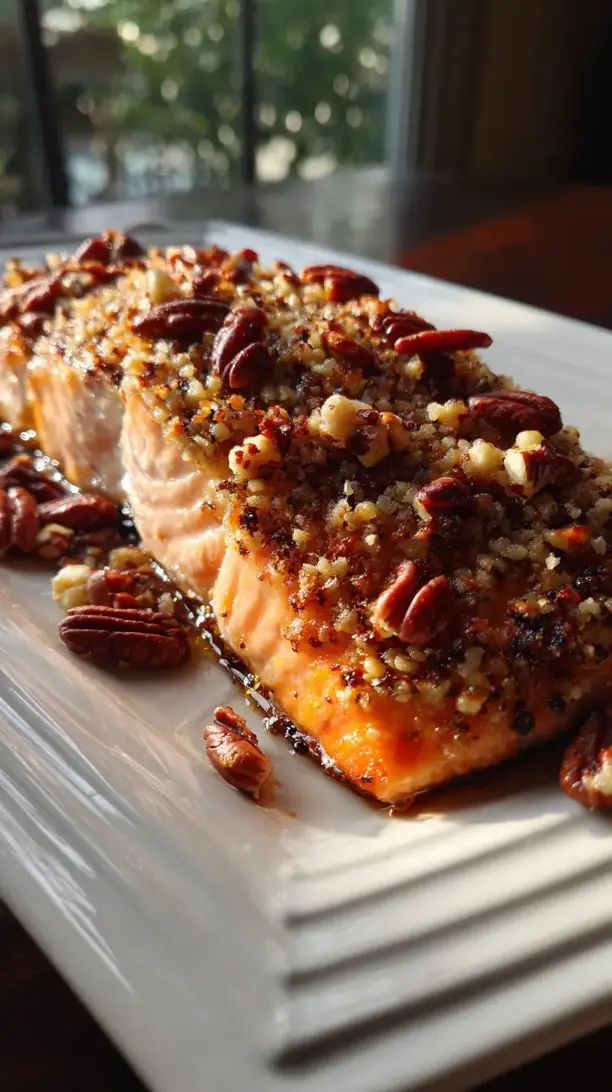
Pecan Crusted Salmon
Make this easy Pecan Crusted Salmon recipe for a flavorful, impressive dinner in under 30 minutes. Get the simple steps for a perfect crispy crust and tender fish!
Ingredients
For the Ingredients
-
4 salmon fillets (6-ounce, skin-on or skinless)
-
1 cup raw pecans
-
2 tablespoons maple syrup or light brown sugar
-
1 tablespoon Dijon mustard
-
1 tablespoon olive oil
-
1 teaspoon fresh thyme leaves (or ½ teaspoon dried)
-
½ teaspoon garlic powder
-
½ teaspoon smoked paprika
-
¼ teaspoon salt (or to taste)
-
¼ teaspoon black pepper
-
1 tablespoon chopped fresh parsley (for garnish)
Instructions
-
Preheat your oven to 400°F (200°C). Line a rimmed baking sheet with parchment paper for easy cleanup. Pat the salmon fillets completely dry with paper towels—this is a crucial step for getting a nice sear and helping the crust stick. Place them on the prepared baking sheet, skin-side down if they have skin.01
-
Now, let's make that incredible crust. Add the raw pecans to the bowl of a food processor. Pulse them 8-10 times until they resemble coarse sand with a few larger pecan pieces for texture. You don't want pecan dust; a little texture is wonderful here. If you don't have a processor, you can chop them by hand until they're finely chopped but not powdery.02
-
In a small bowl, whisk together the maple syrup (or brown sugar), Dijon mustard, olive oil, thyme, garlic powder, smoked paprika, salt, and pepper. This is your flavor-packed wet mixture. It should look glossy and smell absolutely amazing—savory, sweet, and herby all at once.03
-
Pour this wet mixture over the chopped pecans in a separate bowl. Use a fork to mix everything together until the pecans are evenly coated and the mixture holds together when pinched. It should have the consistency of a coarse, damp sand. This is your pecan crust.04
-
Divide the pecan mixture evenly among the tops of the salmon fillets. Use your fingers or the back of a spoon to gently press the crust onto the salmon, creating an even layer that covers the entire surface. Pressing firmly helps ensure the crust doesn't fall off during baking.05
-
Place the baking sheet in the preheated oven. Bake for 12-15 minutes. The exact time will depend on the thickness of your fillets. You're looking for the pecan crust to be a deep golden brown and for the salmon to be opaque and flake easily with a fork at its thickest part.06
-
For an extra-crispy top, you can switch your oven to a high broil for the last 1-2 minutes of cooking. Watch it like a hawk during this time to prevent the nuts from burning! The crust will become even more fragrant and beautifully browned.07
-
Once out of the oven, let the salmon rest on the baking sheet for 2-3 minutes. This allows the juices to redistribute, ensuring a moist result. Just before serving, sprinkle with the fresh chopped parsley for a pop of color and freshness.08