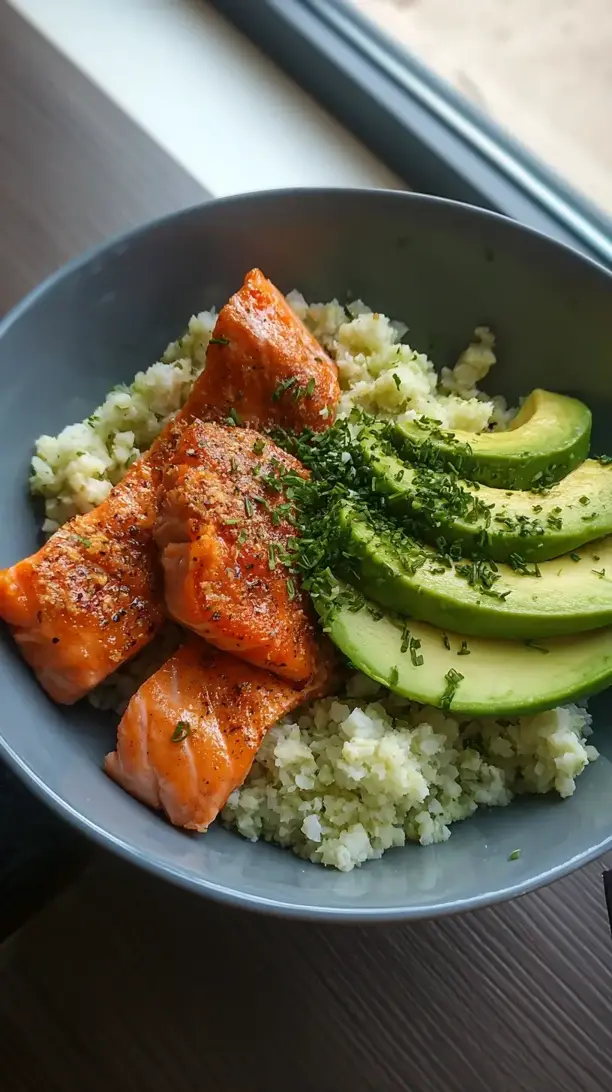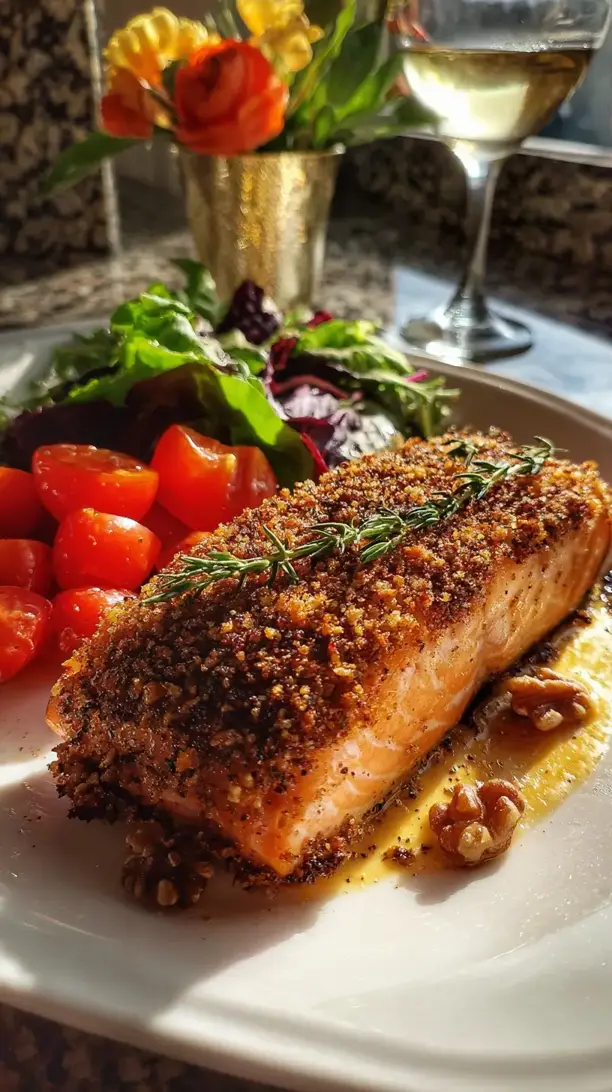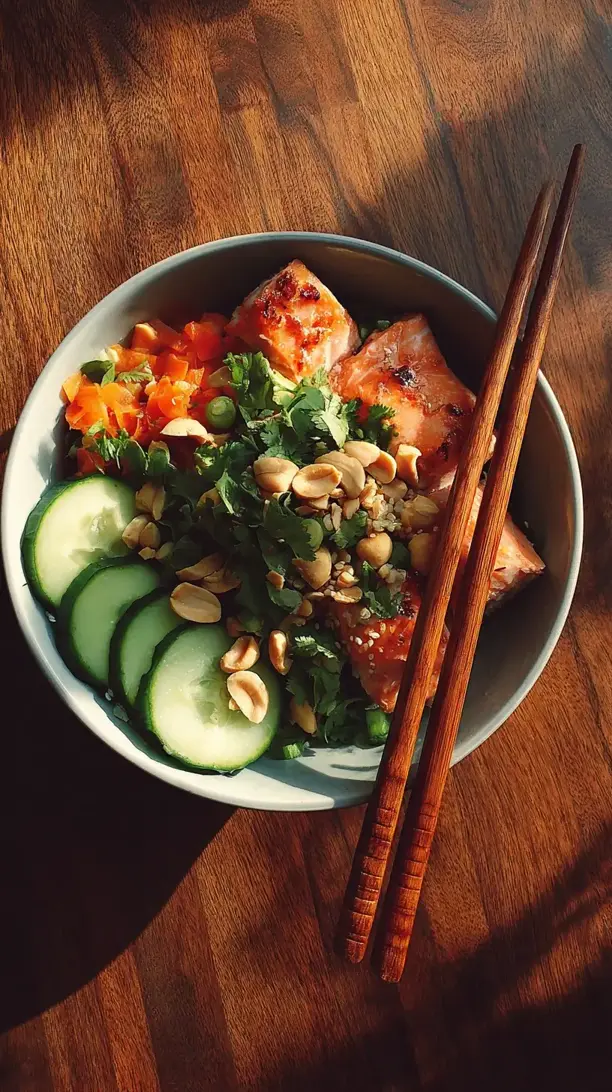

This low-carb salmon dinner is an elegant yet effortless meal that comes together in about 30 minutes. Perfectly cooked salmon and roasted asparagus are finished with a bright lemon-herb butter sauce for a complete, satisfying plate. It’s a nutritious and delicious option for busy weeknights or last-minute guests.
Why You’ll Love This Low-Carb Salmon Dinner
- Fast & Foolproof: Ready in 30 minutes with straightforward steps.
- Winner Flavors: Rich salmon balanced by zesty lemon and fresh herbs.
- Balanced Plate: Packed with healthy fats, protein, and fiber.
- Minimal Cleanup: Uses mostly one sheet pan and one skillet.
Ingredients & Tools
- 2 salmon fillets (about 150-180 g each), skin-on or skinless
- 1 large bunch asparagus (about 250 g), woody ends trimmed
- 2 tbsp olive oil, divided
- 3 tbsp unsalted butter
- 2 cloves garlic, minced
- 1 lemon (you’ll use juice and zest)
- 1 tbsp fresh dill, chopped
- 1 tbsp fresh parsley, chopped
- ¼ tsp red pepper flakes (optional, for a little heat)
- Salt and black pepper to taste
Tools: A large sheet pan, a medium skillet, microplane or zester, tongs
Notes: Don’t sweat missing an herb or two—the core is salmon and lemon. Fresh herbs make a world of difference.
Nutrition (per serving)
| Calories: | 485 kcal |
| Protein: | 35 g |
| Fat: | 36 g |
| Carbs: | 8 g |
| Fiber: | 4 g |
Serves: 2 | Prep Time: 10 minutes | Cook Time: 20 minutes | Total Time: 30 minutes
Before You Start: Tips & Ingredient Notes
- Bring your salmon to room temperature. This is a small step with a big impact. Taking the chill off the fish for 10-15 minutes before cooking helps it cook more evenly, preventing a cold center and an overcooked exterior.
- Don’t skip drying the salmon. Use a paper towel to pat the fillets completely dry. A dry surface is the secret to getting that beautifully seared, crispy crust instead of a steamed, pale one.
- How to trim asparagus the easy way. Hold one spear at each end and bend it until it snaps. It will naturally break at the point where the tough, woody part ends and the tender part begins. Use that as a guide to trim the rest of the bunch with a knife.
- Zest your lemon before you juice it. It is infinitely easier to zest a whole, firm lemon than a juiced, floppy one. Trust me on this—it’s a tiny logistical win that makes the process smoother.
How to Make Low-Carb Salmon Dinner
Step 1: Preheat your oven to 200°C (400°F). This high heat is perfect for getting our asparagus nicely roasted and tender-crisp. While it’s heating, place your trimmed asparagus on the sheet pan. Drizzle with one tablespoon of the olive oil, and season generously with salt and pepper. Toss them with your hands to make sure every spear is lightly coated. You’ll hear a satisfying sizzle when they hit the hot pan later.
Step 2: Pat your salmon fillets completely dry with paper towels. This is non-negotiable for a good sear! Season both sides liberally with salt and pepper. Heat the remaining tablespoon of olive oil in your skillet over medium-high heat. Once the oil is shimmering—you can test it by flicking a tiny drop of water in, and it should sizzle—carefully place the salmon in the pan, presentation-side down. If the fillets have skin, place them skin-side up.
Step 3: Now, don’t touch it! Let the salmon sear for 4-6 minutes, depending on thickness. You’re looking for a golden-brown crust that releases easily from the pan. You can peek by gently lifting a corner. When it’s nicely colored, flip the fillets. At this point, slide your sheet pan with the asparagus into the preheated oven. They’ll roast for about 12-15 minutes while you finish the salmon and sauce.
Step 4: Cook the salmon on the second side for just 1-2 minutes to heat it through. For medium, you want the center to still be a little translucent. Then, remove the salmon from the skillet and set it aside on a clean plate. It will carry over cook a bit more, so it’s better to err on the side of underdone here.
Step 5: Reduce the heat to medium-low and add the butter to the same skillet. Let it melt and foam slightly. Add the minced garlic and the optional red pepper flakes, swirling the pan constantly for about 30-60 seconds until the garlic is fragrant but not browned. Burnt garlic tastes bitter, so keep it moving!
Step 6: Turn off the heat. Stir in the fresh dill, parsley, the zest of the entire lemon, and the juice from half of it. Swirl the pan to combine everything into a beautiful, emulsified sauce. Taste it—this is your moment to adjust. Does it need more salt? A squeeze more lemon? This sauce should be bright, herby, and rich all at once.
Step 7: By now, your asparagus should be tender and lightly charred. Pull the sheet pan from the oven. To serve, divide the asparagus between two plates, place a salmon fillet on top, and generously spoon the warm lemon-herb butter sauce over everything. Finish with a final crack of black pepper and maybe an extra sprinkle of fresh herbs for a pop of color.
Storage & Freshness Guide
- Fridge: Store leftovers in an airtight container for up to 2 days.
- Freezer: Freeze cooked salmon and asparagus separately for up to 1 month.
- Reviving: Reheat gently in a skillet over low heat or in a 300°F oven until warm.
Serving Suggestions
Complementary Dishes
- Cauliflower Mash — Its creamy, neutral flavor is the perfect pillow for the salmon and a wonderful vehicle for that extra lemon butter sauce.
- A Simple Arugula Salad — Tossed with a light vinaigrette, the peppery arugula provides a fresh, crisp contrast to the rich, warm salmon.
- Sautéed Mushrooms — Their deep, earthy umami flavor complements the salmon beautifully and adds another layer of texture to the plate.
Drinks
- A Crisp Sauvignon Blanc — The wine’s citrusy and grassy notes mirror the flavors in the dish, creating a harmonious pairing that cleanses the palate.
- Sparkling Water with Lemon — For a non-alcoholic option, the bubbles and citrus are incredibly refreshing and highlight the lemony aspects of the meal.
- An Unoaked Chardonnay — This wine has enough body to stand up to the salmon but won’t overpower the delicate herb and lemon sauce.
Something Sweet
- Mixed Berry Compote — Gently warmed berries with a hint of vanilla make a light, tart, and fruity dessert that feels like a natural, refreshing endnote.
- Dark Chocolate Squares — A few pieces of high-cocoa dark chocolate are a simple, sophisticated way to finish the meal without feeling too heavy.
- Lemon Sorbet — It’s a continuation of the citrus theme, but in a cool, clean, and palate-cleansing form that feels incredibly light.
Top Mistakes to Avoid
- Mistake: Overcrowding the skillet. If you’re doubling the recipe, cook the salmon in batches. Crowding the pan steams the fish instead of searing it, and you’ll end up with a pale, soft exterior instead of that gorgeous crust.
- Mistake: Overcooking the salmon. Salmon continues to cook after it’s removed from the heat (carryover cooking). It’s better to take it off the heat when it’s still a bit translucent in the very center—it will firm up to perfect doneness as it rests.
- Mistake: Burning the garlic. Garlic goes from golden and fragrant to bitter and burnt in seconds. Always add it to butter over low or off heat, and keep it moving. If it burns, it’s best to wipe the pan and start the sauce over.
- Mistake: Skipping the rest for the salmon. Letting the salmon sit for a couple of minutes after cooking allows the juices to redistribute throughout the fillet. If you cut into it immediately, all those flavorful juices will just run out onto the plate.
Expert Tips
- Tip: Use the back of a spoon to baste the salmon. After you flip the salmon, tilt the skillet and use a spoon to continuously pour the hot butter and oil over the top of the fillets. This basting technique gently cooks the top side, resulting in an unbelievably moist and flavorful piece of fish.
- Tip: Get creative with your herbs. While dill and parsley are classic, don’t be afraid to use what you have. Fresh tarragon, chives, or even a little thyme would be fantastic here. Just stick with soft, fresh herbs for the best flavor and texture in the sauce.
- Tip: Add capers for a briny punch. If you love a salty, briny flavor, toss a tablespoon of drained capers into the butter sauce along with the garlic. They fry up slightly and add a wonderful burst of flavor that cuts through the richness.
- Tip: Score the salmon skin. If you’re using skin-on fillets, take a sharp knife and make a few shallow slashes through the skin (but not into the flesh) before seasoning. This prevents the skin from curling up dramatically in the pan, giving you a flat, evenly crispy surface.
FAQs
Can I use frozen salmon for this recipe?
Absolutely, you can! The key is to thaw it properly. The best method is to move it from the freezer to the refrigerator the night before. If you’re in a pinch, seal it in a plastic bag and submerge it in cold water, changing the water every 30 minutes. Just be extra diligent about patting it completely dry with paper towels before seasoning and cooking, as frozen fish tends to release more moisture.
What other vegetables can I use instead of asparagus?
This method is wonderfully versatile. Broccoli florets, green beans, halved Brussels sprouts, or even zucchini spears would all work beautifully. Just keep an eye on the roasting time—denser veggies like broccoli and Brussels sprouts might need a few extra minutes, while softer ones like zucchini will cook faster. The goal is tender-crisp.
How can I tell when the salmon is done cooking?
The most reliable method is to use the tip of a small knife or a cake tester. Gently insert it into the thickest part of the fillet, then hold it there for 3 seconds. Pull it out and touch it to your lip or wrist—it should feel very warm. Alternatively, the salmon should flake easily with a fork and the center should be opaque but still moist. Remember, it keeps cooking off the heat!
Is it okay to make the sauce ahead of time?
You can prep the components—mince the garlic, chop the herbs, zest and juice the lemon—a few hours ahead. But I’d strongly recommend making the sauce fresh, right before serving. Butter sauces can separate or become greasy if made in advance and reheated. It comes together in just a couple of minutes in the same pan, so it’s really best done at the last moment.
My sauce broke and looks oily. Can I fix it?
Don’t worry, this happens to the best of us! The most common cause is too much heat. First, take the pan off the heat entirely. Then, add a teaspoon of cold water or lemon juice and whisk vigorously. The shock of the cold liquid can often bring the emulsion back together. If that doesn’t work, it will still taste delicious, even if it’s not perfectly glossy.

Low Carb Salmon Dinner
Make this easy Low-Carb Salmon Dinner in just 30 minutes! Featuring roasted asparagus and a zesty lemon sauce. Get the healthy, delicious recipe now!
Ingredients
For the main ingredients
-
2 salmon fillets (about 150-180 g each, skin-on or skinless)
-
1 large bunch asparagus (about 250 g, woody ends trimmed)
-
2 tbsp olive oil (divided)
-
3 tbsp unsalted butter
-
2 cloves garlic (minced)
-
1 lemon (you'll use juice and zest)
-
1 tbsp fresh dill (chopped)
-
1 tbsp fresh parsley (chopped)
-
¼ tsp red pepper flakes (optional, for a little heat)
-
Salt and black pepper (to taste)
Instructions
-
Preheat your oven to 200°C (400°F). While it's heating, place your trimmed asparagus on the sheet pan. Drizzle with one tablespoon of the olive oil, and season generously with salt and pepper. Toss them with your hands to make sure every spear is lightly coated.01
-
Pat your salmon fillets completely dry with paper towels. Season both sides liberally with salt and pepper. Heat the remaining tablespoon of olive oil in your skillet over medium-high heat. Once the oil is shimmering, carefully place the salmon in the pan, presentation-side down. If the fillets have skin, place them skin-side up.02
-
Let the salmon sear for 4-6 minutes, depending on thickness. When it's nicely colored, flip the fillets. At this point, slide your sheet pan with the asparagus into the preheated oven. They'll roast for about 12-15 minutes while you finish the salmon and sauce.03
-
Cook the salmon on the second side for just 1-2 minutes to heat it through. Then, remove the salmon from the skillet and set it aside on a clean plate.04
-
Reduce the heat to medium-low and add the butter to the same skillet. Let it melt and foam slightly. Add the minced garlic and the optional red pepper flakes, swirling the pan constantly for about 30-60 seconds until the garlic is fragrant but not browned.05
-
Turn off the heat. Stir in the fresh dill, parsley, the zest of the entire lemon, and the juice from half of it. Swirl the pan to combine everything into a beautiful, emulsified sauce. Taste it to adjust seasoning.06
-
By now, your asparagus should be tender and lightly charred. Pull the sheet pan from the oven. To serve, divide the asparagus between two plates, place a salmon fillet on top, and generously spoon the warm lemon-herb butter sauce over everything.07