
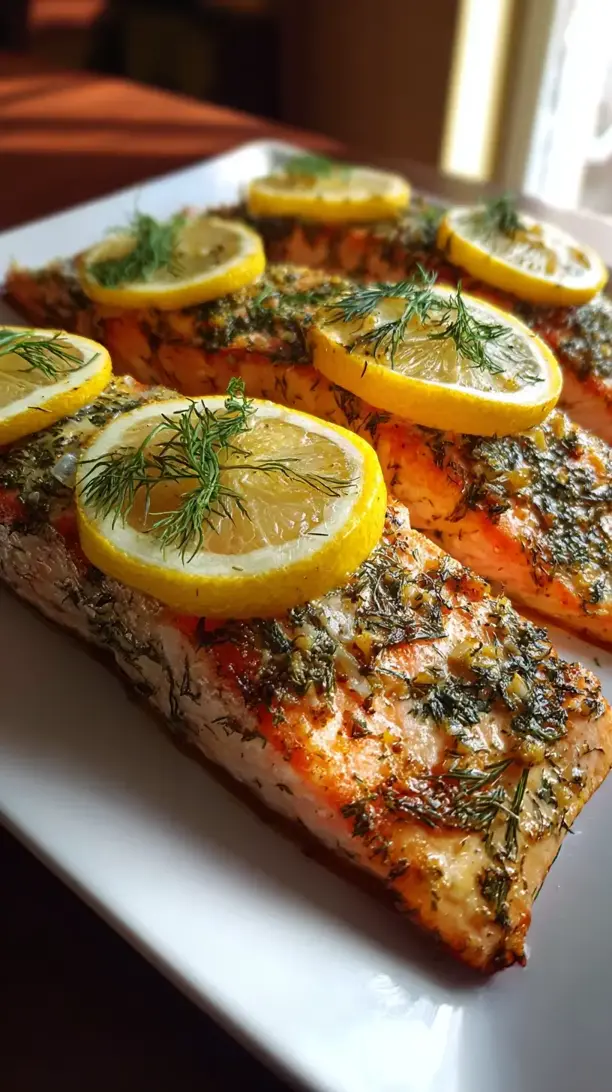
This Lemon Dill Salmon is an elegant yet effortless meal that comes together in under 30 minutes. Tender salmon fillets are bathed in a vibrant, herby sauce with bright citrus notes. It’s a classic combination that feels special any night of the week.
Why You’ll Love This Lemon Dill Salmon
- Quick & easy: Ready in about 25 minutes with mostly hands-off baking.
- Bright & refreshing: Zesty lemon and fresh dill balance the rich salmon perfectly.
- Versatile for any occasion: Equally perfect for a simple family dinner or a dressed-up meal.
- Wholesome ingredients: Packed with fresh herbs, lean protein, and healthy fats.
Ingredients & Tools
- 4 salmon fillets (about 150–180 g each), skin-on or skinless
- 2 tbsp olive oil
- 3 cloves garlic, minced
- 1 large lemon (juice and zest)
- 3 tbsp fresh dill, finely chopped
- 1 tbsp honey or maple syrup
- 1 tsp Dijon mustard
- ½ tsp smoked paprika
- Salt and black pepper to taste
- 2 tbsp unsalted butter, cut into small cubes (optional, for extra richness)
- Lemon slices for garnish
Tools: Baking sheet, parchment paper, small mixing bowl, zester or fine grater, brush (optional)
Notes: Fresh dill is recommended over dried for the best flavor. Don’t skip the lemon zest—it adds a fragrant citrus aroma.
Nutrition (per serving)
| Calories: | 320 kcal |
| Protein: | 28 g |
| Fat: | 20 g |
| Carbs: | 6 g |
| Fiber: | 1 g |
Serves: 4 | Prep Time: 10 minutes | Cook Time: 15 minutes | Total Time: 25 minutes
Before You Start: Tips & Ingredient Notes
- Choose the right salmon. Look for fillets that are evenly thick, with a vibrant pink-orange color and firm texture. If they’re too thin on one end, they might overcook—so try to pick similarly sized pieces.
- Don’t skip the zest. The lemon zest is packed with essential oils that give the sauce an incredible fragrance. Use a fine grater or microplane, and be careful not to grate the bitter white pith underneath.
- Fresh dill vs. dried dill. While you can use dried dill in a pinch, fresh dill has a brighter, more delicate flavor that really shines here. If you must substitute, use one-third the amount of dried.
- Butter is optional but recommended. Adding a few small cubes of butter to the sauce just before baking gives the dish a lovely, glossy finish and a touch of richness. You can skip it if you prefer, but it really elevates the flavor.
- Pat the salmon dry. Before seasoning, use a paper towel to pat the salmon fillets dry. This helps the seasoning stick and ensures a nicely seared surface if you’re pan-searing first.
How to Make Lemon Dill Salmon
Step 1: Preheat your oven to 200°C (400°F) and line a baking sheet with parchment paper. While the oven heats up, pat the salmon fillets dry with a paper towel—this helps the marinade cling to the surface and promotes even cooking. Season both sides of the salmon lightly with salt and black pepper. You’ll notice that a little seasoning now goes a long way in enhancing the natural flavor of the fish.
Step 2: In a small bowl, combine the olive oil, minced garlic, lemon juice, lemon zest, chopped dill, honey, Dijon mustard, and smoked paprika. Whisk everything together until the mixture is smooth and well-blended. The sauce should look glossy and smell incredibly fragrant—you’ll get hints of citrus, garlic, and herbs all mingling together. Taste it and adjust the seasoning if needed; if it’s too tangy, add a touch more honey.
Step 3: Arrange the salmon fillets on the prepared baking sheet, skin-side down if they have skin. Using a spoon or a brush, generously coat the top and sides of each fillet with the lemon-dill sauce. Make sure every nook and cranny is covered—this is what gives the salmon its incredible flavor and keeps it moist during baking.
Step 4: If you’re using butter, scatter the small cubes over the top of the salmon fillets. Then, place a couple of thin lemon slices on each piece for garnish. The lemon slices will caramelize slightly in the oven, adding both visual appeal and an extra burst of citrus flavor.
Step 5: Bake the salmon for 12–15 minutes, depending on the thickness of your fillets. The salmon is done when it flakes easily with a fork and has an internal temperature of 63°C (145°F). Be careful not to overcook it—you want the center to remain tender and juicy. When it’s ready, remove it from the oven and let it rest for 2–3 minutes before serving. This allows the juices to redistribute, ensuring every bite is perfectly moist.
Storage & Freshness Guide
- Fridge: Store leftovers in an airtight container for up to 2 days.
- Freezer: Freeze cooked salmon in a sealed bag for up to 1 month. Thaw in fridge before reheating.
- Reviving: Reheat gently in a covered skillet with a splash of water or broth to keep moist.
Serving Suggestions
Complementary Dishes
- Garlic roasted asparagus — The earthy, slightly crisp asparagus balances the lemony salmon beautifully, and it can roast in the oven at the same time.
- Herbed quinoa or couscous — A light, fluffy grain soaks up the extra sauce from the salmon, making every bite even more delicious.
- Creamy mashed potatoes — For a cozier meal, the richness of the potatoes contrasts wonderfully with the bright, zesty salmon.
Drinks
- Sauvignon Blanc — Its crisp, citrusy notes mirror the lemon in the dish and cleanse the palate between bites.
- Sparkling water with cucumber and mint — A refreshing, non-alcoholic option that highlights the herby freshness of the dill.
- Light-bodied Pinot Noir — If you prefer red wine, a fruity, low-tannin Pinot won’t overpower the delicate flavors of the salmon.
Something Sweet
- Lemon sorbet — A light, tangy dessert that continues the citrus theme without feeling too heavy after the meal.
- Almond biscotti — The subtle nuttiness and crunch provide a lovely contrast to the soft, flaky texture of the salmon.
- Berry pavlova — The sweet-tart berries and airy meringue make for a show-stopping finish that feels special yet simple.
Top Mistakes to Avoid
- Overcooking the salmon. Salmon continues to cook a bit after it comes out of the oven, so take it out when it’s just slightly under your desired doneness. Overcooked salmon becomes dry and tough—a real shame when it starts out so juicy.
- Using bottled lemon juice. Freshly squeezed lemon juice has a brighter, more complex flavor compared to bottled versions, which can taste flat and overly acidic. Trust me, the extra effort is worth it.
- Skipping the rest time. Letting the salmon rest for a few minutes after baking allows the juices to settle, resulting in a more tender and flavorful bite. Cutting into it right away can cause those precious juices to run out.
- Not tasting the sauce before using it. The sauce is the star of the show, so give it a quick taste and adjust the
Lemon Dill Salmon
Make perfect Lemon Dill Salmon in under 30 minutes! This easy, healthy recipe features tender fish with a zesty lemon dill sauce. Get the simple steps here!
Ingredients
For the Ingredients
-
4 salmon fillets (about 150–180 g each, skin-on or skinless)
-
2 tbsp olive oil
-
3 cloves garlic (minced)
-
1 large lemon (juice and zest)
-
3 tbsp fresh dill (finely chopped)
-
1 tbsp honey or maple syrup
-
1 tbsp Dijon mustard
-
0.5 tsp smoked paprika
-
Salt and black pepper (to taste)
-
2 tbsp unsalted butter (cut into small cubes, optional, for extra richness)
-
Lemon slices (for garnish)
Instructions
-
Preheat your oven to 200°C (400°F) and line a baking sheet with parchment paper. While the oven heats up, pat the salmon fillets dry with a paper towel—this helps the marinade cling to the surface and promotes even cooking. Season both sides of the salmon lightly with salt and black pepper. You’ll notice that a little seasoning now goes a long way in enhancing the natural flavor of the fish.01
-
In a small bowl, combine the olive oil, minced garlic, lemon juice, lemon zest, chopped dill, honey, Dijon mustard, and smoked paprika. Whisk everything together until the mixture is smooth and well-blended. The sauce should look glossy and smell incredibly fragrant—you’ll get hints of citrus, garlic, and herbs all mingling together. Taste it and adjust the seasoning if needed; if it’s too tangy, add a touch more honey.02
-
Arrange the salmon fillets on the prepared baking sheet, skin-side down if they have skin. Using a spoon or a brush, generously coat the top and sides of each fillet with the lemon-dill sauce. Make sure every nook and cranny is covered—this is what gives the salmon its incredible flavor and keeps it moist during baking.03
-
If you’re using butter, scatter the small cubes over the top of the salmon fillets. Then, place a couple of thin lemon slices on each piece for garnish. The lemon slices will caramelize slightly in the oven, adding both visual appeal and an extra burst of citrus flavor.04
-
Bake the salmon for 12–15 minutes, depending on the thickness of your fillets. The salmon is done when it flakes easily with a fork and has an internal temperature of 63°C (145°F). Be careful not to overcook it—you want the center to remain tender and juicy. When it’s ready, remove it from the oven and let it rest for 2–3 minutes before serving. This allows the juices to redistribute, ensuring every bite is perfectly moist.05