
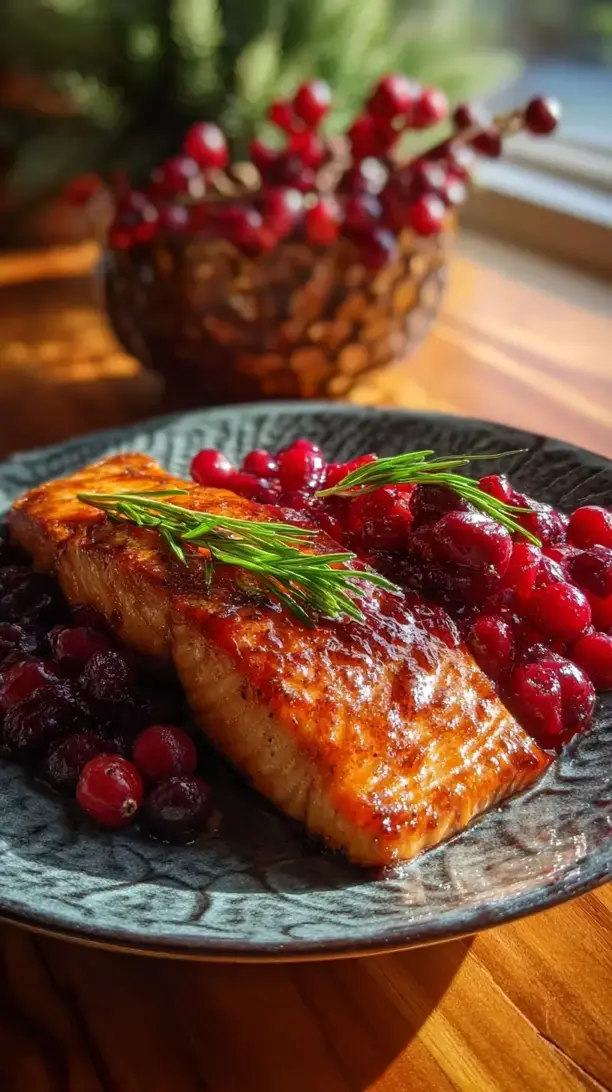
This Cranberry Glazed Salmon recipe is a festive yet simple weeknight dinner that comes together in under 30 minutes. The sweet-tart cranberry glaze creates a gorgeous, glossy crust on rich, flaky salmon. It’s a crowd-pleasing dish that proves simple ingredients can create something special.
Why You’ll Love This Cranberry Glazed Salmon
- Surprisingly Simple: Elegant but straightforward, ready in under 30 minutes.
- Perfect Flavor Balance: Tart cranberry, maple sweetness, and savory depth.
- Incredibly Versatile: Fits holiday feasts or casual weeknights.
- Total Crowd-Pleaser: Beautiful color and restaurant-quality presentation.
Ingredients & Tools
- 4 (6-ounce/170 g) salmon fillets, skin-on or skinless
- 1 tablespoon (15 ml) olive oil
- 1 cup (100 g) fresh or frozen cranberries
- 1/3 cup (80 ml) pure maple syrup
- 2 tablespoons (30 ml) soy sauce (or tamari for gluten-free)
- 1 tablespoon (15 ml) balsamic vinegar
- 2 cloves garlic, minced
- 1 teaspoon freshly grated ginger
- 1/4 teaspoon black pepper
- 1/4 cup (60 ml) water
- 1 tablespoon chopped fresh rosemary or thyme (optional, for garnish)
Tools: A medium saucepan, a baking sheet, parchment paper or a silicone baking mat, and a small whisk or fork.
Notes: Using fresh cranberries when in season is fantastic, but frozen work just as well—no need to thaw. Don’t skip the fresh ginger and garlic; they provide a crucial aromatic base.
Nutrition (per serving)
| Calories: | 345 kcal |
| Protein: | 35 g |
| Fat: | 14 g |
| Carbs: | 18 g |
| Fiber: | 1 g |
Serves: 4 | Prep Time: 10 minutes | Cook Time: 20 minutes | Total Time: 30 minutes
Before You Start: Tips & Ingredient Notes
- Salmon Selection Matters. Try to find fillets that are similar in thickness so they cook at the same rate. I prefer skin-on for this recipe as the skin gets wonderfully crisp and protects the flesh, but skinless works perfectly too.
- Embrace the Cranberry Texture. The cranberries will burst and break down as they cook, creating a rustic, jam-like glaze. If you prefer a completely smooth glaze, you can press it through a fine-mesh sieve after cooking, but I love the little pops of fruit.
- Don’t Sub the Maple Syrup. Honey can be used in a pinch, but pure maple syrup gives a deeper, less cloying sweetness that pairs exceptionally well with the cranberries. The flavor profile is just… better.
- Pat Your Salmon Dry. This is a small but crucial step! Use a paper towel to thoroughly pat the salmon fillets dry before seasoning. This helps the exterior sear and caramelize instead of steam, giving you a much nicer texture.
How to Make Cranberry Glazed Salmon
Step 1: Preheat your oven to 400°F (200°C). Line a baking sheet with parchment paper for easy cleanup. Pat the salmon fillets completely dry with paper towels—this is your secret for a perfect sear, not a steam. Drizzle the olive oil over the fillets and rub it in, then season both sides generously with a little salt and the black pepper. Arrange them on the prepared baking sheet, spaced evenly apart.
Step 2: Now, let’s make that glorious glaze. In a medium saucepan, combine the cranberries, maple syrup, soy sauce, balsamic vinegar, minced garlic, grated ginger, and water. Give it a good stir to combine everything. Bring the mixture to a lively simmer over medium-high heat, then immediately reduce the heat to maintain a gentle bubble.
Step 3: Cook the glaze for 10-12 minutes, stirring occasionally. You’ll hear the cranberries start to pop and sizzle—that’s exactly what you want! The mixture will slowly thicken and reduce. Once it’s thickened to a syrupy consistency that coats the back of a spoon, take it off the heat. It will continue to thicken as it cools, so don’t over-reduce it. Give it a taste; it should be a beautiful balance of tart, sweet, and savory.
Step 4: While the glaze is simmering, place the seasoned salmon in the preheated oven. Roast for about 12-15 minutes, depending on the thickness of your fillets. You’re aiming for salmon that is just opaque and flakes easily with a fork. For medium-rare, aim for the lower end of that time.
Step 5: About halfway through the salmon’s cooking time, at around the 6-7 minute mark, carefully pull the baking sheet out of the oven. Use a spoon or a pastry brush to generously coat the top of each fillet with the cranberry glaze. Be liberal here—this is where the flavor magic happens. Return the pan to the oven to finish cooking.
Step 6: For a final caramelized finish, you can switch your oven to a high broil for the last 1-2 minutes of cooking. Watch it like a hawk! The glaze will bubble and darken slightly, creating a stunning, sticky-sweet crust. Remove the salmon from the oven the moment it’s done to your liking.
Step 7: Let the salmon rest for a couple of minutes on the baking sheet before serving. This allows the juices to redistribute. Right before serving, drizzle with any remaining warm glaze from the saucepan and sprinkle with fresh rosemary or thyme if you’re using it. The final dish should be glossy, fragrant, and impossible to resist.
Storage & Freshness Guide
- Fridge: Store leftover salmon in an airtight container for up to 2 days.
- Freezer: Freeze unglazed, cooked salmon for up to 1 month; glaze is best fresh.
- Reviving: Reheat gently in a 300°F (150°C) oven to prevent drying out.
Serving Suggestions
Complementary Dishes
- Garlic Mashed Potatoes — The creamy, savory potatoes are the ultimate backdrop for the tangy, rich salmon. They soak up every last drop of the extra glaze on the plate.
- Simple Roasted Asparagus — Toss asparagus spears with olive oil, salt, and pepper and roast them on the same pan as the salmon during the last 10 minutes of cook time for a truly easy side.
- Quinoa Pilaf with Herbs — A light, fluffy quinoa pilaf with parsley and lemon zest adds a wholesome, nutritious element that complements the salmon without overpowering it.
Drinks
- A Crisp Pinot Gris — This white wine has enough acidity to cut through the richness of the salmon and enough fruitiness to echo the cranberry notes beautifully.
- Sparkling Water with Citrus — For a non-alcoholic option, nothing beats the clean, bubbly contrast of sparkling water with a squeeze of fresh lime or orange.
- A Light-Bodied Pale Ale — The slight bitterness and carbonation in a pale ale can cleanse the palate between bites, making each mouthful taste fresh and new.
Something Sweet
- Lemon Sorbet — After the rich salmon, a scoop of bright, palate-cleansing lemon sorbet is the perfect, refreshing finish to the meal.
- Dark Chocolate Bark with Sea Salt — A few pieces of sophisticated dark chocolate bark provide a bittersweet ending that doesn’t feel too heavy.
- Pears Poached in Red Wine — For a more elegant dessert, these spiced, wine-poached pears continue the fruity theme in a warm and comforting way.
Top Mistakes to Avoid
- Mistake: Overcooking the Salmon. Salmon continues to cook after it comes out of the oven (carryover cooking). If you wait until it’s completely opaque in the center on the stove, it will be dry by the time it gets to the table. Pull it out when it’s still slightly translucent in the very center.
- Mistake: Not Reducing the Glaze Enough. If your glaze is too thin, it will just run off the salmon. You want it to be the consistency of warm honey so it clings beautifully. I’ve messed this up before too, and it makes all the difference.
- Mistake: Using Sweetened Cranberry Sauce. This recipe relies on the tartness of fresh or frozen cranberries. Using canned jellied sauce will make the dish cloyingly sweet and ruin the sophisticated flavor balance we’re going for.
- Mistake: Skipping the Broiling Step. That final minute under the broiler isn’t just for color—it caramelizes the sugars in the glaze, creating a deeper, more complex flavor and a wonderful textural contrast. Don’t skip it!
Expert Tips
- Tip: Make a Double Batch of Glaze. This cranberry glaze is so good you’ll want extra. Make a double portion and keep it in a jar in the fridge for up to a week. It’s incredible on roasted chicken, pork chops, or even as a spread for a turkey sandwich.
- Tip: Grate Your Ginger with a Microplane. This ensures you get all the flavorful juice and no stringy bits in your smooth glaze. It’s a tiny detail that makes a big difference in the final texture.
- Tip: Let the Salmon Come to Room Temp. Take the salmon out of the fridge 15-20 minutes before cooking. This helps it cook more evenly, preventing an overcooked outside and a cold, undercooked center.
- Tip: Use the Glaze as a Marinade. For an even deeper flavor, reserve a quarter of the glaze (before simmering) and let the salmon marinate in it for 30 minutes in the fridge before patting dry and proceeding with the recipe.
FAQs
Can I use dried cranberries instead of fresh?
I wouldn’t recommend it for the glaze itself. Dried cranberries are often sweetened and won’t break down to create the same saucy, jam-like consistency. They also lack the bright, tart punch that fresh or frozen berries provide. If you’re in a real bind, you could try rehydrating them in hot water first, but the result won’t be nearly as good.
How do I know when the salmon is perfectly cooked?
The best method is to use the tip of a sharp knife to peek into the thickest part of the fillet. The flesh should be opaque and flake easily, but still look moist. For a more precise method, an instant-read thermometer inserted into the thickest part should read 125°F (52°C) for medium-rare or 135°F (57°C) for medium. Remember, it will continue to cook after you take it out!
Can I make this recipe ahead of time?
You can absolutely make the glaze up to 3 days ahead of time—just store it in an airtight container in the fridge and gently reheat it before using. I don’t recommend glazing and cooking the salmon ahead, as it’s best served fresh from the oven. However, you can pat the salmon dry and season it, then keep it covered on a plate in the fridge for a few hours before cooking.
What can I use if I don’t have maple syrup?
While maple syrup is ideal, you can substitute with an equal amount of honey. The flavor will be different—lighter and more floral—but still delicious. Agave nectar is another good alternative. Just avoid using thick, overly processed pancake syrups as they can make the glaze taste artificial.
Is it okay if my glaze is a bit chunky?
Absolutely! In fact, I prefer it that way. The little bursts of softened cranberry and bits of garlic and ginger add wonderful texture and bursts of flavor. If you’re serving someone who prefers completely smooth sauces, you can simply blend the finished glaze with an immersion blender or press it through a fine-mesh sieve.
Cranberry Glazed Salmon
Make this easy Cranberry Glazed Salmon in under 30 minutes for a stunning, flavorful dinner. Perfect for holidays or weeknights. Get the simple recipe now!
Ingredients
For the salmon and glaze:
-
4 6-ounce salmon fillets (skin-on or skinless)
-
1 tablespoon olive oil
-
1 cup fresh or frozen cranberries
-
1/3 cup pure maple syrup
-
2 tablespoons soy sauce (or tamari for gluten-free)
-
1 tablespoon balsamic vinegar
-
2 cloves garlic (minced)
-
1 teaspoon freshly grated ginger
-
1/4 teaspoon black pepper
-
1/4 cup water
-
1 tablespoon chopped fresh rosemary or thyme (optional, for garnish)
Instructions
-
Preheat your oven to 400°F (200°C). Line a baking sheet with parchment paper for easy cleanup. Pat the salmon fillets completely dry with paper towels—this is your secret for a perfect sear, not a steam. Drizzle the olive oil over the fillets and rub it in, then season both sides generously with a little salt and the black pepper. Arrange them on the prepared baking sheet, spaced evenly apart.01
-
Now, let’s make that glorious glaze. In a medium saucepan, combine the cranberries, maple syrup, soy sauce, balsamic vinegar, minced garlic, grated ginger, and water. Give it a good stir to combine everything. Bring the mixture to a lively simmer over medium-high heat, then immediately reduce the heat to maintain a gentle bubble.02
-
Cook the glaze for 10-12 minutes, stirring occasionally. You’ll hear the cranberries start to pop and sizzle—that’s exactly what you want! The mixture will slowly thicken and reduce. Once it’s thickened to a syrupy consistency that coats the back of a spoon, take it off the heat. It will continue to thicken as it cools, so don’t over-reduce it. Give it a taste; it should be a beautiful balance of tart, sweet, and savory.03
-
While the glaze is simmering, place the seasoned salmon in the preheated oven. Roast for about 12-15 minutes, depending on the thickness of your fillets. You’re aiming for salmon that is just opaque and flakes easily with a fork. For medium-rare, aim for the lower end of that time.04
-
About halfway through the salmon’s cooking time, at around the 6-7 minute mark, carefully pull the baking sheet out of the oven. Use a spoon or a pastry brush to generously coat the top of each fillet with the cranberry glaze. Be liberal here—this is where the flavor magic happens. Return the pan to the oven to finish cooking.05
-
For a final caramelized finish, you can switch your oven to a high broil for the last 1-2 minutes of cooking. Watch it like a hawk! The glaze will bubble and darken slightly, creating a stunning, sticky-sweet crust. Remove the salmon from the oven the moment it’s done to your liking.06
-
Let the salmon rest for a couple of minutes on the baking sheet before serving. This allows the juices to redistribute. Right before serving, drizzle with any remaining warm glaze from the saucepan and sprinkle with fresh rosemary or thyme if you’re using it. The final dish should be glossy, fragrant, and impossible to resist.07