
Bourbon glazed salmon combines rich, oaky bourbon with sweet maple syrup and savory soy for a spectacular glaze. It caramelizes under high heat, creating a glossy crust that seals in moisture. This restaurant-quality dish comes together in under 30 minutes for an impressive yet easy meal.
Why You’ll Love This Bourbon Glazed Salmon
- Fast & fuss-free: Ready in about 25 minutes with minimal cleanup.
- Perfect flavor balance: Sweet, savory, and complex with bourbon, maple, and soy.
- Fancy yet approachable: Impressive for dates or holidays, easy enough for weeknights.
- Versatile glaze: Also great on chicken, pork, or roasted vegetables.
Ingredients & Tools
- 4 salmon fillets (about 6 oz / 170 g each), skin-on or skinless
- 1/4 cup bourbon
- 1/4 cup pure maple syrup
- 2 tbsp soy sauce (or tamari for gluten-free)
- 1 tbsp olive oil
- 2 cloves garlic, minced
- 1 tsp freshly grated ginger
- 1 tbsp apple cider vinegar
- 1/2 tsp smoked paprika
- 1/4 tsp black pepper
- 1 tbsp cornstarch mixed with 2 tbsp cold water (slurry, for thickening)
- 1 tbsp chopped fresh parsley or chives (for garnish)
Tools: Rimmed baking sheet, parchment paper, small saucepan, whisk, microplane or fine grater, basting brush
Notes: Use bourbon you enjoy drinking—alcohol cooks off, leaving caramel notes. Real maple syrup is essential for depth of flavor.
Nutrition (per serving)
| Calories: | 385 kcal |
| Protein: | 35 g |
| Fat: | 18 g |
| Carbs: | 15 g |
| Fiber: | 0.5 g |
Serves: 4 | Prep Time: 10 minutes | Cook Time: 15 minutes | Total Time: 25 minutes
Before You Start: Tips & Ingredient Notes
- What if I don’t have bourbon? You can substitute with an equal amount of apple cider or even a dark beer, but you’ll lose that distinctive oaky flavor. A non-alcoholic version can use 2 tbsp each of apple juice and balsamic vinegar.
- Skin-on or skinless salmon? I prefer skin-on for this recipe because it helps the fillet hold its shape and adds a lovely textural contrast once crisped up. If using skinless, just reduce the roasting time by 1-2 minutes.
- Don’t skip the cornstarch slurry. This is what gives the glaze its perfect, clingy consistency. Without it, the sauce might be too thin and run right off the salmon.
- Fresh ginger makes a difference. The jarred stuff works in a pinch, but freshly grated ginger has a brighter, more aromatic quality that really shines through in the final dish.
- Pat your salmon dry. This is crucial for getting a good sear and helping the glaze adhere. Use paper towels to thoroughly dry the fillets before seasoning.
How to Make Bourbon Glazed Salmon
Step 1: Preheat your oven to 400°F (200°C). Line a rimmed baking sheet with parchment paper—this prevents sticking and makes cleanup incredibly easy. Pat the salmon fillets completely dry with paper towels, then brush them lightly with olive oil and season with black pepper and a tiny pinch of salt (go easy, the soy sauce is salty). Place them on the prepared baking sheet, skin-side down if they have skin.
Step 2: While the oven heats, make your glaze. In a small saucepan over medium heat, combine the bourbon, maple syrup, soy sauce, minced garlic, grated ginger, apple cider vinegar, and smoked paprika. Whisk everything together and bring it to a gentle simmer. You’ll notice the aroma starting to bloom—it should smell sweet, sharp, and wonderfully complex.
Step 3: Let the mixture simmer for about 3-4 minutes, stirring occasionally. This allows the alcohol to cook off and the flavors to meld. The sauce should be slightly reduced but still quite liquid at this point. Now, give your cornstarch and water mixture another quick stir (it settles fast) and slowly drizzle it into the simmering glaze while whisking constantly.
Step 4: Continue whisking for about 1-2 minutes until the glaze thickens noticeably. It should coat the back of a spoon and look glossy. Once thickened, remove it from the heat immediately—overcooking can make it gummy. You’ll have about ½ cup of beautiful, caramel-colored glaze.
Step 5: Now, roast your salmon. Place the baking sheet in the preheated oven and cook for 5 minutes. After 5 minutes, carefully remove the pan. Using a basting brush or spoon, generously coat the top of each salmon fillet with the bourbon glaze. Be liberal here—this first layer will soak in and flavor the fish.
Step 6: Return the salmon to the oven and cook for another 5-7 minutes. The exact time will depend on the thickness of your fillets. You’re looking for the salmon to be opaque and flake easily with a fork, but still be moist in the center. For medium, aim for an internal temperature of 125°F (52°C).
Step 7: For a final caramelized finish, switch your oven to broil (or use the top heating element if you have a convection oven). Brush one more thin layer of glaze over the salmon and broil for 1-2 minutes, watching closely to prevent burning. The glaze will bubble and become beautifully dark and sticky.
Step 8: Remove the salmon from the oven and let it rest for 2-3 minutes. This allows the juices to redistribute. Drizzle with any remaining glaze from the saucepan, sprinkle with fresh parsley or chives, and serve immediately. That resting time is crucial for the most tender result.
Storage & Freshness Guide
- Fridge: Store leftovers in an airtight container for up to 2 days.
- Freezer: Freeze cooked salmon (without fresh herbs) for up to 1 month. Thaw in fridge before reheating.
- Reviving: Reheat gently in a 275°F oven for 10–15 minutes to maintain moisture.
Serving Suggestions
Complementary Dishes
- Garlic Mashed Potatoes — The creamy, savory potatoes are the perfect canvas for that extra bourbon glaze and balance the richness of the salmon beautifully.
- Simple Roasted Asparagus — Tossed with olive oil, salt, and pepper and roasted alongside the salmon, its slight bitterness cuts through the sweet glaze.
- Quinoa Pilaf with Herbs — A light, fluffy quinoa with chopped parsley and dill adds a nutritious and texturally interesting base that soaks up sauce wonderfully.
Drinks
- A Crisp Chardonnay — The slight oakiness in an unoaked or lightly oaked Chardonnay mirrors the bourbon notes, while its acidity cleanses the palate.
- An Old Fashioned Cocktail — For a thematic pairing, serve the dish with the very spirit that flavors it. The bittersweet cocktail is a natural companion.
- Sparkling Water with Lemon — The bubbles and citrus are fantastic at resetting your taste buds between bites of the rich, glazed fish.
Something Sweet
- Classic Crème Brûlée — The creamy vanilla custard and crackly caramelized top continue the theme of contrasting textures and rich, sophisticated flavors.
- Dark Chocolate Tart — A slice of bittersweet chocolate tart provides a decadent, not-too-sweet finish that complements the meal without overpowering it.
- Bourbon Pecan Pie — If you really want to lean into the theme, a sliver of pecan pie brings it all full circle with its nutty, bourbon-kissed filling.
Top Mistakes to Avoid
- Mistake: Boiling the glaze too aggressively. A rapid boil can cause the sugars in the maple syrup to scorch, giving the sauce a bitter taste. Keep it at a gentle, steady simmer.
- Mistake: Overcooking the salmon. Salmon continues to cook after it comes out of the oven (carryover cooking). If you cook it until it’s completely opaque in the center on the stove, it will be dry by the time it reaches the table. Pull it out when it’s still slightly translucent in the very center.
- Mistake: Adding the cornstarch slurry to a cold mixture. The slurry must be added to a simmering liquid to activate the starch and thicken properly. If the glaze isn’t hot enough, you’ll end up with a thin, starchy sauce.
- Mistake: Skipping the final broil step. That quick blast of high heat is what creates the irresistible, sticky, caramelized crust. Without it, the glaze can be a bit wet and less integrated with the fish.
Expert Tips
- Tip: Use the glaze as a marinade for deeper flavor. If you have an extra 30 minutes, place the salmon fillets in a shallow dish and brush them with about a third of the glaze (before thickening it). Let them marinate in the fridge. Pat dry before roasting, then proceed with the recipe. The flavor penetration is incredible.
- Tip: Double the glaze recipe and keep some on hand. This stuff is liquid gold. Make a double batch and store the extra in a jar in the fridge for up to two weeks. It’s fantastic on grilled chicken, brushed on roasted carrots, or even as a dipping sauce for meatballs.
- Tip: For super-crispy skin, start on the stovetop. If you’re using skin-on salmon and want the skin perfectly crisp, heat an oven-safe skillet with a little oil over medium-high heat. Sear the fillets skin-side down for 3-4 minutes until the skin is crispy, then flip, glaze, and transfer the entire skillet to the oven to finish cooking.
- Tip: Let the salmon come to room temperature. Taking the salmon out of the fridge 15-20 minutes before cooking helps it cook more evenly, preventing an overcooked outside and a cold, undercooked center.
FAQs
Can I make this bourbon glazed salmon without alcohol?
Absolutely! The alcohol cooks off, but if you prefer to avoid it entirely, you can substitute the bourbon with an equal amount of apple cider, beef broth, or even a combination of 2 tbsp water + 2 tbsp additional maple syrup + 1 tsp of vanilla extract to mimic the complexity. The flavor profile will be slightly different, but it will still be deliciously sweet and savory.
How do I know when the salmon is perfectly cooked?
The most reliable method is an instant-read thermometer. Insert it into the thickest part of the fillet; for medium (my preference for optimal moisture), aim for 125°F (52°C). Without a thermometer, look for the flesh to be opaque and flake easily when pressed with a fork, but with a slightly darker, still-translucent line in the very center. It will continue to cook as it rests.
What’s the best way to reheat leftover glazed salmon?
Reheating fish is tricky because it can dry out so easily. I strongly recommend gently reheating it in a 275°F (135°C) oven for about 10-15 minutes until just warmed through. You could also use the air fryer at 300°F (150°C) for 4-5 minutes. The microwave will work in a pinch, but use a low power setting and cover it with a damp paper towel to add steam.
Can I use frozen salmon for this recipe?
Yes, but it’s crucial to thaw it completely first. The best method is to move it from the freezer to the refrigerator the night before. If you’re short on time, seal the vacuum-packed fillets in a plastic bag and submerge them in cold water, changing the water every 30 minutes. Cooked from frozen, the salmon will release too much water and steam rather than roast, and the glaze won’t adhere properly.
How long will the glaze keep in the fridge?
The prepared, cooked glaze will keep beautifully in an airtight container in the refrigerator for up to two weeks. It may thicken considerably when cold. To use it again, simply warm it gently in a saucepan over low heat, adding a teaspoon of water at a time to thin it back to a brushable consistency.
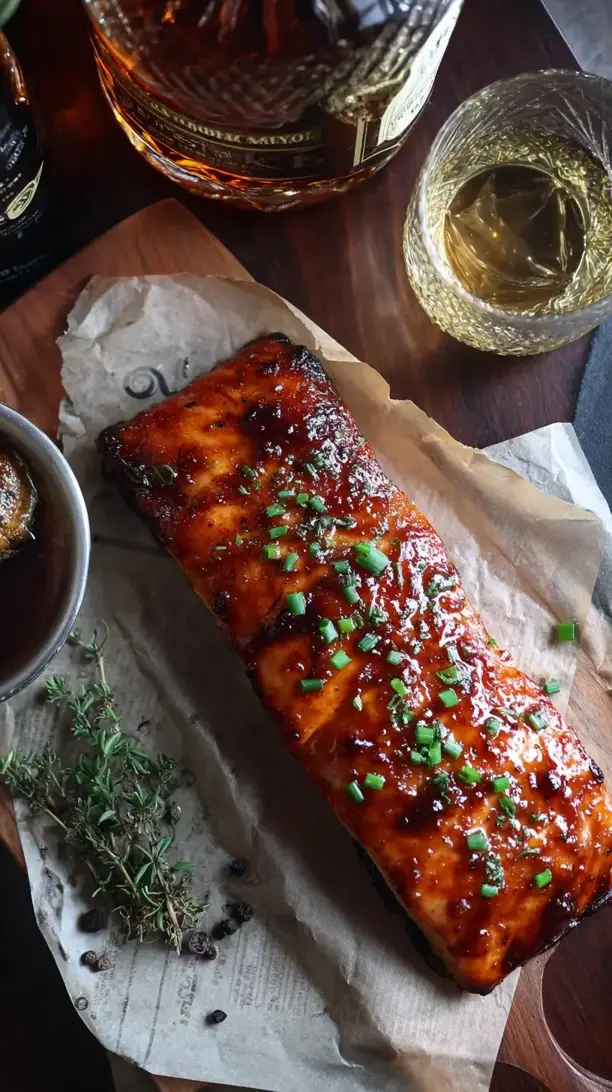
Bourbon Glazed Salmon
Make restaurant-quality Bourbon Glazed Salmon in under 30 minutes. This easy recipe features a sweet & savory glaze for a perfect weeknight meal. Get the recipe now!
Ingredients
For the salmon and glaze:
-
4 salmon fillets (about 6 oz / 170 g each, skin-on or skinless)
-
1/4 cup bourbon
-
1/4 cup pure maple syrup
-
2 tbsp soy sauce (or tamari for gluten-free)
-
1 tbsp olive oil
-
2 cloves garlic (minced)
-
1 tsp freshly grated ginger
-
1 tbsp apple cider vinegar
-
1/2 tsp smoked paprika
-
1/4 tsp black pepper
-
1 tbsp cornstarch mixed with 2 tbsp cold water (slurry, for thickening)
-
1 tbsp chopped fresh parsley or chives (for garnish)
Instructions
-
Preheat your oven to 400°F (200°C). Line a rimmed baking sheet with parchment paper—this prevents sticking and makes cleanup incredibly easy. Pat the salmon fillets completely dry with paper towels, then brush them lightly with olive oil and season with black pepper and a tiny pinch of salt (go easy, the soy sauce is salty). Place them on the prepared baking sheet, skin-side down if they have skin.01
-
While the oven heats, make your glaze. In a small saucepan over medium heat, combine the bourbon, maple syrup, soy sauce, minced garlic, grated ginger, apple cider vinegar, and smoked paprika. Whisk everything together and bring it to a gentle simmer. You’ll notice the aroma starting to bloom—it should smell sweet, sharp, and wonderfully complex.02
-
Let the mixture simmer for about 3-4 minutes, stirring occasionally. This allows the alcohol to cook off and the flavors to meld. The sauce should be slightly reduced but still quite liquid at this point. Now, give your cornstarch and water mixture another quick stir (it settles fast) and slowly drizzle it into the simmering glaze while whisking constantly.03
-
Continue whisking for about 1-2 minutes until the glaze thickens noticeably. It should coat the back of a spoon and look glossy. Once thickened, remove it from the heat immediately—overcooking can make it gummy. You’ll have about ½ cup of beautiful, caramel-colored glaze.04
-
Now, roast your salmon. Place the baking sheet in the preheated oven and cook for 5 minutes. After 5 minutes, carefully remove the pan. Using a basting brush or spoon, generously coat the top of each salmon fillet with the bourbon glaze. Be liberal here—this first layer will soak in and flavor the fish.05
-
Return the salmon to the oven and cook for another 5-7 minutes. The exact time will depend on the thickness of your fillets. You’re looking for the salmon to be opaque and flake easily with a fork, but still be moist in the center. For medium, aim for an internal temperature of 125°F (52°C).06
-
For a final caramelized finish, switch your oven to broil (or use the top heating element if you have a convection oven). Brush one more thin layer of glaze over the salmon and broil for 1-2 minutes, watching closely to prevent burning. The glaze will bubble and become beautifully dark and sticky.07
-
Remove the salmon from the oven and let it rest for 2-3 minutes. This allows the juices to redistribute. Drizzle with any remaining glaze from the saucepan, sprinkle with fresh parsley or chives, and serve immediately. That resting time is crucial for the most tender result.08