
Why You’ll Love This Mediterranean Chickpea Pasta
- It’s a true one-pot wonder (almost). With the exception of boiling the pasta, the entire sauce comes together in one single skillet. This means less washing up and more time enjoying your meal—a win-win in my book.
- The texture is everything. You get this fantastic combination of al dente pasta, soft chickpeas, juicy burst tomatoes, and little salty bites of feta and olive. It’s a real party for your palate, with something interesting in every single forkful.
- It’s endlessly adaptable. Not a fan of olives? Leave them out. Have some spinach that needs using up? Wilt it in at the end. This recipe is a fantastic template that welcomes your own personal touches.
- It’s just as good cold. This pasta salad is fantastic served warm, but it’s also incredible the next day straight from the fridge. The flavours have more time to mingle and develop, making it a brilliant make-ahead lunch option.
Ingredients & Tools
- 250-300 g short pasta like fusilli, penne, or farfalle
- 3 tbsp extra virgin olive oil, plus more for drizzling
- 4 cloves garlic, finely sliced or minced
- 1 pinch chilli flakes (optional, but recommended)
- 300 g cherry or grape tomatoes, halved
- 1 can (400 g) chickpeas, rinsed and drained
- 100 g pitted Kalamata olives, halved
- Juice of 1/2 a lemon
- 1 large handful fresh parsley, roughly chopped
- 1 small handful fresh basil or mint, torn
- 100 g feta cheese, crumbled
- Salt and freshly ground black pepper to taste
Tools: A large pot for pasta, a large skillet or frying pan, a colander.
The quality of your olive oil and the freshness of your herbs really make a difference here. Since the sauce is so simple, each component shines through, so it’s worth using the good stuff!
Serves: 3-4 | Prep Time: 15 mins | Cook Time: 20 mins | Total Time: 35 mins
Before You Start: Tips & Ingredient Notes
- Pasta shape matters. I strongly recommend a short, textured pasta like fusilli or penne. Their nooks and crannies are perfect for catching little bits of chickpea, olive, and the delicious oil. Long strands like spaghetti can work, but it’s a different, less integrated eating experience.
- Don’t skip rinsing the chickpeas. Giving your canned chickpeas a good rinse under cold water gets rid of that excess starchy liquid they’re packed in. This helps the final dish feel fresher and prevents it from becoming gloopy.
- Embrace the feta. If you can, buy a block of feta and crumble it yourself. Pre-crumbled feta often contains anti-caking agents that can make it a bit chalky. A block gives you those lovely, moist, uneven crumbles that melt into the pasta just slightly.
- Your pan is your friend. Use a skillet that’s large enough to eventually hold all the pasta along with the sauce. We want to be able to toss everything together comfortably without making a mess. A cramped pan is a sad pan.
How to Make Mediterranean Chickpea Pasta
Step 1: Start by bringing a large pot of well-salted water to a rolling boil for your pasta. Cook the pasta according to the package directions until it’s al dente—it should still have a slight bite to it. Remember, we’ll be tossing it with the hot sauce later, so it will cook a tiny bit more. Just before draining, reserve about a cup of the starchy pasta water. This is liquid gold for creating a silky sauce that clings to every noodle!
Step 2: While the pasta is cooking, heat the olive oil in your large skillet over medium heat. Add the sliced garlic and the chilli flakes (if using) and cook for just about 60-90 seconds. You’re looking for the garlic to become fragrant and just start to turn golden at the edges. Be careful not to burn it—burnt garlic tastes bitter. The aroma at this stage is just incredible.
Step 3: Increase the heat to medium-high and add the halved cherry tomatoes and a good pinch of salt. The salt will help draw out their juices. Cook, stirring occasionally, for about 5-7 minutes. You’ll notice the tomatoes will start to soften, wrinkle, and some might even burst open, creating a lovely, chunky base for our sauce.
Step 4: Now, stir in the rinsed chickpeas and the halved olives. Cook for another 2-3 minutes, just until the chickpeas are heated through. You want them to soak up some of the tomato and garlic flavours. At this point, the kitchen should smell absolutely divine.
Step 5: By now, your pasta should be ready. Drain it (remembering you saved that pasta water!) and add the pasta directly to the skillet with the tomato and chickpea mixture. Reduce the heat to low. Pour in the lemon juice and add about a quarter cup of the reserved pasta water. Toss everything together vigorously. The starch from the water, the oil, and the lemon juice will emulsify into a light, glossy sauce that coats everything beautifully.
Step 6: Take the skillet off the heat. This is crucial for keeping our fresh herbs bright and vibrant. Now, stir in almost all of the chopped parsley and basil (save a little for garnish), and most of the crumbled feta. Give it one final gentle toss. Taste it and season with more black pepper and salt if needed—remember, the feta and olives are quite salty, so you might not need much.
Step 7: To serve, divide the pasta among bowls. Top with the remaining fresh herbs, the rest of the feta cheese, and a final generous drizzle of your best extra virgin olive oil. This last-minute drizzle adds a fresh, fruity note that really lifts the whole dish. And there you have it—a vibrant, satisfying meal that’s ready in no time.
Serving Suggestions
Complementary Dishes
- A simple arugula salad — The peppery bite of arugula dressed with just lemon juice and olive oil provides a crisp, refreshing contrast to the rich, savoury pasta.
- Grilled lemon chicken or fish — If you’re looking to add some protein, a simply grilled chicken breast or a piece of white fish like sea bass would be fantastic alongside this pasta without overpowering it.
- Some crusty, warmed bread — Absolutely essential for mopping up every last bit of the delicious olive oil and tomato juices left in the bowl. It’s a non-negotiable for me.
Drinks
- A crisp, dry rosé — The berry notes and acidity in a good rosé complement the tomatoes and olives perfectly. It just tastes like summer in a glass.
- A citrusy IPA or a light lager — The bitterness of an IPA can cut through the richness nicely, while a clean lager is always a refreshing choice.
- Sparkling water with lemon — For a non-alcoholic option, the bubbles and citrus are a perfect palate cleanser between bites.
Something Sweet
- Lemon sorbet — A scoop of sharp, clean lemon sorbet is the perfect way to finish this meal. It’s light, refreshing, and continues the citrus theme.
- Baklava — For a truly Mediterranean finale, the honey-sweetened, nutty flakiness of baklava offers a wonderful textural and flavour contrast.
- Fresh figs with a drizzle of honey — Simple, elegant, and seasonal. The sweetness of the figs feels like a natural progression from the savoury main course.
Top Mistakes to Avoid
- Mistake: Overcooking the garlic. Garlic burns easily and becomes bitter, which can ruin the delicate balance of the sauce. Keep the heat at medium and watch it like a hawk—it should just be golden and fragrant.
- Mistake: Forgetting the pasta water. That starchy water is the magic ingredient that brings the sauce together. Without it, the oil and lemon juice might just slide off the pasta. It’s the key to a cohesive, restaurant-quality finish.
- Mistake: Adding the herbs and cheese while the pan is on the heat. If you stir in the fresh herbs and delicate feta while the skillet is still cooking, the herbs will wilt into oblivion and the feta will melt completely. Taking the pan off the heat preserves their fresh flavours and textures.
- Mistake: Underseasoning the pasta water. Your pasta water should taste like the sea! This is your one big chance to season the pasta from the inside out. If the water is bland, the pasta will be bland, no matter how flavourful your sauce is.
Expert Tips
- Tip: Let the tomatoes do the work. Don’t be tempted to add liquid like tinned tomatoes or stock. The juiciness from the fresh tomatoes, combined with the pasta water, creates a sauce that’s fresh and light, not heavy or stew-like.
- Tip: Toast your chickpeas. For an extra layer of flavour and a slightly crispier texture, pat the rinsed chickpeas very dry and toss them in the hot pan for a minute or two *before* adding the tomatoes. This gives them a lovely, nutty depth.
- Tip: Make it a pasta salad. To serve this cold, prepare the recipe as directed but let the tomato-chickpea mixture cool completely before tossing with the pasta. The pasta will absorb the dressing beautifully as it chills.
- Tip: Add a protein punch. A can of good-quality tuna (drained and flaked) stirred in at the end is a fantastic addition. It makes the dish even heartier and is a classic Mediterranean combination.
FAQs
Can I make this Mediterranean Chickpea Pasta ahead of time?
Absolutely, and it’s great for meal prep! Let the cooked pasta and sauce cool completely before combining them and storing in an airtight container in the fridge for up to 3 days. The pasta will absorb some of the dressing, so you might want to refresh it with a little extra lemon juice and a drizzle of olive oil before serving. I wouldn’t recommend freezing it, as the texture of the pasta and fresh tomatoes can become mushy upon thawing.
What’s a good vegan substitute for the feta cheese?
You have a couple of great options! For a similar salty, tangy kick, you could use a commercial vegan feta—many brands are surprisingly good now. Alternatively, a handful of toasted pine nuts or walnuts will add a lovely richness and crunch. For a creamy element, a dollop of vegan pesto stirred through at the end works wonders. The dish will still be deliciously satisfying without the cheese.
My dish turned out a bit dry. What happened?
This usually means you either didn’t use enough reserved pasta water, or the sauce reduced too much before adding the pasta. The pasta water is essential for creating the right saucy consistency. Next time, don’t be shy—add a quarter to a half cup of the starchy water and toss vigorously. You can always add more if needed, but you can’t take it out!
Can I use dried herbs instead of fresh?
You can, but honestly, the fresh herbs are a key component of the fresh, vibrant flavour profile. If you must use dried, use about one-third of the amount (dried herbs are more potent), and add them to the skillet along with the garlic so their flavour has time to bloom in the oil. But I really encourage you to use fresh if possible—it makes a world of difference.
What other vegetables can I add to this pasta?
So many! This recipe is a fantastic canvas. You could add sliced bell peppers or zucchini when you cook the tomatoes. A handful of spinach or kale wilted in at the end is lovely. Sun-dried tomatoes would add an intense, sweet flavour. Artichoke hearts (canned or jarred) are another brilliant Mediterranean addition. Feel free to get creative and use what you have!
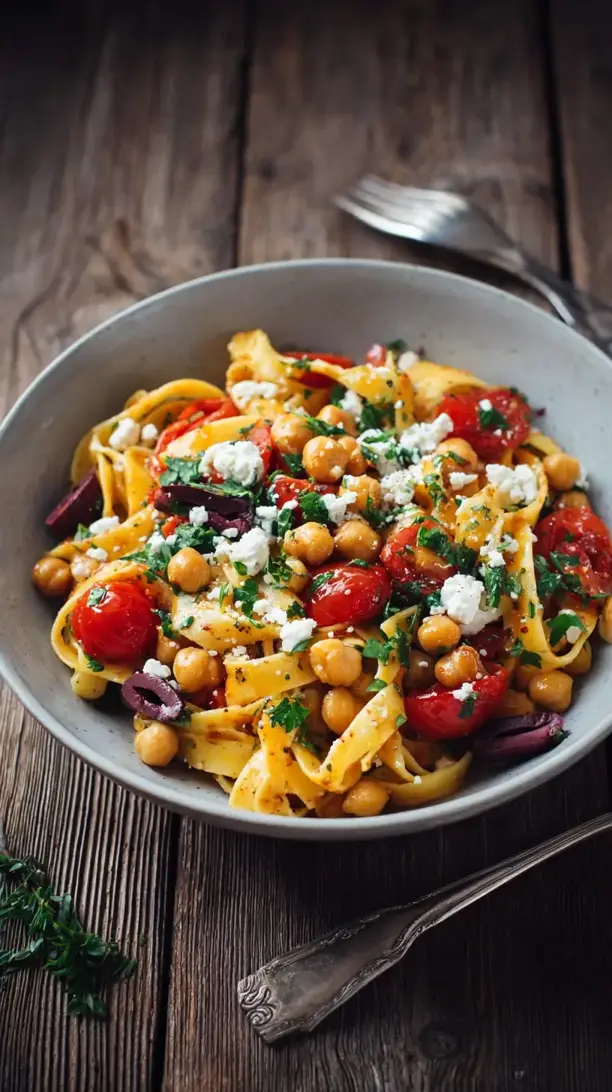
Mediterranean Chickpea Pasta
Whip up this vibrant Mediterranean Chickpea Pasta! A quick, one-pan wonder with cherry tomatoes, olives, feta & fresh herbs. Perfect for a healthy, satisfying weeknight dinner in 35 minutes.
Ingredients
Ingredients
-
250-300 g short pasta like fusilli, penne, or farfalle
-
3 tbsp extra virgin olive oil (plus more for drizzling)
-
4 cloves garlic (finely sliced or minced)
-
1 pinch chilli flakes (optional, but recommended)
-
300 g cherry or grape tomatoes (halved)
-
1 can chickpeas (400 g, rinsed and drained)
-
100 g pitted Kalamata olives (halved)
-
1/2 lemon (juice of)
-
1 large handful fresh parsley (roughly chopped)
-
1 small handful fresh basil or mint (torn)
-
100 g feta cheese (crumbled)
-
Salt and freshly ground black pepper (to taste)
Instructions
-
Start by bringing a large pot of well-salted water to a rolling boil for your pasta. Cook the pasta according to the package directions until it's al dente—it should still have a slight bite to it. Remember, we'll be tossing it with the hot sauce later, so it will cook a tiny bit more. Just before draining, reserve about a cup of the starchy pasta water. This is liquid gold for creating a silky sauce that clings to every noodle!01
-
While the pasta is cooking, heat the olive oil in your large skillet over medium heat. Add the sliced garlic and the chilli flakes (if using) and cook for just about 60-90 seconds. You're looking for the garlic to become fragrant and just start to turn golden at the edges. Be careful not to burn it—burnt garlic tastes bitter. The aroma at this stage is just incredible.02
-
Increase the heat to medium-high and add the halved cherry tomatoes and a good pinch of salt. The salt will help draw out their juices. Cook, stirring occasionally, for about 5-7 minutes. You'll notice the tomatoes will start to soften, wrinkle, and some might even burst open, creating a lovely, chunky base for our sauce.03
-
Now, stir in the rinsed chickpeas and the halved olives. Cook for another 2-3 minutes, just until the chickpeas are heated through. You want them to soak up some of the tomato and garlic flavours. At this point, the kitchen should smell absolutely divine.04
-
By now, your pasta should be ready. Drain it (remembering you saved that pasta water!) and add the pasta directly to the skillet with the tomato and chickpea mixture. Reduce the heat to low. Pour in the lemon juice and add about a quarter cup of the reserved pasta water. Toss everything together vigorously. The starch from the water, the oil, and the lemon juice will emulsify into a light, glossy sauce that coats everything beautifully.05
-
Take the skillet off the heat. This is crucial for keeping our fresh herbs bright and vibrant. Now, stir in almost all of the chopped parsley and basil (save a little for garnish), and most of the crumbled feta. Give it one final gentle toss. Taste it and season with more black pepper and salt if needed—remember, the feta and olives are quite salty, so you might not need much.06
-
To serve, divide the pasta among bowls. Top with the remaining fresh herbs, the rest of the feta cheese, and a final generous drizzle of your best extra virgin olive oil. This last-minute drizzle adds a fresh, fruity note that really lifts the whole dish. And there you have it—a vibrant, satisfying meal that's ready in no time.07