
Why You’ll Love This Lemon Garlic Shrimp Pasta
- It’s incredibly fast. From start to finish, you’re looking at about 20 minutes. It’s the perfect solution for those nights when you’re short on time but still want a meal that feels special and homemade.
- The flavor is bright and balanced. The combination of rich butter, pungent garlic, and the zing of fresh lemon creates a sauce that is anything but boring. It’s a beautiful dance of savory and citrusy notes that will wake up your taste buds.
- It feels elegant without the effort. Shrimp and pasta together just have a way of feeling a bit more sophisticated than your average weeknight dinner. It’s the kind of dish you’d be happy to serve to guests, but it’s simple enough to make just for yourself.
- It’s surprisingly light. Unlike many pasta dishes that rely on heavy cream or cheese sauces, this one gets its body from a simple pan sauce and a splash of starchy pasta water. You’ll feel satisfied but not weighed down.
Ingredients & Tools
- 8 oz (225 g) linguine or spaghetti
- 1 lb (450 g) large shrimp, peeled and deveined
- 4 cloves garlic, minced
- 1 large lemon
- 3 tbsp unsalted butter
- 2 tbsp olive oil
- 1/4 cup dry white wine (like Sauvignon Blanc)
- 1/4 cup fresh parsley, chopped
- 1/4 tsp red pepper flakes (optional)
- Salt and freshly ground black pepper
Tools: A large pot for boiling pasta, a large skillet (12-inch is ideal), a microplane or zester, tongs.
A couple of ingredient notes right off the bat—using fresh lemon juice and garlic is non-negotiable here for the brightest flavor. And that pasta water you save? That’s liquid gold for creating a silky, emulsified sauce that clings to every strand.
Serves: 3-4 | Prep Time: 10 minutes | Cook Time: 15 minutes | Total Time: 25 minutes
Before You Start: Tips & Ingredient Notes
- Pat your shrimp dry. This is a small step with a big impact. If your shrimp are wet, they’ll steam instead of getting a nice sear. Taking a moment to pat them dry with a paper towel ensures a beautiful, caramelized exterior.
- Zest your lemon before you juice it. It’s infinitely easier to zest a whole, firm lemon than one that’s been squeezed. Do this first and you’ll thank yourself later. The zest packs an intense citrus aroma that really makes the dish pop.
- Don’t skip the pasta water. I know I already mentioned it, but it’s that important. The starchy water is the secret to a restaurant-quality sauce. It helps the butter, oil, and lemon juice bind together into a creamy, cohesive sauce without any actual cream.
- Mise en place is your friend. Since this recipe comes together so quickly, having all your ingredients prepped and within arm’s reach—minced garlic, chopped parsley, lemon zested and juiced—makes the process seamless and stress-free.
How to Make Lemon Garlic Shrimp Pasta
Step 1: Bring a large pot of generously salted water to a rolling boil. You want the water to taste like the sea—this is your only chance to season the pasta itself from the inside out. Add the linguine and cook according to package directions until al dente. Just before draining, carefully scoop out about a cup of the starchy pasta water. This is our sauce magic. Drain the pasta and set it aside.
Step 2: While the pasta cooks, pat the shrimp completely dry with paper towels. Season them generously on both sides with salt and black pepper. Heat the olive oil in your large skillet over medium-high heat. When the oil is shimmering, add the shrimp in a single layer. You’ll hear a nice sizzle. Cook for about 1-2 minutes per side, until they’re pink and opaque. Don’t overcrowd the pan—cook in batches if needed. Transfer the cooked shrimp to a clean plate.
Step 3: Reduce the heat to medium-low. In the same skillet, you’ll have all those delicious browned bits from the shrimp. Add the butter. Once it’s melted and foaming slightly, add the minced garlic and the red pepper flakes (if using). Cook for just about 30 seconds to 1 minute, stirring constantly. You want the garlic to become fragrant, but be so careful not to let it burn—burnt garlic turns bitter very quickly.
Step 4: Pour in the white wine to deglaze the pan. Use your spoon to scrape up all those flavorful bits from the bottom of the skillet. Let the wine simmer and reduce by about half, which should take 1-2 minutes. This cooks off the harsh alcohol and leaves behind a lovely acidity.
Step 5: Now, squeeze in the juice of your lemon and add half of the lemon zest. Give it a stir. Then, start adding the reserved pasta water a few tablespoons at a time, stirring continuously. You’ll notice the sauce start to thicken and look glossy as the starch emulsifies with the fats.
Step 6: Add the drained pasta directly into the skillet. Use tongs to toss the pasta thoroughly, coating every strand in the glorious lemon-garlic sauce. If the sauce seems a bit tight, add another splash of pasta water until it’s perfectly saucy and clinging to the pasta.
Step 7: Return the cooked shrimp to the skillet, along with any juices that accumulated on the plate. Toss everything together to reheat the shrimp gently. Turn off the heat and stir in most of the chopped parsley, saving a little for garnish. Give it a final taste and adjust the seasoning with more salt or pepper if needed.
Step 8: Serve immediately, garnished with the remaining parsley, a final sprinkle of the reserved lemon zest, and an extra crack of black pepper. Dive in while it’s hot!
Serving Suggestions
Complementary Dishes
- A simple arugula salad — The peppery bite of arugula dressed with just a squeeze of lemon and a drizzle of olive oil provides a crisp, fresh contrast to the rich, savory pasta.
- Garlic bread or focaccia — Because you can never have too much garlic, right? It’s perfect for sopping up every last drop of that delicious sauce left on your plate.
- Roasted asparagus or broccolini — Tossing some green veggies with olive oil, salt, and pepper and roasting them until tender-crisp adds a lovely earthy element and makes the meal feel even more complete.
Drinks
- A crisp Sauvignon Blanc — The citrus and herbal notes in this wine mirror the flavors in the pasta beautifully, creating a really harmonious pairing.
- A light lager or pilsner — The carbonation and clean finish of a good lager help cut through the richness of the butter and cleanse the palate between bites.
- Sparkling water with lemon — For a non-alcoholic option, the bubbles and citrus are refreshing and keep the meal feeling light and bright.
Something Sweet
- Lemon sorbet — Continuing the citrus theme with a palate-cleansing, light dessert that feels incredibly refreshing after the main course.
- Panna cotta with a berry coulis — The creamy, delicate texture of panna cotta is a lovely, simple finish that doesn’t overpower the memory of the pasta.
- Amaretti cookies — These little Italian almond cookies are sweet, chewy, and the perfect little bite to end the meal with a cup of coffee.
Top Mistakes to Avoid
- Mistake: Overcooking the shrimp. Shrimp cook incredibly fast and become rubbery and tough if left on the heat for too long. They’re done as soon as they turn pink and opaque. Remember, they’ll heat through again when you toss them back into the sauce at the end.
- Mistake: Burning the garlic. Garlic goes from golden and fragrant to bitter and burnt in a matter of seconds. Keep the heat at medium-low when you add it and stir constantly. If it starts to brown too quickly, pull the pan off the heat for a moment.
- Mistake: Skipping the pasta water. I’ve messed this up before too, thinking I could just use regular water. You really can’t. The starch is essential for creating a sauce that properly coats the pasta instead of sliding right off.
- Mistake: Crowding the pan with shrimp. If you add too many shrimp at once, the pan temperature drops and they release moisture, leading to steaming instead of searing. Cook in batches for the best texture and color.
Expert Tips
- Tip: Use frozen shrimp. Honestly, high-quality frozen shrimp are often a better bet than “fresh” shrimp at the counter, which may have been previously frozen anyway. Thaw them overnight in the fridge for the best texture.
- Tip: Add the pasta to the sauce, not the other way around. Finishing the pasta by tossing it in the skillet with the sauce allows it to absorb all the flavors. This is a classic Italian technique called “mantecatura” that makes all the difference.
- Tip: Brown the butter for a nutty depth. If you have an extra minute, let the butter cook a little longer until it turns a light golden brown and smells nutty before adding the garlic. It adds a wonderful, complex flavor to the sauce.
- Tip: Let the pasta water do the work. When adding the pasta water to the sauce, add it gradually and toss vigorously. The agitation helps the starch and fat emulsify, creating a beautifully silky texture without any cream.
FAQs
Can I use a different type of pasta?
Absolutely! While long shapes like linguine and spaghetti are classic, this sauce works wonderfully with other types. Try it with fettuccine, tagliatelle, or even a short pasta like penne or fusilli. The key is to use a shape that can cradle the sauce and shrimp. Just remember to reserve that starchy water no matter what pasta you choose—it’s the key to the sauce’s success.
What can I use instead of white wine?
No problem! You can simply omit the wine and use an equal amount of chicken or vegetable broth instead. The wine adds acidity, so to compensate, you might want to add an extra tablespoon of lemon juice at the end. Another great option is a splash of bottled clam juice, which will enhance the seafood flavor of the dish beautifully.
How should I store and reheat leftovers?
Store any leftovers in an airtight container in the refrigerator for up to 2 days. Reheating pasta like this can be tricky, as it can dry out. The best method is to reheat it gently in a skillet over low heat with a tiny splash of water, broth, or even a pat of butter to loosen the sauce back up. The microwave can work in a pinch, but cover it and use a low power setting to avoid making the shrimp rubbery.
Can I make this dish ahead of time?
You can do some prep ahead to make the final cooking faster. You can peel and devein the shrimp, chop the parsley, mince the garlic, and zest and juice the lemon a few hours in advance. Keep everything separate in the fridge. But I highly recommend cooking and assembling the dish just before serving for the best texture and brightest flavor.
My sauce looks a bit oily or broken. What happened?
This usually means the emulsion wasn’t quite strong enough. The most common culprit is adding the pasta water too quickly or not agitating the sauce enough while adding it. Next time, try adding the water a tablespoon or two at a time, tossing the pasta vigorously after each addition. If it happens, don’t panic! A little more pasta water and vigorous tossing can often bring it back together.
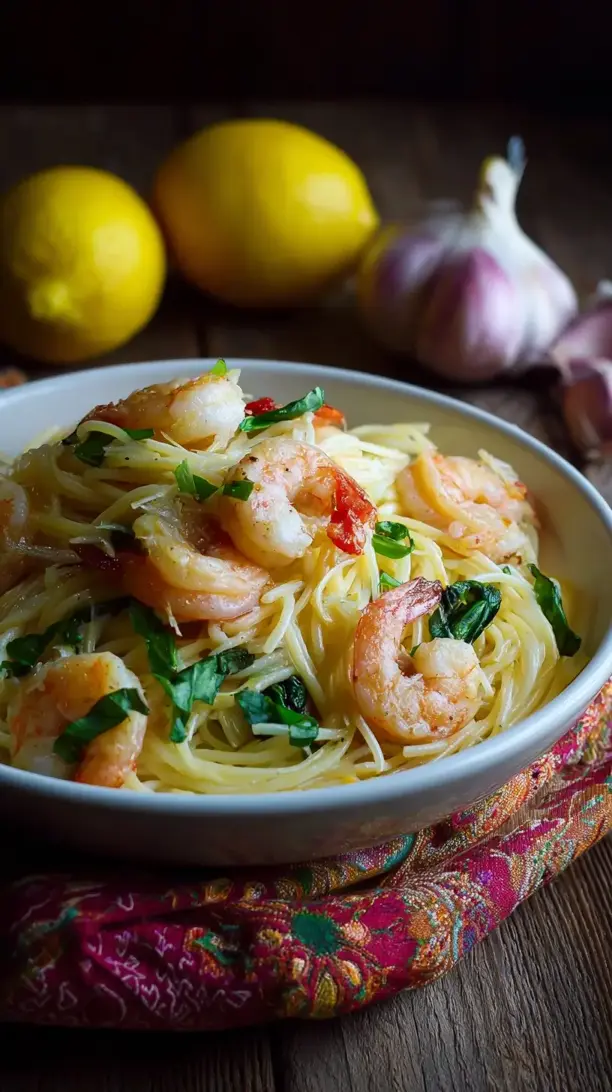
Lemon Garlic Shrimp Pasta
Whip up this bright & zesty Lemon Garlic Shrimp Pasta in just 25 minutes! A restaurant-quality, creamy (but cream-free!) weeknight dinner that feels both elegant and easy.
Ingredients
Ingredients
-
8 oz linguine or spaghetti ((225 g))
-
1 lb large shrimp (peeled and deveined (450 g))
-
4 cloves garlic (minced)
-
1 large lemon
-
3 tbsp unsalted butter
-
2 tbsp olive oil
-
1/4 cup dry white wine (like Sauvignon Blanc)
-
1/4 cup fresh parsley (chopped)
-
1/4 tsp red pepper flakes (optional)
-
Salt and freshly ground black pepper
Instructions
-
Bring a large pot of generously salted water to a rolling boil. You want the water to taste like the sea—this is your only chance to season the pasta itself from the inside out. Add the linguine and cook according to package directions until al dente. Just before draining, carefully scoop out about a cup of the starchy pasta water. This is our sauce magic. Drain the pasta and set it aside.01
-
While the pasta cooks, pat the shrimp completely dry with paper towels. Season them generously on both sides with salt and black pepper. Heat the olive oil in your large skillet over medium-high heat. When the oil is shimmering, add the shrimp in a single layer. You'll hear a nice sizzle. Cook for about 1-2 minutes per side, until they're pink and opaque. Don't overcrowd the pan—cook in batches if needed. Transfer the cooked shrimp to a clean plate.02
-
Reduce the heat to medium-low. In the same skillet, you'll have all those delicious browned bits from the shrimp. Add the butter. Once it's melted and foaming slightly, add the minced garlic and the red pepper flakes (if using). Cook for just about 30 seconds to 1 minute, stirring constantly. You want the garlic to become fragrant, but be so careful not to let it burn—burnt garlic turns bitter very quickly.03
-
Pour in the white wine to deglaze the pan. Use your spoon to scrape up all those flavorful bits from the bottom of the skillet. Let the wine simmer and reduce by about half, which should take 1-2 minutes. This cooks off the harsh alcohol and leaves behind a lovely acidity.04
-
Now, squeeze in the juice of your lemon and add half of the lemon zest. Give it a stir. Then, start adding the reserved pasta water a few tablespoons at a time, stirring continuously. You'll notice the sauce start to thicken and look glossy as the starch emulsifies with the fats.05
-
Add the drained pasta directly into the skillet. Use tongs to toss the pasta thoroughly, coating every strand in the glorious lemon-garlic sauce. If the sauce seems a bit tight, add another splash of pasta water until it's perfectly saucy and clinging to the pasta.06
-
Return the cooked shrimp to the skillet, along with any juices that accumulated on the plate. Toss everything together to reheat the shrimp gently. Turn off the heat and stir in most of the chopped parsley, saving a little for garnish. Give it a final taste and adjust the seasoning with more salt or pepper if needed.07
-
Serve immediately, garnished with the remaining parsley, a final sprinkle of the reserved lemon zest, and an extra crack of black pepper. Dive in while it's hot!08