

Why You’ll Love This Split Pea and Spinach Soup
- It’s the ultimate comfort food, but with a vibrant twist. The classic, creamy base of split peas gets a serious upgrade from a generous handful of fresh spinach stirred in at the last minute. You get that familiar, cozy feeling, but with a bright, fresh flavor and a gorgeous green color that makes it feel special.
- It’s incredibly forgiving and easy to make. This isn’t a recipe where you need to stand over the stove, stirring constantly. Once you’ve sautéed your aromatics, you pretty much just let it simmer away until the peas have broken down into silky perfection. It’s the perfect low-maintenance meal.
- It’s a fantastic way to pack in the greens. The spinach wilts down so beautifully, melting right into the soup. It’s an effortless way to add a nutritional boost without changing the character of the dish. Even spinach-skeptics might be converted!
- It tastes even better the next day. Like many great soups, the flavors have a chance to meld and deepen overnight. Making a big pot means you’ve got delicious, ready-to-go lunches for a couple of days, which is always a win in my book.
Ingredients & Tools
- 2 tbsp olive oil or butter
- 1 large yellow onion, diced
- 2 carrots, peeled and diced
- 2 celery stalks, diced
- 3 cloves garlic, minced
- 1.5 cups / 300 g dried green or yellow split peas, rinsed and drained
- 6 cups / 1.5 liters vegetable broth (or chicken broth)
- 1 bay leaf
- 1 tsp dried thyme (or 3-4 sprigs fresh)
- 5 oz / 140 g fresh baby spinach
- To taste: salt and freshly ground black pepper
- Optional for serving: a squeeze of lemon juice, a drizzle of good olive oil, crusty bread
Tools: A large, heavy-bottomed pot or Dutch oven, a wooden spoon, and a ladle.
The quality of your broth really makes a difference here, as it’s the main liquid component. A good, flavorful broth will give your soup a wonderful depth. And don’t skip the fresh spinach—it’s the star that transforms this from a standard split pea into something truly memorable.
Serves: 4-6 | Prep Time: 15 minutes | Cook Time: 45-60 minutes | Total Time: about 1 hour 15 minutes
Before You Start: Tips & Ingredient Notes
- Rinse those peas! It’s a simple step, but it’s important. Dried split peas can sometimes have little bits of dust or debris. Giving them a good rinse in a fine-mesh strainer under cold water ensures your soup is perfectly clean and smooth.
- Don’t rush the veggie sauté. Taking the time to properly soften the onion, carrots, and celery (this trio is called a mirepoix, by the way) is the first layer of flavor. You’re not looking for color, just for them to become tender and sweet, which usually takes about 8-10 minutes.
- To blend or not to blend? That is the question! I love this soup both ways. If you prefer a completely smooth, velvety texture, an immersion blender is your best friend. But if you enjoy a bit of texture from the softened peas and veggies, just leave it as is. It’s entirely up to you.
- Fresh spinach is key. I really recommend using fresh baby spinach for this recipe. Frozen spinach will work in a pinch, but it tends to release more water and can make the soup a bit thinner and sometimes a little gritty. Fresh spinach wilts perfectly and retains its vibrant color.
How to Make Split Pea and Spinach Soup
Step 1: Start by building your flavor base. Heat the olive oil or butter in your large pot over medium heat. Once it’s shimmering (or melted), add the diced onion, carrots, and celery. Sprinkle with a pinch of salt—this helps draw out their moisture and speeds up the cooking process. Sauté, stirring occasionally, until the vegetables have softened and the onion is translucent. This should take about 8 to 10 minutes. You’ll notice your kitchen starting to smell amazing already.
Step 2: Add the aromatics. Stir in the minced garlic and cook for just one more minute, until it becomes fragrant. Be careful not to let the garlic burn, as it can turn bitter. This quick step adds a crucial layer of savory depth to the soup.
Step 3: It’s time for the peas and broth. Add the rinsed split peas, the broth, the bay leaf, and the dried thyme to the pot. Give everything a good stir, scraping the bottom of the pot to lift any tasty browned bits. Bring the soup to a lively boil.
Step 4: The simmering stage. Once boiling, reduce the heat to low, cover the pot with a lid, and let it simmer gently. You’ll want to let it go for about 45 minutes to an hour. The peas will slowly break down and thicken the soup. Give it an occasional stir to prevent anything from sticking to the bottom.
Step 5: Check for doneness. After about 45 minutes, the peas should be completely soft and almost falling apart. The soup will have thickened significantly. If it seems too thick for your liking, you can stir in a little more broth or water until it reaches your preferred consistency. Season generously with salt and black pepper now—the peas absorb a lot of seasoning.
Step 6: The grand spinach finale! This is the magic moment. Turn off the heat. Add all of the fresh spinach to the hot soup and stir it in. It will seem like a lot at first, but it wilts down incredibly quickly—within a minute or two. The residual heat is all you need to cook the spinach perfectly without making it mushy.
Step 7: Final touches and serving. Remove the bay leaf. If you want a smoother soup, now is the time to use an immersion blender to purée it to your desired consistency. Ladle the hot soup into bowls. A final squeeze of fresh lemon juice and a drizzle of good olive oil right before serving really brightens up all the flavors.
Serving Suggestions
Complementary Dishes
- A thick slice of crusty sourdough bread — There’s nothing better for dunking and scooping up every last bit of this hearty soup. Toasting it and rubbing it with a garlic clove first is a game-changer.
- A simple, sharp side salad — Something with a tangy vinaigrette, like an arugula salad with shaved Parmesan, provides a lovely, crisp contrast to the rich, creamy soup.
- A grilled cheese sandwich — For the ultimate comfort meal, serve a bowl of this soup with a classic, gooey grilled cheese on the side. It’s a timeless combination for a reason.
Drinks
- A crisp, dry cider — The apple notes and bright acidity in a good dry cider cut through the soup’s earthiness beautifully.
- A light-bodied red wine — A Pinot Noir or a Gamay with low tannins won’t overpower the soup and complements its savory notes.
- A sparkling water with lemon — For a non-alcoholic option, the bubbles and citrus are incredibly refreshing and help cleanse the palate between spoonfuls.
Something Sweet
- A simple ginger cookie — The warm spice of a ginger snap or a soft molasses cookie is a wonderful, cozy follow-up to the savory soup.
- A poached pear — Light, not too sweet, and elegant. A poached pear in a little red wine or with a vanilla pod feels like a special treat.
- Dark chocolate squares — A few pieces of high-quality dark chocolate (70% or higher) are the perfect bitter-sweet ending that won’t leave you feeling too full.
Top Mistakes to Avoid
- Mistake: Adding the spinach too early. If you add the spinach at the beginning with the split peas, it will completely overcook, lose all its vibrant color, and turn a drab, bitter brown. The trick is to stir it in right at the end, off the heat.
- Mistake: Not seasoning at the right time. Hold off on adding most of your salt until the split peas are fully cooked. If you salt the broth heavily at the beginning, the peas can toughen up and take longer to soften. Season to taste at the end.
- Mistake: Boiling too vigorously. A gentle simmer is what you want once the soup is cooking. A rolling boil can cause the peas to break apart too quickly and potentially stick to the bottom of the pot, leading to a burnt flavor.
- Mistake: Skipping the acid at the end. That squeeze of lemon juice might seem optional, but it’s honestly a secret weapon. It brightens the entire dish and balances the earthiness of the peas and spinach. Don’t skip it!
Expert Tips
- Tip: Make it ahead for deeper flavor. Soups are almost always better the next day. Let it cool completely, store it in the fridge overnight, and gently reheat it. You’ll notice the flavors have melded together beautifully.
- Tip: Use an immersion blender for a custom texture. You don’t have to go fully smooth. Try pulsing the blender a few times to break up some of the peas and veggies for a thicker, chunkier texture without having to dirty a countertop blender.
- Tip: Add a Parmesan rind for umami. If you have a leftover rind of Parmesan cheese in your fridge, toss it into the pot while the soup is simmering. It will melt into the broth, adding an incredible savory, salty depth.
- Tip: Freeze it right. This soup freezes exceptionally well. Let it cool completely, then portion it into airtight containers, leaving a little space at the top for expansion. It will keep for up to 3 months. Thaw overnight in the fridge before reheating.
FAQs
Can I use frozen spinach instead of fresh?
You can, but fresh is highly recommended for the best texture and color. If using frozen, be sure to thaw it completely and squeeze out every last drop of excess water with your hands or a clean kitchen towel. If you add frozen spinach directly, it will water down your soup significantly. You’ll need about a 10-ounce block, thawed and squeezed, to replace the 5 ounces of fresh.
My soup is too thick! How can I thin it out?
No problem at all—this is an easy fix! Simply stir in a little more broth, stock, or even water, a half-cup at a time, over low heat until it reaches your desired consistency. Remember, the soup will continue to thicken a bit as it cools, so you might want to make it slightly thinner than you think.
Can I make this soup in a slow cooker or Instant Pot?
Absolutely. For a slow cooker: Sauté the veggies first for best flavor, then add everything except the spinach to the cooker. Cook on low for 6-8 hours or high for 3-4 hours. Stir in the spinach at the end. For an Instant Pot: Use the sauté function for the veggies, then add everything except spinach, seal, and cook on high pressure for 15 minutes. Quick release, then stir in the spinach.
Why aren’t my split peas getting soft?
This can happen if your split peas are very old. Dried legumes have a long shelf life, but they do eventually lose their ability to soften properly. If they’re still firm after an hour of simmering, they might be past their prime. The other common culprit is hard water or adding salt too early, which can toughen the peas’ skins.
Is this soup vegan/vegetarian?
It is naturally vegetarian as written. To make it vegan, just ensure you’re using a vegan-friendly vegetable broth (check the label, as some contain hidden animal products) and use olive oil instead of butter at the beginning. It’s a wonderfully hearty and satisfying plant-based meal.
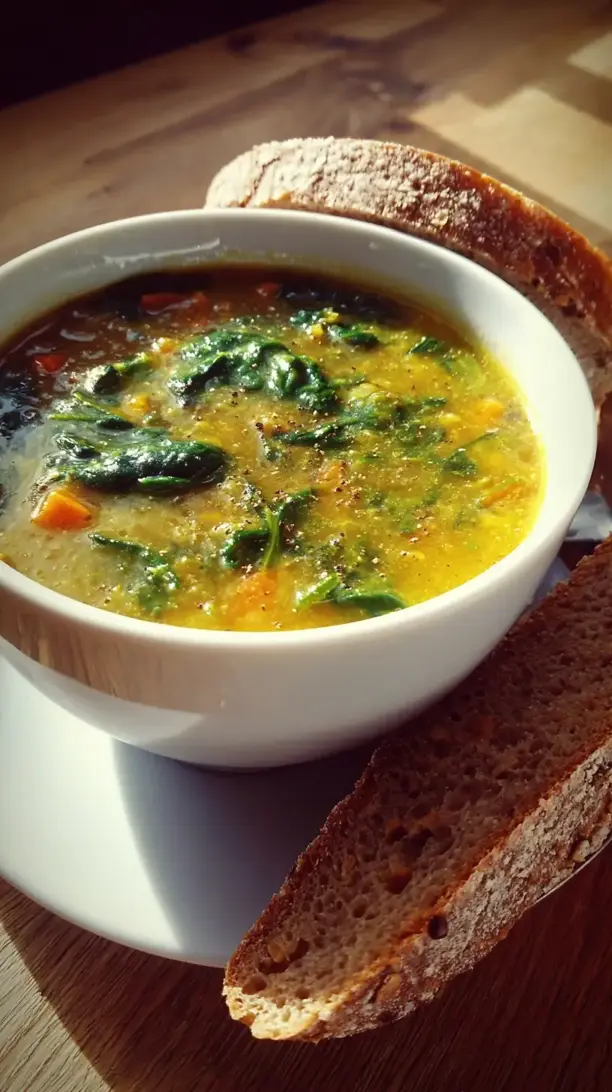
Split Pea And Spinach Soup
Warm up with Mike's hearty Split Pea & Spinach Soup! This easy, comforting recipe is a vibrant twist on a classic, packed with flavor and perfect for a cozy night in. Ready in about an hour.
Ingredients
Ingredients
-
2 tbsp olive oil or butter
-
1 large yellow onion (diced)
-
2 carrots (peeled and diced)
-
2 celery stalks (diced)
-
3 cloves garlic (minced)
-
1.5 cups dried green or yellow split peas (rinsed and drained (300 g))
-
6 cups vegetable broth (or chicken broth (1.5 liters))
-
1 bay leaf
-
1 tsp dried thyme (or 3-4 sprigs fresh)
-
5 oz fresh baby spinach (140 g)
-
salt and freshly ground black pepper (to taste)
-
lemon juice (optional for serving)
-
good olive oil (optional for serving)
-
crusty bread (optional for serving)
Instructions
-
Start by building your flavor base. Heat the olive oil or butter in your large pot over medium heat. Once it's shimmering (or melted), add the diced onion, carrots, and celery. Sprinkle with a pinch of salt—this helps draw out their moisture and speeds up the cooking process. Sauté, stirring occasionally, until the vegetables have softened and the onion is translucent. This should take about 8 to 10 minutes. You'll notice your kitchen starting to smell amazing already.01
-
Add the aromatics. Stir in the minced garlic and cook for just one more minute, until it becomes fragrant. Be careful not to let the garlic burn, as it can turn bitter. This quick step adds a crucial layer of savory depth to the soup.02
-
It's time for the peas and broth. Add the rinsed split peas, the broth, the bay leaf, and the dried thyme to the pot. Give everything a good stir, scraping the bottom of the pot to lift any tasty browned bits. Bring the soup to a lively boil.03
-
The simmering stage. Once boiling, reduce the heat to low, cover the pot with a lid, and let it simmer gently. You'll want to let it go for about 45 minutes to an hour. The peas will slowly break down and thicken the soup. Give it an occasional stir to prevent anything from sticking to the bottom.04
-
Check for doneness. After about 45 minutes, the peas should be completely soft and almost falling apart. The soup will have thickened significantly. If it seems too thick for your liking, you can stir in a little more broth or water until it reaches your preferred consistency. Season generously with salt and black pepper now—the peas absorb a lot of seasoning.05
-
The grand spinach finale! This is the magic moment. Turn off the heat. Add all of the fresh spinach to the hot soup and stir it in. It will seem like a lot at first, but it wilts down incredibly quickly—within a minute or two. The residual heat is all you need to cook the spinach perfectly without making it mushy.06
-
Final touches and serving. Remove the bay leaf. If you want a smoother soup, now is the time to use an immersion blender to purée it to your desired consistency. Ladle the hot soup into bowls. A final squeeze of fresh lemon juice and a drizzle of good olive oil right before serving really brightens up all the flavors.07


