
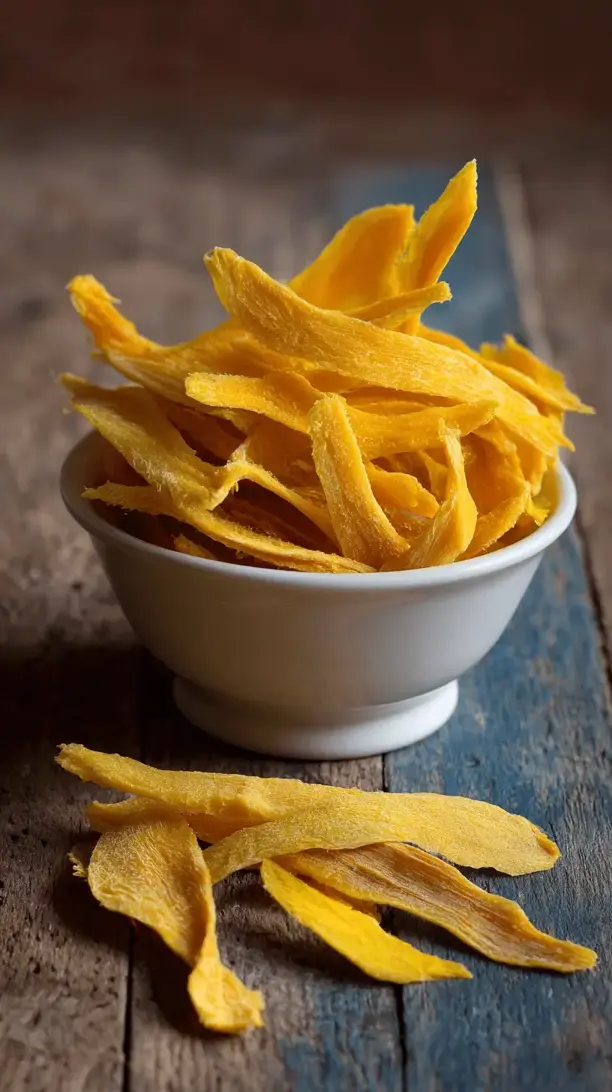

Why You’ll Love This Dried Mango Snack Strips
- Unbeatable, Pure Flavor. When you dry mangoes at a low temperature, the natural sugars concentrate, creating a candy-like sweetness without any added sugar. The flavor is just… more mango-y.
- It’s Surprisingly Simple. You don’t need any fancy equipment or advanced culinary skills. The oven does most of the work for you. It’s a fantastic first project if you’re new to dehydrating foods at home.
- You’re in Complete Control. You decide how chewy or how leathery you want your strips to be. Prefer a little hint of spice? A light dusting of chili powder before drying transforms them completely. It’s your snack, your rules.
- A Truly Wholesome Treat. Knowing exactly what’s in your food is a wonderful feeling. These strips are a whole-food snack you can feel great about sharing with family and friends.
Ingredients & Tools
- 4-5 large ripe but firm mangoes (look for Ataulfo or Kent varieties if you can)
- 1 tablespoon fresh lemon or lime juice (optional, but helps preserve color)
Tools: A sharp chef’s knife, a Y-peeler (optional but helpful), a baking sheet, parchment paper or a silicone baking mat, a mandoline slicer (highly recommended for even slices).
The ingredient list is wonderfully short, which means the quality of your mangoes is the star of the show. Using ripe, fragrant mangoes is non-negotiable for the best flavor—they should give slightly to gentle pressure. The lemon juice is a little trick to keep the mangoes from browning too much, giving you those bright, sunny-yellow strips.
Serves: Makes about 4 cups | Prep Time: 20 minutes | Cook Time: 4-6 hours | Total Time: 4 hours 20 minutes to 6 hours 20 minutes
Before You Start: Tips & Ingredient Notes
- Mango Variety Matters. Ataulfo (sometimes called Champagne or Honey) mangoes are my top choice. They’re less fibrous and have a higher sugar content, which leads to a superior chewy texture. Tommy Atkins mangoes work too but can be a bit stringier.
- Ripe, But Not Too Soft. You want a mango that’s fragrant and yields to pressure like a ripe avocado. If it’s mushy, it will be difficult to slice thinly and evenly. A firm-ripe mango is your goal.
- The Thinner, The Chewier. This is the golden rule. Aim for slices that are about ¼-inch thick. Any thicker, and they’ll take forever to dry and might end up more tough than pleasantly chewy. A mandoline slicer is a game-changer for consistency.
- Patience is a Virtue. Drying is not a process you can rush. Low and slow is the only way to remove the moisture without cooking or burning the fruit. Don’t be tempted to crank up the oven temperature!
How to Make Dried Mango Snack Strips
Step 1: Prep Your Mangoes. First, give your mangoes a good wash and dry them. The trick to easily slicing a mango is to find the flat, long seed inside. Stand the mango upright on its stem end and carefully slice down vertically, just skimming past the seed. You’ll have two large “cheeks.” Repeat on the other side. You can also slice off the thinner sides to get a bit more fruit.
Step 2: Slice Evenly. Take each mango cheek and place it flesh-side up. Using a sharp knife or, even better, a mandoline slicer set to ¼-inch, slice the mango into even strips. If you’re using a knife, try to keep the thickness as uniform as possible—this ensures everything dries at the same rate. You’ll notice some strips will be longer than others, and that’s perfectly fine!
Step 3: (Optional) Toss with Citrus. If you’re using lemon or lime juice, place all your mango strips in a bowl and drizzle the juice over them. Gently toss them with your hands to make sure each piece gets a light, protective coating. This step isn’t strictly necessary, but it really does help maintain that vibrant color.
Step 4: Arrange on Baking Sheets. Preheat your oven to its lowest possible setting, ideally around 170°F (75°C) or 200°F (95°C) if that’s your oven’s minimum. Line your baking sheets with parchment paper or a silicone mat. Arrange the mango strips in a single layer, making sure they aren’t touching or overlapping. They need space for the air to circulate around them for even drying.
Step 5: The Long, Slow Dry. Place the baking sheets in the preheated oven. Now, the waiting game begins. The drying process will take anywhere from 4 to 6 hours, depending on your oven, the thickness of your slices, and the humidity in the air. You’ll know they’re done when the strips are pliable and leathery, but not sticky or wet. They should tear apart with a little resistance.
Step 6: Cool Completely. This is a crucial final step! Once the mango strips look done, turn off the oven and let them cool completely right on the baking sheets inside the turned-off oven. This allows them to finish drying gently and ensures the texture is perfect. Rushing this can lead to strips that are still too moist in the center.
Step 7: Store and Enjoy. Once completely cool, transfer your beautiful homemade dried mango strips to an airtight container. A glass jar is ideal. They’ll keep at room temperature for about a week, or for several months if stored in the refrigerator.
Serving Suggestions
Complementary Dishes
- A Charcuterie or Cheese Board — The sweet, chewy mango provides a fantastic contrast to sharp cheeses like aged cheddar or creamy brie, cutting through the richness beautifully.
- Chopped into a Tropical Granola — Dice the strips and mix them into your favorite granola recipe along with coconut flakes and macadamia nuts for a breakfast that tastes like a vacation.
- Alongside Curry Dishes — The sweetness is a classic pairing with spicy Thai or Indian curries. Serve a small bowl of strips on the side for a refreshing palate cleanser between bites.
Drinks
- Iced Green Tea — The slight grassy bitterness of green tea is the perfect backdrop to let the mango’s sweetness shine. It’s a light and refreshing combination.
- A Crisp Rosé — For a more grown-up snack time, the berry notes in a dry rosé wine complement the tropical fruit flavor surprisingly well.
- Sparkling Water with Lime — Keep it simple and hydrating. The bubbles and citrus make the mango taste even brighter.
Something Sweet
- Dark Chocolate-Dipped Ends — Melt some high-quality dark chocolate and dip one end of each mango strip. Let them set on parchment paper for an elegant, decadent treat.
- Chopped over Coconut Ice Cream — The chewy texture of the mango against the smooth, cold ice cream is a textural dream come true.
- As a Cake Decoration — Use whole strips to adorn the top of a cheesecake or a simple vanilla sponge cake for a stunning, natural-looking finish.
Top Mistakes to Avoid
- Mistake: Slicing the mango too thickly. This is the number one reason for failure. Thick slices will take forever to dry and the outside might become unpleasantly tough before the inside loses its moisture. Consistent, ¼-inch slices are key.
- Mistake: Setting the oven temperature too high. If the oven is too hot, you’ll end up with baked or even burnt mangoes, not dried ones. The goal is to evaporate water, not cook the fruit. Low and slow is the only way.
- Mistake: Overcrowding the baking sheet. If the strips are touching, the steam they release will get trapped, and they’ll steam instead of dry. They need personal space for air to flow freely around each piece.
- Mistake: Storing them before they’re completely cool. Any residual warmth will create condensation in your storage container, leading to mold. Patience is essential—let them cool to room temperature every single time.
Expert Tips
- Tip: Flip halfway through. For the most even drying, about halfway through the estimated time, flip each mango strip over. This ensures both sides dry uniformly and prevents any sticking.
- Tip: Prop the oven door open slightly. If your oven doesn’t have a convection setting, try propping the door open an inch or two with the handle of a wooden spoon. This allows moisture to escape, significantly improving the drying process.
- Tip: Do a texture test before stopping. Take a piece out of the oven (be careful, it’s hot!) and let it cool for a minute. It should be pliable and not snap, but it also shouldn’t feel sticky or wet. It’s better to dry them a little longer than to have them be under-done.
- Tip: Get creative with flavors. Before drying, you can lightly sprinkle the strips with chili-lime powder, Tajín, a pinch of sea salt, or even a very light dusting of cinnamon. A little goes a long way!
FAQs
Can I use frozen mango slices?
You absolutely can! Thaw them completely first and then pat them dry very thoroughly with paper towels to remove as much excess moisture as possible. Because they’re already soft, they might take a slightly shorter time to dry, but the texture can be a bit mushier than starting with fresh. It’s a great shortcut, but fresh will give you the best chewy result.
Why are my dried mango strips tough and not chewy?
This usually means they were either sliced too thickly or dried for too long at too high a temperature. They’ve essentially been over-dried. Next time, check them earlier and aim for that pliable, leathery texture. Remember, they will firm up a bit more as they cool, so if they’re just-barely-chewy when warm, they’ll be perfect when cool.
How do I know if they’ve gone bad?
Trust your senses. If you see any signs of mold (fuzzy spots), or if they smell off (sour, fermented, or just not right), toss them. Properly dried and stored strips should just smell intensely of sweet mango. If they feel excessively hard or have lost all flexibility, they’re probably just past their prime but not necessarily unsafe.
Can I make these in a food dehydrator?
Yes, a dehydrator is ideal! Follow your dehydrator’s instructions for fruit. Typically, you’d set it to 135°F (57°C) and dry for 6-10 hours. The trays in a dehydrator are designed for optimal air circulation, so you’ll often get a more consistent result than in an oven.
My mangoes are very ripe and soft. Can I still use them?
It’s a bit trickier, but you can. Pop them in the freezer for 20-30 minutes to firm them up slightly, which will make slicing much easier. Use a mandoline if you have one, and handle the slices very gently. The final strips might be a bit more delicate, but they’ll be incredibly sweet and flavorful.


