
Why You’ll Love This Sheet Pan Salmon and Brussels Sprouts
- It’s a true one-pan wonder. From prep to plating, everything happens on that single sheet pan. This means you’re not juggling multiple pots and pans, and the cleanup is an absolute breeze. Honestly, it’s a weeknight superhero.
- The flavor combination is just… perfect. The savory, slightly bitter Brussels sprouts become sweet and nutty when roasted, which pairs incredibly well with the rich, oily salmon. The glaze adds a sticky, glossy finish that brings a touch of elegance.
- It’s incredibly flexible. Don’t have maple syrup? Use honey. Not a fan of Dijon? A whole-grain mustard would be lovely. You can swap in asparagus or broccoli for the sprouts if you like—the method stays the same.
- It cooks surprisingly fast. The active prep time is minimal, and in about 20 minutes, you have a complete, healthy, and seriously impressive meal on the table. It’s perfect for when you’re short on time but not on ambition.
Ingredients & Tools
- 4 (6-ounce) skin-on salmon fillets, about 1-inch thick
- 1 lb Brussels sprouts, trimmed and halved
- 1 medium red onion, cut into 1-inch wedges
- 3 tbsp olive oil, divided
- 2 tbsp pure maple syrup
- 1 tbsp Dijon mustard
- 2 cloves garlic, minced
- 1 tsp smoked paprika
- ½ tsp red pepper flakes (optional, for a little heat)
- To taste kosher salt and freshly ground black pepper
- 2 tbsp fresh parsley or dill, chopped (for garnish)
- 1 lemon, cut into wedges (for serving)
Tools: 1 large rimmed baking sheet (a half-sheet pan is ideal), parchment paper (highly recommended for easy cleanup), a small bowl for the glaze, a large mixing bowl for the veggies.
A quick note on the salmon: try to get fillets that are similar in thickness so they cook evenly. And for the Brussels sprouts—don’t discard those loose outer leaves that fall off when you’re trimming them! Toss them in with the halved sprouts; they’ll get wonderfully crispy in the oven.
Serves: 4 | Prep Time: 15 minutes | Cook Time: 15-18 minutes | Total Time: 30-35 minutes
Before You Start: Tips & Ingredient Notes
- Why skin-on salmon? The skin acts as a protective barrier between the delicate flesh of the fish and the hot pan, preventing it from overcooking or sticking. It also gets deliciously crispy. You can easily remove it after cooking if you prefer.
- Don’t overcrowd the pan! This is the golden rule of roasting. If the veggies are piled on top of each other, they’ll steam instead of roast. We want caramelization, not sogginess. Use a large enough pan to give everything some breathing room.
- Pat the salmon dry. Before you season the salmon, take a moment to pat it dry with a paper towel. This simple step ensures the skin gets nice and crisp and helps the glaze stick better.
- What if my sprouts are very large? If your Brussels sprouts are on the bigger side, go ahead and quarter them instead of just halving them. The goal is to have all the veggie pieces roughly the same size so they cook at the same rate.
How to Make Sheet Pan Salmon and Brussels Sprouts
Step 1: Preheat your oven to 425°F (220°C). Line your large rimmed baking sheet with parchment paper—this is a non-negotiable step for me because it makes cleanup a dream. While the oven heats up, prepare your vegetables. Trim the ends off the Brussels sprouts, slice them in half lengthwise, and place them in a large mixing bowl. Add the red onion wedges.
Step 2: Drizzle the Brussels sprouts and onions with 2 tablespoons of the olive oil. Season generously with salt and black pepper. Now, get your hands in there and toss everything together until the vegetables are evenly coated. This hands-on approach is the best way to make sure every nook and cranny is seasoned. You’ll notice the sprouts will start to glisten.
Step 3: Pour the seasoned vegetables onto your prepared baking sheet and spread them out into a single, even layer. It’s crucial that they aren’t piled up. Pop the pan into the preheated oven and roast for about 10 minutes. This head start gives the denser veggies a chance to begin softening and caramelizing before we add the quick-cooking salmon.
Step 4: While the veggies are roasting, prepare the salmon and the glaze. Pat the salmon fillets dry with a paper towel and place them on a plate. In your small bowl, whisk together the remaining 1 tablespoon of olive oil, maple syrup, Dijon mustard, minced garlic, smoked paprika, and red pepper flakes (if using). The mixture should be smooth and fragrant.
Step 5: After the 10 minutes are up, carefully pull the baking sheet out of the oven. Use a spatula to push the Brussels sprouts and onions to the perimeter of the pan, creating space in the center for the salmon fillets. Place the salmon fillets skin-side down in the center of the pan.
Step 6: Now, brush the maple-Dijon glaze generously over the top and sides of each salmon fillet. You should use most of the glaze here—don’t be shy! Try to get some of the garlic and paprika bits onto the fish too; they’ll toast up beautifully.
Step 7: Return the sheet pan to the oven and roast for another 12 to 15 minutes. The exact time will depend on the thickness of your salmon. You’re looking for the salmon to be opaque and flake easily with a fork, and the Brussels sprouts to be tender with crispy, browned edges.
Step 8: Once everything is perfectly cooked, remove the pan from the oven. Let it rest for a minute—this allows the juices in the salmon to redistribute. Sprinkle the chopped fresh herbs over the entire pan for a burst of color and freshness. Serve immediately with lemon wedges on the side for squeezing over everything. The bright acidity of the lemon really brings all the flavors to life.
Serving Suggestions
Complementary Dishes
- Fluffy quinoa or couscous — These light grains are perfect for soaking up any delicious juices and glaze from the pan. They add a lovely, neutral base that lets the salmon and sprouts shine.
- Creamy mashed potatoes or sweet potato fries — If you’re craving something a bit more comforting, the creaminess of mashed potatoes is a fantastic contrast to the crispy textures on the sheet pan.
- A simple arugula salad with a lemon vinaigrette — The peppery bite of arugula and the sharpness of the vinaigrette cut through the richness of the salmon beautifully, adding a fresh element to the meal.
Drinks
- A crisp Sauvignon Blanc or Pinot Gris — The high acidity and citrus notes in these white wines complement the oily fish and the sweet-savory glaze without overpowering the dish.
- A light-bodied, hoppy IPA — The bitterness of the hops can stand up to the strong flavors of the Brussels sprouts and the smoky paprika, creating a really satisfying pairing.
- Sparkling water with a twist of lemon — For a non-alcoholic option, the bubbles and citrus are always refreshing and help cleanse the palate between bites.
Something Sweet
- Lemon sorbet or a berry granita — The bright, clean finish of a citrus sorbet is the perfect palate-cleanser after this meal. It feels light and refreshing.
- Dark chocolate pots de crème — A small, rich chocolate dessert provides a lovely, decadent contrast to the savory main course without being too heavy.
- Simple almond cookies — Something nutty and not too sweet, like a classic Italian almond biscotti or a French financier, offers a delightful, crunchy end to the meal.
Top Mistakes to Avoid
- Mistake: Skipping the pre-roast for the vegetables. If you put the salmon and sprouts on the pan at the same time, the salmon will be overcooked by the time the sprouts are tender. Giving the veggies a head start is the key to perfectly cooked components.
- Mistake: Using a wet glaze on cold salmon. Always pat your salmon fillets dry before applying the glaze. A wet surface will prevent the glaze from adhering properly and can make the fish steam instead of roast.
- Mistake: Overcrowding the sheet pan. I know I’ve said it before, but it’s that important. Crowding leads to steaming, which is the enemy of crispy, caramelized Brussels sprouts. If your pan is small, use two.
- Mistake: Overcooking the salmon. Salmon continues to cook for a minute or two after it comes out of the oven (carryover cooking). It’s better to pull it out when it’s *almost* done to your liking. It should flake easily but still be moist.
Expert Tips
- Tip: Make it a complete sheet pan meal. Add some chopped apple or sweet potato wedges to the veggie mix for a touch of extra sweetness that roasts beautifully alongside the sprouts and onions.
- Tip: Get the skin extra crispy. For really crispy salmon skin, you can start the fillets skin-side down in a hot, oven-safe skillet on the stovetop for 2-3 minutes before transferring the *entire skillet* to the oven to finish cooking. It’s a pro move for sure.
- Tip: Customize your glaze. Swap the maple syrup for honey or a brown sugar slurry. Add a tablespoon of soy sauce or tamari to the glaze for a deeper umami flavor. A teaspoon of grated fresh ginger would be fantastic too.
- Tip: Use the leftovers wisely. Flake the leftover salmon and Brussels sprouts into a salad for lunch the next day, or toss them with warm pasta and a little extra olive oil and lemon juice for a quick pasta dish.
FAQs
Can I use frozen salmon and frozen Brussels sprouts?
You can, but you’ll need to adjust the method. Thaw both completely in the refrigerator first, and pat the salmon and sprouts *very* dry with paper towels to remove excess moisture. If you put frozen items on the sheet pan, they’ll release too much water and everything will steam instead of roast. The texture just won’t be the same, so thawing is highly recommended for the best results.
How do I know when the salmon is done cooking?
The best test is the flake test. Gently press the tines of a fork into the thickest part of the salmon and twist slightly. The flesh should separate easily into large, moist flakes and appear opaque throughout. An instant-read thermometer inserted into the thickest part should read 125-130°F (52-54°C) for medium-rare, or 135-140°F (57-60°C) for medium. Remember, it will continue to cook a bit after you take it out of the oven!
My Brussels sprouts are burning. What did I do wrong?
This usually happens if the oven temperature is too high or the sprouts are cut too small. If you notice the sprouts are getting too dark too quickly, you can toss them around a bit on the pan when you add the salmon. Also, make sure your oven rack is positioned in the center, not too close to the top heating element. If you have a particularly fierce oven, you might want to try roasting at 400°F (200°C) and add a few extra minutes to the cooking time.
Can I make this with chicken instead of salmon?
Absolutely! Use boneless, skinless chicken breasts or thighs. You’ll likely need to increase the initial veggie roasting time to 15 minutes before adding the chicken, and then cook for another 15-20 minutes, or until the chicken is cooked through (165°F / 74°C internally). The cooking time will vary based on the size and thickness of your chicken pieces.
How should I store and reheat leftovers?
Store any leftovers in an airtight container in the refrigerator for up to 2 days. To reheat, I strongly recommend using a toaster oven or a conventional oven at a low temperature (around 300°F / 150°C) until just warmed through. This will help keep the salmon from becoming dry and the sprouts from getting soggy. The microwave is not your friend here—it will make the fish rubbery and the sprouts limp.
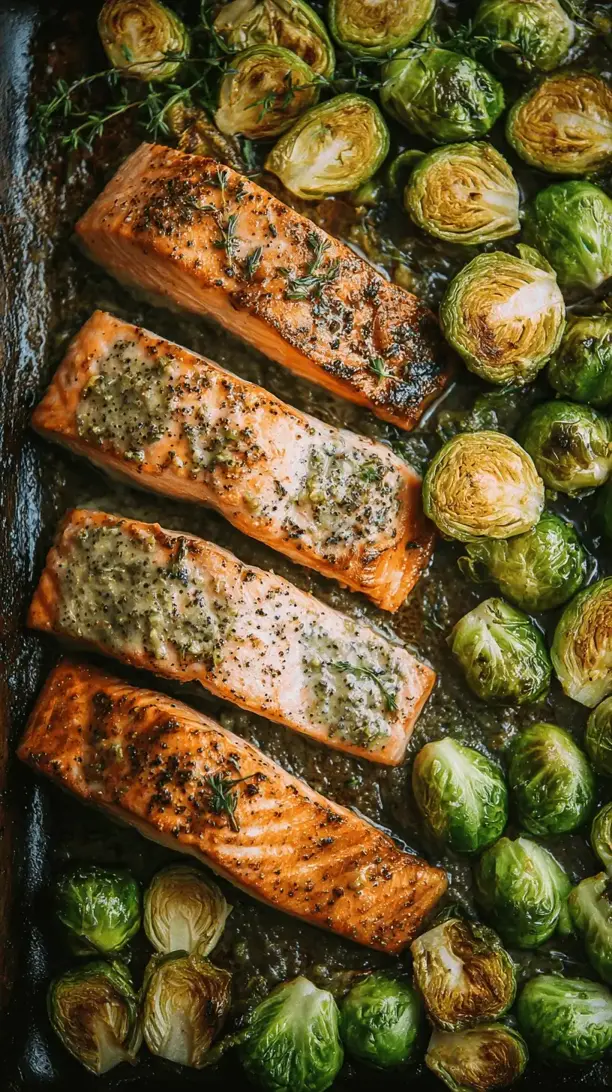
Sheet Pan Salmon And Brussels Sprouts
Easy sheet pan salmon & Brussels sprouts recipe! A one-pan wonder with a maple-Dijon glaze. Ready in 30 mins for a healthy, impressive weeknight dinner. Less cleanup, more flavor!
Ingredients
Ingredients
-
4 skin-on salmon fillets ((6-ounce), about 1-inch thick)
-
1 lb Brussels sprouts (trimmed and halved)
-
1 red onion (medium, cut into 1-inch wedges)
-
3 tbsp olive oil (divided)
-
2 tbsp pure maple syrup
-
1 tbsp Dijon mustard
-
2 cloves garlic (minced)
-
1 tsp smoked paprika
-
½ tsp red pepper flakes (optional, for a little heat)
-
kosher salt and freshly ground black pepper (To taste)
-
2 tbsp fresh parsley or dill (chopped, for garnish)
-
1 lemon (cut into wedges, for serving)
Instructions
-
Preheat your oven to 425°F (220°C). Line your large rimmed baking sheet with parchment paper—this is a non-negotiable step for me because it makes cleanup a dream. While the oven heats up, prepare your vegetables. Trim the ends off the Brussels sprouts, slice them in half lengthwise, and place them in a large mixing bowl. Add the red onion wedges.01
-
Drizzle the Brussels sprouts and onions with 2 tablespoons of the olive oil. Season generously with salt and black pepper. Now, get your hands in there and toss everything together until the vegetables are evenly coated. This hands-on approach is the best way to make sure every nook and cranny is seasoned. You'll notice the sprouts will start to glisten.02
-
Pour the seasoned vegetables onto your prepared baking sheet and spread them out into a single, even layer. It's crucial that they aren't piled up. Pop the pan into the preheated oven and roast for about 10 minutes. This head start gives the denser veggies a chance to begin softening and caramelizing before we add the quick-cooking salmon.03
-
While the veggies are roasting, prepare the salmon and the glaze. Pat the salmon fillets dry with a paper towel and place them on a plate. In your small bowl, whisk together the remaining 1 tablespoon of olive oil, maple syrup, Dijon mustard, minced garlic, smoked paprika, and red pepper flakes (if using). The mixture should be smooth and fragrant.04
-
After the 10 minutes are up, carefully pull the baking sheet out of the oven. Use a spatula to push the Brussels sprouts and onions to the perimeter of the pan, creating space in the center for the salmon fillets. Place the salmon fillets skin-side down in the center of the pan.05
-
Now, brush the maple-Dijon glaze generously over the top and sides of each salmon fillet. You should use most of the glaze here—don't be shy! Try to get some of the garlic and paprika bits onto the fish too; they'll toast up beautifully.06
-
Return the sheet pan to the oven and roast for another 12 to 15 minutes. The exact time will depend on the thickness of your salmon. You're looking for the salmon to be opaque and flake easily with a fork, and the Brussels sprouts to be tender with crispy, browned edges.07
-
Once everything is perfectly cooked, remove the pan from the oven. Let it rest for a minute—this allows the juices in the salmon to redistribute. Sprinkle the chopped fresh herbs over the entire pan for a burst of color and freshness. Serve immediately with lemon wedges on the side for squeezing over everything. The bright acidity of the lemon really brings all the flavors to life.08