
Why You’ll Love This Roasted Salmon with Asparagus
- It’s a complete meal on one pan. Seriously, the simplicity is a game-changer. You arrange the salmon and asparagus on a single baking sheet, drizzle everything with a flavorful marinade, and pop it in the oven. No juggling multiple pots and pans, which means you get a stunning dinner with barely any mess to clean up afterwards.
- The texture contrast is absolutely perfect. You get the rich, buttery, and flaky flesh of the salmon right alongside the vibrant, crisp-tender asparagus spears. Each forkful is a delightful mix of soft and snappy, making every bite interesting and satisfying.
- It’s incredibly versatile and forgiving. This recipe is a fantastic base that you can adapt based on what’s in your pantry. Feel like adding lemon slices? Go for it. Want a sprinkle of red pepper flakes for heat? Absolutely. The cooking time is also quite flexible, so even if you’re a little distracted, the results are still going to be wonderful.
- It feels fancy without the fuss. This dish has that restaurant-quality look and taste, but it’s deceptively easy to make. It’s the perfect answer when you want to impress someone—or just treat yourself—without spending hours in the kitchen. The vibrant colors and beautiful presentation do all the talking for you.
Ingredients & Tools
- 4 (6-ounce / 170 g) skin-on salmon fillets, about 1 to 1.5 inches thick
- 1 lb fresh asparagus, ends trimmed
- 3 tbsp extra virgin olive oil, divided
- 2 tbsp fresh lemon juice (about 1 lemon)
- 3 cloves garlic, minced
- 1 tsp Dijon mustard
- 1/2 tsp honey or maple syrup
- 1 tsp dried oregano or Italian seasoning
- To taste kosher salt and freshly ground black pepper
- 1 lemon, thinly sliced (for garnish, optional)
- 2 tbsp fresh parsley or dill, chopped (for garnish)
Tools: A large rimmed baking sheet, parchment paper or aluminum foil (for easy cleanup), a small bowl for the marinade, and a microplane or garlic press.
You’ll notice I call for skin-on salmon—honestly, it helps the fillets hold their shape beautifully during roasting and keeps the flesh extra moist. And don’t skip the little bit of honey or maple syrup in the marinade; it’s not about making it sweet, but about creating a beautifully balanced, glossy glaze that caramelizes just slightly in the oven.
Serves: 4 | Prep Time: 10 minutes | Cook Time: 12-15 minutes | Total Time: 25 minutes
Before You Start: Tips & Ingredient Notes
- Bring your salmon to room temperature. This is a small step that makes a big difference! Taking the salmon out of the fridge 15-20 minutes before cooking ensures it cooks evenly from edge to center, preventing a cold, undercooked middle and an overcooked exterior.
- Don’t be shy when trimming the asparagus. The ends of asparagus are woody and tough. The easiest way to find the breaking point is to hold a spear at both ends and bend it—it will snap naturally where the tender part begins. You can use that first spear as a guide to trim the rest of the bunch with a knife.
- Pat everything dry. Before you add the oil and marinade, use a paper towel to pat the salmon fillets and the asparagus dry. This is the secret to getting a nice sear on the salmon and preventing the vegetables from steaming instead of roasting. A little moisture is the enemy of browning!
- Why skin-on salmon? Even if you don’t plan on eating the skin, leaving it on during roasting acts as a protective barrier between the delicate flesh and the hot pan. It insulates the fish, resulting in a more tender and evenly cooked piece of salmon. You can always easily remove it after cooking if you prefer.
How to Make Roasted Salmon with Asparagus
Step 1: Prep the Oven and Pan. Start by preheating your oven to 400°F (200°C). This high heat is key for getting a nice roast on the veggies and cooking the salmon quickly. Line your large rimmed baking sheet with parchment paper or foil—this isn’t just for easy cleanup; it also prevents the delicate salmon from sticking terribly. You’ll thank yourself later.
Step 2: Make the Flavor-Packed Marinade. In your small bowl, whisk together 2 tablespoons of the olive oil, the fresh lemon juice, minced garlic, Dijon mustard, honey, dried oregano, a good pinch of salt, and several grinds of black pepper. Whisk it until it’s well combined and slightly emulsified—you’ll notice it thickens up just a bit. This marinade is the flavor engine of the whole dish, so give it a quick taste and adjust the seasoning if needed.
Step 3: Arrange and Season the Salmon & Asparagus. Place your room-temperature salmon fillets skin-side down in the center of the prepared baking sheet. Arrange the trimmed asparagus spears around the salmon in a single layer. Drizzle the remaining 1 tablespoon of olive oil over just the asparagus, and toss them with your hands to coat them lightly. Then, season the asparagus with a pinch of salt and pepper. Now, spoon the marinade you made evenly over the top of the salmon fillets, making sure to coat them well, including the garlic bits.
Step 4: Roast to Perfection. Slide the baking sheet into the preheated oven. The cook time will depend on the thickness of your fillets, but for standard 1-inch thick pieces, start checking at around 12 minutes. You’re looking for the salmon to be opaque and flake easily when pressed gently with a fork at the thickest part. The asparagus should be tender-crisp and bright green. If you have an instant-read thermometer, the internal temperature of the salmon should read 125-130°F (52-54°C) for medium.
Step 5: Garnish and Serve Immediately. Once out of the oven, let the pan rest for just a minute. This allows the juices in the salmon to redistribute. Then, transfer the salmon and asparagus to serving plates. Squeeze a little extra fresh lemon juice over everything if you like, and sprinkle generously with the chopped fresh parsley or dill. The fresh herbs add a burst of color and a lovely, bright finish that really brings the whole dish together.
Serving Suggestions
Complementary Dishes
- Fluffy Quinoa or Couscous — These light grains are perfect for soaking up the delicious lemony juices from the salmon and asparagus. They add a lovely, neutral base that makes the meal feel more substantial without overpowering the main event.
- Creamy Mashed Potatoes or Polenta — For a more comforting, decadent feel, serve the salmon and asparagus on a bed of something creamy. The rich, soft texture is a dreamy contrast to the flaky fish and crisp veg.
- A Simple Arugula Salad — A salad with a sharp, peppery bite from arugula, dressed simply with lemon vinaigrette, complements the richness of the salmon beautifully and adds another fresh element to the plate.
Drinks
- A Crisp Sauvignon Blanc — The classic pairing. This wine’s bright acidity and citrus notes mirror the flavors in the dish and cut through the richness of the salmon perfectly.
- A Light Pinot Noir — If you prefer red wine, a light-bodied, low-tannin Pinot Noir won’t overwhelm the fish. Its earthy, cherry notes work surprisingly well with the roasted elements.
- Sparkling Water with Lemon — For a non-alcoholic option, nothing beats ice-cold sparkling water with a squeeze of lemon. It’s refreshing, cleansing, and highlights the citrus in the recipe.
Something Sweet
- Lemon Sorbet — A scoop of tangy, palate-cleansing lemon sorbet is the perfect way to end this meal. It’s light, refreshing, and continues the citrus theme in the most delightful way.
- Fresh Berry Parfait — Layers of Greek yogurt, honey, and fresh mixed berries provide a sweet, creamy, and healthy finish that feels indulgent without being too heavy.
- Dark Chocolate Almond Bark — A few pieces of high-quality dark chocolate with almonds offers a rich, slightly bitter counterpoint to the meal and is a simple, elegant way to satisfy a sweet tooth.
Top Mistakes to Avoid
- Mistake: Overcrowding the pan. If you cram everything onto a small baking sheet, the ingredients will steam instead of roast. You want a single layer with a little space between the fillets and asparagus for the hot air to circulate properly. This is non-negotiable for achieving that beautiful caramelization.
- Mistake: Overcooking the salmon. I’ve messed this up before too—it’s easy to do! Salmon continues to cook from residual heat after it comes out of the oven (carryover cooking). So, it’s better to pull it out when it’s *almost* done to your liking. Remember, you can always put it back in for a minute, but you can’t undo dry, chalky fish.
- Mistake: Skipping the drying step. If the salmon and asparagus are wet, they won’t brown. That pat-dry with a paper towel might seem trivial, but it’s the difference between a pale, steamed dinner and a beautifully roasted one with delicious browned bits.
- Mistake: Using old, dried-out herbs. The dried oregano in the marinade is fine, but for the fresh garnish at the end, please use truly fresh herbs. Wilted, brown parsley won’t add the vibrant flavor and color you’re looking for. If your herbs are looking sad, just skip the garnish rather than using subpar ones.
Expert Tips
- Tip: Use the skin to your advantage. For an extra-crispy salmon skin, start the fillets skin-side down in a hot oven-safe skillet on the stovetop for 2-3 minutes until the skin is crisp. Then, transfer the entire skillet to the preheated oven to finish cooking. This method gives you a fantastic textural element.
- Tip: Customize your marinade. This recipe is a template! Love capers? Stir a tablespoon into the marinade. Want an Asian twist? Swap the lemon for lime and the oregano for grated ginger and a splash of soy sauce. Play around with the flavors you love most.
- Tip: Check for doneness with a thermometer. For perfectly cooked salmon every single time, an instant-read thermometer is your best friend. Aim for 125-130°F (52-54°C) in the thickest part for medium. It takes the guesswork out completely and ensures ideal results.
- Tip: Add cherry tomatoes for a burst of color. In the last 5-7 minutes of cooking, you can scatter a handful of cherry tomatoes onto the pan alongside the asparagus. They’ll blister and burst, adding a lovely sweetness and acidity to the dish.
FAQs
Can I use frozen salmon and asparagus?
You can, but you need to thaw them properly first. Thaw the salmon overnight in the refrigerator—never at room temperature—and pat it very dry before using. For frozen asparagus, thaw it and then pat it *extremely* dry, as it releases a lot of water. Honestly, fresh is best for texture here, but frozen will work in a pinch if you’re diligent about removing excess moisture.
How do I know when the salmon is done cooking?
The most reliable method is an instant-read thermometer: 125-130°F (52-54°C) for medium. Without a thermometer, look for the flesh to turn from translucent to opaque pink and to flake easily when gently pressed with a fork at the thickest part. A little translucent pink in the very center is okay—it will continue to cook from residual heat.
What can I use instead of Dijon mustard?
No problem! Whole-grain mustard would be a great substitute, adding a nice texture. If you don’t have any mustard, you can simply omit it. The marinade will still be delicious with the olive oil, lemon, and garlic. You might want to add an extra pinch of salt to compensate for the missing flavor depth.
Can I prepare this ahead of time?
You can do some prep to make things faster! You can trim the asparagus and make the marinade up to a day in advance. Store them separately in the fridge. When you’re ready to cook, let the salmon come to room temperature, arrange everything on the pan, and proceed. I don’t recommend marinating the salmon for more than 30 minutes beforehand, as the acid in the lemon juice can start to “cook” the fish.
How should I store and reheat leftovers?
Store any leftovers in an airtight container in the refrigerator for up to 2 days. To reheat, the best method is gently in a 300°F (150°C) oven for about 10-15 minutes, or until warmed through. You can use the microwave, but do it on low power in short bursts to avoid overcooking and making the salmon rubbery. The asparagus will soften considerably upon reheating, but it will still taste great.
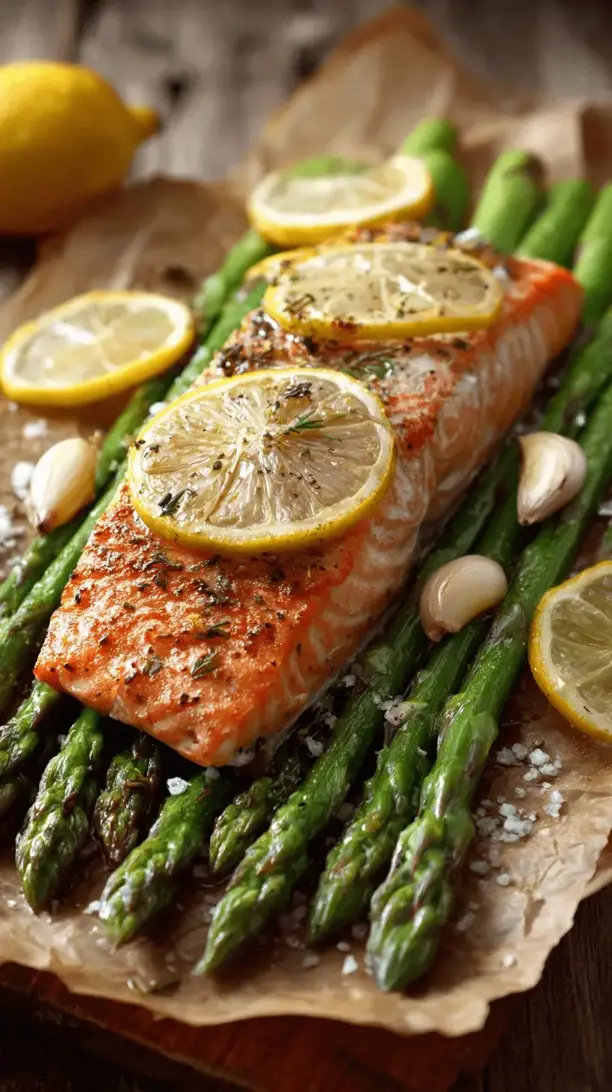
Roasted Salmon With Asparagus
Learn how to make perfect roasted salmon with asparagus on one pan! This easy, healthy recipe is ready in 25 minutes. A foolproof dinner that's elegant enough for guests.
Ingredients
Ingredients
-
4 skin-on salmon fillets (6-ounce / 170 g, about 1 to 1.5 inches thick)
-
1 lb fresh asparagus (ends trimmed)
-
3 tbsp extra virgin olive oil (divided)
-
2 tbsp fresh lemon juice (about 1 lemon)
-
3 cloves garlic (minced)
-
1 tsp Dijon mustard
-
1/2 tsp honey or maple syrup
-
1 tsp dried oregano or Italian seasoning
-
kosher salt and freshly ground black pepper (To taste)
-
1 lemon (thinly sliced (for garnish, optional))
-
2 tbsp fresh parsley or dill (chopped (for garnish))
Instructions
-
Prep the Oven and Pan. Start by preheating your oven to 400°F (200°C). This high heat is key for getting a nice roast on the veggies and cooking the salmon quickly. Line your large rimmed baking sheet with parchment paper or foil—this isn't just for easy cleanup; it also prevents the delicate salmon from sticking terribly.01
-
Make the Flavor-Packed Marinade. In your small bowl, whisk together 2 tablespoons of the olive oil, the fresh lemon juice, minced garlic, Dijon mustard, honey, dried oregano, a good pinch of salt, and several grinds of black pepper. Whisk it until it's well combined and slightly emulsified—you'll notice it thickens up just a bit. This marinade is the flavor engine of the whole dish, so give it a quick taste and adjust the seasoning if needed.02
-
Arrange and Season the Salmon & Asparagus. Place your room-temperature salmon fillets skin-side down in the center of the prepared baking sheet. Arrange the trimmed asparagus spears around the salmon in a single layer. Drizzle the remaining 1 tablespoon of olive oil over just the asparagus, and toss them with your hands to coat them lightly. Then, season the asparagus with a pinch of salt and pepper. Now, spoon the marinade you made evenly over the top of the salmon fillets, making sure to coat them well, including the garlic bits.03
-
Roast to Perfection. Slide the baking sheet into the preheated oven. The cook time will depend on the thickness of your fillets, but for standard 1-inch thick pieces, start checking at around 12 minutes. You're looking for the salmon to be opaque and flake easily when pressed gently with a fork at the thickest part. The asparagus should be tender-crisp and bright green. If you have an instant-read thermometer, the internal temperature of the salmon should read 125-130°F (52-54°C) for medium.04
-
Garnish and Serve Immediately. Once out of the oven, let the pan rest for just a minute. This allows the juices in the salmon to redistribute. Then, transfer the salmon and asparagus to serving plates. Squeeze a little extra fresh lemon juice over everything if you like, and sprinkle generously with the chopped fresh parsley or dill. The fresh herbs add a burst of color and a lovely, bright finish that really brings the whole dish together.05