
Why You’ll Love This Miso Salmon with Bok Choy
- It’s a complete meal in one pan. Honestly, the fewer dishes to wash, the better. You’ll arrange the salmon and bok choy on a single baking sheet, and about 15 minutes later, dinner is served. The simplicity is just unbeatable.
- The flavor profile is complex yet effortless. The umami-rich miso, the subtle heat from the ginger, and the sweet note from the honey create a glaze that is so much greater than the sum of its parts. It’s a taste that will have everyone asking for the recipe.
- It feels indulgent but is packed with goodness. Salmon is a fantastic source of omega-3s, and bok choy is a nutrient-dense green. You get that satisfying, restaurant-quality feel while knowing you’re feeding your body something truly wholesome.
- It’s incredibly versatile. Don’t have bok choy? Use broccoli or asparagus. Need to use maple syrup instead of honey? Go for it. This recipe is a wonderful template that welcomes little tweaks based on what you have on hand.
Ingredients & Tools
- 4 (6-ounce / 170 g) skin-on salmon fillets, about 1-inch thick
- 4 heads of baby bok choy, halved lengthwise
- 1/4 cup white miso paste
- 2 tablespoons honey or maple syrup
- 1 tablespoon rice vinegar
- 1 tablespoon toasted sesame oil
- 1 tablespoon fresh ginger, grated
- 2 cloves garlic, minced
- 1-2 tablespoons warm water
- 1 tablespoon avocado oil or olive oil
- 1 teaspoon sesame seeds, for garnish
- 2 scallions, thinly sliced, for garnish
Tools: A rimmed baking sheet, parchment paper or aluminum foil, a small whisk or fork, a small bowl.
A quick note on the miso—white (or yellow) miso is milder and sweeter than red miso, which is why it’s perfect here. It creates a beautifully balanced glaze without being overly salty. And using skin-on salmon helps keep the fillets intact and incredibly moist during the high-heat cooking.
Serves: 4 | Prep Time: 15 minutes | Cook Time: 12-15 minutes | Total Time: 30 minutes
Before You Start: Tips & Ingredient Notes
- Pat your salmon dry. This is a small but crucial step. Taking a paper towel and patting the salmon fillets dry ensures the marinade will stick properly and helps the skin get a bit crispier, rather than steaming.
- Don’t skip the rice vinegar. It might seem like a small amount, but the acidity is essential. It cuts through the richness of the miso and salmon, brightening the entire dish and preventing the glaze from being one-dimensional.
- What if my miso paste is super thick? No worries! This is why we have the warm water. If your miso mixture is too pasty to brush on, just add the water, one teaspoon at a time, until it reaches a thick but spreadable consistency—like a loose peanut butter.
- To grate ginger easily, freeze it first. Honestly, this is a game-changer. Keep a knob of ginger in the freezer. When you need some, just pull it out and grate it frozen—skin and all—on a microplane. It creates fluffy piles of ginger with zero fuss.
How to Make Miso Salmon with Bok Choy
Step 1: Make the Miso Glaze. In a small bowl, combine the white miso paste, honey, rice vinegar, toasted sesame oil, grated ginger, and minced garlic. Use a small whisk or a fork to mix everything until it’s completely smooth and well-combined. If the mixture seems too thick to brush easily, stir in a tablespoon of warm water to loosen it up. You’re aiming for a smooth, pourable paste. Give it a little taste—you’ll notice it’s salty, sweet, and savory all at once.
Step 2: Prepare the Baking Sheet and Vegetables. Preheat your broiler on high with a rack positioned about 6-8 inches from the heat source. Line a rimmed baking sheet with parchment paper or foil for easy cleanup. Place the halved baby bok choy on the sheet and drizzle with the avocado or olive oil. Use your hands to toss them, making sure each piece is lightly coated. Arrange them cut-side down in a single layer—this will help them get a nice sear.
Step 3: Marinate the Salmon. Pat the salmon fillets completely dry with paper towels. Place them skin-side down on the baking sheet, nestled among the bok choy. Using a pastry brush or the back of a spoon, generously coat the top and sides of each salmon fillet with the miso glaze. You should use about two-thirds of the glaze here, saving the rest for later. Don’t worry about the skin; the glaze is just for the flesh.
Step 4: Broil to Perfection. Carefully place the baking sheet under the broiler. Broil for 8-12 minutes. The exact time will depend on the thickness of your salmon and your broiler’s power. You’re looking for the glaze to become deeply caramelized and bubbly, and the salmon should be opaque and flake easily with a fork at the thickest part. The bok choy should be tender with slightly charred edges. The trick is to watch it closely after the 8-minute mark to prevent burning.
Step 5: Glaze and Garnish. Once out of the oven, immediately brush the remaining miso glaze over the hot salmon fillets—this double layer of glaze adds an incredible burst of flavor. Let everything rest for a minute on the pan. Then, transfer the salmon and bok choy to serving plates. Sprinkle with sliced scallions and sesame seeds for a fresh, nutty finish and a pop of color.
Serving Suggestions
Complementary Dishes
- Steamed Jasmine Rice — The fluffy, slightly sticky rice is the perfect neutral base to soak up every last drop of the delicious miso glaze and salmon juices. It completes the meal and makes it more substantial.
- Simple Soba Noodle Salad — Toss chilled soba noodles with a light dressing of soy sauce, lime juice, and a dash of sesame oil for a refreshing, cool contrast to the warm, rich salmon.
- Quick-Pickled Cucumbers — Their sharp, acidic crunch cuts through the richness of the fish beautifully, cleansing the palate between bites. Just slice cucumbers thin and toss with rice vinegar, a pinch of sugar, and salt.
Drinks
- Crisp Pinot Grigio or Sauvignon Blanc — A white wine with good acidity complements the umami flavors without overpowering them. The citrus notes in these wines will mirror the brightness in the dish.
- Jasmine Green Tea — For a non-alcoholic option, the floral, delicate notes of jasmine tea are a surprisingly perfect match for the Asian-inspired flavors, creating a light and soothing pairing.
- Ginger Beer — The spicy-sweet fizz of a good ginger beer echoes the ginger in the glaze and provides a refreshing, palate-cleansing effervescence.
Something Sweet
- Mango Sorbet — The tropical sweetness and bright acidity of mango are a fantastic, light way to end the meal. It feels refreshing and doesn’t weigh you down after the savory salmon.
- Matcha Cookies — The earthy, slightly bitter notes of matcha are a sophisticated follow-up to the umami-rich main course, creating a lovely flavor bridge.
- Lychee with a drizzle of honey — Simply serving chilled, fresh lychees is an elegant and simple dessert. Their perfumed, floral sweetness is a delightful, light finish.
Top Mistakes to Avoid
- Mistake: Placing the rack too close to the broiler. If the salmon is too close to the intense heat, the sugar in the glaze will burn before the fish has a chance to cook through. You’ll end up with a bitter crust and undercooked center. The 6-8 inch distance is key.
- Mistake: Not patting the salmon dry. I’ve messed this up before too… a wet salmon fillet will steam instead of roast, and the glaze will slide right off. Taking that extra 30 seconds to dry it makes a world of difference in texture and flavor adherence.
- Mistake: Overcooking the salmon. Salmon continues to cook from residual heat after it comes out of the oven (carryover cooking). You want to remove it just as it becomes opaque and flaky. If you wait until it’s completely firm, it will be dry by the time you eat it.
- Mistake: Skipping the final glaze. Brushing on that reserved glaze at the end might seem optional, but it’s not! It adds a layer of fresh, vibrant flavor that hasn’t been cooked out, elevating the entire dish.
Expert Tips
- Tip: Bring the salmon to room temperature. If you have an extra 15 minutes, let the salmon sit out for a bit before cooking. This helps it cook more evenly, preventing an overcooked outside and a cold center.
- Tip: Use the back of your knife to crush the garlic. Instead of mincing, sprinkle a little salt on the garlic cloves and use the flat side of your knife to crush them into a paste. This releases more flavor and ensures you don’t get a sharp bite of raw garlic.
- Tip: Make a double batch of the glaze. This miso glaze is incredible on so many things—chicken thighs, roasted eggplant, even as a dressing for a hearty grain bowl. Whip up extra and store it in a jar in the fridge for up to a week.
- Tip: Check for doneness with a paring knife. The flake test is great, but for absolute precision, insert the tip of a paring knife into the thickest part of the salmon and peek inside. It should be opaque but still glistening a little.
FAQs
Can I use a different type of miso?
You can, but it will change the flavor profile. Red miso is fermented longer, making it saltier and more pungent. If you use it, I’d recommend starting with half the amount and adding more to taste, and you might want to increase the honey slightly to balance the stronger saltiness. White miso is really ideal for its mild, sweet character in this particular recipe.
How do I know when the salmon is perfectly cooked?
Look for the flesh to turn from translucent orange to an opaque pinkish-white. When you gently press the top of the fillet with a fork, it should flake apart easily. The internal temperature, if you use a thermometer, should read between 125°F and 130°F (52°C-54°C) for medium-rare to medium, which is where salmon is most moist and flavorful. Remember, it will continue to cook a bit after you take it out!
Can I bake this instead of broiling?
Absolutely! If you’re nervous about the broiler or your oven runs hot, you can bake it at 400°F (200°C). It will take a bit longer, about 12-15 minutes. You won’t get the same intense caramelization on the glaze, so for the last 2-3 minutes, you can switch the oven to broil to get that beautiful color and crust.
What can I use instead of bok choy?
This recipe is very flexible! Broccoli florets, asparagus spears, or even thick slices of sweet potato would be fantastic. Just keep in mind that denser vegetables like sweet potato might need a head start—you could roast them for 10 minutes before adding the salmon and bok choy to the pan.
How should I store and reheat leftovers?
Store any leftover salmon and bok choy in an airtight container in the refrigerator for up to 2 days. To reheat, do it gently! The microwave can make the salmon rubbery. Instead, place it on a foil-lined baking sheet and warm it in a 300°F (150°C) oven for about 10-15 minutes, or until just heated through. It’s also delicious cold, flaked over a salad.
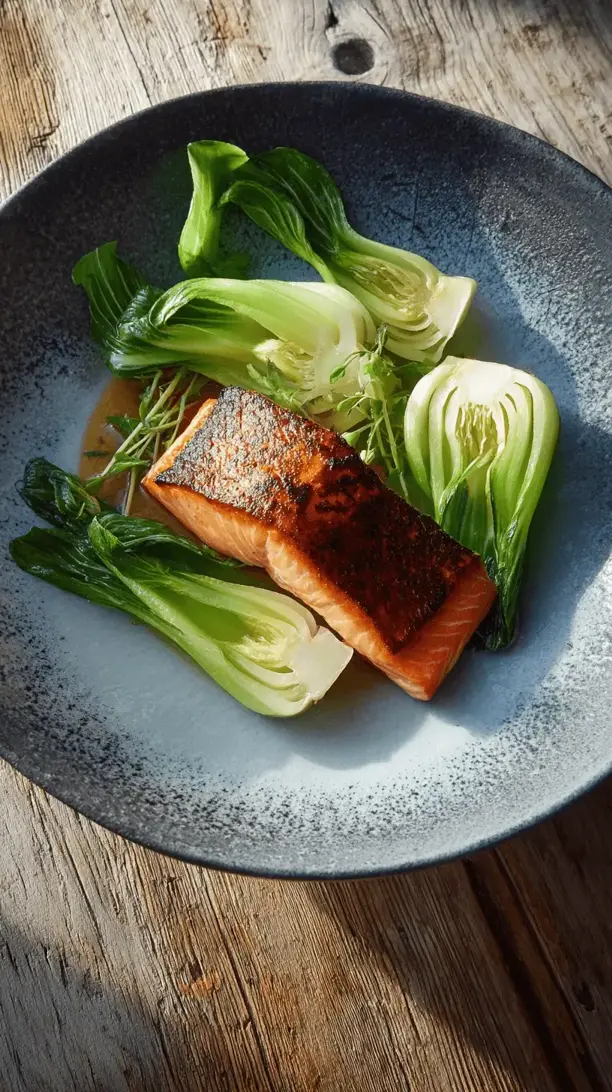
Miso Salmon With Bok Choy
Whip up restaurant-quality miso salmon with bok choy in 30 minutes! My easy, one-pan recipe features a sweet-savory glaze for perfectly flaky fish & tender greens.
Ingredients
Ingredients
-
4 skin-on salmon fillets (6-ounce / 170 g, about 1-inch thick)
-
4 heads baby bok choy (halved lengthwise)
-
1/4 cup white miso paste
-
2 tablespoons honey or maple syrup
-
1 tablespoon rice vinegar
-
1 tablespoon toasted sesame oil
-
1 tablespoon fresh ginger (grated)
-
2 cloves garlic (minced)
-
1-2 tablespoons warm water
-
1 tablespoon avocado oil or olive oil
-
1 teaspoon sesame seeds (for garnish)
-
2 scallions (thinly sliced, for garnish)
Instructions
-
Make the Miso Glaze. In a small bowl, combine the white miso paste, honey, rice vinegar, toasted sesame oil, grated ginger, and minced garlic. Use a small whisk or a fork to mix everything until it's completely smooth and well-combined. If the mixture seems too thick to brush easily, stir in a tablespoon of warm water to loosen it up. You're aiming for a smooth, pourable paste. Give it a little taste—you'll notice it's salty, sweet, and savory all at once.01
-
Prepare the Baking Sheet and Vegetables. Preheat your broiler on high with a rack positioned about 6-8 inches from the heat source. Line a rimmed baking sheet with parchment paper or foil for easy cleanup. Place the halved baby bok choy on the sheet and drizzle with the avocado or olive oil. Use your hands to toss them, making sure each piece is lightly coated. Arrange them cut-side down in a single layer—this will help them get a nice sear.02
-
Marinate the Salmon. Pat the salmon fillets completely dry with paper towels. Place them skin-side down on the baking sheet, nestled among the bok choy. Using a pastry brush or the back of a spoon, generously coat the top and sides of each salmon fillet with the miso glaze. You should use about two-thirds of the glaze here, saving the rest for later. Don't worry about the skin; the glaze is just for the flesh.03
-
Broil to Perfection. Carefully place the baking sheet under the broiler. Broil for 8-12 minutes. The exact time will depend on the thickness of your salmon and your broiler's power. You're looking for the glaze to become deeply caramelized and bubbly, and the salmon should be opaque and flake easily with a fork at the thickest part. The bok choy should be tender with slightly charred edges. The trick is to watch it closely after the 8-minute mark to prevent burning.04
-
Glaze and Garnish. Once out of the oven, immediately brush the remaining miso glaze over the hot salmon fillets—this double layer of glaze adds an incredible burst of flavor. Let everything rest for a minute on the pan. Then, transfer the salmon and bok choy to serving plates. Sprinkle with sliced scallions and sesame seeds for a fresh, nutty finish and a pop of color.05