
Why You’ll Love This Baked Salmon with Lemon Dill Sauce
- It’s incredibly simple and foolproof. The baking method is hands-off and reliable, giving you perfectly cooked, flaky fish every single time. No more guessing or dry, overcooked salmon.
- The sauce is a game-changer. It’s cool, creamy, and bursting with fresh dill and lemon. It transforms the simple baked salmon into a restaurant-quality dish that feels luxurious.
- It’s a wonderfully versatile centrepiece. This dish is light enough for a summer lunch but substantial enough for a cosy dinner. It pairs beautifully with so many different sides, from simple roasted veggies to a hearty grain salad.
- It comes together in under 30 minutes. From fridge to table in less than half an hour? That’s my kind of weeknight win. It’s perfect for those evenings when you want something delicious and nourishing without a long cooking process.
Ingredients & Tools
- 4 salmon fillets, skin-on or skinless (about 150-180 g each)
- 1 tbsp olive oil
- 1/2 tsp each salt and black pepper
- 1 lemon, thinly sliced
- 120 g Greek yoghurt or sour cream
- 2 tbsp mayonnaise
- 1 tbsp fresh lemon juice
- 1 tsp lemon zest
- 2 tbsp fresh dill, finely chopped
- 1 small garlic clove, minced
- 1-2 tbsp capers, rinsed (optional, for a briny kick)
Tools: A baking sheet, parchment paper, a small mixing bowl, a zester or fine grater, and a sharp knife.
Using fresh dill and a real lemon for both juice and zest is non-negotiable here—it makes all the difference in creating that bright, aromatic sauce. For the salmon, try to get fillets that are similar in thickness so they cook evenly.
Serves: 4 | Prep Time: 10 minutes | Cook Time: 12-15 minutes | Total Time: 25 minutes
Before You Start: Tips & Ingredient Notes
- Pat that salmon dry! This is the secret to getting a nice surface on your fish, rather than it steaming in its own moisture. Use a paper towel and gently press on both sides.
- What’s the deal with skin-on vs. skinless? I actually prefer skin-on fillets for baking. The skin acts as a protective layer, keeping the flesh incredibly moist. You can easily slide a spatula between the skin and flesh to serve—no need to eat it if you don’t want to!
- Is your salmon cold? Let the fillets sit at room temperature for about 10-15 minutes before baking. This helps them cook more evenly from edge to centre.
- Fresh herbs are key. While dried dill can work in a pinch, the flavour of fresh dill is so much brighter and more vibrant. It’s really worth seeking out for this recipe.
- Don’t skip the zest! The lemon zest adds a powerful, fragrant citrus oil that the juice alone can’t provide. It’s the magic ingredient that makes the sauce pop.
How to Make Baked Salmon with Lemon Dill Sauce
Step 1: Prep the Salmon and Oven. First, preheat your oven to 200°C (400°F). Line a baking sheet with parchment paper—this makes cleanup a dream. Take your salmon fillets and pat them thoroughly dry with paper towels. This is a crucial step! Drizzle the olive oil over the fillets and use your hands to rub it all over the surface. Season both sides generously with the salt and pepper.
Step 2: Arrange and Bake. Place the seasoned salmon fillets on the prepared baking sheet. If you’re using them, tuck a few of the thin lemon slices underneath or around the sides of the fillets. They’ll release their juices and perfume the fish as it bakes. Slide the baking sheet into the preheated oven and bake for 12-15 minutes. The exact time will depend on the thickness of your fillets. You’re looking for the salmon to be opaque and flake easily when pressed gently with a fork.
Step 3: Make the Lemon Dill Sauce. While the salmon is baking, let’s whip up that incredible sauce. In your small mixing bowl, combine the Greek yoghurt (or sour cream), mayonnaise, fresh lemon juice, and lemon zest. Whisk it together until it’s smooth and well-combined. Now, stir in the finely chopped fresh dill, the minced garlic, and the capers if you’re using them. Give it a taste—you might want an extra pinch of salt or a squeeze more lemon. Set the sauce aside while the salmon finishes cooking.
Step 4: Check for Doneness and Rest. When the timer goes off, check your salmon. The flesh should be opaque and separate into large, moist flakes. A little translucent pink in the very centre is okay—it will continue to cook from residual heat. Please, whatever you do, do not overcook it! Dry salmon is a sad thing. Once it’s done, remove the baking sheet from the oven and let the salmon rest for about 2-3 minutes. This allows the juices to redistribute throughout the fish.
Step 5: Serve and Enjoy. Carefully transfer the baked salmon fillets to serving plates using a spatula. If the skin has stuck to the parchment, just slide the spatula between the skin and flesh. Dollop a generous amount of the lemon dill sauce over the top of each warm fillet. Serve immediately with extra lemon wedges on the side for those who love an extra zing.
Serving Suggestions
Complementary Dishes
- Garlic Roasted Asparagus — The earthy, slightly charred flavour of asparagus is a classic partner for salmon. A little garlic and a squeeze of lemon after roasting ties everything together beautifully.
- Simple Quinoa Pilaf — A light, fluffy quinoa pilaf with some chopped parsley and spring onions acts as a wonderful, protein-packed base that soaks up the extra sauce.
- Buttery New Potatoes — For a more comforting meal, boiled or roasted new potatoes tossed in butter and fresh dill are an absolute dream alongside the flaky fish.
Drinks
- A Crisp Sauvignon Blanc — The high acidity and citrus notes in a good Sauvignon Blanc mirror the flavours in the sauce and cut through the richness of the salmon perfectly.
- Sparkling Water with Lemon — For a non-alcoholic option, nothing beats ice-cold sparkling water with a slice of lemon. It’s refreshing and cleanses the palate between bites.
- A Light Pale Ale — The slight bitterness and carbonation of a pale ale can be a surprising and delightful match, especially if you’re eating al fresco.
Something Sweet
- Lemon Sorbet — Continuing the citrus theme, a scoop of sharp, clean lemon sorbet is the perfect palate-cleansing dessert after this meal.
- Fresh Berry Pavlova — The soft meringue and sweet-tart berries provide a lovely, light contrast to the savoury main course without feeling too heavy.
- Dark Chocolate Almond Clusters — A few pieces of good-quality dark chocolate with almonds offer a simple, elegant, and not-too-sweet ending.
Top Mistakes to Avoid
- Mistake: Overcooking the salmon. This is the number one error. Salmon continues to cook after it comes out of the oven (carryover cooking), so it’s better to pull it out when it’s *almost* done. Overcooked salmon becomes dry and chalky.
- Mistake: Not patting the fillets dry. Skipping this step means the salmon will steam instead of bake, resulting in a less appealing texture and a pale, wet-looking surface.
- Mistake: Adding the sauce before baking. The lemon dill sauce is a finishing sauce, meant to be served cold or at room temperature on top of the warm salmon. If you put it on before baking, the yoghurt will curdle and separate.
- Mistake: Using old, dull lemons. You need a fresh, firm lemon to get good juice and, more importantly, fragrant zest. An old, soft lemon won’t give you the same vibrant flavour.
Expert Tips
- Tip: Make the sauce ahead. The flavours in the lemon dill sauce actually improve if it sits in the fridge for an hour or even overnight. This gives the garlic and dill time to meld beautifully with the other ingredients.
- Tip: Use an instant-read thermometer. For absolute precision, cook your salmon until it reaches an internal temperature of 45-50°C (115-125°F) for medium-rare, or 55-60°C (130-140°F) for medium. This takes the guesswork out completely.
- Tip: Get creative with the sauce. Feel free to stir in a teaspoon of whole grain mustard for a little sharpness, or swap the dill for another soft herb like tarragon or chives for a different flavour profile.
- Tip: Save the leftover sauce. This sauce is fantastic the next day! Use it as a dip for vegetable sticks, a spread for sandwiches, or a dressing for a potato salad. It’s too good to waste.
FAQs
Can I use frozen salmon for this recipe?
Absolutely! Just make sure to thaw it completely in the refrigerator overnight first. Pat it extra dry, as frozen fish tends to release more water. Cooking it from frozen isn’t recommended for this method, as the outside will overcook before the inside is done.
How long will the leftovers keep?
Store any leftover salmon and sauce separately in airtight containers in the fridge. The salmon will keep for up to 2 days. The sauce will last for 3-4 days. The salmon is lovely flaked over a salad or stirred into pasta when cold—just note that reheating fish can sometimes make it a bit strong-smelling.
I don’t like mayonnaise. Can I leave it out?
You can, but the mayonnaise adds a lovely richness and helps stabilize the sauce. If you omit it, the sauce will be tangier and thinner. You could try replacing it with an extra tablespoon of Greek yoghurt, though the texture will be different.
What can I use instead of fresh dill?
In a real pinch, you can use 2 teaspoons of dried dill, but the flavour will be much more muted and earthy. If you have other fresh herbs, tarragon or parsley would be nice substitutes, though the character of the dish will change.
My sauce is too thick. How can I thin it out?
No problem! Just whisk in a teaspoon of milk, water, or extra lemon juice at a time until it reaches your desired consistency. Go slowly—you can always add more liquid, but you can’t take it out!
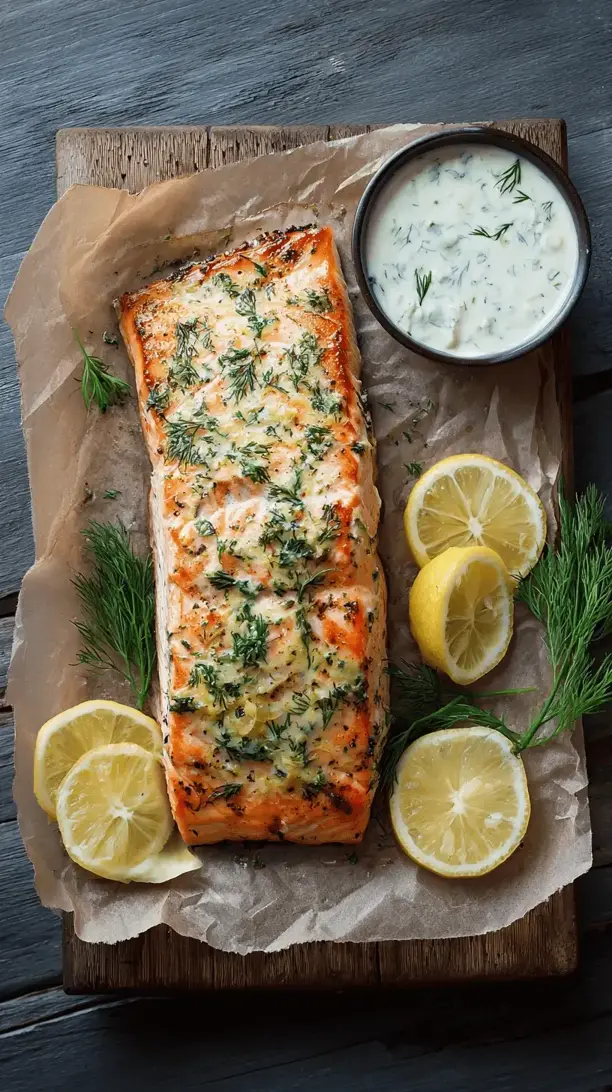
Baked Salmon With Lemon Dill Sauce
My foolproof baked salmon with lemon dill sauce! Ready in under 30 mins. Flaky, moist salmon & a zesty, creamy sauce for an easy, elegant weeknight dinner.
Ingredients
Ingredients
-
4 salmon fillets (skin-on or skinless (about 150-180 g each))
-
1 tbsp olive oil
-
1/2 tsp salt
-
1/2 tsp black pepper
-
1 lemon (thinly sliced)
-
120 g Greek yoghurt or sour cream
-
2 tbsp mayonnaise
-
1 tbsp fresh lemon juice
-
1 tsp lemon zest
-
2 tbsp fresh dill (finely chopped)
-
1 garlic clove (small, minced)
-
1-2 tbsp capers (rinsed (optional, for a briny kick))
Instructions
-
Prep the Salmon and Oven. First, preheat your oven to 200°C (400°F). Line a baking sheet with parchment paper—this makes cleanup a dream. Take your salmon fillets and pat them thoroughly dry with paper towels. This is a crucial step! Drizzle the olive oil over the fillets and use your hands to rub it all over the surface. Season both sides generously with the salt and pepper.01
-
Arrange and Bake. Place the seasoned salmon fillets on the prepared baking sheet. If you're using them, tuck a few of the thin lemon slices underneath or around the sides of the fillets. They'll release their juices and perfume the fish as it bakes. Slide the baking sheet into the preheated oven and bake for 12-15 minutes. The exact time will depend on the thickness of your fillets. You're looking for the salmon to be opaque and flake easily when pressed gently with a fork.02
-
Make the Lemon Dill Sauce. While the salmon is baking, let's whip up that incredible sauce. In your small mixing bowl, combine the Greek yoghurt (or sour cream), mayonnaise, fresh lemon juice, and lemon zest. Whisk it together until it's smooth and well-combined. Now, stir in the finely chopped fresh dill, the minced garlic, and the capers if you're using them. Give it a taste—you might want an extra pinch of salt or a squeeze more lemon. Set the sauce aside while the salmon finishes cooking.03
-
Check for Doneness and Rest. When the timer goes off, check your salmon. The flesh should be opaque and separate into large, moist flakes. A little translucent pink in the very centre is okay—it will continue to cook from residual heat. Please, whatever you do, do not overcook it! Dry salmon is a sad thing. Once it's done, remove the baking sheet from the oven and let the salmon rest for about 2-3 minutes. This allows the juices to redistribute throughout the fish.04
-
Serve and Enjoy. Carefully transfer the baked salmon fillets to serving plates using a spatula. If the skin has stuck to the parchment, just slide the spatula between the skin and flesh. Dollop a generous amount of the lemon dill sauce over the top of each warm fillet. Serve immediately with extra lemon wedges on the side for those who love an extra zing.05