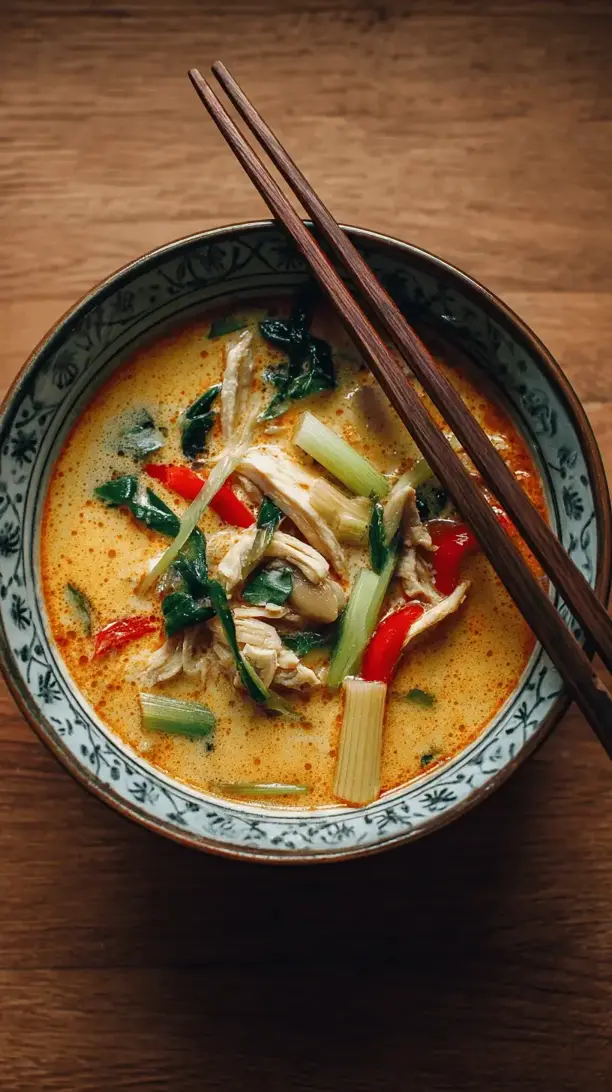

Why You’ll Love This Thai Chicken and Vegetable Soup
- It’s a Flavor Explosion. We’re talking layers upon layers of taste here. The savory base, the subtle spice, the creamy coconut, and the fresh, zesty finish all work together in perfect harmony. Each spoonful is a little different from the last.
- It’s Surprisingly Quick and Easy. You might look at the ingredient list and think it’s complicated, but honestly, it’s a one-pot wonder. The process is mostly about simmering and adding ingredients at the right time. It’s practically foolproof and perfect for a busy evening.
- It’s Incredibly Adaptable. Not a fan of mushrooms? Swap them for green beans. Want it spicier? Add more curry paste. This soup is a fantastic canvas for whatever you have in your fridge. It’s a great way to clean out the vegetable drawer while creating something spectacular.
- It Feels Like a Hug from the Inside. This soup is the ultimate comfort food, but it’s also light and brothy, not heavy or overly rich. It’s the kind of meal that leaves you feeling satisfied and energized, not weighed down. It’s pure wellness in a bowl.
Ingredients & Tools
- 1 tbsp coconut or avocado oil
- 1 medium yellow onion, thinly sliced
- 2 cloves garlic, minced
- 1 tbsp fresh ginger, grated
- 2-3 tbsp red curry paste (adjust to your spice preference)
- 4 cups low-sodium chicken broth
- 1 (14 oz) can full-fat coconut milk
- 2 tbsp fish sauce
- 1 tbsp coconut or brown sugar
- 1 lb boneless, skinless chicken breasts or thighs, cut into bite-sized pieces
- 2 medium carrots, thinly sliced
- 1 red bell pepper, thinly sliced
- 8 oz cremini or shiitake mushrooms, sliced
- Juice of 1-2 limes
- For serving: fresh cilantro, basil, sliced green onions, and lime wedges
Tools: A large pot or Dutch oven, a wooden spoon, a sharp knife, and a grater for the ginger.
Don’t be intimidated by the list—most of these are pantry staples or easy finds. The real stars are the red curry paste and fish sauce; they create that authentic, deep umami flavor that makes this soup so special. Using full-fat coconut milk is key for that luxurious, creamy texture.
Serves: 4 | Prep Time: 15 minutes | Cook Time: 20 minutes | Total Time: 35 minutes
Before You Start: Tips & Ingredient Notes
- Choosing Your Curry Paste. The brand of red curry paste can make a big difference. Some are much spicier than others. I recommend starting with 2 tablespoons of a milder brand like Thai Kitchen, or just 1 tablespoon of a very potent one like Maesri. You can always add more later!
- Don’t Skip the Fish Sauce. I know, it smells strong straight from the bottle, but I promise it transforms in the soup. It adds a crucial salty, savory depth (umami) that you can’t get from salt alone. If you’re vegetarian, a good-quality soy sauce or tamari is a fine substitute.
- Chicken Thighs vs. Breasts. While breasts work perfectly fine and cook quickly, chicken thighs will give you a more flavorful and forgiving result. They stay incredibly tender and juicy even if you simmer a little too long. It’s a personal preference, but thighs are my go-to.
- Prep Everything First. This recipe moves quickly once you start cooking. Taking five minutes to chop all your vegetables and measure your sauces (a practice called *mise en place*) will make the process feel seamless and stress-free. Trust me on this one.
How to Make Thai Chicken and Vegetable Soup
Step 1: Build the Flavor Base. Heat the oil in your large pot over medium heat. Add the sliced onion and cook for about 4-5 minutes, until it becomes soft and translucent. You’ll notice a lovely sweet aroma starting to develop. Now, add the minced garlic and grated ginger, and stir for just 30 seconds until fragrant—be careful not to burn it! This is the foundation of your soup’s flavor.
Step 2: Bloom the Curry Paste. This is the most important step! Push the onions to the side and add the red curry paste to the center of the pot. Let it cook for a minute, mashing and stirring it in the hot oil. You’ll see the color deepen and the fragrance become incredibly rich and aromatic. This “blooming” process wakes up the spices in the paste and ensures your soup isn’t bland.
Step 3: Create the Broth. Pour in the chicken broth and use your wooden spoon to scrape up any browned bits from the bottom of the pot—that’s pure flavor! Then, stir in the coconut milk, fish sauce, and coconut sugar. The sugar isn’t to make it sweet, but to perfectly balance the spicy and salty elements. Bring the broth to a gentle simmer.
Step 4: Cook the Chicken and Harder Veggies. Add the bite-sized chicken pieces and the sliced carrots to the simmering broth. Let it cook for about 8-10 minutes. The chicken should be cooked through, and the carrots will start to become tender but still have a slight bite. You’ll notice the soup starting to take on a beautiful orange hue from the curry.
Step 5: Add the Remaining Vegetables. Now, stir in the sliced bell pepper and mushrooms. These softer vegetables need less time to cook. Let them simmer for just 4-5 minutes more. You want the peppers to be bright and crisp-tender, and the mushrooms to be soft but not mushy. This keeps the texture of the soup really interesting.
Step 6: The Final, Crucial Touch. Turn off the heat. Now, stir in the fresh lime juice. Taste the soup! This is where you adjust the seasoning. Need more salt? Add a splash more fish sauce. Need more tang? Add more lime. Need more heat? A little extra curry paste stirred in now will do the trick. The lime juice at the end is non-negotiable—it makes all the flavors pop.
Step 7: Serve Immediately. Ladle the hot soup into bowls and top generously with fresh cilantro, basil, and green onions. Don’t be shy with the herbs—they add a fantastic fresh contrast. Serve with extra lime wedges on the side for everyone to customize their bowl. The aroma at this point is absolutely irresistible.
Serving Suggestions
Complementary Dishes
- Jasmine Rice or Rice Noodles — A small bowl of steamed jasmine rice on the side, or even a handful of rice noodles cooked right in the soup, turns this into a more substantial meal. The rice soaks up the incredible broth beautifully.
- Fresh Spring Rolls — The cool, crisp, and clean flavors of fresh shrimp or vegetable spring rolls with a peanut dipping sauce provide a wonderful textural and temperature contrast to the warm, spicy soup.
- Simple Green Papaya Salad — If you’re going all out, a sharp, spicy, and crunchy green papaya salad (Som Tum) complements the creamy soup perfectly, creating a truly authentic Thai meal experience.
Drinks
- A Crisp Lager or Pale Ale — The carbonation and slight bitterness of a light beer help cut through the richness of the coconut milk and cleanse the palate between spicy bites.
- Off-Dry Riesling or Gewürztraminer — These white wines have a touch of sweetness and floral notes that are a classic pairing with Thai food, balancing the heat and enhancing the aromatic spices.
- Sparkling Water with Lime — For a non-alcoholic option, nothing beats ice-cold sparkling water with a squeeze of lime. It’s refreshing, simple, and lets the complex flavors of the soup shine.
Something Sweet
- Mango with Sticky Rice — The ultimate Thai dessert. The sweet, creamy mango and slightly salty coconut sticky rice are a heavenly way to finish the meal and soothe your taste buds after the soup’s spice.
- Coconut Ice Cream — A scoop of rich, creamy coconut ice cream is a simple yet incredibly satisfying endnote. The cool creaminess is the perfect follow-up to a warm, brothy soup.
- Pineapple Sorbet — A light, tart, and refreshing pineapple sorbet acts as a palate cleanser and provides a bright, fruity finish that doesn’t feel too heavy.
Top Mistakes to Avoid
- Mistake: Adding the lime juice too early. If you add the fresh lime juice while the soup is still actively boiling, the high heat will cause it to lose its bright, fresh flavor. Always stir it in at the very end, after you’ve turned off the heat.
- Mistake: Not tasting and adjusting at the end. Soups need balancing. The lime juice, fish sauce, and sugar are your levers. Your palate is the final judge. I’ve messed this up before by being in a rush—always take a moment to taste and tweak!
- Mistake: Overcooking the vegetables. Adding all the veggies at the same time will result in a mushy, less vibrant soup. The staggered addition is key to maintaining different textures and bright colors.
- Mistake: Skipping the step to bloom the curry paste. If you just dump the curry paste into the liquid without frying it first, your soup will taste flat and one-dimensional. That quick minute of frying unlocks its full potential.
Expert Tips
- Tip: Make it ahead for even better flavor. Like many soups, this one tastes even more incredible the next day. The flavors have time to meld and deepen. Just cool it completely and store it in the fridge. Reheat gently on the stove, and add a fresh squeeze of lime and the herbs right before serving.
- Tip: Use store-bought rotisserie chicken. For an ultra-fast version, you can skip cooking raw chicken. Shred a rotisserie chicken and add it in the last 5 minutes just to heat through. It’s a fantastic weeknight shortcut.
- Tip: Freeze it for a rainy day. This soup freezes beautifully. Let it cool completely, then portion it into airtight containers (leave a little space for expansion). It will keep for up to 3 months. Thaw overnight in the fridge and reheat.
- Tip: Create a flavor bar for guests. If you’re serving this at a dinner party, set out small bowls of extra toppings: sliced chili peppers, more fish sauce, lime wedges, chopped peanuts, and fresh herbs. It lets everyone customize their bowl and makes the meal interactive and fun.
FAQs
Can I make this soup vegetarian or vegan?
Absolutely! It’s a very easy swap. Use vegetable broth instead of chicken broth. For the protein, substitute the chicken with cubed firm tofu or a can of drained and rinsed chickpeas. Instead of fish sauce, use soy sauce or tamari. Just add the tofu at the very end to heat through so it doesn’t break apart. The soup will be just as flavorful and satisfying.
My soup is too spicy! How can I tone it down?
Don’t worry, this happens to the best of us. The easiest fix is to add more coconut milk and a little more broth to dilute the spice level. A teaspoon of coconut sugar or even a pinch of brown sugar can also help balance the heat. Serving it with a generous scoop of jasmine rice will also help absorb some of the spiciness.
What other vegetables can I add?
This soup is a fantastic clean-out-the-fridge recipe. Thinly sliced zucchini, broccoli florets, baby corn, or snow peas would all be wonderful additions. Just remember to add them based on their cooking time—harder veggies like broccoli with the carrots, quicker-cooking ones like snow peas in the last 2-3 minutes.
Why is my coconut milk curdling or separating?
This can happen if the soup boils aggressively after the coconut milk is added. Coconut milk is an emulsion, and high, rolling boils can break it. The key is to keep the soup at a gentle simmer once the coconut milk is in. If it does separate a little, don’t panic—it will still taste great, but the texture will be less smooth.
How long will leftovers keep in the refrigerator?
Leftovers will stay fresh in an airtight container in the fridge for 3-4 days. The flavors will continue to develop, making it even tastier. When reheating, do so gently on the stovetop over medium-low heat. You may need to add a splash of water or broth if it has thickened up, and don’t forget to add a fresh squeeze of lime juice before serving to wake the flavors back up.