
Why You’ll Love This Roasted Vegetable Minestrone
- Next-level flavor, with minimal extra effort. Roasting the vegetables is the only real “extra” step, and it pays off tenfold. The deep, caramelized notes from the oven create a flavor base that simmering alone just can’t achieve.
- It’s incredibly versatile and forgiving. Don’t have zucchini? Use broccoli florets. Not a fan of kidney beans? Cannellini beans work beautifully. This recipe is a fantastic template for using up whatever veggies are lingering in your fridge.
- It makes fantastic leftovers. Honestly, this soup might even be better the next day. The flavors have more time to meld and deepen, making it the ultimate make-ahead lunch or dinner.
- A truly satisfying, one-pot meal. With a good balance of vegetables, beans, and pasta, this minestrone is a complete, nourishing meal in a bowl. Just add a hunk of crusty bread for dipping, and dinner is served.
Ingredients & Tools
- 2 medium carrots, peeled and chopped into 1/2-inch pieces
- 2 medium zucchini, chopped into 1/2-inch pieces
- 1 large red onion, roughly chopped
- 1 red bell pepper, chopped
- 3 tbsp olive oil, divided
- 4 cloves garlic, minced
- 2 tbsp tomato paste
- 1 (28 oz) can crushed tomatoes
- 6 cups vegetable broth (low sodium if possible)
- 1 tsp dried oregano
- 1/2 tsp dried thyme
- 1 bay leaf
- 1 (15 oz) can kidney beans, rinsed and drained
- 1/2 cup small pasta like ditalini or elbow macaroni
- 2 cups fresh spinach, roughly chopped
- To taste: salt and freshly ground black pepper
- For serving: freshly grated Parmesan cheese and chopped fresh parsley
Tools: A large baking sheet, a large stockpot or Dutch oven (5-6 quarts is ideal), a wooden spoon.
The quality of your vegetable broth really matters here, as it forms the liquid base of the soup. A good, rich broth makes all the difference. And don’t skip the tomato paste—it’s our secret weapon for adding a deep, savory umami flavor.
Serves: 6 | Prep Time: 20 minutes | Cook Time: 50 minutes | Total Time: 1 hour 10 minutes
Before You Start: Tips & Ingredient Notes
- Chop your vegetables uniformly. This isn’t just for looks! Cutting everything to a similar size (about 1/2-inch pieces) ensures they roast evenly and cook at the same rate in the soup later.
- Don’t crowd the baking sheet. If your vegetables are piled on top of each other, they’ll steam instead of roast. Use two sheets if necessary to give them plenty of space to caramelize properly.
- Why low-sodium broth? It gives you complete control over the saltiness of your soup. As the broth reduces and the other ingredients meld, the salt concentration increases. Starting with low-sodium means you can season perfectly at the end.
- The power of tomato paste. Let it cook for a full minute with the garlic. You’ll notice its color darken slightly and its aroma become sweet and rich—this is called “cooking out the raw flavor,” and it’s a simple trick that adds incredible depth.
How to Make Roasted Vegetable Minestrone
Step 1: Preheat your oven to 425°F (220°C). While it heats up, chop your carrots, zucchini, red onion, and bell pepper. Place them all on a large baking sheet, drizzle with 2 tablespoons of the olive oil, and season generously with salt and pepper. Toss everything with your hands until the vegetables are evenly coated. Spread them out in a single layer—this is key for getting those beautiful roasted edges, not steamed veggies.
Step 2: Roast the vegetables for 20-25 minutes, giving them a good stir halfway through. You’re looking for them to be tender and have some nicely browned, caramelized spots. That caramelization is pure flavor gold for our soup. While they roast, you can get the soup base started.
Step 3: Heat the remaining 1 tablespoon of olive oil in your large stockpot or Dutch oven over medium heat. Add the minced garlic and cook for just 30 seconds until fragrant—be careful not to let it burn! Stir in the tomato paste and cook for another minute, stirring constantly. It should look a shade darker and smell wonderfully rich.
Step 4: Pour in the crushed tomatoes and vegetable broth. Add the dried oregano, thyme, and the bay leaf. Give it all a good stir to combine. Bring the mixture to a gentle boil, then reduce the heat to low and let it simmer uncovered for about 10 minutes. This allows the flavors in the broth to start getting acquainted.
Step 5: By now, your roasted vegetables should be ready. Carefully add them to the pot, along with any juices from the baking sheet. Stir in the rinsed kidney beans. Let the soup simmer for another 15 minutes to allow the flavors to fully meld together.
Step 6: Now, stir in the dry pasta. Cook for the time recommended on the pasta package, usually around 8-10 minutes, stirring occasionally to prevent the pasta from sticking to the bottom of the pot. The soup will thicken as the pasta cooks.
Step 7: Once the pasta is al dente, turn off the heat. Remove the bay leaf—its job is done! Stir in the fresh spinach. It will wilt almost instantly from the residual heat. Now is the time to taste your masterpiece. Season with additional salt and pepper until it’s just right for you.
Step 8: Ladle the hot minestrone into bowls and top generously with a sprinkle of freshly grated Parmesan cheese and a handful of chopped fresh parsley. The Parmesan adds a salty, savory punch that ties the whole bowl together beautifully.
Serving Suggestions
Complementary Dishes
- Garlic Bread or Crusty Baguette — Absolutely non-negotiable for sopping up every last bit of the flavorful broth. The crisp, garlicky contrast is pure perfection.
- Simple Arugula Salad with Lemon Vinaigrette — The peppery arugula and bright, acidic dressing provide a lovely, light counterpoint to the hearty, rich soup.
- Grilled Cheese Sandwiches — For the ultimate comfort food experience, a classic, crispy grilled cheese made with sharp cheddar is a match made in heaven.
Drinks
- A Light-bodied Red Wine — A chilled glass of Gamay or a young Chianti complements the tomato-based broth and roasted notes without overpowering the soup.
- Sparkling Water with Lemon — The bubbles and citrus are incredibly refreshing and help cleanse the palate between spoonfuls.
- Herbal Tea — A warm mug of peppermint or chamomile tea after the meal feels soothing and completes the cozy experience.
Something Sweet
- Lemon Olive Oil Cake — The bright, citrusy flavor is a fantastic way to end the meal on a light and uplifting note.
- Dark Chocolate Almond Biscotti — A few pieces of these crunchy cookies are perfect for dipping and provide a satisfying, not-too-sweet finish.
- Vanilla Bean Panna Cotta — Its cool, creamy, and delicate texture is the ideal contrast to the rustic, chunky soup.
Top Mistakes to Avoid
- Mistake: Overcooking the pasta in the soup. If you let the soup sit with the pasta in it for too long, the pasta will continue to absorb liquid and become mushy. It’s best to serve the soup soon after the pasta is cooked, or cook the pasta separately and add it to each bowl.
- Mistake: Skipping the tomato paste toast. I’ve rushed this step before, and you can really tell the difference. Taking that extra minute to cook the tomato paste with the garlic deepens the entire flavor profile of the soup.
- Mistake: Underseasoning at the end. Soups need salt to make all the individual flavors pop. Be sure to taste and season properly after the soup is finished. The Parmesan cheese adds salt, so keep that in mind as you season.
- Mistake: Adding the spinach too early. If you add it with the other vegetables, it will overcook and turn to a sludgy, dark green. Stirring it in at the very end preserves its vibrant color and fresh flavor.
Expert Tips
- Tip: Make it a freezer meal. This soup freezes exceptionally well! Cool it completely, then portion it into airtight containers (leave about an inch of space for expansion). It will keep for up to 3 months. Thaw overnight in the fridge and reheat gently on the stove.
- Tip: Add a Parmesan rind. If you have a rind of Parmesan cheese hanging out in your fridge, toss it into the pot when you add the broth. It will slowly melt and infuse the soup with an incredible, savory, umami richness. Just remember to fish it out before serving.
- Tip: Boost the protein. For an even heartier soup, add a cup of cooked, shredded chicken or Italian sausage (cooked and crumbled) when you add the beans.
- Tip: Make it gluten-free. Simply use your favorite gluten-free small pasta or even substitute with 3/4 cup of rinsed quinoa, adding it when you would add the pasta and simmering until tender.
FAQs
Can I use different vegetables?
Absolutely! That’s the beauty of minestrone. Sweet potatoes, butternut squash, celery, or green beans would all be wonderful additions or substitutions. Just keep the chopping size consistent so everything cooks evenly. If using quicker-cooking veggies like asparagus, add them later in the process so they don’t get mushy.
My soup is too thick. How can I thin it out?
No problem at all! Simply add more vegetable broth or even a bit of water, a half-cup at a time, until it reaches your desired consistency. Remember, the pasta will continue to absorb liquid, especially if you have leftovers, so you may need to add more broth when reheating.
Can I make this soup in a slow cooker?
You can! Roast the vegetables as directed first—this step is crucial for flavor. Then, add them along with all the other ingredients (except the pasta and spinach) to your slow cooker. Cook on low for 6-7 hours or high for 3-4 hours. About 20-30 minutes before serving, stir in the pasta and cook until al dente, then stir in the spinach.
Why did my pasta get mushy in the leftovers?
This is a common issue with pasta soups. The pasta continues to soak up the broth as it sits. For best leftover results, consider storing the soup and cooked pasta separately, then combining them when you reheat. Or, just be prepared for a thicker, stew-like consistency, which is still delicious!
Is it possible to make this soup creamy?
For a creamier version, try stirring in a splash of heavy cream or full-fat coconut milk at the very end, just before serving. You could also blend about two cups of the finished soup and stir it back into the pot to naturally thicken it without any dairy.
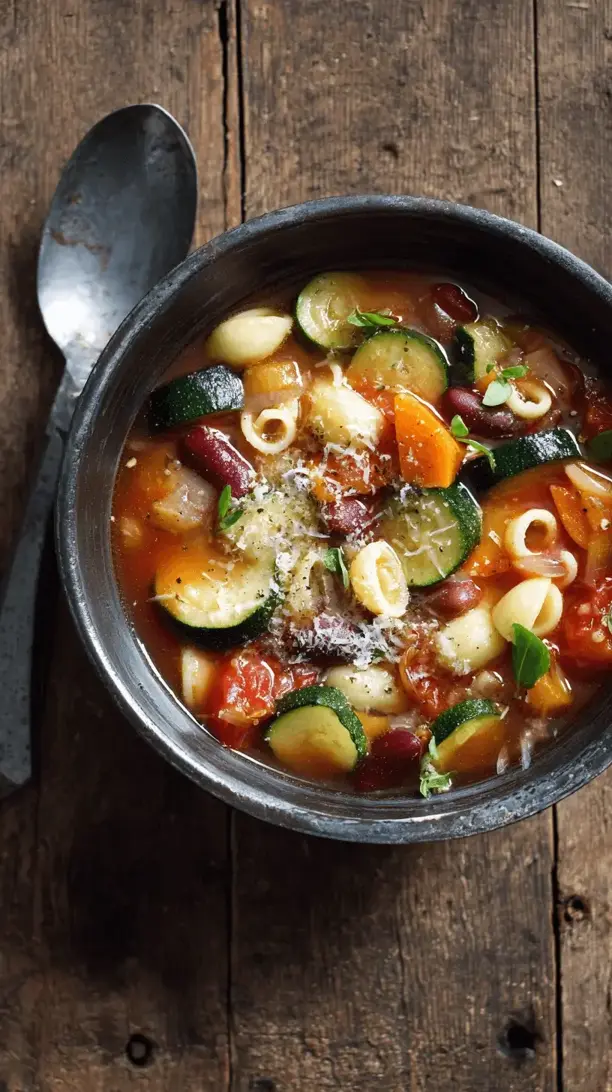
Roasted Vegetable Minestrone
Level up your soup game with this Roasted Vegetable Minestrone! Roasting the veggies first adds incredible depth & smoky flavor. A hearty, one-pot meal that's perfect for cozy nights.
Ingredients
Ingredients
-
2 medium carrots (peeled and chopped into 1/2-inch pieces)
-
2 medium zucchini (chopped into 1/2-inch pieces)
-
1 large red onion (roughly chopped)
-
1 red bell pepper (chopped)
-
3 tbsp olive oil (divided)
-
4 cloves garlic (minced)
-
2 tbsp tomato paste
-
1 (28 oz) can crushed tomatoes
-
6 cups vegetable broth (low sodium if possible)
-
1 tsp dried oregano
-
1/2 tsp dried thyme
-
1 bay leaf
-
1 (15 oz) can kidney beans (rinsed and drained)
-
1/2 cup small pasta (like ditalini or elbow macaroni)
-
2 cups fresh spinach (roughly chopped)
-
salt and freshly ground black pepper (To taste)
-
freshly grated Parmesan cheese (For serving)
-
chopped fresh parsley (For serving)
Instructions
-
Preheat your oven to 425°F (220°C). While it heats up, chop your carrots, zucchini, red onion, and bell pepper. Place them all on a large baking sheet, drizzle with 2 tablespoons of the olive oil, and season generously with salt and pepper. Toss everything with your hands until the vegetables are evenly coated. Spread them out in a single layer—this is key for getting those beautiful roasted edges, not steamed veggies.01
-
Roast the vegetables for 20-25 minutes, giving them a good stir halfway through. You're looking for them to be tender and have some nicely browned, caramelized spots. That caramelization is pure flavor gold for our soup. While they roast, you can get the soup base started.02
-
Heat the remaining 1 tablespoon of olive oil in your large stockpot or Dutch oven over medium heat. Add the minced garlic and cook for just 30 seconds until fragrant—be careful not to let it burn! Stir in the tomato paste and cook for another minute, stirring constantly. It should look a shade darker and smell wonderfully rich.03
-
Pour in the crushed tomatoes and vegetable broth. Add the dried oregano, thyme, and the bay leaf. Give it all a good stir to combine. Bring the mixture to a gentle boil, then reduce the heat to low and let it simmer uncovered for about 10 minutes. This allows the flavors in the broth to start getting acquainted.04
-
By now, your roasted vegetables should be ready. Carefully add them to the pot, along with any juices from the baking sheet. Stir in the rinsed kidney beans. Let the soup simmer for another 15 minutes to allow the flavors to fully meld together.05
-
Now, stir in the dry pasta. Cook for the time recommended on the pasta package, usually around 8-10 minutes, stirring occasionally to prevent the pasta from sticking to the bottom of the pot. The soup will thicken as the pasta cooks.06
-
Once the pasta is al dente, turn off the heat. Remove the bay leaf—its job is done! Stir in the fresh spinach. It will wilt almost instantly from the residual heat. Now is the time to taste your masterpiece. Season with additional salt and pepper until it's just right for you.07
-
Ladle the hot minestrone into bowls and top generously with a sprinkle of freshly grated Parmesan cheese and a handful of chopped fresh parsley. The Parmesan adds a salty, savory punch that ties the whole bowl together beautifully.08