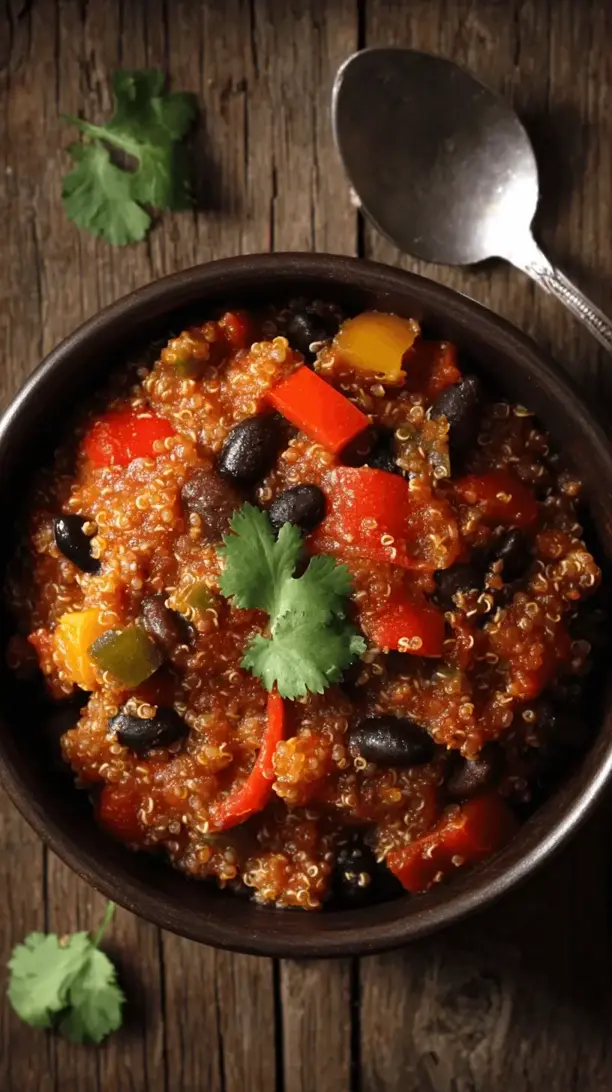

Why You’ll Love This Quinoa and Vegetable Chili
- It’s a complete meal in a bowl. With protein-packed quinoa and a whole garden of vegetables, this chili is seriously satisfying. You get a wonderful mix of textures and nutrients in every single spoonful.
- It’s wonderfully adaptable. Not a fan of bell peppers? Swap them for zucchini. Want more heat? Add an extra jalapeño. This recipe is a fantastic template for using up what you’ve got.
- It tastes even better the next day. Like all great chilis, the flavors have a chance to mingle and deepen overnight. Making a big batch means delicious, ready-to-go lunches for days.
- It’s naturally gluten-free and vegan. This makes it a fantastic crowd-pleaser for gatherings where dietary restrictions are a consideration. Everyone can dig in and enjoy.
Ingredients & Tools
- 1 tablespoon olive oil or avocado oil
- 1 large yellow onion, diced
- 2 bell peppers (any color), diced
- 2 medium carrots, diced
- 2 stalks celery, diced
- 3-4 cloves garlic, minced
- 1 jalapeño, seeds removed and finely diced (optional, for heat)
- 2 tablespoons tomato paste
- 1 tablespoon chili powder
- 1 ½ teaspoons ground cumin
- 1 teaspoon smoked paprika
- ½ teaspoon dried oregano
- 1 (28-ounce) can crushed tomatoes
- 1 (15-ounce) can black beans, rinsed and drained
- 1 (15-ounce) can kidney beans, rinsed and drained
- 4 cups vegetable broth (low sodium if possible)
- ⅔ cup uncooked quinoa, rinsed well
- 1 bay leaf (optional, but adds great depth)
- Salt and black pepper to taste
- For serving: Fresh cilantro, avocado slices, lime wedges, vegan sour cream or yogurt
Tools: A large Dutch oven or heavy-bottomed soup pot, a wooden spoon, and a good knife.
The key here is building layers of flavor, starting with that “holy trinity” of onion, carrot, and celery. Rinsing the quinoa is a non-negotiable step—it removes its natural bitter coating. And using a mix of beans gives the chili a more interesting texture.
Serves: 6 | Prep Time: 20 minutes | Cook Time: 35 minutes | Total Time: 55 minutes
Before You Start: Tips & Ingredient Notes
- Rinse that quinoa! Quinoa has a natural coating called saponin that can taste soapy or bitter. Giving it a good rinse in a fine-mesh strainer under cold water until the water runs clear is the secret to a perfectly flavored chili.
- Dice your veggies uniformly. Try to cut your onions, peppers, carrots, and celery into pieces that are roughly the same size. This isn’t just for looks—it ensures everything cooks at the same rate.
- Don’t skip toasting the spices. Adding the chili powder and cumin directly to the sautéed veggies for a minute before the liquid goes in “wakes up” their oils and intensifies their flavor dramatically. You’ll smell the difference instantly.
- Low-sodium broth is your friend. Since canned beans and tomatoes can contain varying amounts of salt, starting with a low-sodium broth gives you complete control over the final seasoning. You can always add more salt, but you can’t take it out!
How to Make Quinoa and Vegetable Chili
Step 1: Sauté the Aromatics. Heat the olive oil in your large pot over medium heat. Add the diced onion, bell peppers, carrots, and celery. Cook, stirring occasionally, for about 8-10 minutes, until the vegetables have softened and the onion is translucent. You’re not looking for color here, just tenderness.
Step 2: Build the Flavor Base. Add the minced garlic and diced jalapeño (if using) to the pot. Stir and cook for just one minute until fragrant—be careful not to burn the garlic! Now, push the veggies to the side and add the tomato paste to the center of the pot. Let it cook for 30 seconds to caramelize slightly, then stir it into the vegetable mixture.
Step 3: Toast the Spices. This is the magic step! Sprinkle the chili powder, cumin, smoked paprika, and oregano over the vegetables. Stir constantly for about 60 seconds. The mixture might look a little dry, but you’ll be hit with the most incredible, warm, and smoky aroma. This toasting process is what gives the chili its deep, complex flavor.
Step 4: Add the Remaining Ingredients. Pour in the crushed tomatoes, rinsed black and kidney beans, and vegetable broth. Add the rinsed quinoa and the bay leaf. Give everything a really good stir, making sure to scrape up any browned bits from the bottom of the pot—that’s pure flavor!
Step 5: Simmer to Perfection. Bring the chili to a boil, then immediately reduce the heat to low, cover the pot with a lid, and let it simmer gently for 20-25 minutes. The quinoa will cook and absorb the liquid, thickening the chili beautifully. You’ll know it’s done when the quinoa is tender and has little “tails” uncurled from each grain.
Step 6: Final Seasoning and Rest. Remove the pot from the heat. Take out the bay leaf and discard it. Taste the chili and season generously with salt and black pepper. I find it needs a good amount of salt to make all the flavors pop. Let it sit for 5-10 minutes off the heat before serving—this allows the chili to thicken up a bit more and the flavors to settle.
Serving Suggestions
Complementary Dishes
- Skillet Cornbread — A slightly sweet, crumbly piece of cornbread is the ultimate tool for scooping up every last bit of chili from your bowl. The contrast in textures is just perfect.
- Simple Green Salad with a Lime Vinaigrette — A bright, crisp salad with a zesty dressing cuts through the richness of the chili and provides a refreshing counterpoint.
- Roasted Sweet Potatoes — For an extra-hearty meal, serve the chili over cubes of roasted sweet potato. Their natural sweetness complements the smoky spices beautifully.
Drinks
- Ice-Cold Mexican Lager — The crisp, clean taste of a light beer is a classic pairing that cleanses the palate between spicy, flavorful bites.
- Sparkling Water with Lime — The bubbles and citrus are incredibly refreshing and help balance the heat without adding sweetness.
- Herbal Iced Tea — A caffeine-free peppermint or hibiscus tea served over ice is a wonderful, soothing non-alcoholic option.
Something Sweet
- Orange Slices with a Sprinkle of Cinnamon — It sounds simple, but the juicy, cool citrus is a fantastic, light way to end the meal on a bright note.
- Vegan Chocolate Avocado Mousse — A rich, creamy, and decadent dessert that feels indulgent but is secretly packed with good-for-you ingredients.
- Coconut Milk Rice Pudding — A lightly spiced, creamy rice pudding offers a comforting and subtly sweet finale that echoes the warmth of the chili.
Top Mistakes to Avoid
- Mistake: Not rinsing the quinoa. I’ve mentioned it before, but it’s the number one reason someone might say they don’t like quinoa. That bitter saponin coating can ruin the whole pot, so please don’t skip this 60-second step.
- Mistake: Burning the garlic and spices. Garlic cooks in a flash and burned garlic is bitter. Add it after the harder veggies have softened and only cook for a minute. Similarly, when toasting the spices, keep the heat at medium and stir constantly—you’re toasting, not burning.
- Mistake: Adding salt too early. Hold off on salting until the very end, after you’ve tasted it. As the liquid reduces and the quinoa absorbs the broth, the saltiness can concentrate. Seasoning at the end gives you perfect control.
- Mistake: Overcooking the quinoa. Once the quinoa is tender, it’s done. If you let it simmer too long, it can become mushy and the chili can turn into a thick paste. Set a timer for 20 minutes and check it then.
Expert Tips
- Tip: For a deeper, smokier flavor, char your peppers. If you have a gas stove or grill, you can blacken the whole bell peppers over an open flame before dicing them. The charred skin adds an incredible smoky depth that pairs wonderfully with the chili powder.
- Tip: Add a splash of acidity at the end. Just before serving, stir in a tablespoon of fresh lime juice or a teaspoon of apple cider vinegar. This little trick brightens all the flavors and makes the chili taste more complex.
- Tip: Make it a “pantry clean-out” meal. Have a half cup of frozen corn? Throw it in with the beans. A can of fire-roasted tomatoes? Use them instead of plain crushed tomatoes for extra flavor. A little bit of leftover salsa? In it goes! This recipe is incredibly flexible.
- Tip: Freeze individual portions for easy meals. This chili freezes exceptionally well. Let it cool completely, then portion it into airtight containers or freezer bags. It will keep for up to 3 months. It’s like a homemade healthy TV dinner!
FAQs
Can I make this chili in a slow cooker?
Absolutely! It’s a great set-it-and-forget-it option. Sauté the vegetables, garlic, and tomato paste on the stove as directed (this step is important for flavor development). Then, transfer everything to your slow cooker, add the remaining ingredients except the quinoa, and cook on low for 6-7 hours or high for 3-4 hours. Stir in the rinsed quinoa during the last 30 minutes of cooking on high (or 1 hour on low) until tender.
My chili is too thick! How can I thin it out?
No problem at all—this happens, especially with leftovers as the quinoa continues to absorb liquid. Simply stir in a little extra vegetable broth or even water, a half-cup at a time, when you reheat it until it reaches your desired consistency. Taste and adjust the seasoning after you’ve added the liquid.
Can I use a different grain instead of quinoa?
You sure can. Brown rice or farro would be great substitutes. Keep in mind that they take longer to cook. If using brown rice, you may need to simmer the chili for 40-45 minutes instead of 20-25, and you might need to add a bit more broth if it absorbs too much liquid.
How can I make this spicier?
For more heat, you have a few options. Keep the seeds in your jalapeño, add a pinch of cayenne pepper with the other spices, or stir in a tablespoon of your favorite hot sauce at the end. You could also garnish with sliced fresh jalapeños for a fresh, sharp heat.
How long will leftovers last in the fridge?
Stored in an airtight container, this quinoa chili will keep beautifully in the refrigerator for 4-5 days. In fact, many people think it tastes even better on the second or third day as the flavors continue to meld. Just reheat it gently on the stove or in the microwave.